Creativity and Continuous Improvement at Marsh Cabinets

By Julie A. Palm
There are a lot of ways to gauge the growth and health of a company.
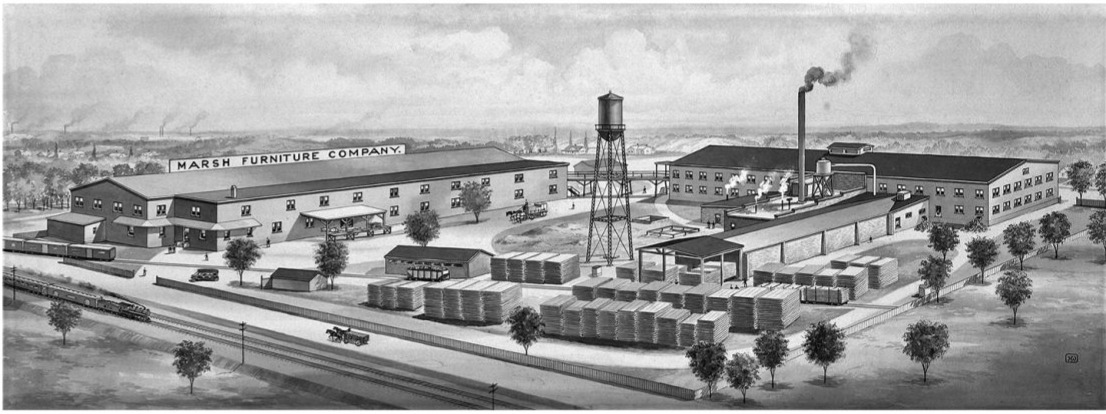
Marsh Cabinets, which celebrated its 120th anniversary with a series of events last week, points to its 20-acre campus in High Point, its 800,000 square feet of manufacturing and headquarters space, its debt-free balance sheet, its 560 employees, and its growing retail operation. Also vital: its committed family ownership and board, continual investment, and strong relationships with customers and vendors, company executives say.
But there’s a simple visual that encapsulates that story — and Marsh Cabinet’s important evolution into a more fashion-forward company. It’s the physical product catalog. Since 2014, the company’s product specifications guide has tripled in size. It’s gotten a glow-up, too, from a plain, drab, gray-covered document to a product showcase with a glossy photo of cabinet options on the front.
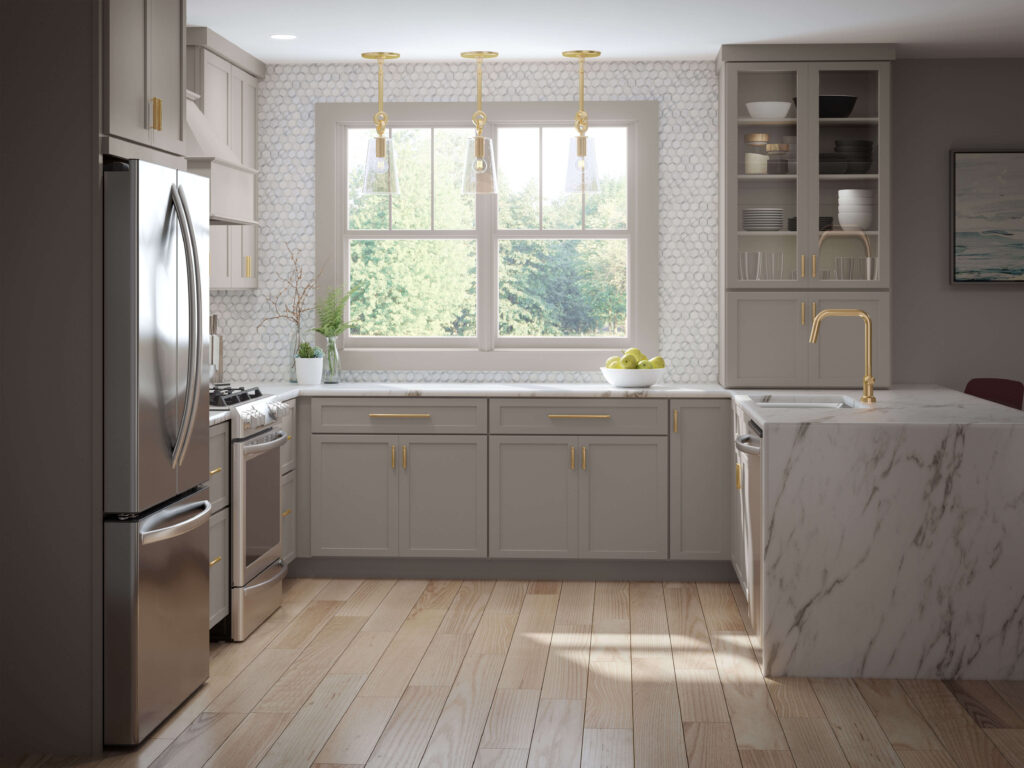
“Today, (we’re) much more of a fashion industry. In my three decades involved (in the company), we’ve seen a significant change from more general styles to much more trend-forward styling, much more geared to the fashion industry,” says Edwin Underwood, president and chief operating officer.
“We’ve adapted to that through creativity,” he continues. “If you have a team geared toward, as we were many, many years ago, running much of the same thing again and again, that is not going to be fashion-driven. So, we have created a culture here — and we still work on it — a culture of creation.”
It’s a culture supported by continuous improvement in all areas, including technological advancements.
“Don’t let the 120-year-old wrapper of this beautiful building that we love fool you,” Underwood says. “… (Inside) you’ll see technology that in a lot of cases would be the envy of many in the cabinet industry, even among our biggest competitors. So, we’ve married that creativity, which is culture, and the capital, particularly with technology, to bring about a much more nimble, flexible operational structure. If we see a trend, be it a stain, a paint or a door style, we want to be able to adapt to that.”
Marsh Cabinets’ products are available in the Eastern third of the United States through builders, retail dealers, and its own network of branded stores, which the company would like to grow, Underwood says.
The company has recently invested in a number of areas, including bringing its milling operation onsite and upgrading equipment for ergonomics and efficiency throughout the factory. Next up is an upgrade and expansion of its custom cabinet operation. That part of the business was inspired by a small custom shop one of its retailers was operating.
Creating an on-site custom shop at the company’s manufacturing facility in High Point provided a nice opportunity in an area of growing demand, says Jim Felmet, who works on the company’s continuous improvement projects.
Marsh Cabinet’s custom operation offers paint finishes in any Sherwin-Williams hue. “Our craftsman can take anything from a Pinterest picture to a sketch on a sticky note and turn it into a custom cabinet,” or accessory item like a range hood, Felmet says.
Underwood notes that in March, Marsh Cabinets marked “its largest single SKU product launch in the company’s history.”
Part of that is being driven by how homeowners are using cabinets. Kitchens and baths remain the primary spaces for cabinet placement, but CEO David Littlefield says homeowners are increasingly adding cabinets everywhere from media rooms and mudrooms to pool houses and basement bars. “Cabinetry is much more versatile today,” he explains.
While painted cabinets remain strong sellers, Littlefield says, “we are seeing a return to warmer stain tones, kind of midtone, neutral stain colors.” The company offers 10 stain options. Cabinets can be left unfinished, as well.
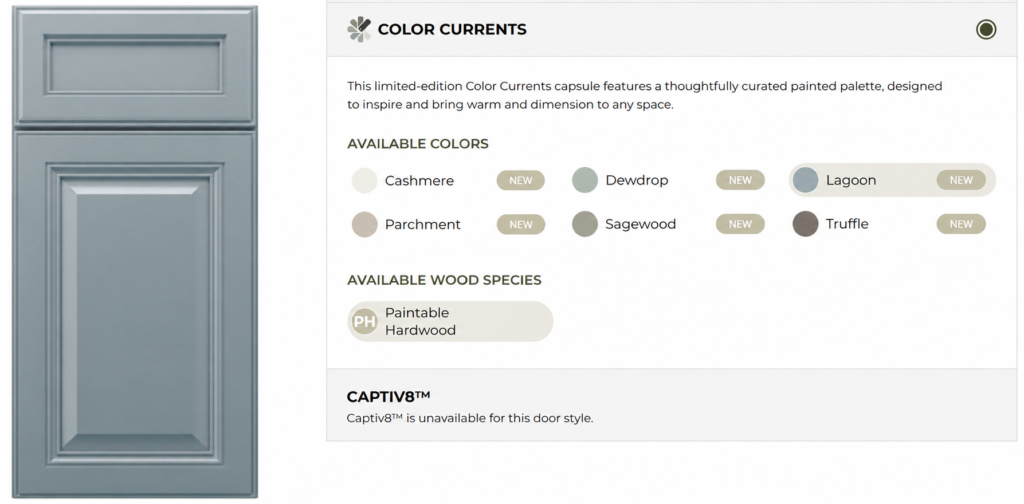
When it comes to paint colors, Littlefield says, trends are moving more quickly, and that helped drive the company’s decision to add six new fashion-forward hues that it calls “Color Currents” to its 10 standard paint options. Those new colors: Cashmere, Parchment, Dewdrop, Sagewood, Lagoon and Truffle.
And, Littlefield says, “we still sell a tremendous amount of wooden products,” with the company offering birch, cherry, maple, and oak cabinets. But customer interest in manufactured products is growing, he says. Marsh Cabinet’s Captiv8 line is a response to that: The MDF door components are fully encapsulated in a long-lasting coating for a smooth, virtually maintenance-free finish.
When it comes to door styles, Underwood says Marsh Cabinets is seeing waning interest in raised door fronts and more interest in flat panels. “We’ve seen the embrace of slab doors, which is not an insert at all, it’s simply a slab door,” he says.
The story of Marsh Cabinets isn’t simply one of longevity. It’s a story of reinvention. Over 120 years, the company has evolved from a regional cabinet manufacturer into a design-driven operation attuned to shifting consumer tastes, emerging technologies and new ways of living.
If the growing size of its product catalog tells part of that story, the company’s willingness to continually rethink what cabinetry can be—and where it belongs in the home—may be the clearest indicator of where the next chapter is headed.