

The Industry Next Door

The Educators Exchange opens new pathways into High Point’s hometown industry
There’s been a curious disconnect in High Point. The city is home to one of the world’s most influential design and home furnishings industries, yet many students graduate without ever understanding the breadth of careers available within it—or realizing that those opportunities exist in their backyard.

“You can’t be what you can’t see,” has been a recurring refrain among High Point’s changemakers, educators and industry leaders, and last week, the inaugural Educators Exchange set out to change that.
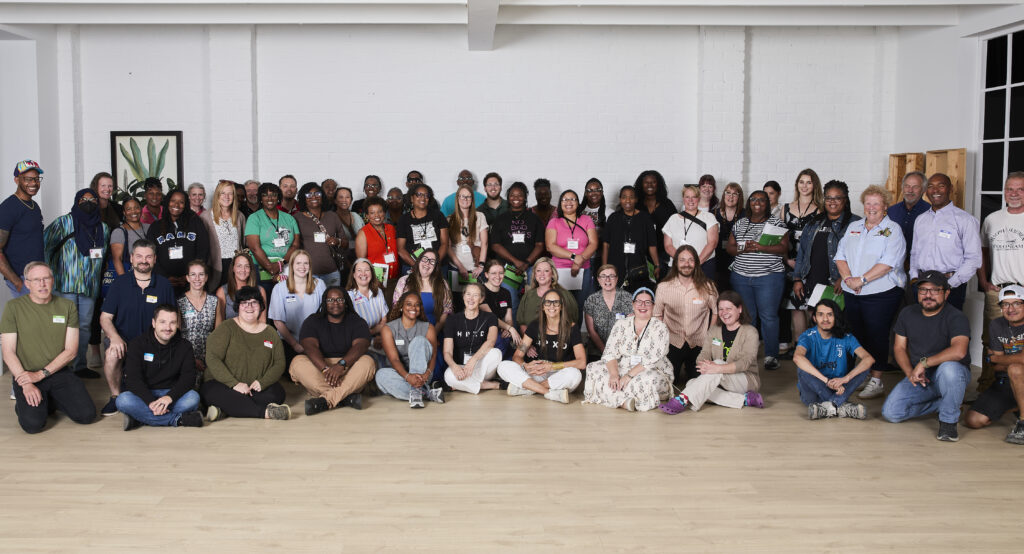
The Educators Exchange: Pathways into the Design and Home Furnishings Industry was a collaboration between The HPxD Foundation and High Point Schools Partnership. Over two days, forty Guilford County middle and high school educators and counselors stepped inside factories, showrooms, and creative studios to discover many of the career pathways that exist within High Point.
The program, made possible through a grant from the City of High Point, also garnered support from High Point Market Authority, Universal Furniture, Verellen, THS Creative, and Cohab.Space, where the two-day experience got underway.
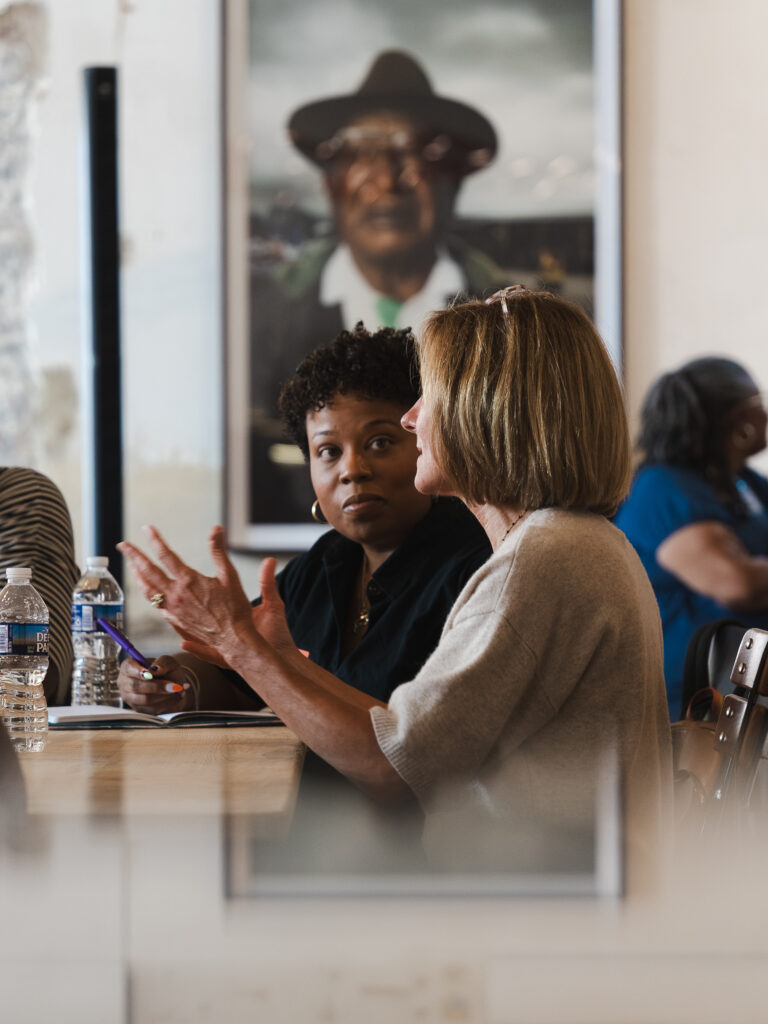
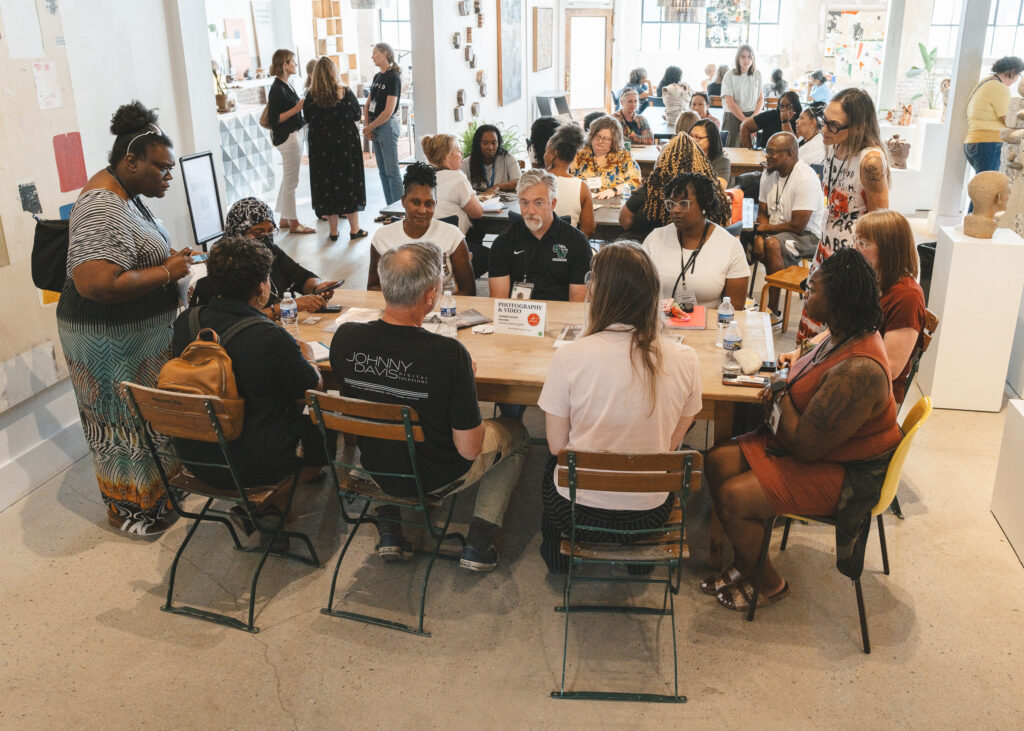
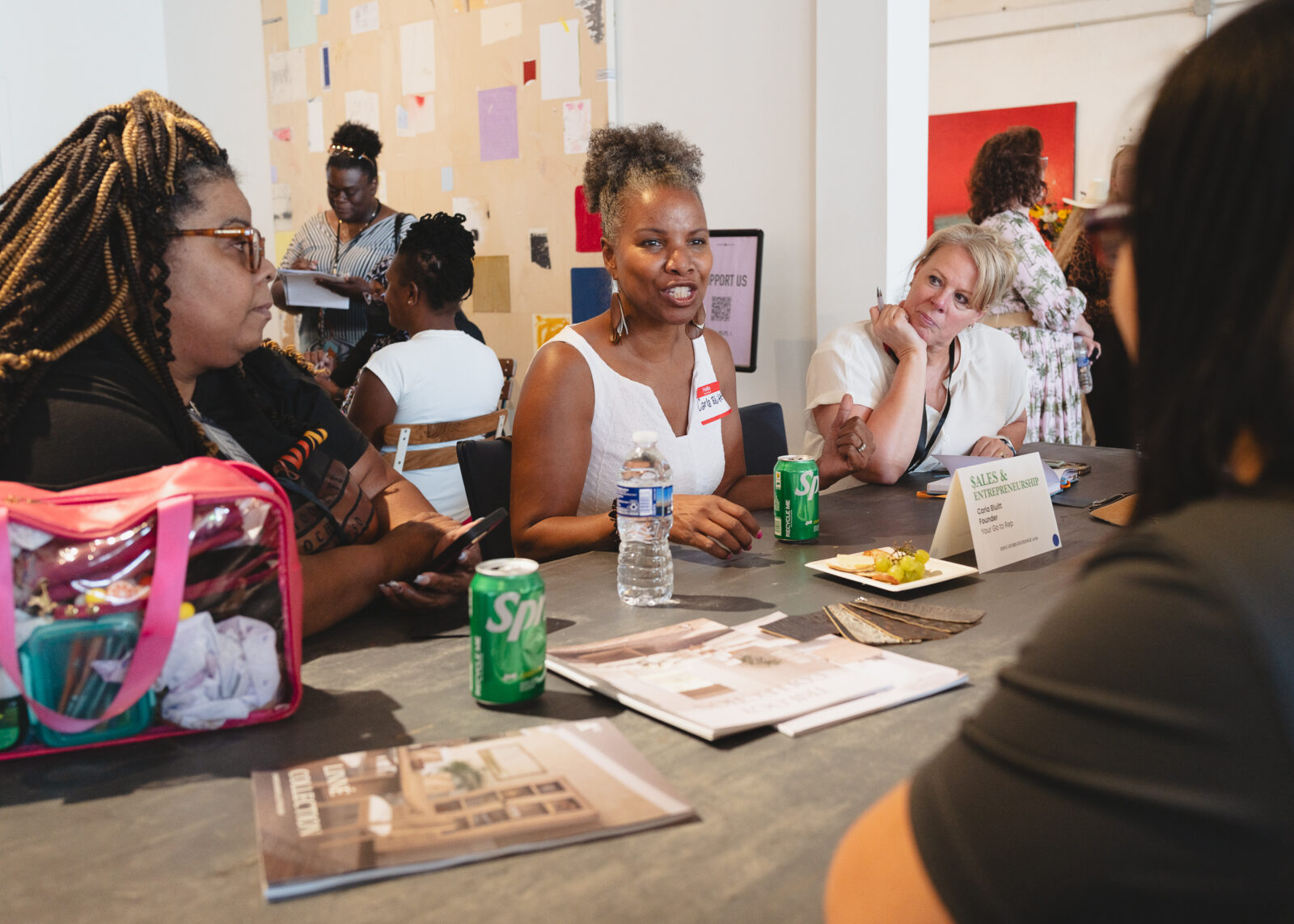
Cohab, a creative workforce nonprofit that provides mentorship and professional development opportunities for makers and artists, was a fitting setting for educators to get their first glimpse into careers that power the industry. During a one-hour speed-networking session, educators rotated from table to table, meeting professionals working in textiles, marketing, photography, interior design, sales, and the arts.
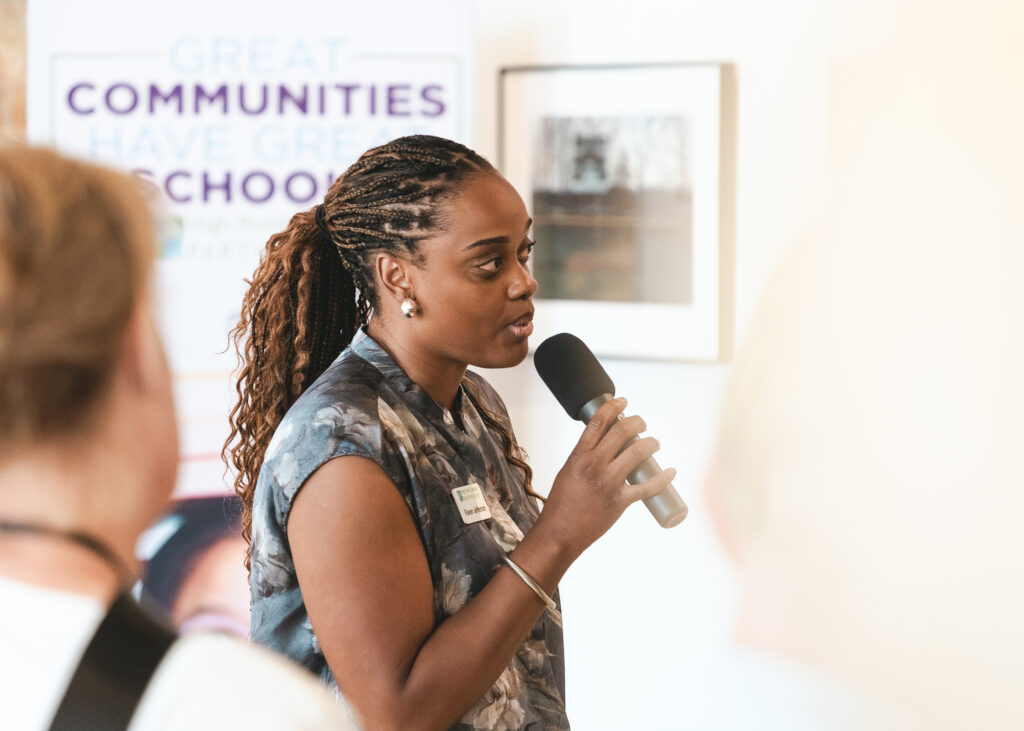
“It is only right that our students who live in this community have access to this industry,” said Raven Jefferson, executive director of High Point Schools Partnership. “They should have a foot in the door, and a leg up because this is their hometown and their hometown industry.”
Round table speakers included Carrie Dillon (International Textile Alliance), Katie Smarr (Crypton Home), Johnny Davis (Johnny Davis Digital Productions), Carla Bluitt (Your Go-To Rep), Alex Moore (Stratagon), Hanna and Michael Manes (Cohab.Space), and Christi Spangle (Barbour Spangle).
Tuesday’s itinerary built upon those initial conversations, giving educators a chance to explore many of the industry’s behind-the-scenes job opportunities and hear firsthand from employees whose career journeys don’t always follow traditional paths.
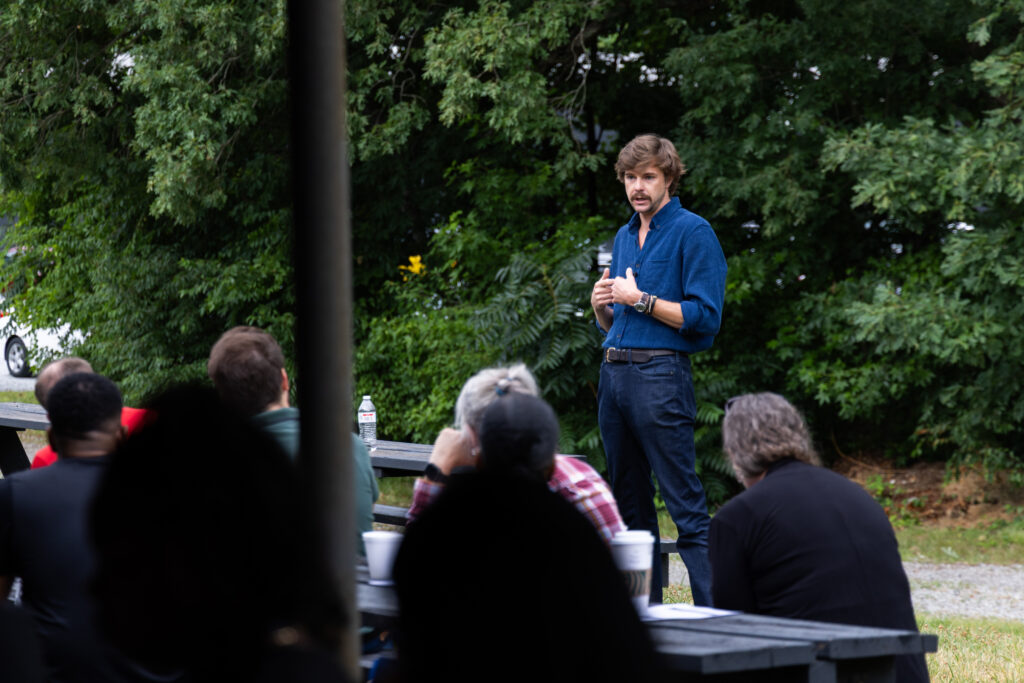
At the Verellen headquarters, educators gathered over coffee and breakfast before hearing from Thomas Verellen, director of business development, and son of founders Tom and Sabine Verellen.
He shared the company story—how his parents arrived in High Point determined to put down roots and build something meaningful and sustainable. Twenty-six years later, the company has grown from 10 employees to approximately 180.
As a second-generation leader, Verellen spoke candidly about one of the company’s greatest challenges. “Thinking about being a second-generation operator one day, I was terrified,” he said. “How am I going to keep this rolling if I don’t have the workforce?”
Educators toured the headquarters, factory, and farm while hearing from employees across departments, representing customer service, content creation, sewing, design and production, and management. The message was consistent: there is no single path into the company, and employees who demonstrate skill, curiosity, and a strong work ethic have opportunities to grow.
While Verellen illustrated the opportunities within manufacturing, a visit to Universal Furniture revealed the many disciplines required to bring a product from concept to the consumer.
Universal’s marketing director Kayla Miller and creative director Janine Wagers kicked things off by tracing the journey of a furniture collection from idea to showroom floor, highlighting the many departments and skill sets involved along the way.
When the conversation turned to workforce development and Universal’s challenge of finding skilled labor, Miller mentioned that some upholsterers can earn as much as $60 per hour. That statement drew an audible reaction from the room.
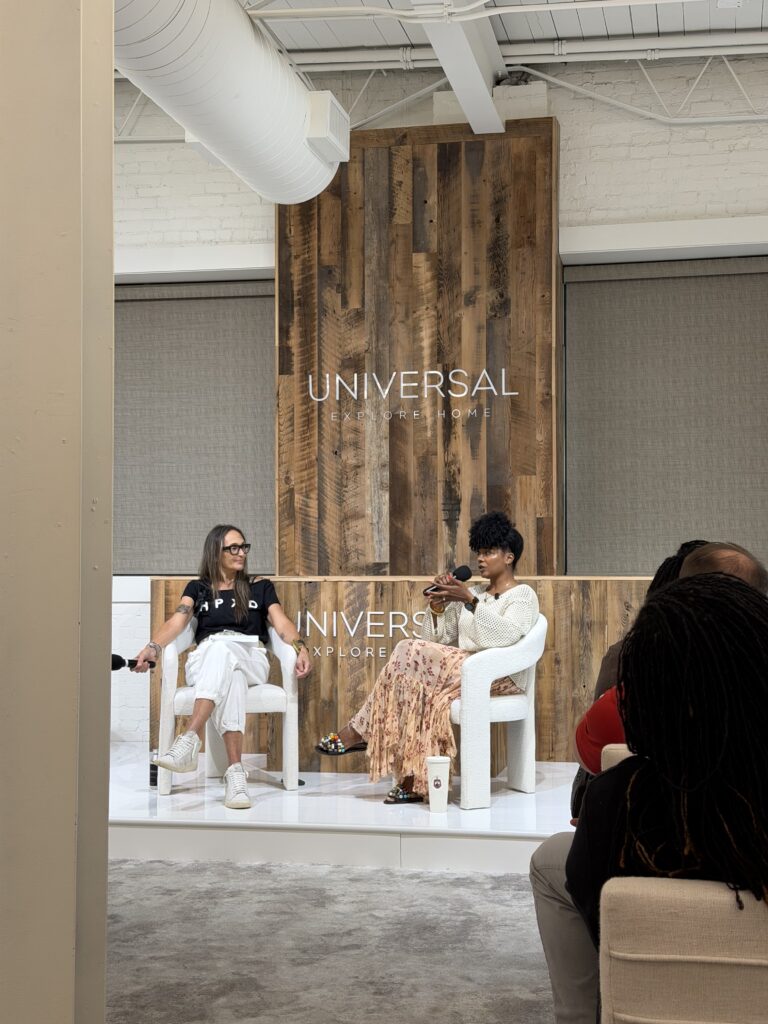
Designer Marie Cloud of Indigo Pruitt Design Studio followed with a personal reflection on how she found her way into the profession. Growing up in Cleveland, she recalled visiting model homes with her mother and imagining a lifestyle beyond what they knew.
“We’d act like we could afford the houses,” she said. “I was exposing myself to something different and subconsciously picking up on things.”
Today, Cloud’s mission is to create beautiful spaces for people who look like her while championing design as a tool for emotional and physical well-being.
“Home is a place of refuge,” she said. “We can’t afford to neglect it.”
Her comments resonated with educators, including Amber Hayes of Wesleyan Christian Academy, who asked how design principles could improve classroom environments for students who spend much of their day indoors.
Cloud’s answer was simple: nature. “Our subconscious is drawn to it,” she explained. “It lowers stress levels.”
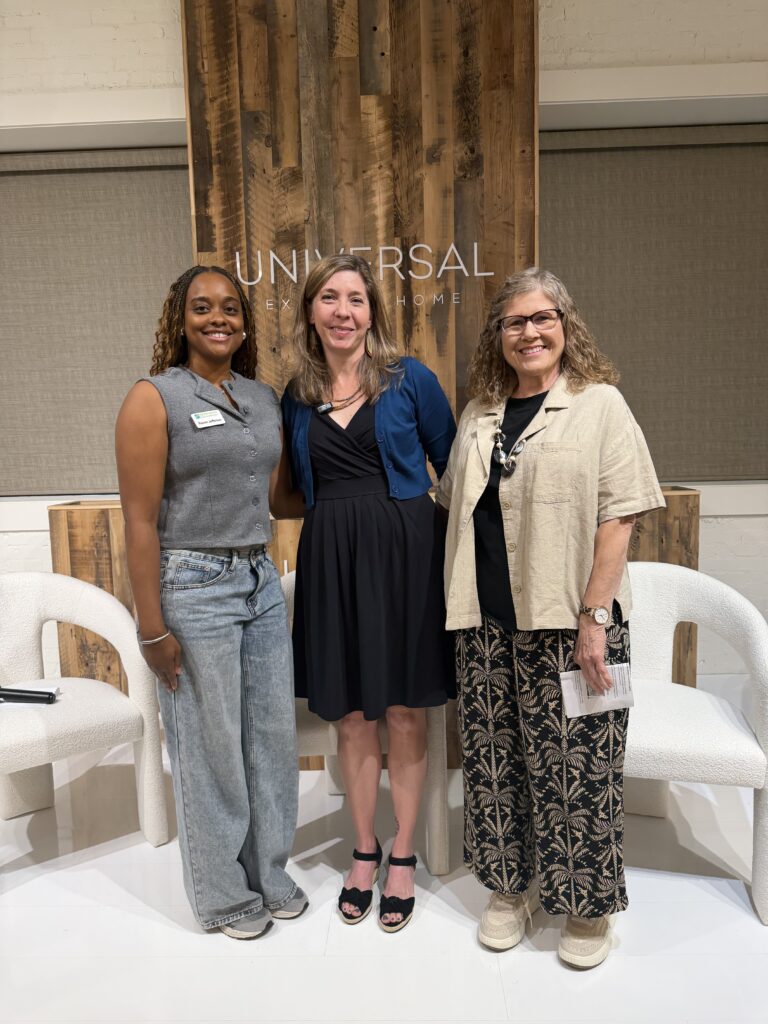
Interior design educators Dr. Jane Nichols of High Point University and Gisele Taylor Wells of Forsyth Technical Community College also spoke about the impact of the built environment. They encouraged attendees to think of design not as surface decoration, but as a discipline that shapes how people live, learn, heal, and connect.
Design gives you an opportunity to play a role in people’s lives,” said Taylor Wells.
When asked what kind of qualities make someone succeed in the field they both agreed that curiosity is key.
“The number one thing is curiosity,” said Taylor Wells. “Curious enough to go above and beyond.”
Nichols emphasized open-mindedness and humility as well, noting that design education is rooted in critique and continuous improvement. When she alluded that young people have a hard time with criticism, the audience concurred.
Touting the profession as flexible and limitless, Nichols added, “It’s the type of career that can change with your lifestyle—you make it your own as your life changes.”
WithIt’s executive director Amy Van Dorp concluded the presentations at Universal. She shared the education and mentorship opportunities available through her organization and invited educators to get their students to October Market.
A mother to three who graduated from the Guilford public education system, Van Dorp shared how her daughter came to realize her value as an artist.
“There are opportunities in High Point that you can point students to,” she said. “When you see a student who is struggling to find their path, pointing them towards a creative path is not pointing them down a road where they can’t earn a living, and that’s an important thing to note.
Before heading over to the final destination, educators were treated to a High Point Market Authority windshield bus tour, getting a feel for the Market district and the magnitude in square feet and economic impact and jobs that each market brings.
The last experience took everyone to THS Creative, a multidisciplinary firm whose services span interior design, fabrication, photography, video production, marketing, CGI, and experiential design. There, educators witnessed yet another example of how varied—and interconnected—industry career paths can be.
Partner and President Larry Boyd greeted the group and stressed how there is room at the company for all. Founding partner Jo Hilliard spoke about the importance of character, work ethic, and attitude amongst team members.
“Not everyone can go to college. Not everyone wants to go. This company has opportunities for kids that don’t have degrees,” said Boyd. “We hope you’ll see something that excites you that you can bring back to your students.
As guests migrated through various stations in the studio from warehousing and carpentry to styling, photography and marketing, they got a feel for the different ways THS serves its clients, the day-to-day tasks and challenges that team members experience, and the essential collaboration between departments.
Tailored for educators, “eye-opening” emerged as a favorite description of the program.
“I have so many ideas running through my head right now,” said Dorice Isaac, a counselor at Southeast Guilford Middle School. “I want to get middle school students exposed to an industry that most have not thought about, but it’s right in our backyard.”
Her reaction captured the spirit of the Exchange. The goal was never simply to showcase companies or career paths. It was to help educators see the opportunities already surrounding their students—and to help industry leaders recognize their role in nurturing the next generation.
“There’s opportunity here,” said Verellen. “It’s on all of us to grow it and bring people into it.”
Note: Featured image is Carla Bluitt (Bill Green)