
A Place at the Table

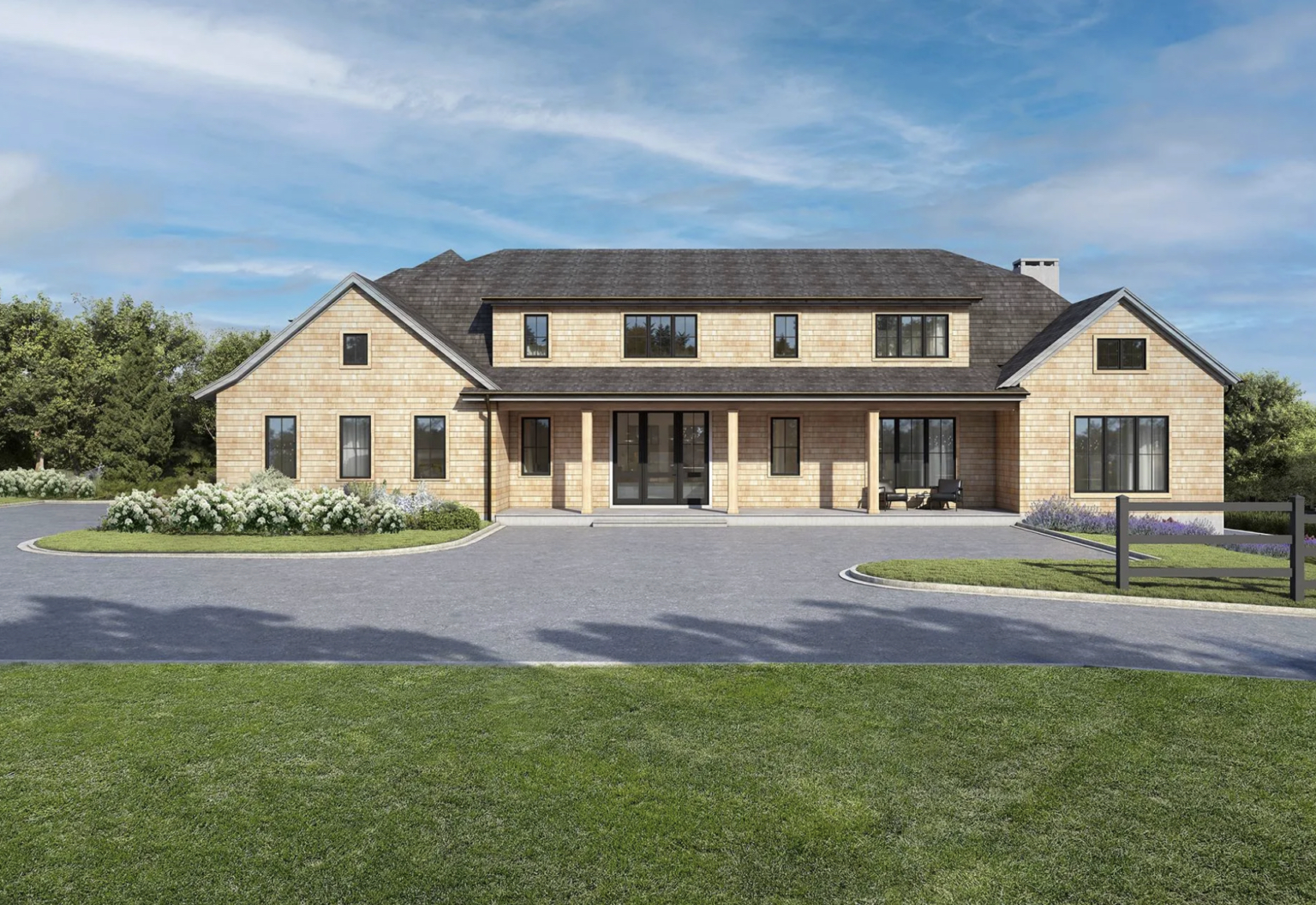
At Holiday House Hamptons, imaginative tablescapes reveal what happens when designers entertain without the usual rules.
There is something wonderfully revealing about a table.
Give a designer an entire room and there are walls to cover, corners to fill, furniture plans to consider and architectural details to navigate. Give them a table and the parameters become considerably tighter. Suddenly, every plate, flower, material and inch of vertical space matters.
At Holiday House Hamptons’ Summer Table, that constraint becomes the creative opportunity.
The event brings designers together to create immersive interpretations of the art of entertaining, but the results stretch well beyond beautifully set tables. Construction materials become decoration. Antique napkin rings tell stories. Furniture transforms a tablescape into an environment. And throughout it all runs a larger idea: Design has the ability to bring people together—in this case, in support of breast cancer research.
For co-chair Vicente Wolf, that combination of creativity and philanthropy is precisely what makes the event meaningful.
“What I think about is, first of all, what Iris [Danker] has created,” Wolf says of Holiday House founder Iris Dankner. “The fact that every bit that goes into this goes for the cause of breast cancer.”
It is personal for Wolf, who has lost friends to the disease. But he also sees Summer Table as part of a long tradition of the design community putting its talents—and its considerable powers of attraction—to work for something larger.
“Our industry is one that has always stepped up,” he says. “As designers, we create wonderful environments, and that is the gift that we can give from our creativity.”
From construction site to dining table
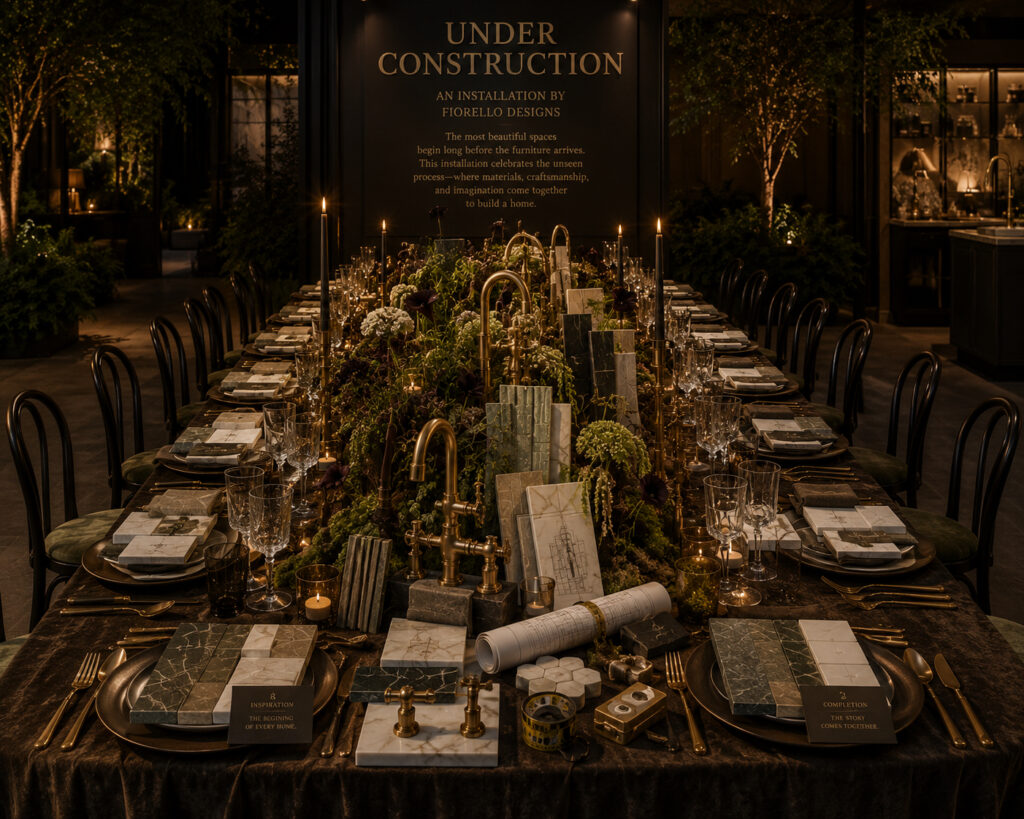
Creativity takes a particularly unexpected turn in Giovanna Fiorello’s installation, “Under Construction.”
Fiorello works across interior design, architecture and general contracting, and wanted her table to challenge the notion that design begins with furniture and decoration. Instead, she went backward, exposing the raw materials that make those finished rooms possible.
Stone, marble and tile samples mingle with metal, mirror, brick and rebar. Slate tile from Nemo Tile becomes a charger. An architectural structure rises from the table to support a runner. Florals travel vertically from tabletop toward ceiling.
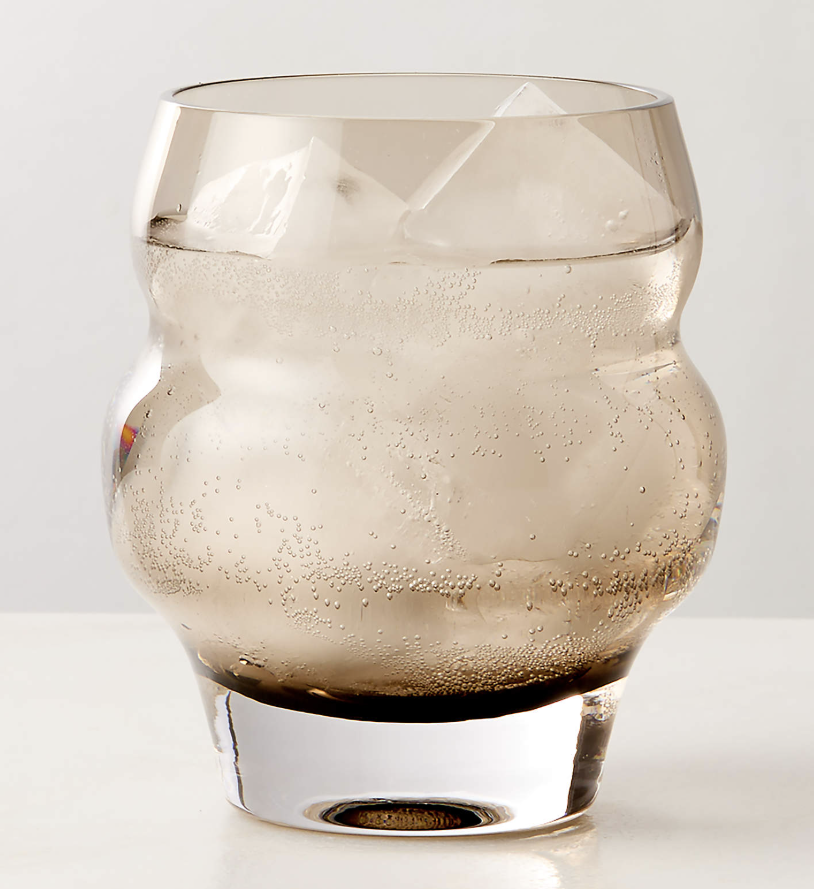
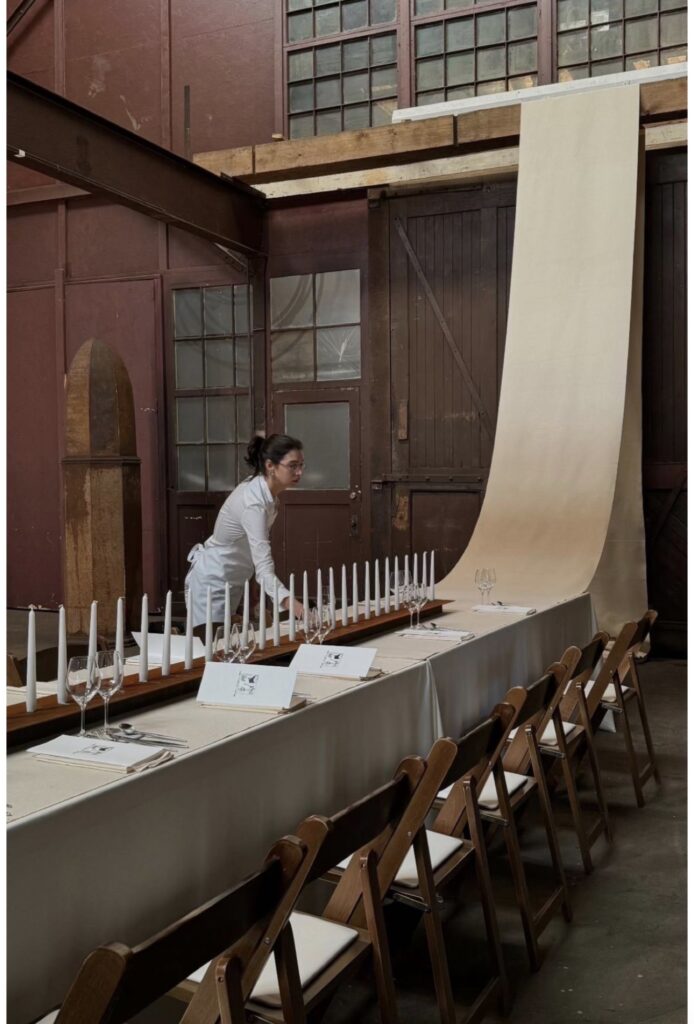
“It’s more of an installation on the table, representing what design and the pathways of design actually are,” Fiorello says. “It’s bridging the gap between construction and design and showing that there are pretty moments, and then there are also the raw materials that make the pretty moments possible.”
Even the restrictions of the setting became part of the exercise. Unable to attach elements to the walls or ceiling, Fiorello created wood partition walls of varying heights and used tension rods to give the floral installation architecture and dimension.
The result deliberately challenges one of the most persistent rules of tablescaping: Keep the center low enough that everyone can see—and converse with—the person sitting across from them.
Fiorello isn’t particularly interested in that rule.
Instead, she considered how people actually interact at a dinner party and designed for more intimate conversations among those seated beside one another.
“Rather than trying to force the conversation,” she says, “make the people sitting next to each other and in close proximity have those intimate moments because sometimes I feel like the layers of the table are laid out by whoever’s entertaining with efforts that everybody can talk to each other, but it’s never possible.”
It’s an idea that reaches beyond tablescaping and into the changing nature of entertaining itself. Fiorello sees Summer Table as an invitation to rediscover something that may have been lost in the era of perpetual restaurant reservations: having people over.
“I feel like there’s been a loss of home entertainment,” she says. “I hope with this event, too, people realize that it’s about intimate entertainment.”
A garden grows indoors
For designer Laura Michaels, the starting point was different, but the ambition was similar: She didn’t want visitors to see only a beautifully dressed table. She wanted them to experience a room.
Michaels initially envisioned an uplit onyx table before the realities of the event’s tight timeline sent her in another direction. What emerged instead was a garden-inspired environment that brings together two of her passions—interior design and entertaining.
“I wanted to create this sort of dynamic table setting that said more than just a table,” Michaels says. “I wanted it to still evoke what people come to a show house for, which is inspirational interior design.”
A round table sits with a curved banquette, introducing the voluptuous furniture forms that continue to influence interiors into a dining setting. The garden theme carries through to one of the installation’s smallest details: antique silver napkin rings from Michaels’ own collection, each adorned with tiny birds.
“It’s almost as if the birds are gathering at the table and collecting seeds,” she says.
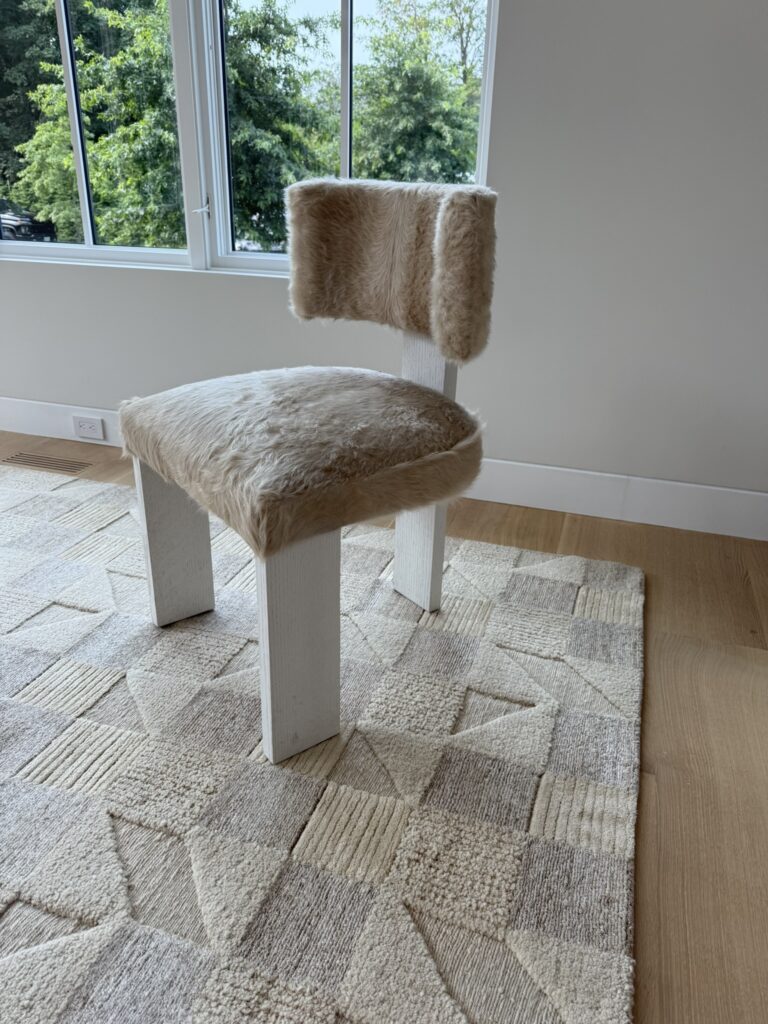
That mix of old and new, polished and personal, also reflects Michaels’ approach to design. A former fashion designer, she sees tabletop through much the same lens as interiors or clothing: proportion, color, texture, balance—and an element of surprise.
“I don’t have rules,” Michaels says. “I think every rule can be broken as long as it’s done well.”
More important, she says, is “following your instincts and making sure that everything is balanced” and “not being too predictable either, so that there’s always something that’s a little bit different.”
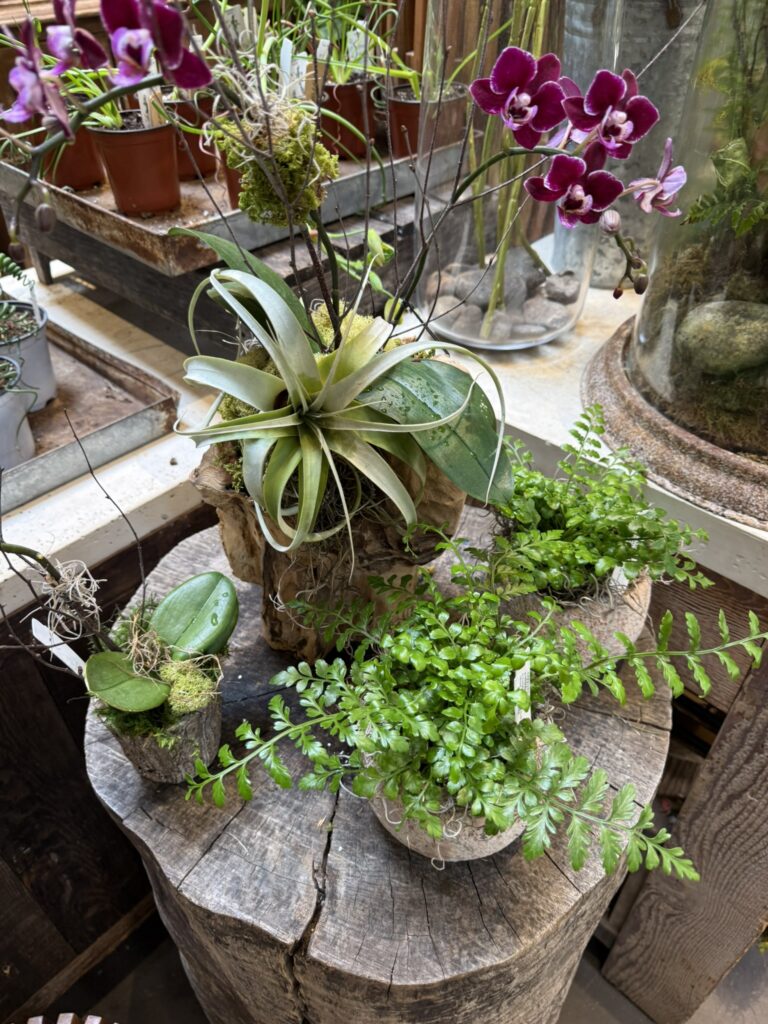
And there is one element she considers nonnegotiable, whether designing a table or a room: flowers.
A sense of place
Elsewhere in the house, Helen Bergin takes the premise of Summer Table and expands it beyond the dining experience entirely.
Rather than a conventional tablescape, Bergin’s team selected the foyer, approaching it as they would a residential project. The goal was to establish a sense of place immediately upon arrival—specifically, the particular ease of the Hamptons.
“We really wanted our space to feel handmade and organic and relaxed and casual,” Bergin says. “You’re coming from a farm stand, from the beach. We wanted you to walk in and really invoke those feelings of just kind of this inviting, casual space.”
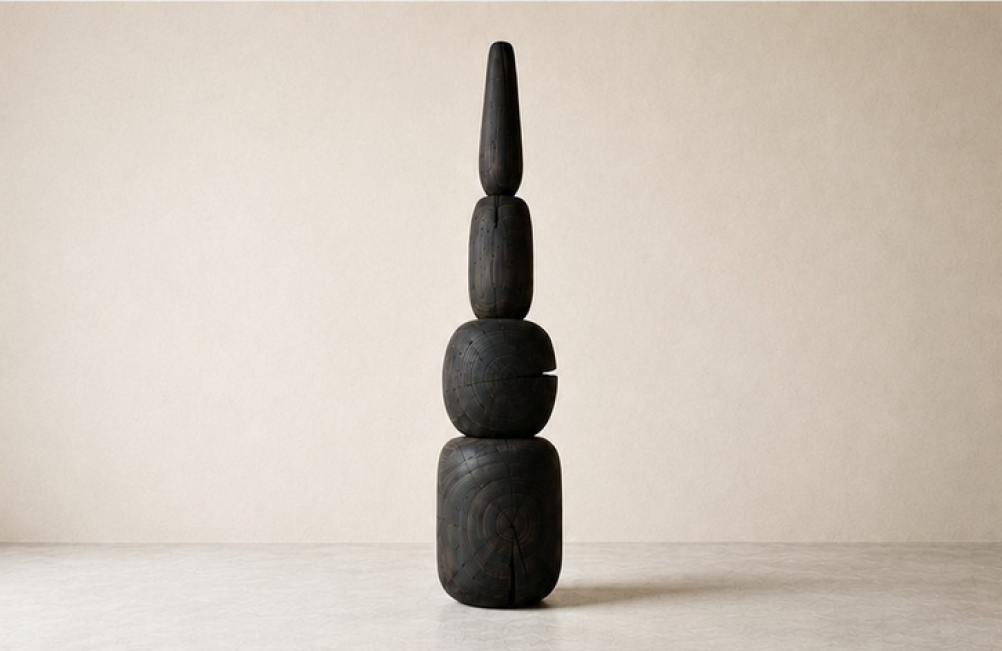
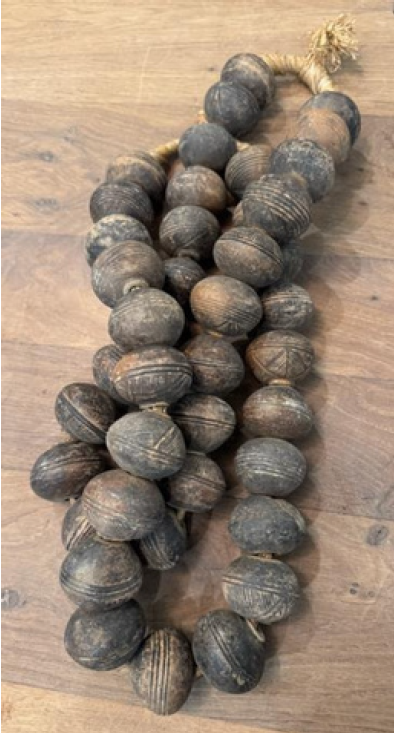
The room is layered with furniture, art and sculpture, much of it handmade, vintage or locally sourced. An antique wine table draped in pale blue Belgian linen anchors the space, topped by a large hand-painted vessel. A hand-carved burnt ash bench and black totem add another material layer, while mixed-media art, ceramics, sculpture and a vintage Soriana sofa bring the history and patina Bergin believes are especially important in a new build.
“We always love pushing toward handmade objects and kind of one-of-a-kind pieces just because I think it tells such a personal story,” she says.
The objective isn’t to create a space the eye comprehends in one glance. Quite the opposite.
Bergin wants visitors to keep looking—to discover something, move on, return and notice another detail they missed the first time.
That is achieved through a strategy designers can easily borrow: varying material, texture, scale and height.
“We like to play with scale and with varying height just to keep your eye moving around the space so it doesn’t stay so stagnant,” she says.
And when asked what a beautifully designed space needs that cannot simply be purchased, Bergin’s answer is immediate: “Personality.”
Creativity with a purpose
That may also explain some of Summer Table’s appeal.
These aren’t client projects. The designers have room to experiment, exaggerate and show visitors how they see—whether that means turning tile samples into chargers, wrapping a dining table with a curved banquette or using a floor lamp as sculpture.
Wolf believes that freedom is part of the longstanding relationship between the design industry and philanthropy. Designers can support a cause while showing what happens when imagination is allowed to run without the normal restrictions of a client brief.
“It’s a great marriage,” he says.
But for Wolf, the most important takeaway from Summer Table has little to do with what visitors might borrow for their next dinner party.
When guests leave, he hopes they recognize “how lucky they are that they’re not suffering with breast cancer” and remember the role charitable efforts can play in fighting the disease.
He credits Dankner’s persistence with turning that mission into something the design community can rally around year after year.
“She has created this—not event, but this venue—out of the will of going to people and asking and just being relentless,” Wolf says. “She teaches us all what we should be doing for the benefit of society.”
Perhaps that is what makes Holiday House’s Summer Table more than another beautiful Hamptons design event. A table has always been a place to gather, to talk, to celebrate and to connect. Here, designers simply stretch that idea further.
They show us what they can bring to the table—and what can happen when creativity is put in service of something bigger than itself.
Note: The Summer Table is open from August 14-30th. Click here to donate to Holiday House Hamptons or to purchase tickets to the Summer Table event.