
Beyond the Curio: Integrated lighting offers a new way to experience furniture and home

By Jane Dagmi
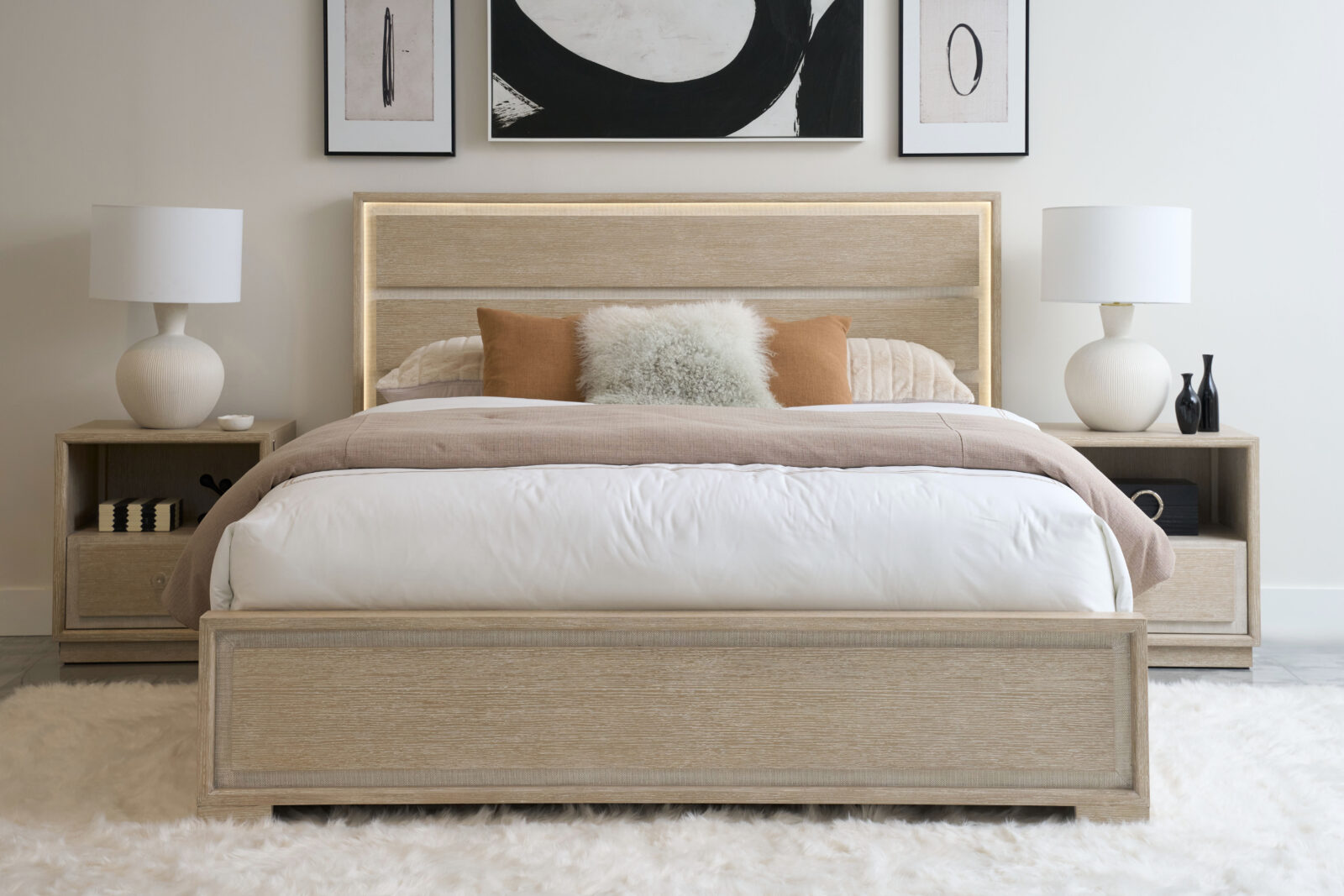
The first time I walked through the Riverside Furniture showroom, I noticed lighting incorporated into the design of several headboards, and it struck me as a smart way to shape mood while adding function.
“Furniture, especially in the bedroom, is deeply personal and should feel like an expression of the individual,” says Harrison “H” Kelly, president of Riverside. “Incorporating soft, integrated lighting adds both ambiance and functionality. It creates a warm, inviting environment while also serving a practical purpose in everyday use.”
Riverside began exploring this approach about five years ago with the introduction of the Cascade bed. Designed with ease in mind, Riverside LED-lit products include a discreetly placed touch switch on either side of the headboard panel, offering three levels of indirect lighting,so users can adjust brightness.
Since that visit to Riverside, I’ve been paying closer attention to instances where lighting is not typically a necessity, but an enhancement—a quiet upgrade that shifts how a piece performs and how a room feels.
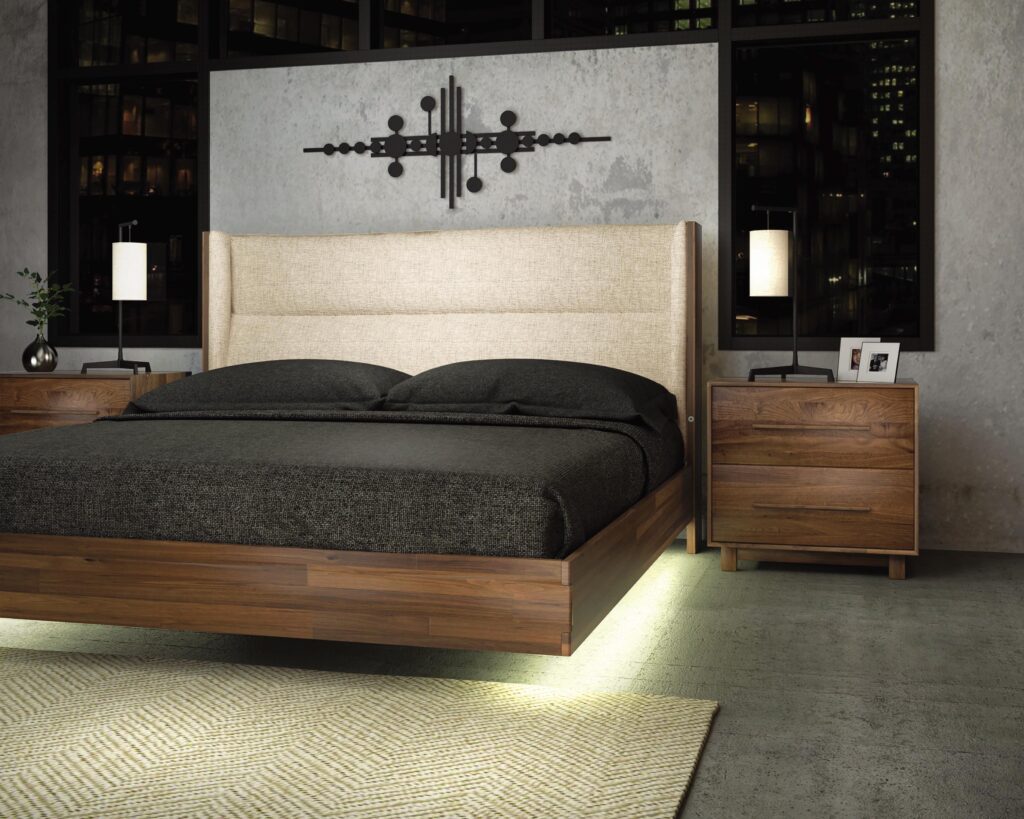
Take Copeland’s Sloane Floating Bed. Designed with independent zones, one sleeper can activate light without disturbing the other. Turn both on, and the effect is a soft, architectural glow.
“We’re always looking for ways to differentiate our products,” says Ben Copeland, director of sales and marketing. “Accent lighting adds both functionality and aesthetics. Underbed lighting, for example, works as an unobtrusive night light while adding subtle ambience.”
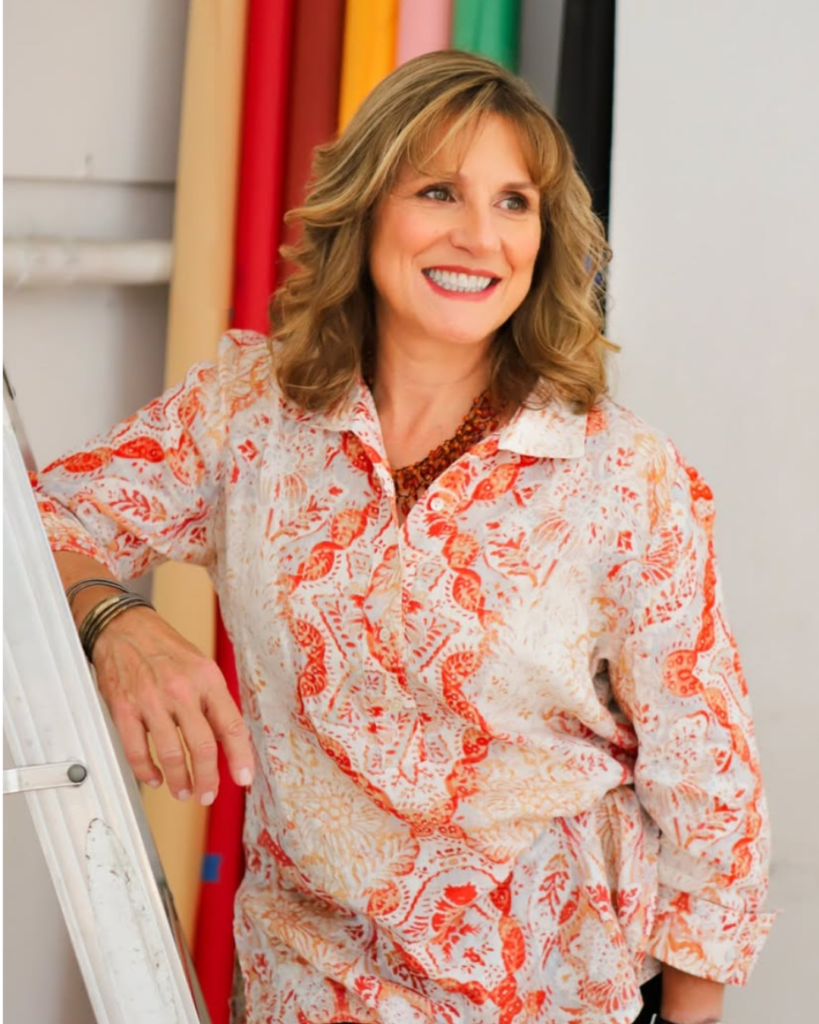
Interior designer Sharon Sherman agrees. “I love furniture that integrates lighting and power in both functional and decorative ways. It can elevate a piece beyond its original intent. Subtle underbed lighting is both sexy and safe.”
That safety piece matters. As awareness around aging in place grows—and with baby boomers holding significant purchasing power—wayfinding lighting is becoming less of a luxury and more of an expectation.

Lori Carpenter, founder of The 3rd Phase Podcast and a certified aging-in-place specialist, has long prioritized lighting in her work. “Intentionally integrating lighting around furniture supports the safety, independence, and confidence of older adults,” she says. “Subtle illumination along beds, seating, cabinetry, and pathways helps define spatial boundaries and reduces the risk of trips and falls—especially at night.”
At Universal, integrated lighting has become standard in open-storage nightstands. This gentle glow is ideal for finding glasses, jotting down a dream, or simply avoiding the shock of a bright, direct light at 2 a.m.
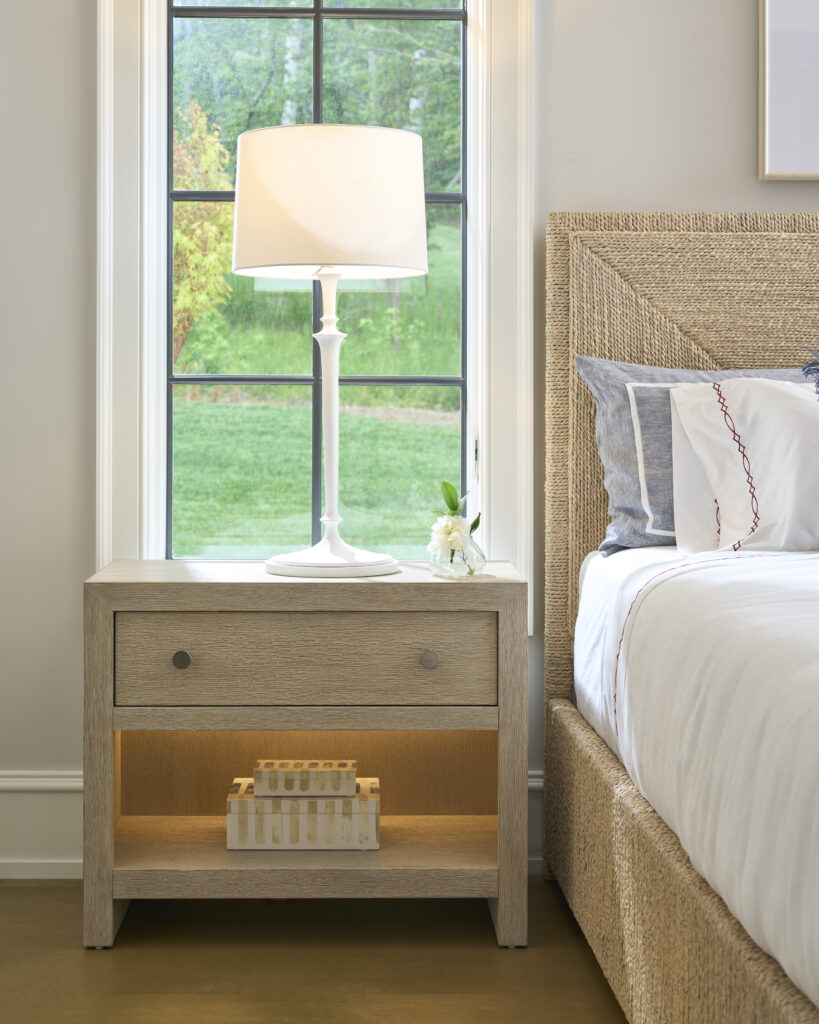
“It’s something we’ve done for years,” says director of Marketing Kayla Miller, “but starting in 2025, we made it consistent across the category.” The feature includes three brightness settings and a touch switch—small practical details that improve functionality without adding cost.
And while I’ve declared “no curios” (generally meaning no cabinets), refrigeration might be the exception.
Michael Magnani, director of product planning at SKS, points to the emotional power of light in their 36-inch integrated refrigerator and freezer columns. “Lighting is essential luxury refrigeration—not just for visibility, but for experience,” he says. “One of its biggest impacts is perceived capacity. By reducing shadows and dark areas, lighting makes the interior feel more open and spacious. While actual capacity matters, how large it feels strongly shapes satisfaction and overall enjoyment.”
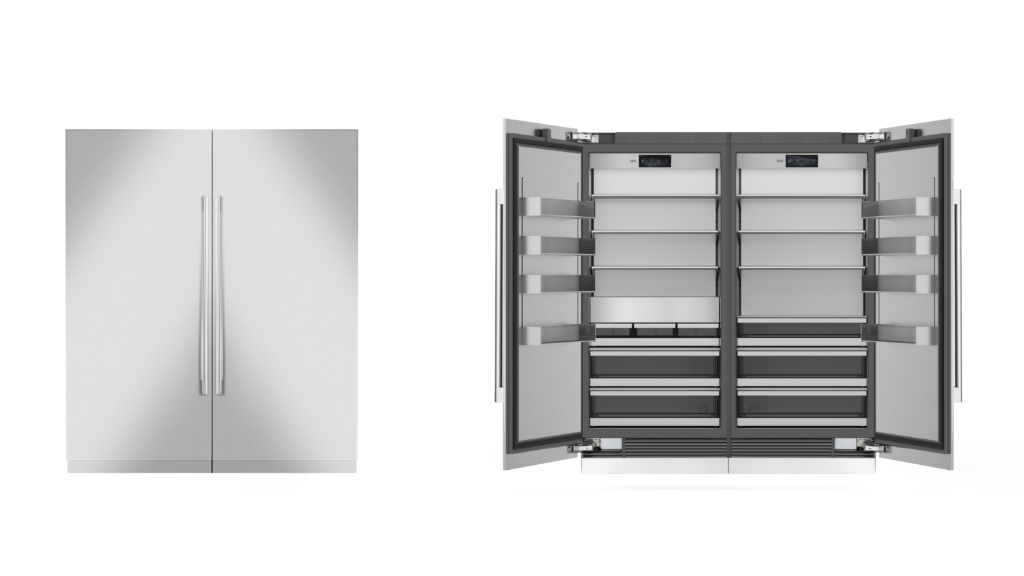
Hidden top lighting minimizes glare, while illuminated shelving moves with the contents, maintaining consistency throughout. It’s thoughtful, almost invisible—and highly effective.
Even in the realm of curios (yes, I’m going there) advances in LED technology are opening new possibilities for case goods, allowing for a consistent glow rather than spotty illumination. Award-winning furniture designer Marissa Brown leaned into this approach for a display cabinet in Stickley’s 125th Anniversary collection.
“The lighting is angled to evenly illuminate the interior,” she explains. “That became especially important because we used wood shelves rather than glass. The goal was a consistent glow that also highlights the stained-glass botanical detailing.”
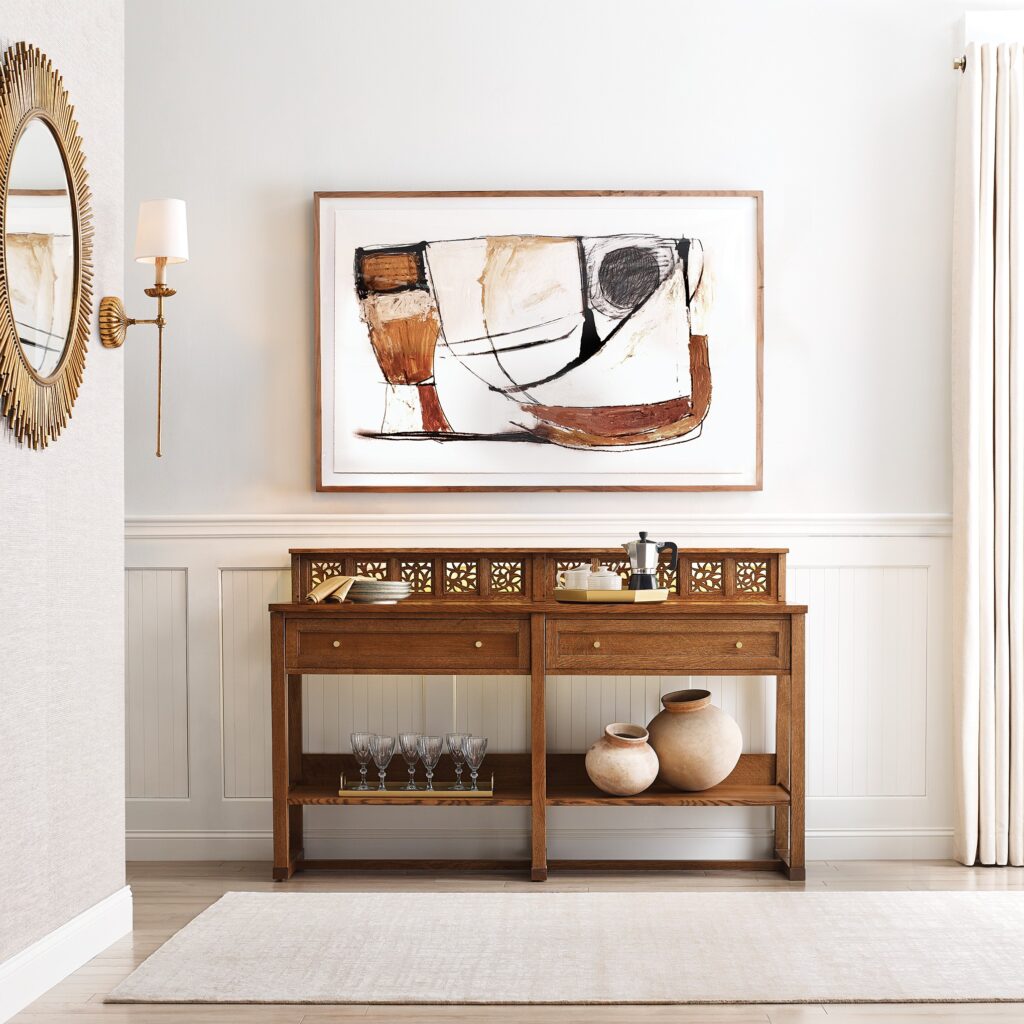
For the Surrey Hills server, Marissa used lighting to call attention to laser-cut fretwork on the gallery of the piece, illuminating a thoughtful and beautiful detail that might otherwise sit in shadow.
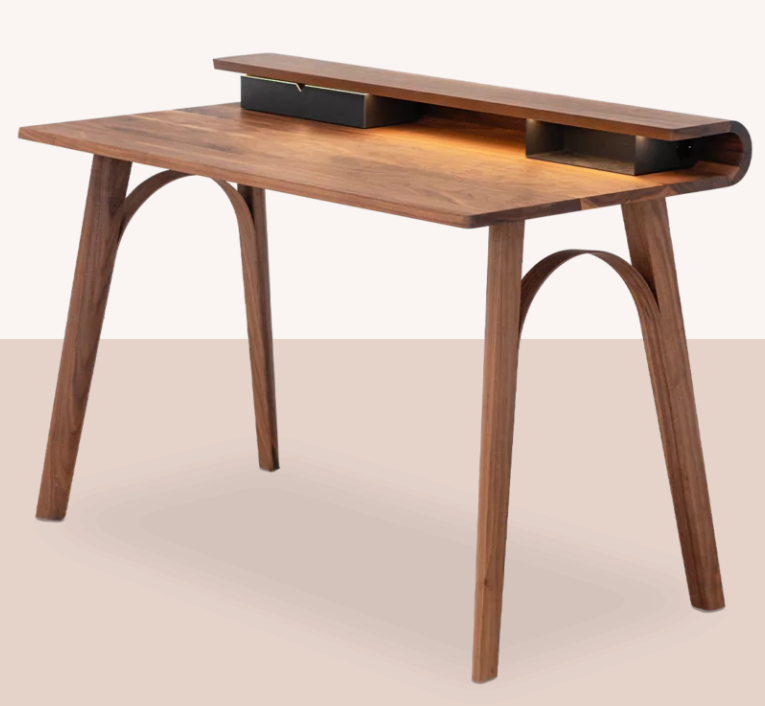
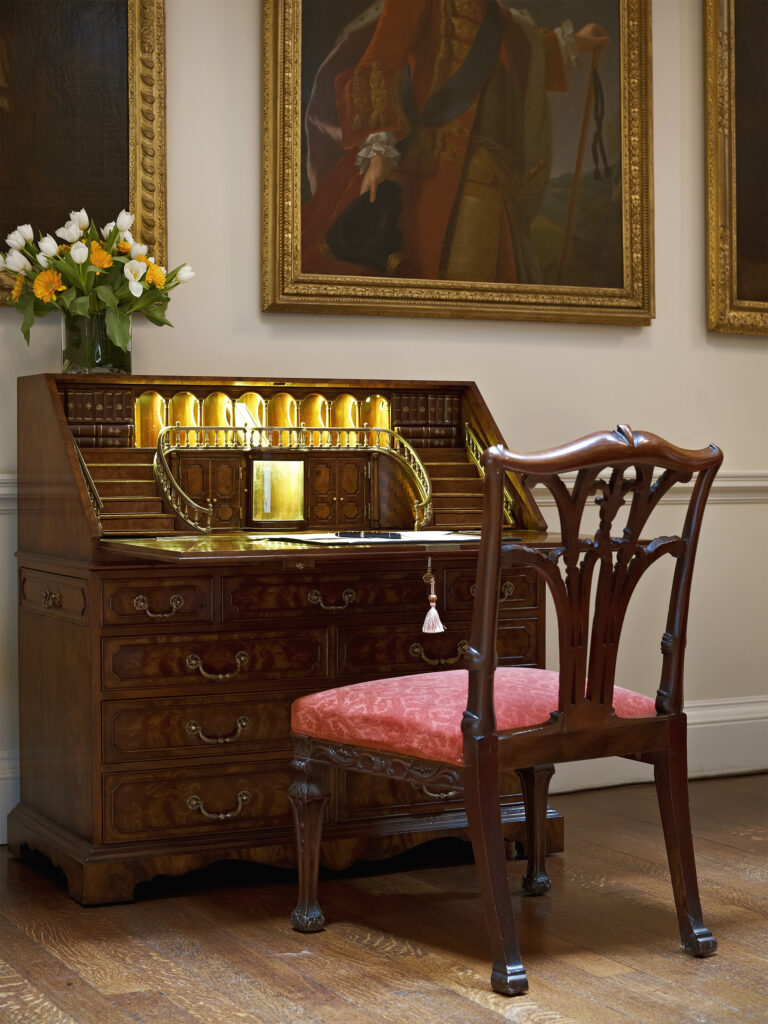
Lighting in this way celebrates the furniture itself. In Theodore Alexander’s Althorp House Desk, illumination within carved archways draws attention to the intricacy of the craftsmanship and plays a rather theatrical role. Conversely, the Arkus desk from Rodam uses light as a wash—highlighting grain, warming tone, and defining its modern silhouette.
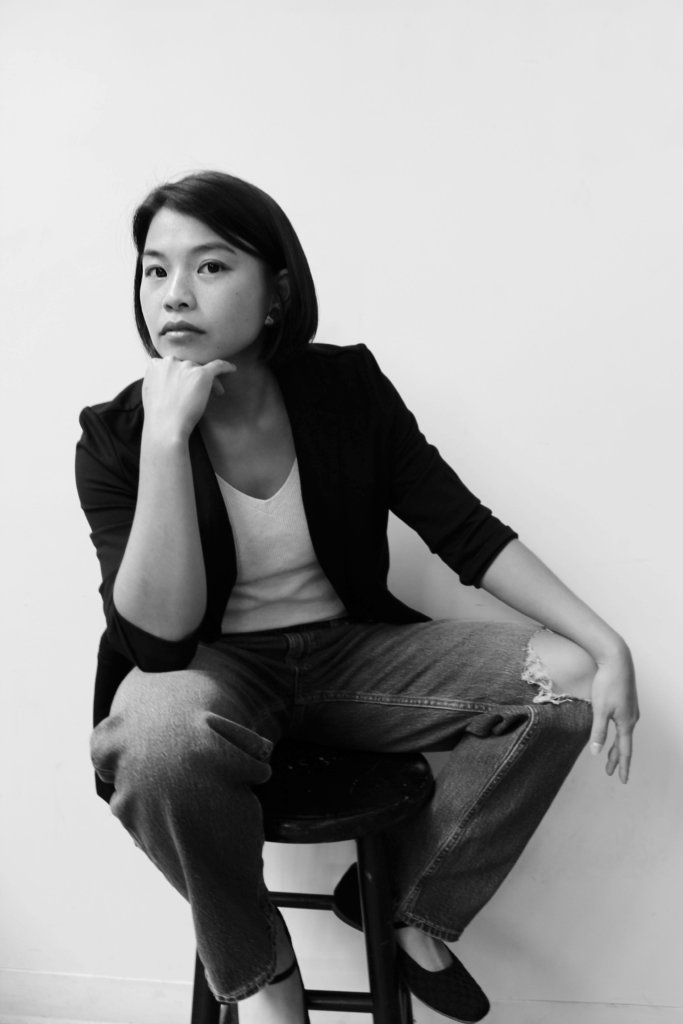
Furniture designer Annina Fremgen of Studio Fremgen, a Pinnacle Award-winner began her career at Caracole and is now at John Richard believes that lighting expands the design conversation entirely. “Lighting gives you room to explore beyond the box,” she says. “You start thinking about light versus shadow, how materials respond, how a piece interacts with its surroundings.
To date, Fremgen has used lighting in cabinet design and looks forward to experimenting beyond. “It doesn’t have to be purely functional,” Annina adds. “Lighting can be an artistic statement. It changes the whole vibe of a space.”
Hafele, a global supplier of furniture fittings, architectural hardware and integrated lighting solutions, enables that kind of exploration. Their lighting team believes, “Light isn’t just functional anymore. It’s being intentionally incorporated into designs to elevate and enhance a space…playing into circadian rhythms, mood and energy, relaxation and more.”
And that’s the shift.
When lighting is part of the object, it becomes part of its identity—not always about task, not always necessary, but often transformative.