On the Way Up: The Drapery Revival

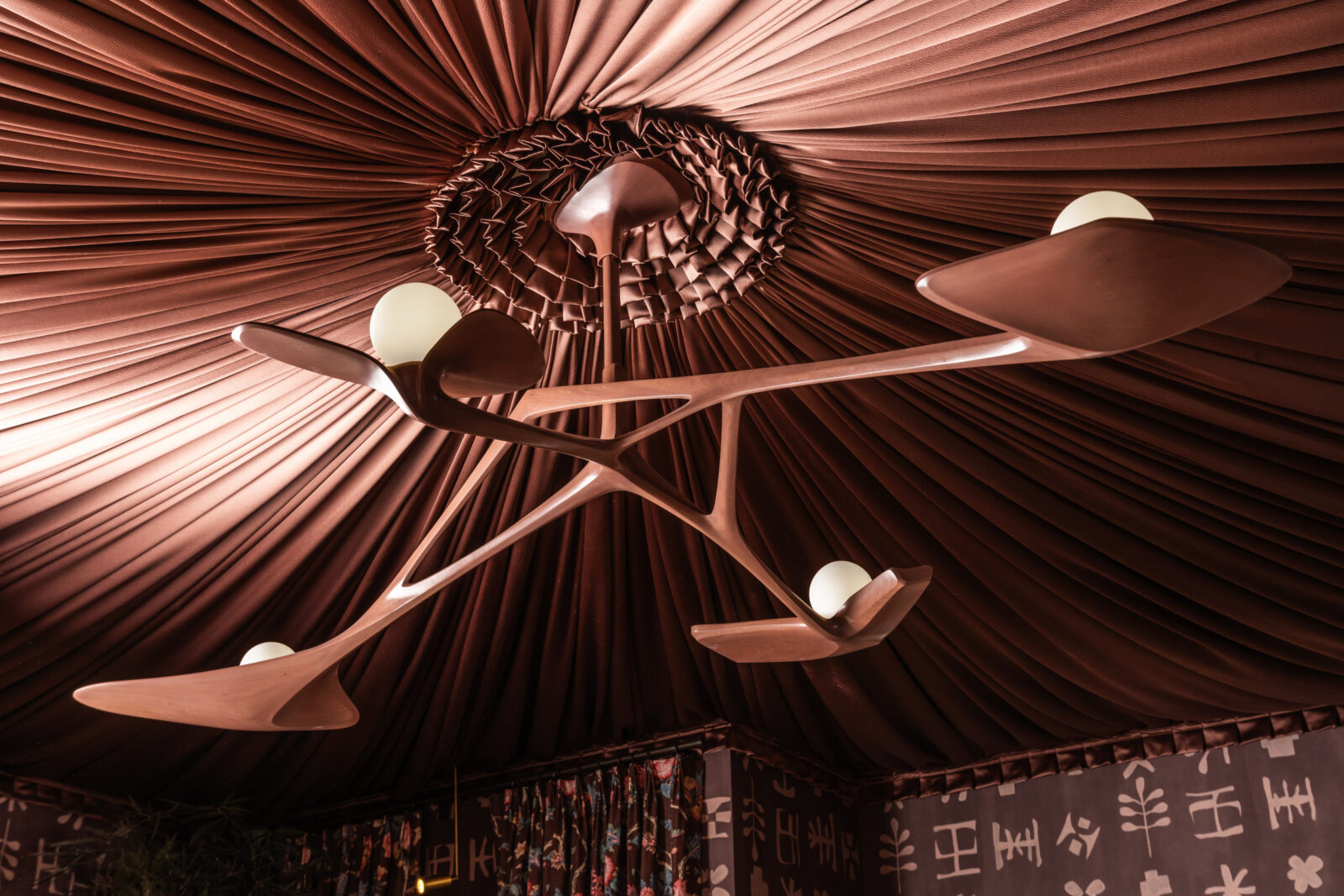
From dramatic showhouse moments to layered bedroom retreats, drapery is stepping out of the background and into the architecture of the room.
By Rachel Fasciani
Drapery is having a moment—and not just at the window. After years of minimalism, the renewed interest reflects a broader industry shift toward layered interiors and tactile materials. The shift is increasingly visible in showhouses, where designers are experimenting with drapery as a spatial element rather than a finishing touch. Across multiple spaces and designer projects, fabric is being used architecturally: framing beds, defining spaces, and adding a layer of atmosphere. Designers, including Marie Cloud, Danielle Balanis, Monica Santayana & Ronald Alvarez and Kathy Kuo, are leading the shift. Read on, design lovers.
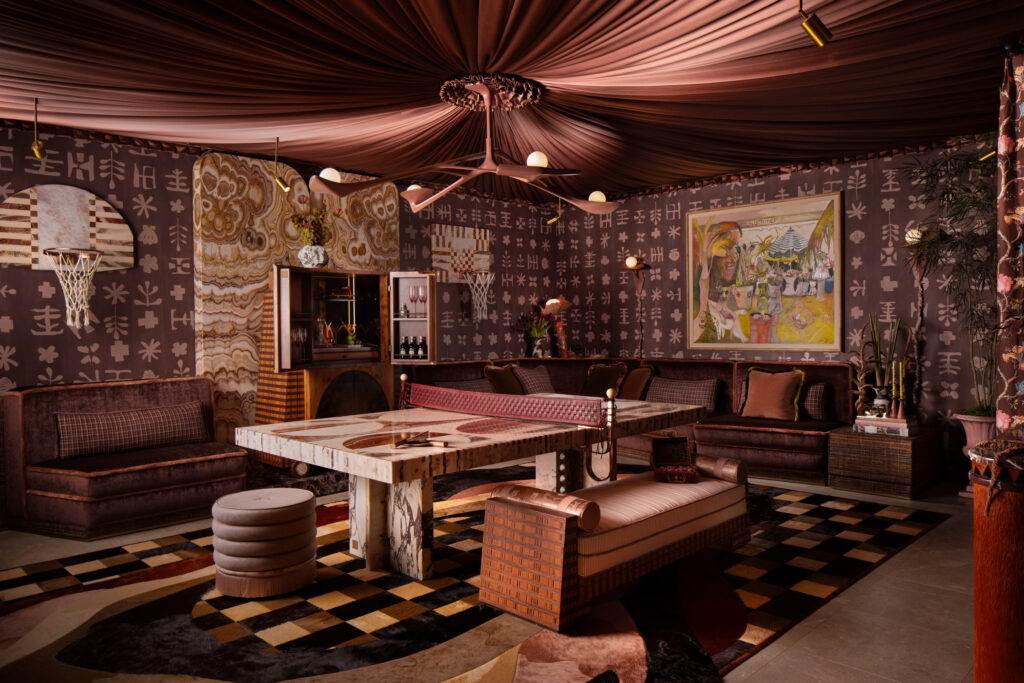
Increasingly, drapery is moving beyond window treatment into spatial design—functioning as a soft architectural element that shapes how a room is experienced. On their rec room design for last year’s Kips Bay Palm Beach Showhouse, the Principals of Moniomi Design, Monica Santayana & Ronald Alvarez, shared, “We view drapery as a versatile tool for enhancing any environment. By extending fabric into unexpected areas—to hide nooks, cover doorways, or provide division without full enclosure—we love how drapery can either command attention as a focal point or provide a subtle, tonal finish that anchors a space in sophisticated luxury.”
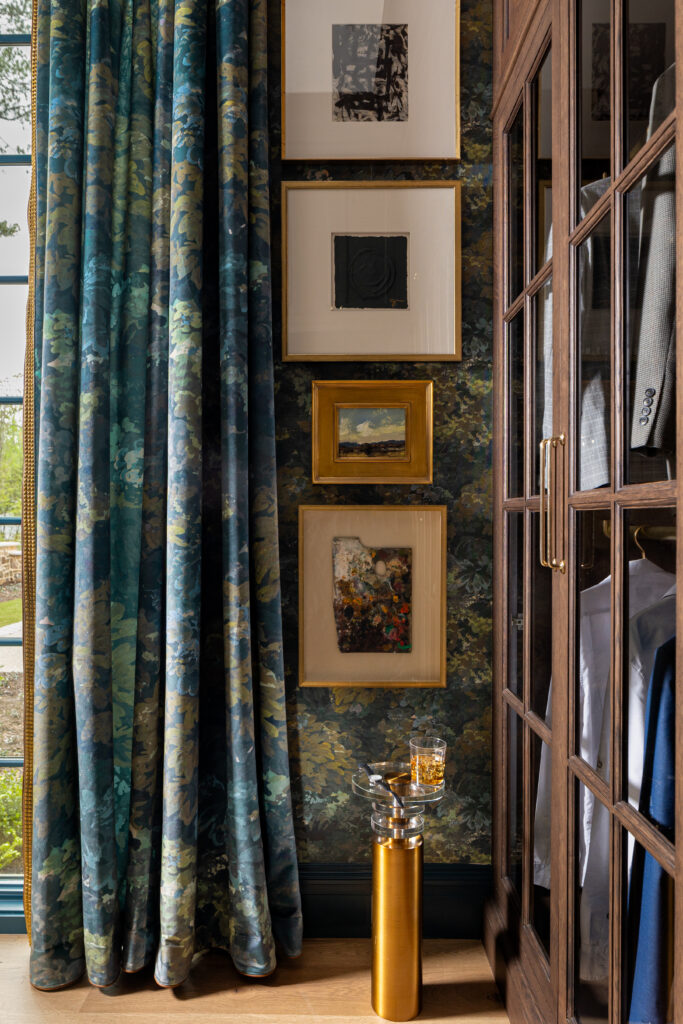
In Marie Cloud’s His-and-Hers closet at the Atlanta Showhouse, drapery becomes both visual anchor and functional design element. Reflecting on it, she shared, “Drapery has always been one of the most expressive decisions in a room, and in this space, I wanted it to do real work.” The metallic trim echoes across the space, in picture frames, a thoughtful drink table, and the gold hanger hardware. Then there is the fabric itself. Cloud continues, “The fabric is Botanical Tapestry: Midnight Forest, from my collection with Spoonflower. I designed it to live in that tension between nature and structure, something that reads almost like a painting up close but moves like a landscape when the light hits it. The colorway, those deep teals, muted golds, and moody greens, was very intentional. I wanted a man to walk into his closet and feel like the room already understood him.”
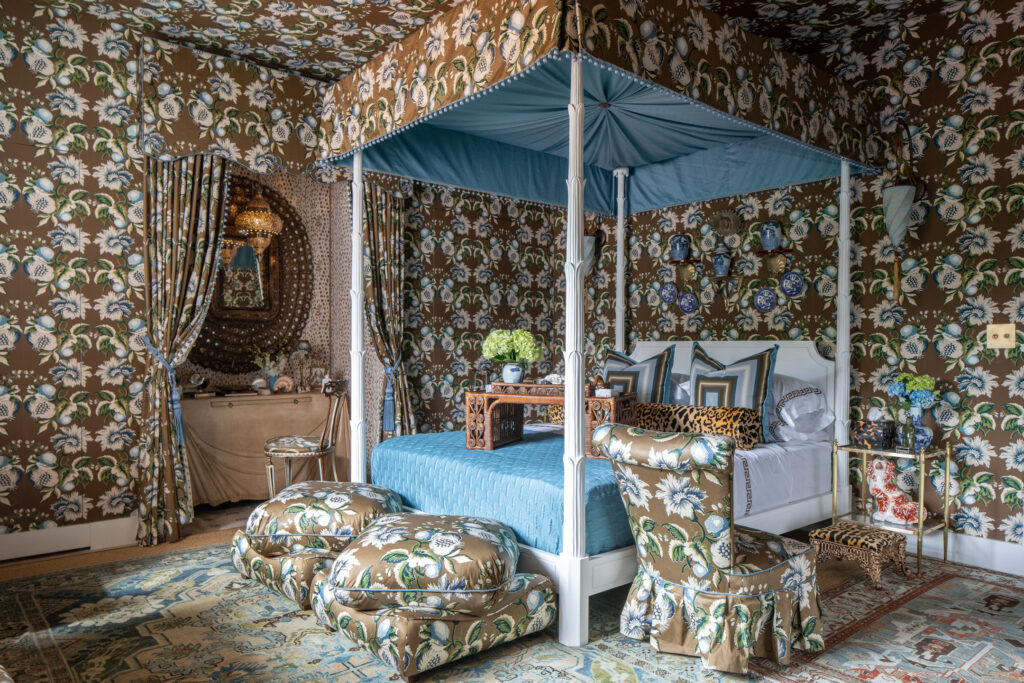
For Danielle Balanis, one of the designers for this year’s Kips Bay Showhouse Palm Beach, drapery is also the workhorse of the room as seen in the “Mame Dennis Suite”. Balanis noted, “Drapes can really set the tone, make a statement, and control the volume of the room.” The result captures Balanis’ sentiment of “more is more and bigger is better.” By using Oscar de la Renta’s Jessup fabric and wallpaper, the effect turns drapery into a spatial device—guiding movement through the room rather than simply dressing the perimeter. The result is theatrical, and exactly the kind of space Mame Dennis would adore.
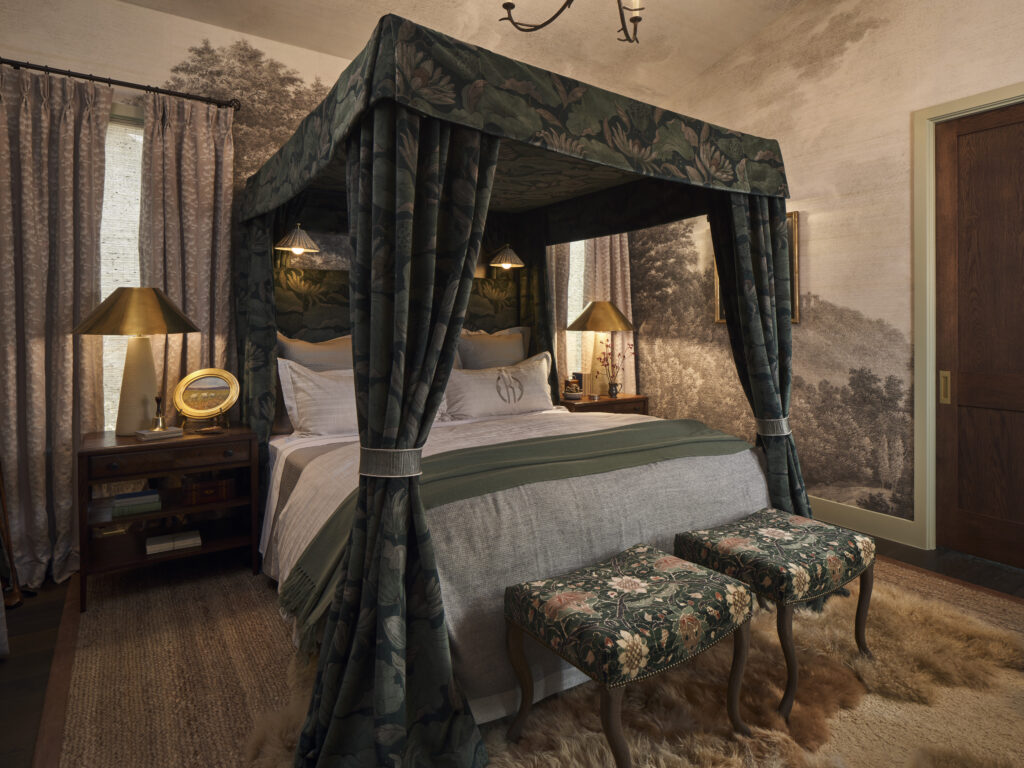
“Drapery is one of those rare design elements that does everything in a room, adding softness, scale, and drama all at once. In many ways, drapery is the difference between a space that’s decorated and a room that feels truly finished,” noted designer Kathy Kuo. The layered textiles in her primary bedroom design for House Beautiful’s Whole Home demonstrate how drapery can unify multiple surfaces—window, bed, and floor—into a cohesive sensory experience. The bed hangings are particularly striking. Created with AQ Interiors Atelier and Quilting in High Point, the deep green lotus-print fabric makes the bed the focal point of the room.
Drapery’s Next Chapter
Where does drapery move next? Cloud believes, “We’ll continue to see drapery move toward something more architectural and personal. Fabric as storytelling. Pattern as identity. That’s the direction I’m always designing toward.” And Kuo notably agreed, “My favorite rooms layer lots of textures to create a deeply sensorial atmosphere, and one of the best ways to soften a space is by adding drapery. I love the idea of using fabric to frame an alcove or act as a room divider in place of a wall. In this application, drapery becomes more of an architectural feature than a decorative touch, one that brings dimension and tactile richness into a home.”
Where does that leave us? As designers push drapery beyond the window and into the architecture of the room—framing beds, defining alcoves, and softening transitions between spaces—the medium is evolving from decorative layer to spatial tool. In the next chapter of interior design, drapery may be one of the industry’s most versaitile tools.