

Lulu and Georgia Takes Its Design Point of View Offline

The brand’s first showroom in West Hollywood brings its collections into focus, with material samples, trade support and a new place for designers to work with clients.
A photograph can introduce a silhouette. Understanding its scale, running a hand across the upholstery and seeing how it sits alongside other pieces requires a different kind of encounter. For Lulu and Georgia, that encounter is the premise of its first physical showroom — and the next step in bringing its digital business into the rooms where design decisions happen.
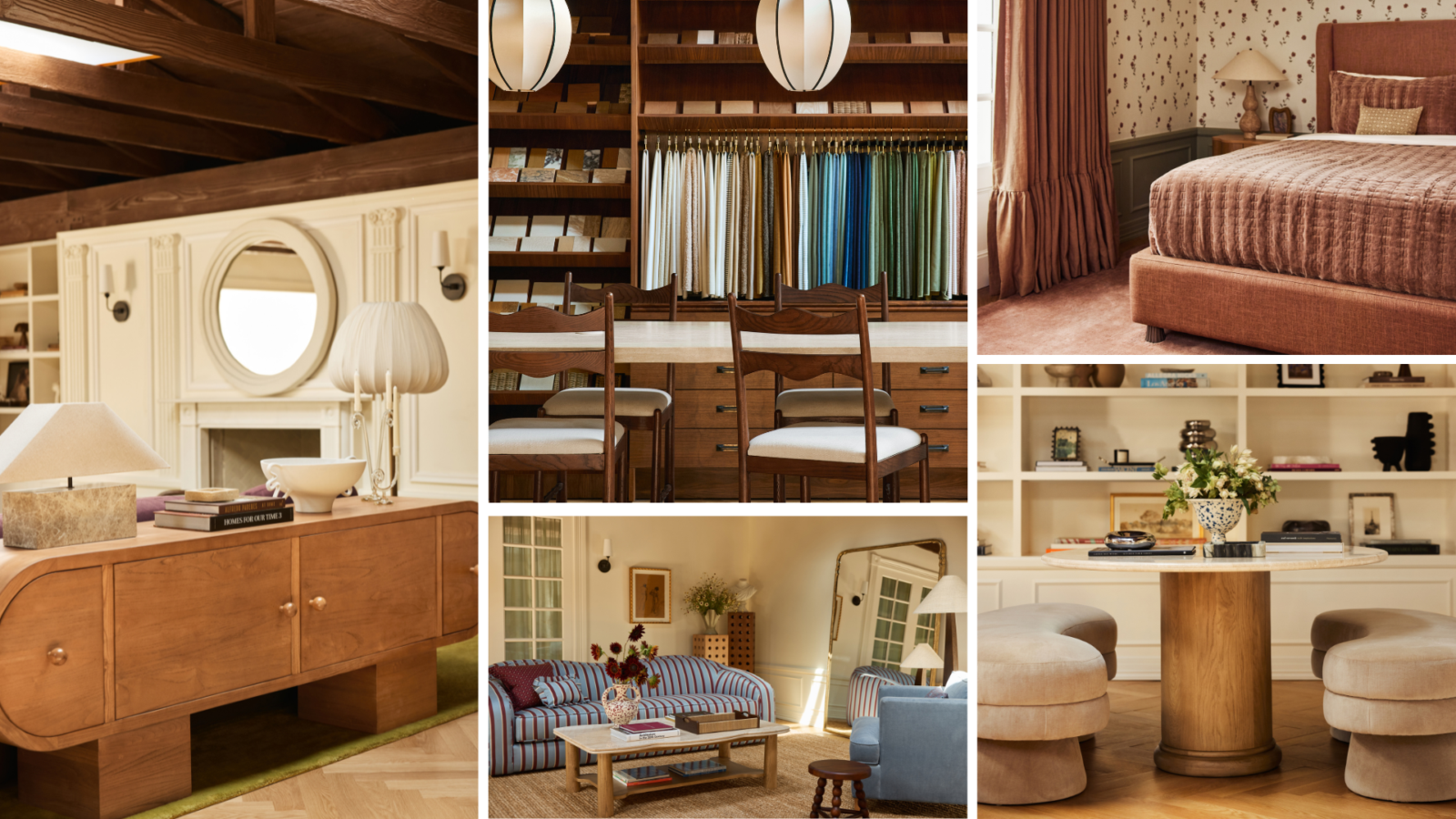
Located in West Hollywood, California, the showroom translates the brand’s online curation into a series of furnished living areas. For designers, the appeal extends beyond seeing a favorite piece in person: It offers a place to evaluate materials, consider combinations and discuss projects with the team.
“Our first-ever showroom serves as an extension of our online brand and the curation we’ve become known for, bringing our design point of view to life in a physical space,” says Julia Metaxas, senior vice president of growth at Lulu and Georgia.
“It gives customers the opportunity to experience the scale, texture and quality of our pieces firsthand and see how they can come together in a beautifully curated and immersive setting.”
A room-by-room introduction
The showroom’s residential approach gives visitors a sense of how the assortment works together, with distinct living areas that encourage a closer look at color, texture and pattern.
“We designed the showroom to feel like a home rather than a traditional retail space, with distinct living areas that demonstrate how different pieces can be styled,” Metaxas says.
That approach carries the brand’s emphasis on discovery into a setting where visitors can explore combinations with its team. It also gives designers a way to introduce clients to selections in context — an advantage when a screen leaves questions about proportion, finish or feel unanswered.
The opening assortment includes the latest Ginny Macdonald collection, the fall 2026 collection and the lighting collaboration with Eny Lee Parker, alongside pieces from Sarah Sherman Samuel, Heidi Caillier and Aimee Song.
While the showroom closely reflects the online assortment, the brand is also working to add vintage and one-of-a-kind pieces unavailable online, giving return visits the potential for a different kind of discovery.
A resource for the trade
For designers, the showroom’s usefulness will depend as much on the support behind the selections as on the selections themselves.
“We offer trade support alongside our design services team, as well as a range of material swatches across rugs, fabrics and wood finishes to help bring projects to life,” Metaxas says.
Those resources create an opportunity to assess options in person and work through questions with the on-site team, which can also assist with order placement.
“The showroom creates a new point of connection for designers to work directly with our team, ask questions and troubleshoot in real time,” she says.
The value is practical: Material samples and direct conversations can help designers make more informed selections, whether they are furnishing a single room or developing a larger project.
From hospitality to home
The showroom follows another expansion in how people encounter the brand. This year, Lulu and Georgia introduced its hospitality division, Contract by Lulu and Georgia, extending its reach into boutique hotels and restaurants.
Partnerships with The Reform Club and Sunset Tower put the brand’s products into spaces where guests could experience them firsthand.
“These experiences reinforced the value of seeing our products firsthand and understanding how they resonate in commercial settings,” Metaxas says.
The showroom brings that contextual approach to a dedicated brand environment, allowing visitors to see how individual products contribute to a complete space.
Lulu and Georgia also plans on-site programming and seasonal events to connect with West Hollywood’s design community. Metaxas says those exchanges will help the company understand designers’ needs and inform its evolution.
For now, the focus is on establishing the showroom and learning how customers and designers use it. But the ambitions extend beyond one address.
“We see significant potential to grow our in-person presence, and view this location as the first step in a broader retail strategy,” Metaxas says.
For designers, the showroom’s deeper value lies in resolving the questions an online selection leaves open: whether the scale is right, how finishes relate and which materials best serve the project. With swatches, trade support, and an on-site team available to discuss selections, place orders, and troubleshoot in real time, it can turn sourcing into a more informed, collaborative process. Seasonal collections and planned vintage finds add reasons to return, while ongoing dialogue gives designers an opportunity to influence how the brand serves them. The promise is greater confidence in what they specify — and a more direct relationship with the people helping them deliver it.