
A conversation on creative rigor, brand evolution, and the shift from aesthetics to mindset.
By Jane Dagmi
I was on Instagram recently and noticed that American Leather’s feed felt different—unexpectedly edited, purposeful, pithy. A flock of tiny skiers sliding down the slope of a chair arm. A sleeper sofa adorned with a cascade of award ribbons. Less explaining. More suggesting.
I wanted to hear about the shift from the person shaping it.
Meet American Leather’s creative director, Lance Trachier. In this role since early 2025, Trachier naturally cares about how the brand looks and moreover is refining how it thinks.
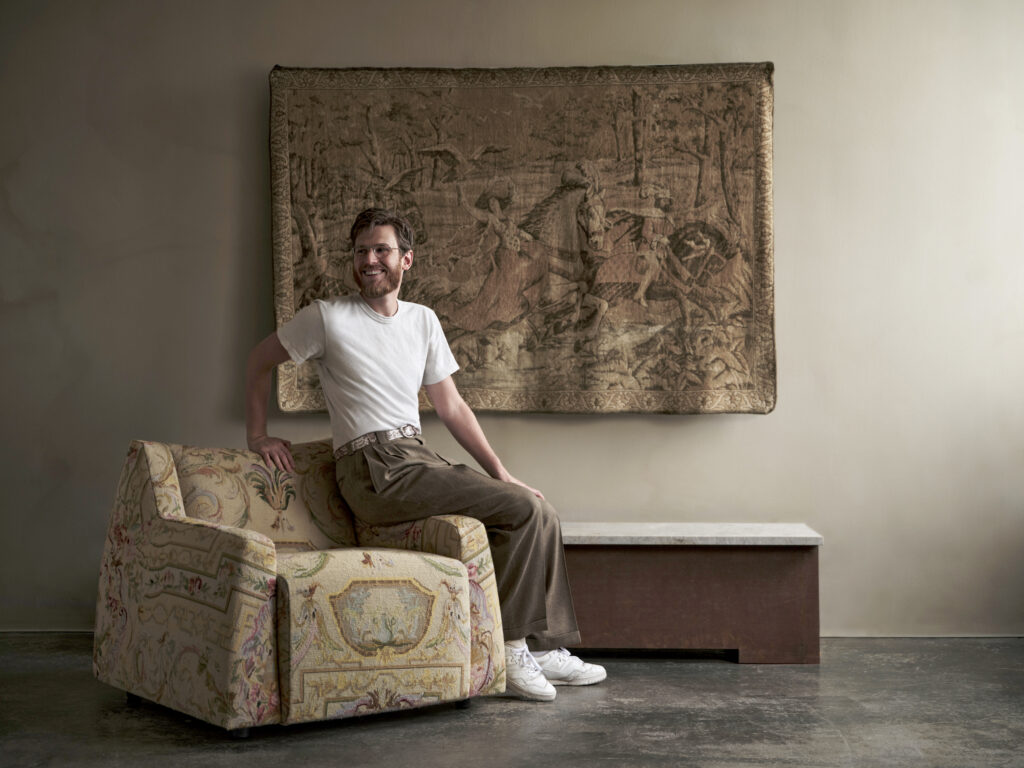
The son of two educators—his mother a math teacher, his father a history teacher—he grew up with a healthy respect for structure and story. The youngest of three and a self-described “curveball” in the family, Trachier was often armed with a pair of safety scissors, cutting, gluing, collaging, and staging miniature productions at home. In high school, he did what many creatively inclined kids do before anyone asks them to choose: everything.
But Trachier wasn’t interested in making art in isolation. He wanted to bring people into his world—to make something consumable, something that held attention. “I always loved the idea of storytelling and art mixed in a way that people could engage with,” he said.
He imagined becoming an illustrator. Then, an observant art teacher suggested he look into graphic design. That suggestion led him to the University of North Texas, where he studied communication design. There, Trachier absorbed an understanding of creativity that has shaped every professional pursuit since.
“It wasn’t just about making things that weren’t ugly,” he said, only half joking. “It was about learning how to think.”
The program was notoriously rigorous, designed less to produce stylists and more to train problem-solvers. Students were taught to generate ideas, avoid creative ruts, think expansively—then narrow quickly and decisively. Creativity wasn’t positioned as a gift. It was a process.
“I’ve never been like, ‘I don’t have an idea,’” he told me. “I’ve just never been unequipped.”
That sense of being equipped—armed with tools, frameworks, and mental agility—is embedded in how he works today. Creativity, in his view, isn’t mystical. It isn’t precious. And it doesn’t wait for inspiration to strike.
“It’s a trade,” he said. “There’s rigor, there’s structure, there are tangible skills. It’s almost like a science.”
That mindset served him well right out of the gate. Hired by an ultra-boutique Dallas-based branding agency called Swoon, he was part of a small team—he was employee number four—with big clients and little room for hesitation. When the firm launched an interiors division, one of their earliest projects was reimagining a century-old historic hotel. The experience was intense and he loved it. More hospitality projects followed. He stayed at Swoon for a decade.
Leaving wasn’t easy. The relationship he developed with Swoon founder, Sam Sano, was layered. “There were days she felt like my mom, my sister, my best friend,” he said, noting that they are still very close. “But at some point, you realize you want to see what you can build on your own.”
In 2022, Trachier relocated to Atlanta, where he stepped into the role of creative director at Jaipur Living—a rug and textile manufacturer with a strong foundation and an appetite for evolution. The challenge wasn’t just to refresh the brand, but to rethink how it showed up entirely. Rugs are beautiful, essential—and often overlooked. They live under everything else, literally and visually. Lance started asking a different question: What if they appeared elsewhere?
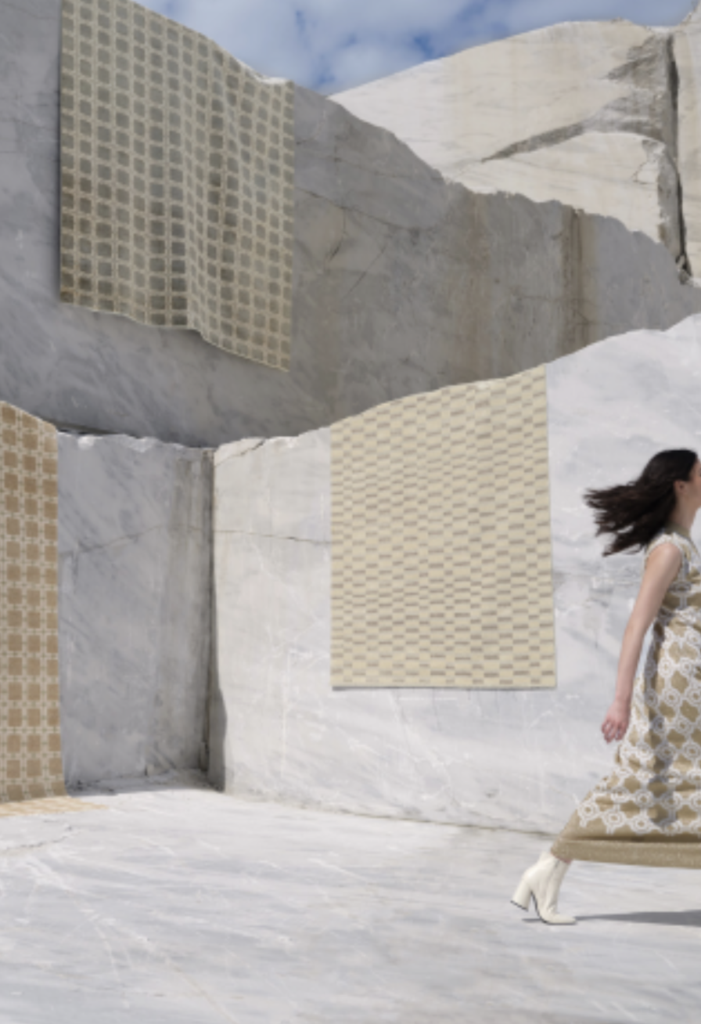
Campaigns became more fashion-forward, more conceptual. Rugs were styled with models, placed in unexpected environments, photographed outside the traditional confines of the home. This was the first time he was fully responsible for shaping not just the output, but the point of view. A key ingredient in that success was trust between Lance and CEO Asha Chaudhary.
“I think I’ll always feel a little bit parental about that brand,” he said.
When Trachier arrived at American Leather, the groundwork had already been laid. Under the leadership of President Veronica Schnitzius, the company had committed to a brand refresh. With a small team, Trachier builds on that vision. Through open brainstorm sessions, he pulls in voices from merchandising and product. Ideas are mapped, stretched, tested—then, in his words, reduced.
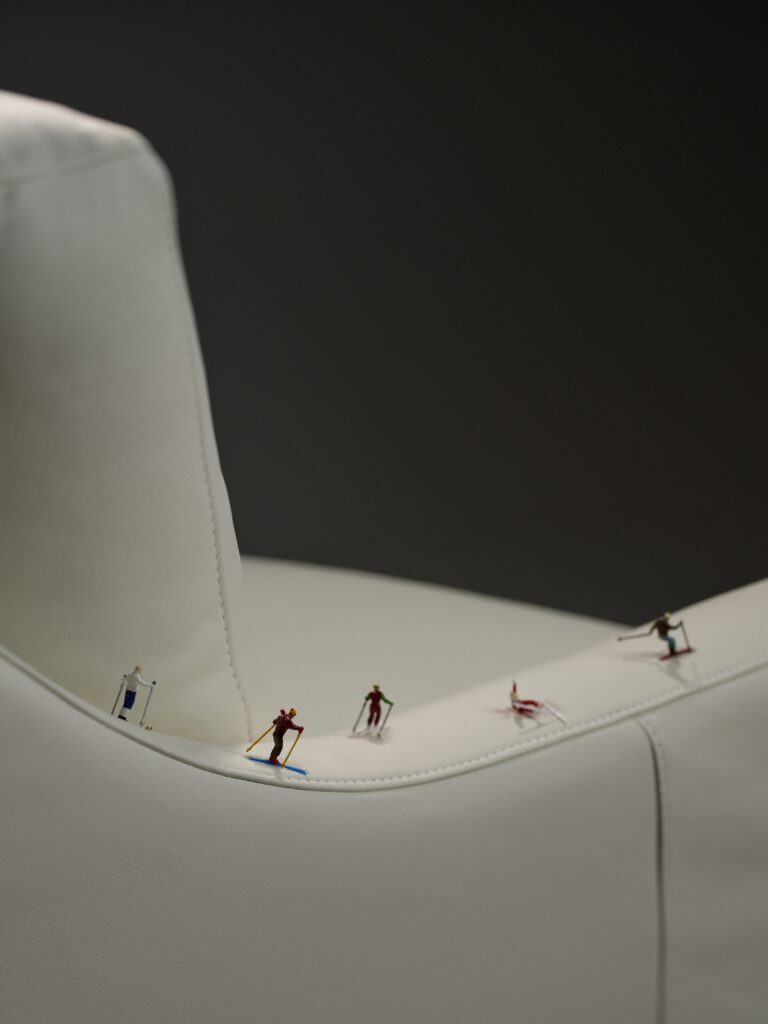
His approach is equal parts instinct and analysis—creative direction shaped by vision and performance. What resonates. What gets ignored. What invites curiosity. He’s also let go of some long-held beliefs about branding.
“I can’t believe I’m saying this on record,” he said, “but in some capacity—who cares what your fonts are? Who cares what your brand color is? You can’t hang your hat on a font and a color, it’s not enough to build a brand. Your brand has to be the way you think.”
At American Leather, that thinking is showing up most clearly in content—particularly in social media, where the goal isn’t conversion, but perception. You can’t click an Instagram post and buy an American Leather sofa. That happens at retail. So instead of trying to sell, Trachier wants to intrigue, even humor.
“My secret sauce is taking all of that and boiling it down,” he said. “Until it’s really clean, really concise.” The point isn’t to explain everything. It’s to invite someone in.