
Beyond ‘Design Star’: How Britany Simon Built a Business Around Doing What She Loves.

The Scottsdale designer shares the business strategies that keep her profitable, inspired and focused on the creative work she loves most.
By Julie A. Palm
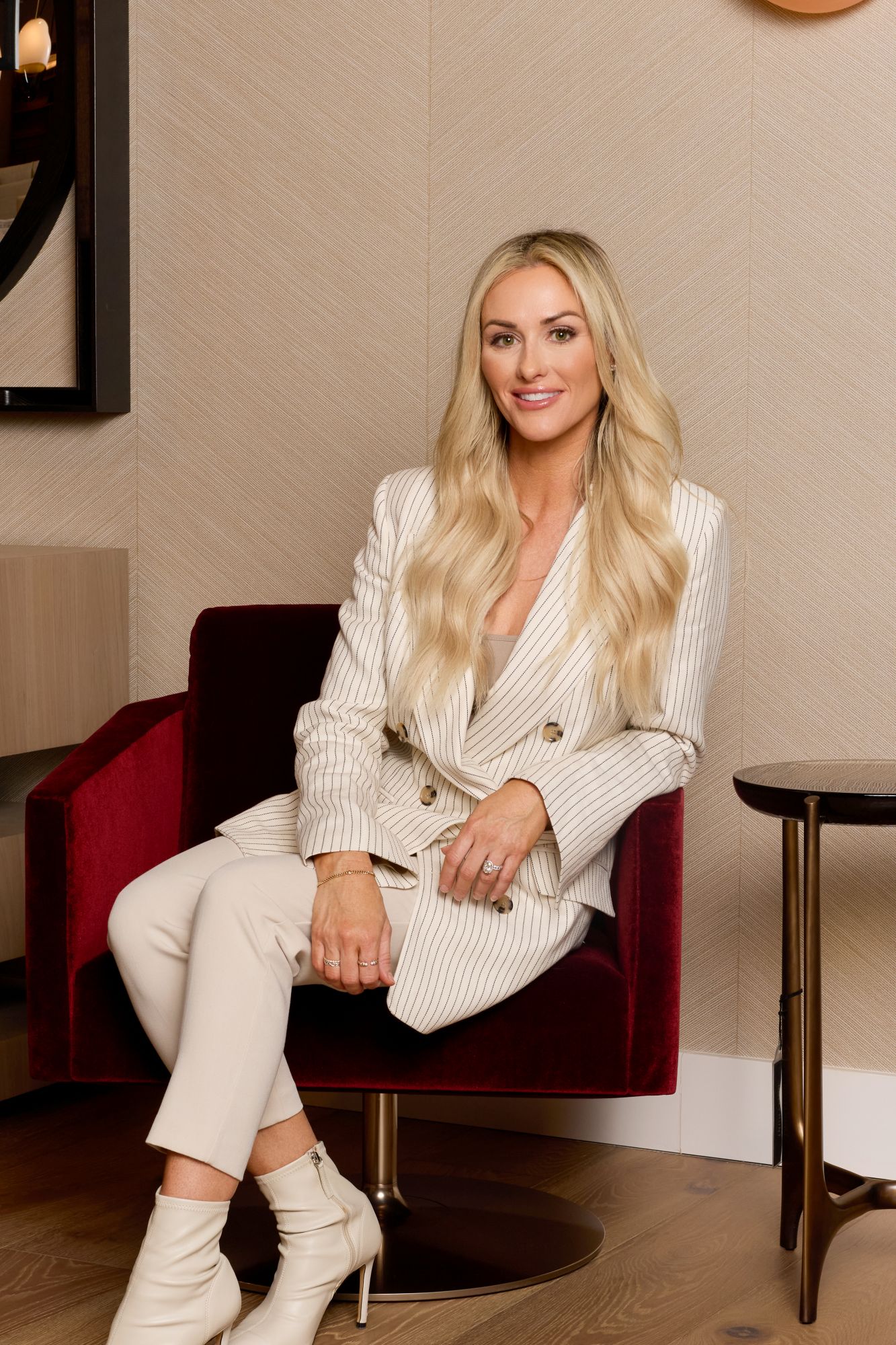
Britany Simon is no longer an “HGTV Design Star” but she is a star of luxury interior design in the fast-growing Scottsdale, Arizona, area, where she founded her eponymous boutique firm, Britany Simon Design House, about a decade ago.
Simon grew up in the world of home design. Her father was a residential developer and after she studied business and interior design in college, she worked in a couple of design centers. Seeking a more creative outlet, she started taking on design clients — mostly friends and family — as a side business.
“I was watching ‘Design Star’ one day and up popped a screen: ‘Do you want to be a Design Star?’ Auditions were in Vegas, a 4 ½-hour drive from here,” she recalls. “I thought maybe I’d just go for fun. I threw together a portfolio and auditioned and landed a part.”
Simon spent six weeks filming for the competitive design program, which, as HGTV explains, gives undiscovered designers a “hope to catapult into the big time by winning his or her own show.”
“I loved the creative side of getting to put my hands into everything when it comes to the interior,” she says of the experience. “It was the first time I’d really finished a space, from construction down to all the furnishings, and I was obsessed with that.”
Simon’s episodes aired in 2012, and while she didn’t win her own TV show, she went on to appear on several design-focused TV programs, and the experience did catapult her career. She worked for a time as an independent contractor with an interior design firm in Scottsdale and eventually grew her own firm, which is now a team of four specializing in residential projects. About half are new construction or full remodels and the other half are what Simon calls “micro-renovations” focused on furniture updates.
“Once ‘Design Star’ came out, I landed some great projects — some clients I still have today,” Simon says.
Her firm recently moved into new office and studio space Simon purchased in January, and she plans a grand opening in October after finishing some renovations.
The design scene in Scottsdale
Britany Simon Design House has occasional projects outside the Scottsdale area, but the region keeps the team busy. Scottsdale is part of the Phoenix metro area and within Maricopa County, which, according to the U.S. Census Bureau, saw the largest gains in housing units from 2023 to 2024. There’s plenty of land, Simon says, for sprawling new construction and in older areas, clients are tearing down existing structures and rebuilding. Her typical project size is 8,000 to 12,000 square feet.
“I shouldn’t have issues for the rest of my career if I do things right,” she says. “We’re not going to run out of space for houses.”
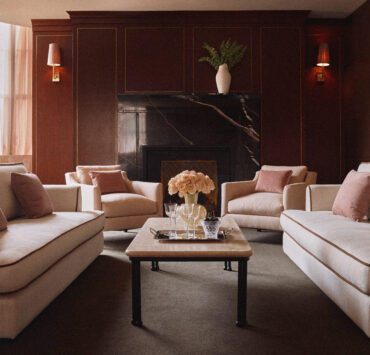
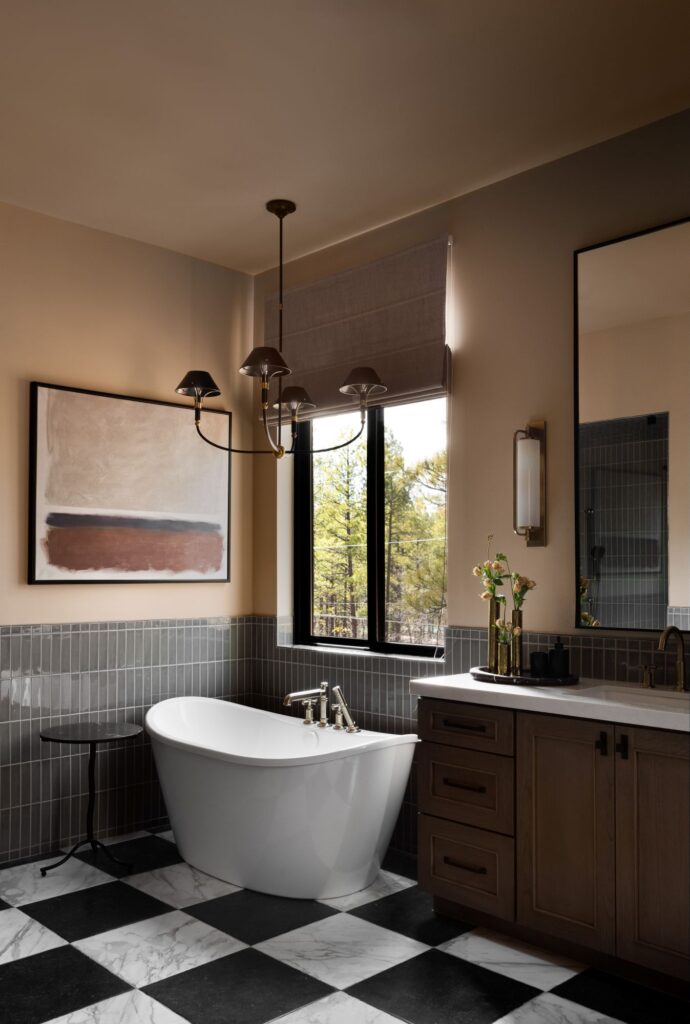
In terms of interior design preferences in the area, Simon says, “we have a transitional, more organic modern style here.”
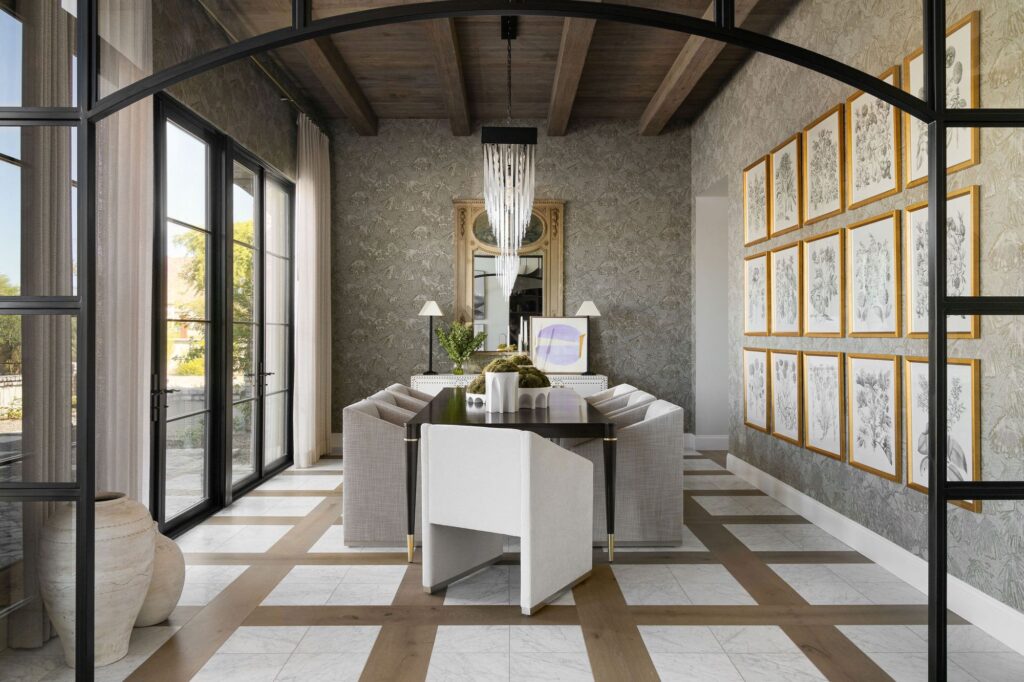
“We’ve moved away from farmhouse, thankfully … We’ve got a lot more people coming in from California (and) after Covid, we’ve had a lot more transplants from other places, bigger cities. So, we have a little more of a resurgence in contemporary design, which I think is fun,” she says. “I’m hoping to see more of that.”
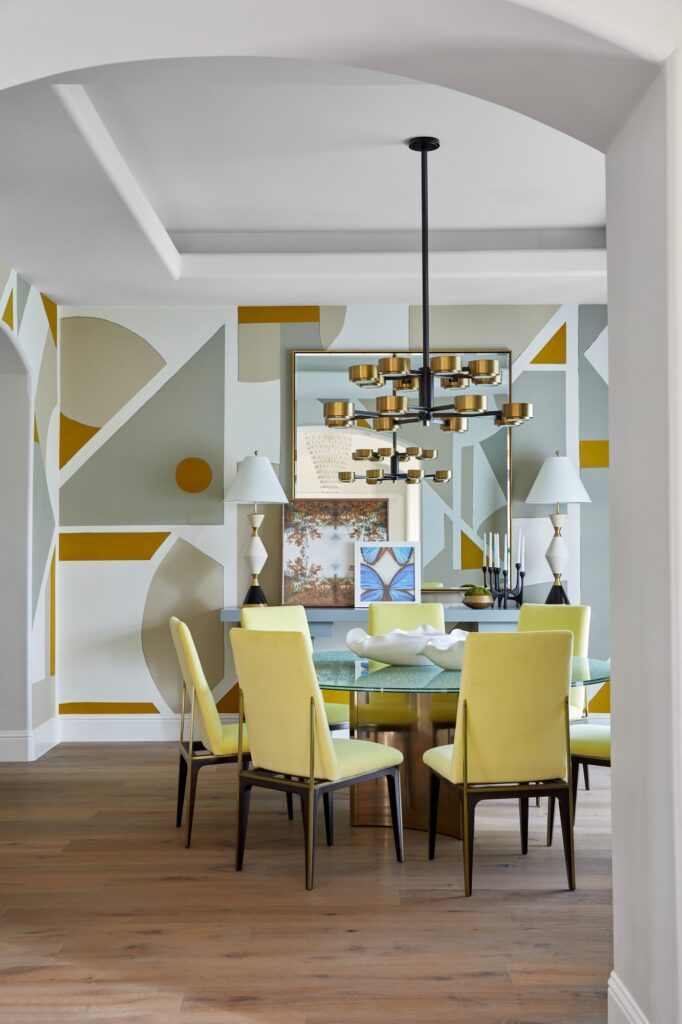
Two favorite projects include Trovita Place, a Tuscan-style, compartmentalized home that Simon and her team opened up to create an art-forward showplace. “That was the most fun because the client was so bold and out there with their design style,” she says. “It was a fun, collaborative process — and they pushed us to think more out of the box, and we love to think out of the box. … Everything turned out really dynamic, bold and unique.”
Simon recently finished a 4 ½ year project — her longest ever — renovating a house built into a mountainside, “so you’ve got these cave-type spaces, one being the garage and another we call the spa cave downstairs,” she explains.
“It’s unlike anything we’ve ever done because it’s so unique and different. It’s a very, very neutral palette, very texture-heavy,” she says. “We sort of gained a little bit of a reputation for using color and playing with color, which we do love, but this represents another facet of what we can do.”
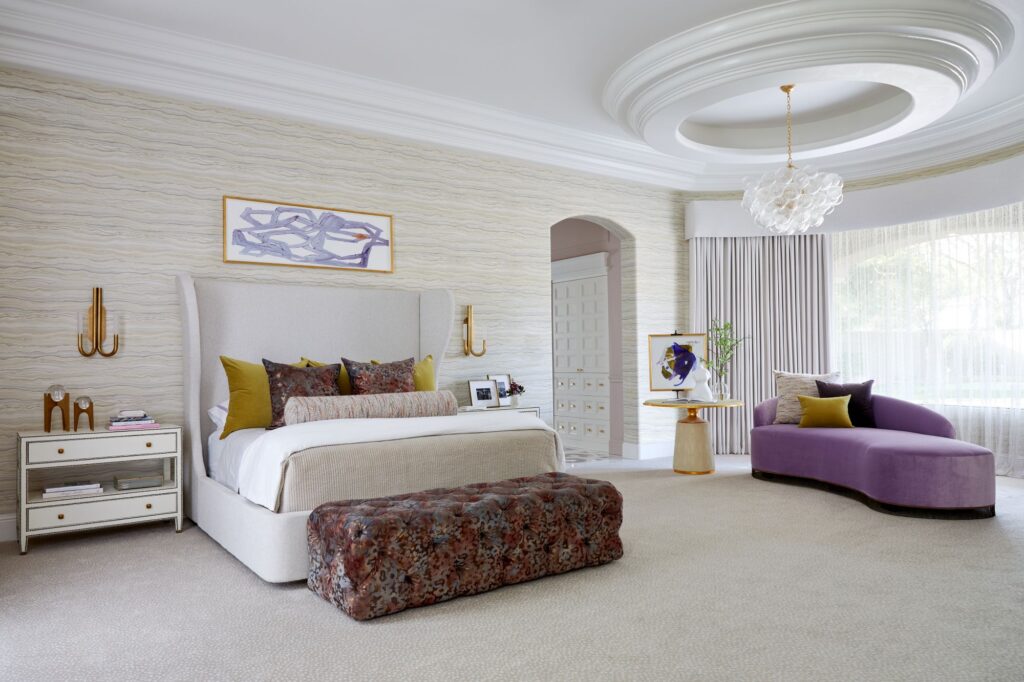
I talked with Simon more about how she has built her business and how she continues to evolve to take advantage of opportunities that fuel her creative passions.
Design News Now: What’s the most important or useful question you ask new clients?
Britany Simon: One of my favorite things is to ask about a Tuesday. Like, “Tell me about a Tuesday,” which is a way of asking, “What does your normal day look like?” Obviously, we’re going to look at pictures and their inspiration … but I want to also understand how your home functions and how you function in your day-to-day life. … The reality is they’re probably not going to change what that routine is. … It’s making sure you design the home around those routines. … If we’re designing a home that doesn’t function better for you, then we’ve missed something substantially.
DNN: What do you take with you to every client meeting?
BS: I have a digital notebook called reMarkable. Everybody in my office has one. It’s not an iPad. It’s really just a notebook that you write in digitally and it has an app that syncs to your computer. I got this originally because I’m a notetaker, a scribbler. I take notes on anything that’s in front of me, Post-it notes, a scrap of paper. I realized I needed to stop doing that because if I lost a Post-it, then my notes would be lost. We got a reMarkable for everybody in the office so we can keep our notes in one place and then we can upload them into our client files in Dropbox. … And I bring a laser measuring device and then a standard measuring tape to every meeting.
DNN: How do you approach the subject of budgets with clients?
BS: When we are talking about the furniture budget, we usually give them a general idea where we’ll say, “to start is $100 a square foot. That’s sort of your beginning midline for a furniture budget. But then you can have a better and even better budget that’s like $150 (a square foot) or $200 (a square foot).” That gives them a general idea of where we would start with furniture. We used to give a more particular breakdown, taking it room by room, and that was absorbing way too much time. So, we kind of came up with a number that really seemed to hit our budget numbers and where we needed to be. And then … for new construction or a full remodel where we’re touching every space, we can do a flat-rate design fee.
DNN: How do you bill for the furniture budget and design fee
BS: For the flat fee, we’ll break that into payments, like monthly payments, for however long we feel that project is going to take. … When we start making furniture purchases, we do take that 100% upfront because we typically order all of it at the same time. … And we do have a 15% to 18% freight charge that covers the costs of procurement from the manufacturer to the receiver, the receiving costs, storage, and then the on-site install.
DNN: How do you approach the topic of furniture markups?
BS: We talk about it together, and then it’s also in our agreement. We talk about that we get a discounted rate from the manufacturer’s MSRP — typically what they’re saving off MSRP is 25% to 30%. So, we could explain that we are sharing our discounts … (with them) and we make a margin on that. … (Clients) are seeing the value in using us to purchase (furnishings) because they’re getting it for a discounted rate over someone else that would walk in off the street and pay full retail.
DNN: What’s a change you’ve made in your business that’s made a real difference?
BS: We did implement more of a project minimum. … Right now, it’s basically a 200-hour minimum. … Because we’re a small firm, we can only take on so many projects at a time, so we had to be more strategic about who we said yes to. That’s helped keep us within a client (base) that values what we’re doing and makes it worthwhile for everybody.
DNN: Who are some of your favorite home furnishings vendors?
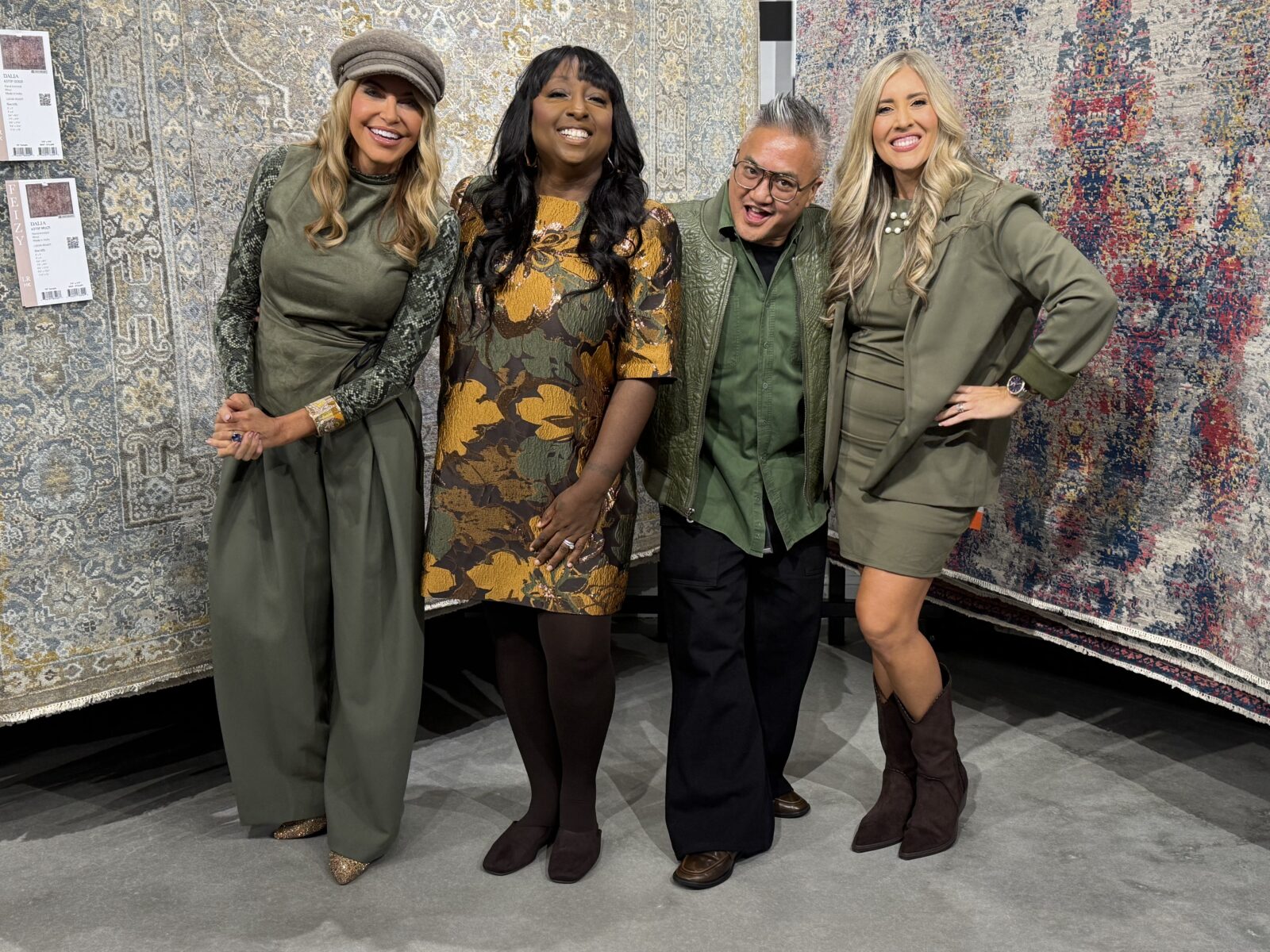
BS: To me, it really comes down to our sales rep and how helpful they are to us because that’s everything. I would say Bernhardt is great, and luckily that’s one of my favorite reps, really from the start of my career. He kind of showed me the ropes. He was like, “Hey, you need to be marking this up. That’s how designers make money. You send (product) to a receiver. Here’s my receiver.” Because I didn’t know. He was instrumental for me at the beginning. And luckily, their offerings are great. … We use Vanguard a lot and CR Laine. We source from Left Bank and Wendover for art. For lighting, Visual Comfort is always our go-to. They always have what we need, and it fits so many different styles, which works for us. And again, our rep is great and goes above and beyond for us, which is amazing. For rugs, we have a local store here called Floor Styles, which carries Loloi, Jaipur, Surya, but then they also carry Stark, for when we need a bigger rug. Spaces are so big here, we’ll often bind carpets into rugs. That showroom is best for us because they have all the major players. … And then we do a lot of custom. We have a lot of great trades and craftspeople here in Arizona.
DNN: What markets do you attend?
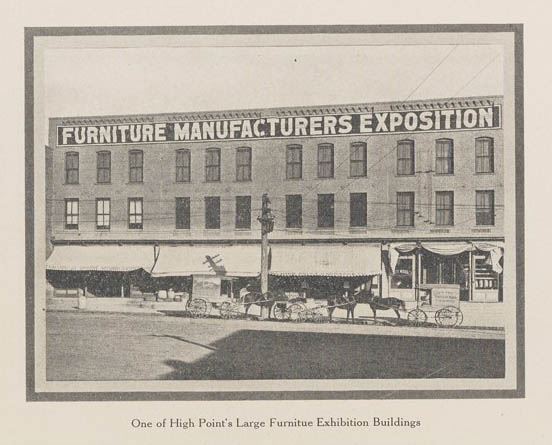
BS: I would say High Point makes the most sense if we’re going to do a trip. We don’t go every year; we go every two or three years. … We do like to pop into the Vegas market every so often if we need some quick accessory shopping because it’s a quick flight. I went to Salone del Mobile in Milan this year, and it was kind of a game changer. It was really, really inspiring. … The Italians know how to do furniture and lighting. … I think I will probably continue to make that either a yearly trip or every other year because I came back fired up.
DNN: What does an ideal workweek look like for you?
BS: This year, I started to be more mindful of planning out my workweek because, as a business owner who’s also trying to do design, I can get really wrapped up in the day-to-day stuff, and then I’m like, “Oh, I didn’t do any design this week.” So, I’ve structured my week where Mondays, Wednesdays, and Fridays are design days, meaning I’ve blocked off the day to work on design and move the needle on client projects. Speaking with potential new clients is the only other thing outside of design that I like to do on those days. And then Tuesdays and Thursdays are when we try to do all the meetings — some client meetings, vendor meetings, meetings with my team.
DNN: Where do you turn for advice?
BS: It depends on what I’m trying to solve. If it’s a business question, I do have a couple of design friends that have become my network. We’re close to each other, and I value their opinion. … Or I’ll ask my husband, who runs a showroom. … He sells to designers, so he understands the business. And ChatGPT is great. It’s become my attorney, my counselor, my therapist, my doctor sometimes. … It’s like Chad (Simon’s name for her ChatGPT agent) knows me now.
DNN: What would you like to be doing less?
BS: Oh, the HR stuff. I did hire an assistant this year, which has been a game changer. … I tracked what I was doing every day for two weeks, and most of it was stuff that I could take off my plate. That’s when I decided I needed an assistant to handle those things. She started in January. … I’ve already taken a lot off my plate that I didn’t want or need to do so that I could focus more on design. I’m still actively giving her more and more to do. … I think oftentimes as a business owner, you end up doing less of what you got into the business for. I definitely want to be mindful of that because there were years when I was not looking forward to going to work, and I didn’t know why. I’m like, “Why am I dreading Monday?” And I realized we weren’t busy enough for everybody to have enough design work to do within the team, so I found myself doing business strategy, HR, PR, all things instead of design. … I don’t want to be a big firm because I don’t want to just manage people all day. I want to be able to have my hand in the actual creative aspects of the business while still having time to grow it and run it.
DNN: I must ask: Do you ever want to return to TV?
BS: I’d never say never because it’s a lot — it’s definitely a young person’s game. I loved doing it until I started having kids, and then that made it a bit more challenging. Maybe it would be fun to consider once my kids are grown and out of the house and don’t necessarily want to hang out with me every day like they do now. It was definitely a great experience for me. I had a lot of fun doing it while I did it.