
The New York-based designer of nature-inspired, human-centered homes is moving into product design with hardware, a new rug line, and another soon-to-be-announced collaboration.
By Julie A. Palm
Although her interior design business is built on creating calming, nature-inspired spaces that promote mental and physical wellness, Nina Lichtenstein speeds through life. She officially launched her firm, Custom Home Design by Nina Lichtenstein, a little over four years ago in Thornwood, New York, and is now rapidly expanding into product design. (We’ll get to how quickly she earned her interior design certification shortly.) This spring, Lichtenstein is launching a line of rugs with Ruggle Up that, she says, translates her “health-centered philosophy into one of the largest sensory surfaces we interact with every day.”

“Rugs shape how a space feels under foot, how sound is absorbed, how pattern is registered by the nervous system,” she explains.
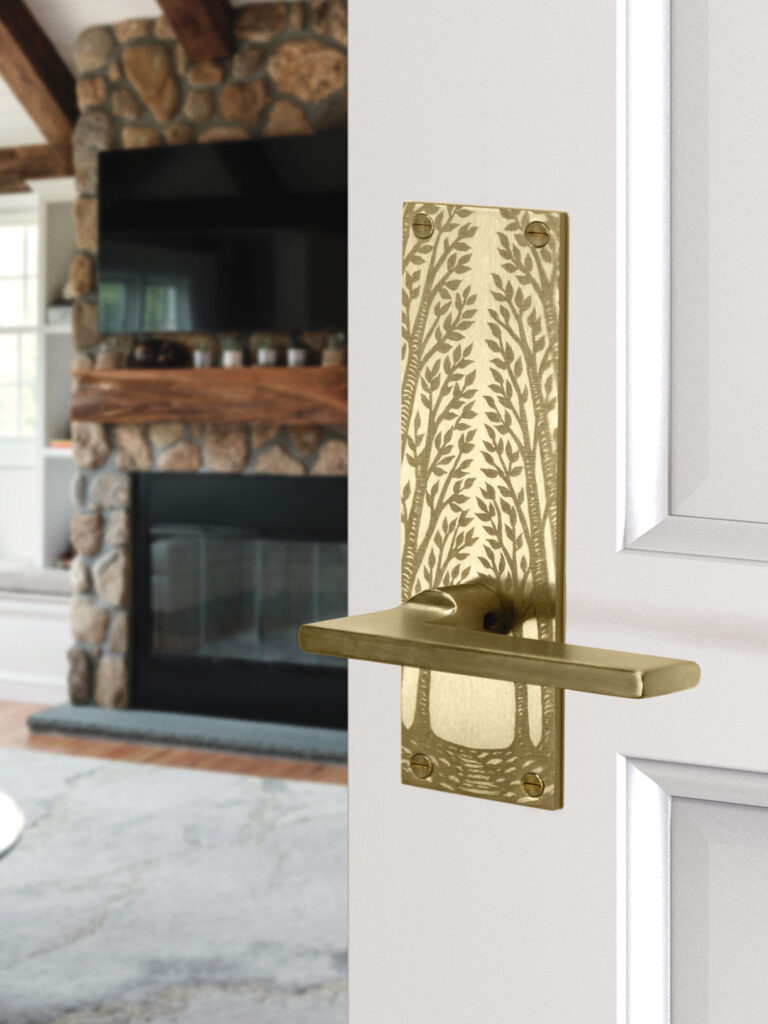
The eight initial designs feature fractal geometric patterns and nature-based designs. She also has another product collaboration in the works that she expects to announce soon. Lichtenstein’s first foray into product design was a line of door hardware — Transcend: Nina Lichtenstein — with Accurate Lock & Hardware, home also to Thom Filicia’s hardware line. The initial Transcend: Nina Lichtenstein collection, which features land, sea and sky imagery etched onto the surface of ADA-compliant hardware, won the Gold Award in the nonclinical architectural products category in the 2025 Nightengale Awards, part of the annual Healthcare Design Conference + Expo.
“We’re now expanding Transcend beyond its current ADA-compliant applications into residential and commercial settings, as well,” Lichtenstein says. “That recognition reinforced what my clients already understand — that health-center designed is not a trend, it’s a necessary evolution of our profession.”
“Intuitive, restorative and deeply human”
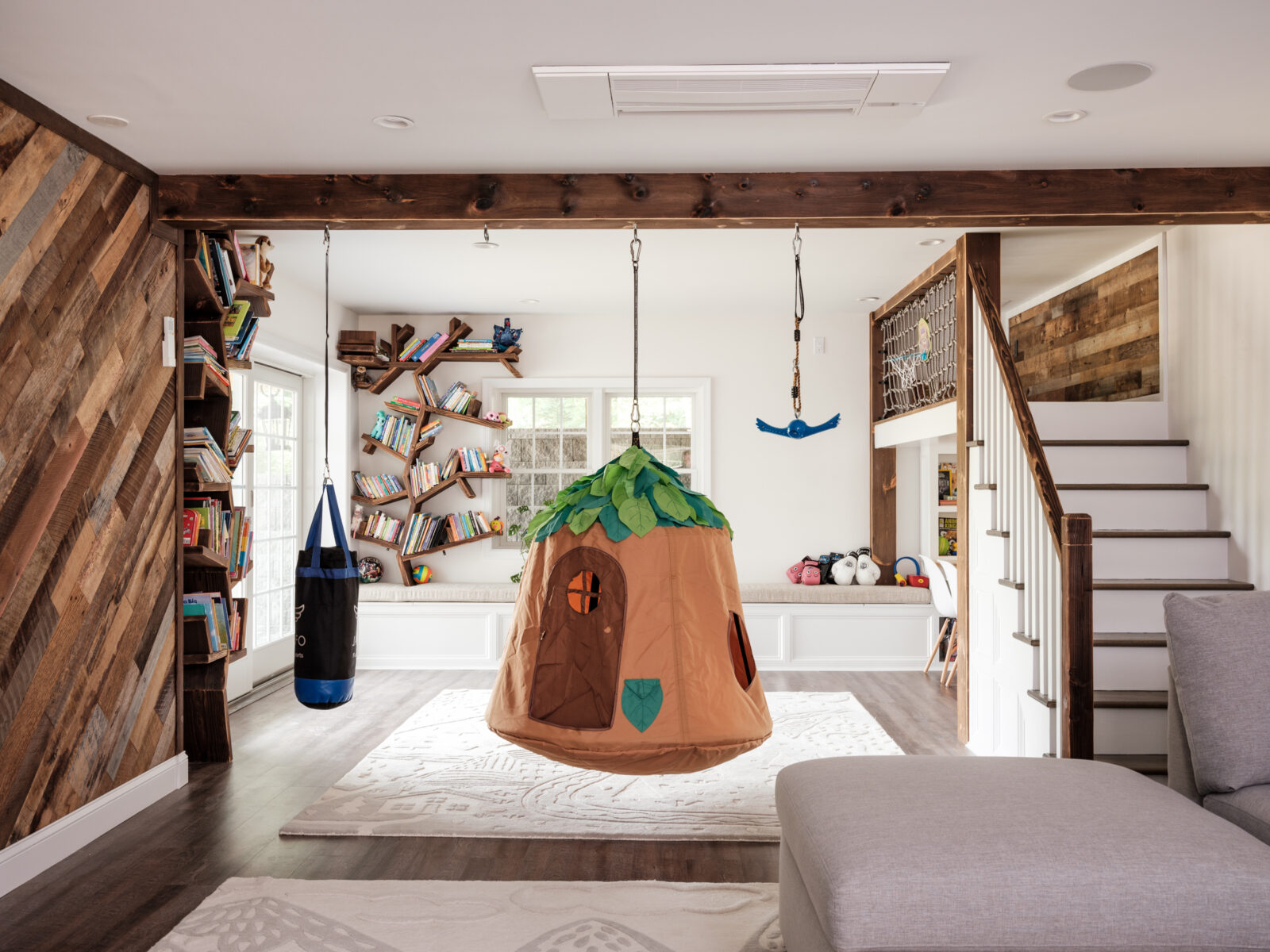
Lichtenstein says her path to interior design began in 2015 with a “complete, nature-inspired transformation of my own home” and she now specializes in luxury homes with a particular interest in designing for families, aging in place and multigenerational living.
“A major part of my specialty is that I advance health-centered design through the built environment, rooted in neuroscience and biophilia,” she says. “So, I’m shaping spaces that actively support the nervous system, cognition and emotional well-being. I’m using light, materiality, proportion and sensory experience to promote calm, clarity and resilience. … I like to say that my work sits at the intersection of architecture, neuroscience and lived experience. I translate research into tangible, buildable environments that feel intuitive, restorative and deeply human.”
Lichtenstein’s interior design work includes renovations and new construction, mostly in the New York City area and Northeast.
“Clients who come to me are often highly analytical, health-focused or deeply attuned to how spaces affect them, and they don’t just want a beautiful home,” she says. “They want one that actively supports their nervous system, their cognition, their longevity and their family’s evolving needs.”
Two recent projects have been especially gratifying for the designer. One is a remodel of the home of a client who, she says, is “navigating progressive mobility and sensory challenges.”
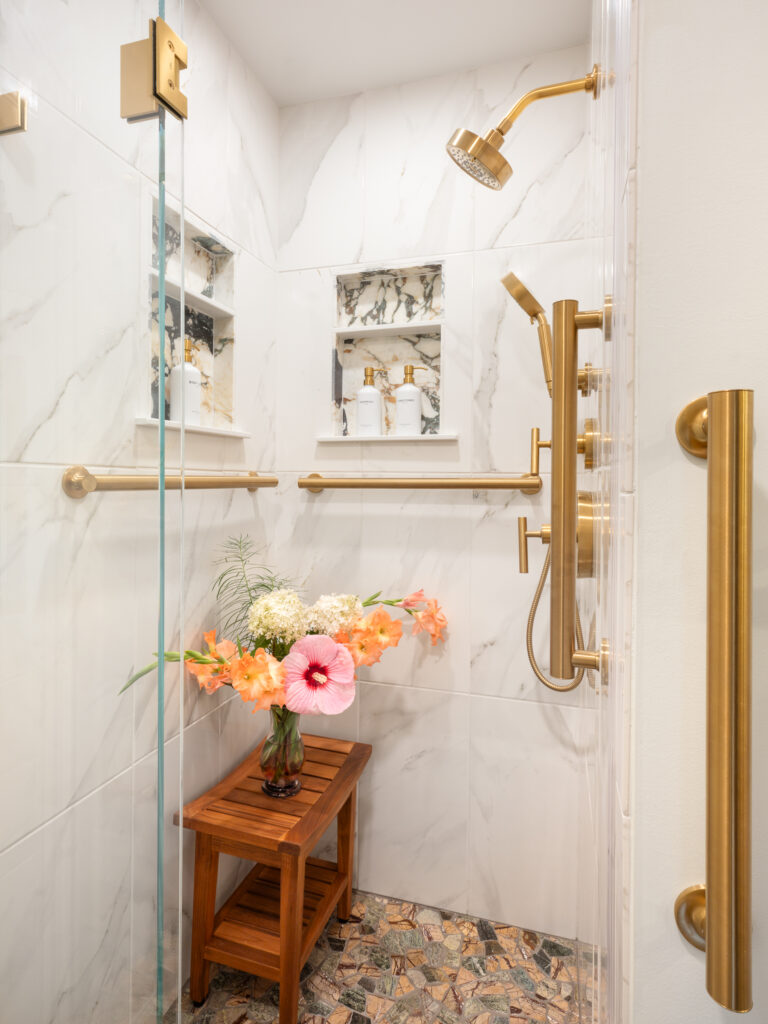
“The primary bathroom required the most dramatic transformation. It had become a space of vigilance rather than restoration,” she says. “Through thoughtful spatial planning, improved lighting, material selection and safety integration, we reshaped it into an environment that supports dignity, safety and nervous system calm.”
The second project is ongoing, as Lichtenstein assists a client dealing with the progressive debilitation of Parkinson’s disease.
“We’re making thoughtful, phased adjustments to circulation, paths, room function, paint colors, furnishings, lighting and discrete support features, so the home remains familiar while becoming progressively more supportive,” she says. “The work requires patience, restraint and long-range thinking. It also demands an understanding that full-time caregivers are often emotionally and physically stretched. So, the design process must feel steady and supportive rather than overwhelming, and it must unfold in a way that reduces strain rather than adding to it.”
When furnishing her projects, Lichtenstein says she favors “brands that prioritize craftsmanship, material integrity and longevity over trend cycles. So, I appreciate manufacturers who work in solid wood, natural fibers and sustainably sourced materials, and whose proportions feel rounded and human scale.”
Favorite sources include Kathy Kuo Home, Lulu and Georgia, Living Spaces, Bassett, Arhaus, Spoonflower, Sunpan, Surya, Universal and Four Hands — for “balancing accessibility with customization,” as well Verellen “for their material quality and refined upholstery craftsmanship.” Other favorites include some companies she met with during a trip to High Point Market last fall, including Phillips Collection, Splashworks and Red Egg “all of whom emphasize unique nature-inspired and sustainable design approaches,” she says. (Click here to read about Lichtenstein’s favorite lighting sources and her lighting philosophy.)
A fitting career
Lichtenstein comes from a family of do-it-yourself builders, her mother is a well-respected naturalist, and Lichtenstein has always been drawn to nature.
But as an undergrad, she studied foreign languages (Spanish, French and Italian) and literature and then earned a master’s degree in early childhood education, specializing in the Montessori methods.
“I feel kind of like I found my passion late in life, even though looking back, I see it was all connected,” she says.
When she decided to explore her interest in interior design, she went all in.
She earned certification in residential interior design from the New York Institute of Art + Design and certification in construction project management from Pace University. And she was among the first interior designers to be certified by Science in Design.
“I’m an early riser, so I can start my day as early as 5 a.m. and I can work late into the night. … I’ll literally work until I achieve something,” she says. “For example, the interior designer certification was an 18-month course, and I achieved that in 20 days, because I worked nonstop (to finish the coursework). That’s just who I am.”
As founder and principal designer of her firm, Lichtenstein continues to oversee all aspects of her business and every project.
“When clients hire my firm, they work directly with me, from foundation to finishing touches — or from study to styling, I like to say. That continuity ensures clarity of vision, precision and execution and a deeply considered outcome,” she says.
Lichtenstein says one of “the most consequential decisions I’ve made is to intentionally limit the number of projects I take on at any given time and to work only with clients where there is genuine philosophical alignment.”
“If values are misaligned or expectations are inconsistent, energy is diverted away from the work itself and toward friction management, and that’s not what I want,” she says. “I think there’s a cultural obsession with busyness that often masquerades as productivity. But activity is not the same as impact. … Strategic restraint has allowed my work to deepen rather than simply expand.”
But that doesn’t mean she doesn’t have plans to continue to expand her business with additional product design partnerships, other industry collaborations, more speaking engagements, and perhaps, the beginnings of a book.
“One of the things I love most about this business is that I never fully know what unexpected opportunity is coming next, and that sense of possibility keeps the work dynamic and deeply engaging,” Lichtenstein says. “I like to tell people that my business — really and truly — brought this sense of spontaneity to my life that is unlike anything else I’ve experienced.”