
Today’s most successful retail spaces are no longer simply showrooms. They are environments where customers spend time engaging with products before committing to purchase. To support this shift, retailers must prioritize openness, natural light, and clear sightlines. These elements invite customers to wander, discover, and interact rather than simply browse.
Many furniture retailers now incorporate hospitality-inspired amenities such as cafés, restaurants, and communal gathering areas into their showrooms, transforming them into lifestyle destinations. Operable glass wall systems have emerged as an essential design tool in this evolution. By removing physical and visual barriers, these systems allow retail environments to adapt to changing needs, highlight product displays, and create seamless connections between interior zones and the storefront. The result is a space that naturally draws shoppers deeper while reinforcing the brand’s lifestyle narrative.
Architectural Solutions for Adaptive Retail Environments
For today’s furniture retailers, flexibility is no longer a design preference. It is an operational necessity. Spaces must accommodate product launches, seasonal resets, private client events, influencer gatherings, and community programming, often within the same footprint. This level of adaptability requires architectural elements that can transform quickly, support the retailer’s aesthetics, and provide reliable performance.
Operable glass wall systems serve as that architectural infrastructure. When opened, they allow showrooms, patios, rooftops, and event areas to function as a single, connected environment. This encourages customers to stay longer, return more often, and interact with the brand more meaningfully. When closed, they continue to deliver comfort, security, and clear visibility, keeping spaces inviting and functional year-round.
This responsiveness also addresses the realities of high-traffic retail, where doors must operate smoothly and reliably without disrupting staff or customers. Designed for frequent use, operable glass walls enable layouts to shift efficiently in response to foot traffic, weather conditions, or programming changes. Code compliance, accessibility, and security must remain integral to the design.
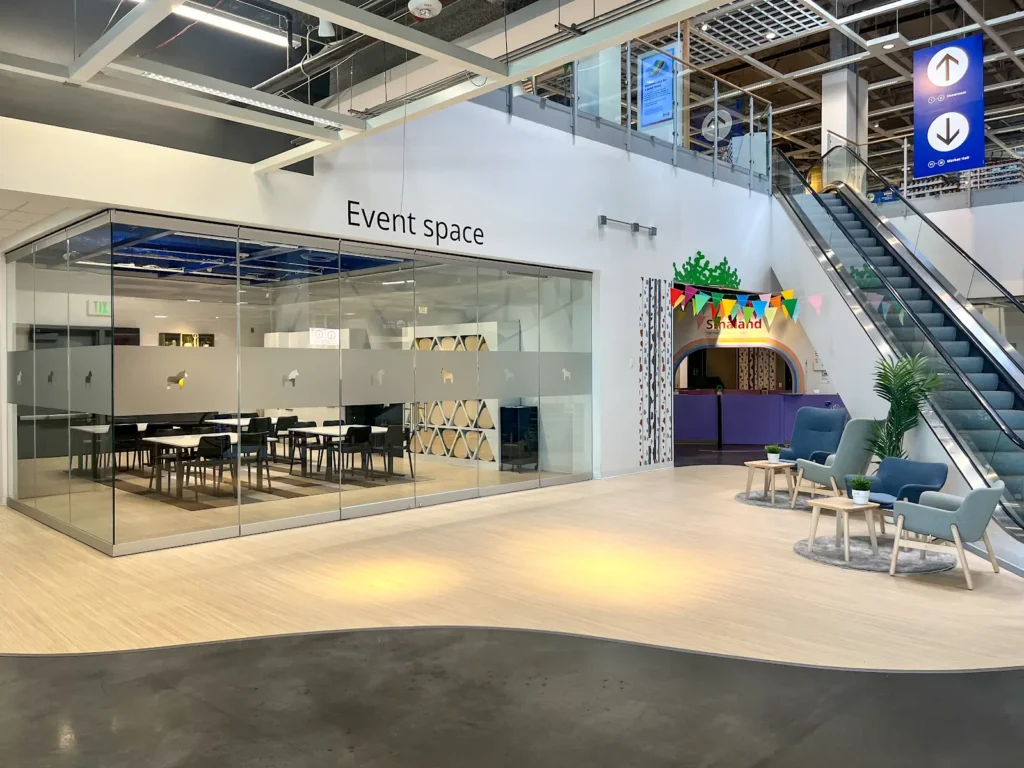
This approach is evident at IKEA in Centennial, CO, where a flexible, multifunctional event space was envisioned to accommodate a wide range of gatherings while enhancing overall engagement within the store environment. A frameless glass wall system by NanaWall was specified to enable the space to open seamlessly into the store lobby during large-scale events, while remaining transparent when closed to maintain visibility and draw attention to activity within. The result is an adaptable environment that transitions easily between intimate gatherings and large-scale events while maintaining circulation and accessibility.
Operable Glass Walls Create Visibility That Drives Engagement
Customers are drawn to spaces they can easily navigate and feel comfortable in. Operable glass wall systems support this by opening views, increasing daylight penetration, inviting fresh air, and eliminating visual barriers that might otherwise divide the store.
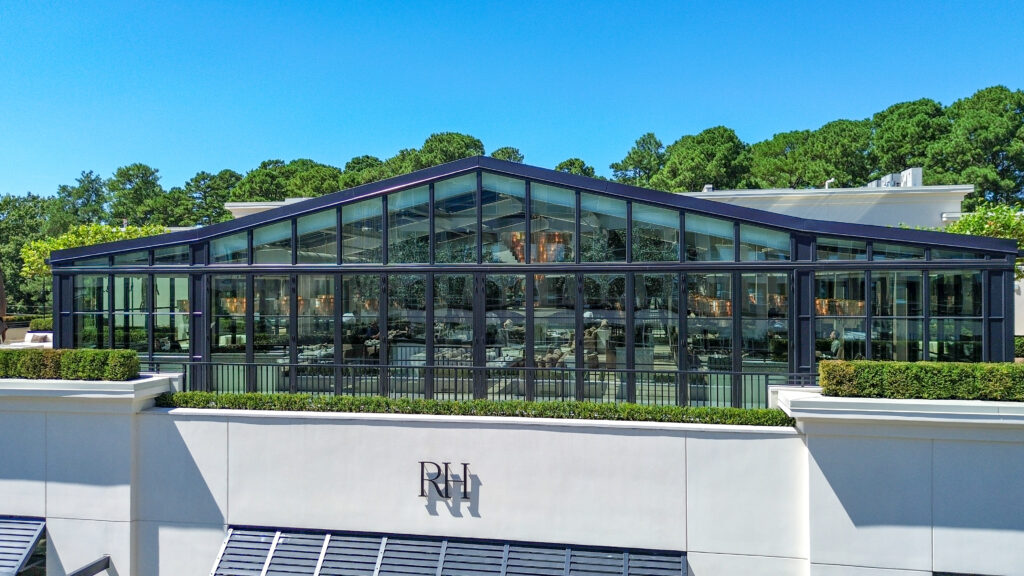
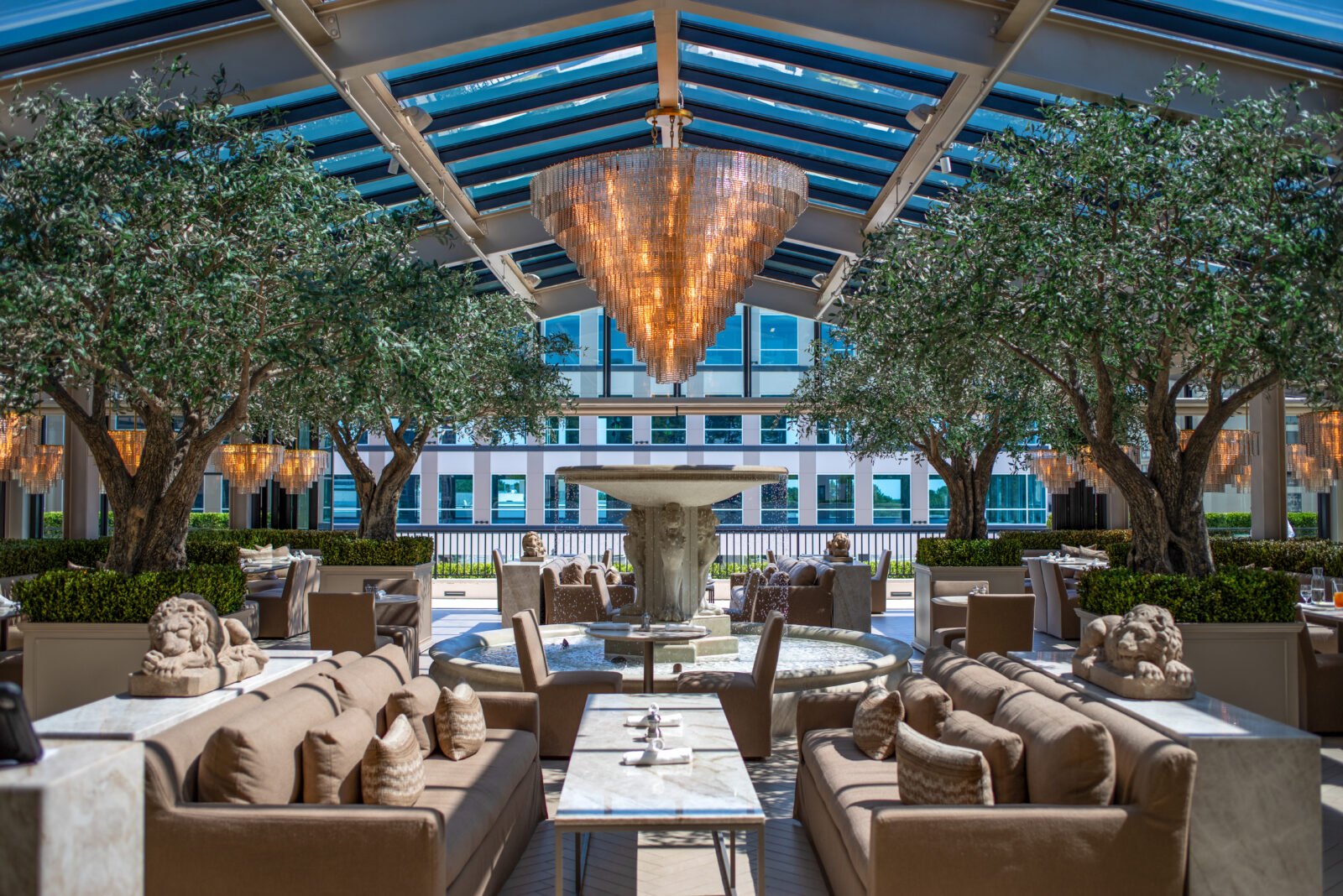
At RH in Raleigh, NC, this concept comes alive at the rooftop restaurant within the third-floor design gallery. Designed as an extension of the brand’s residential lifestyle, the dining space intentionally blurs the boundaries between retail and hospitality. A slim-profile glass wall system complements the gallery’s architectural language while maintaining transparency and a strong connection to the outdoors. The result is a dining environment that adapts seamlessly to daily and seasonal changes without interrupting the guest experience. It also functions as a lived-in showcase of the brand’s products across indoor and outdoor settings.
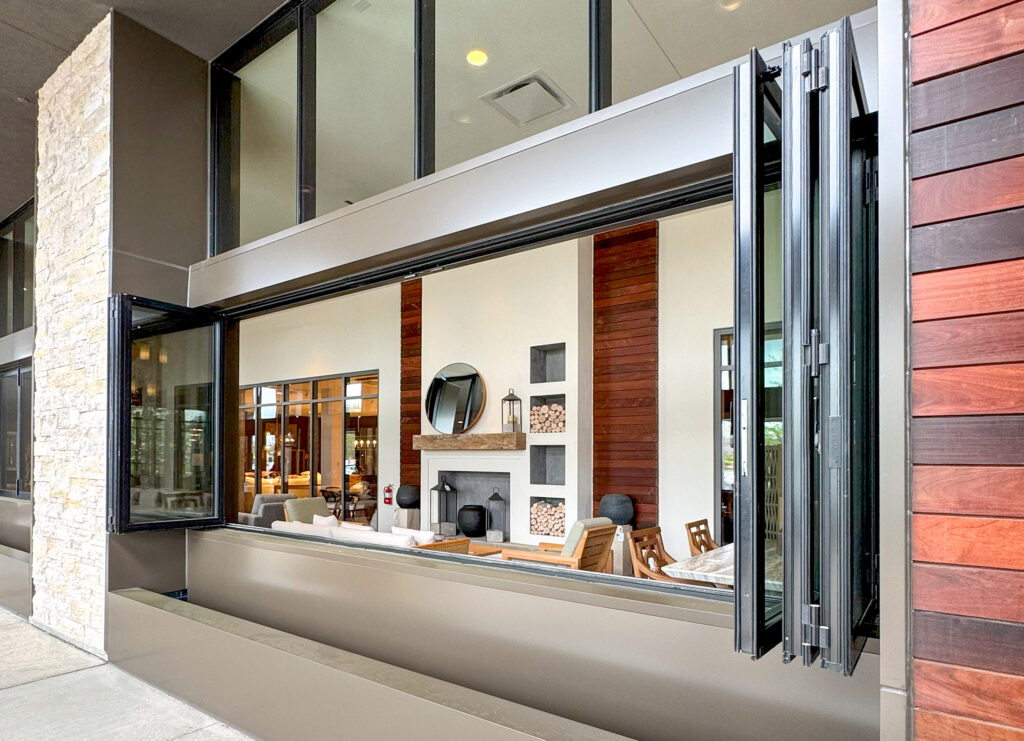
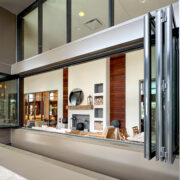
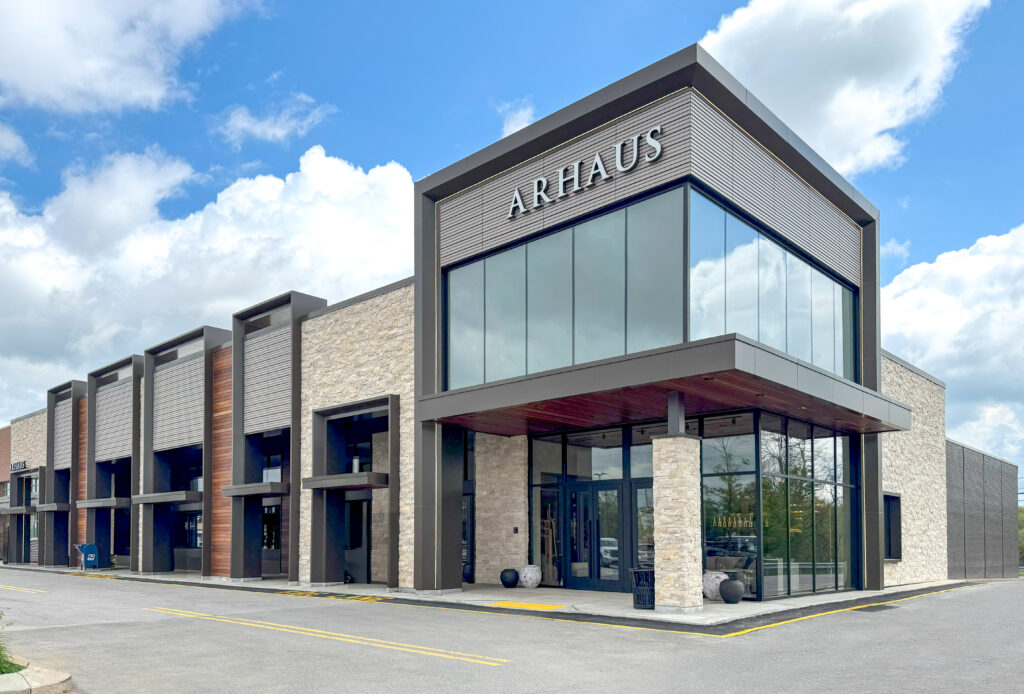
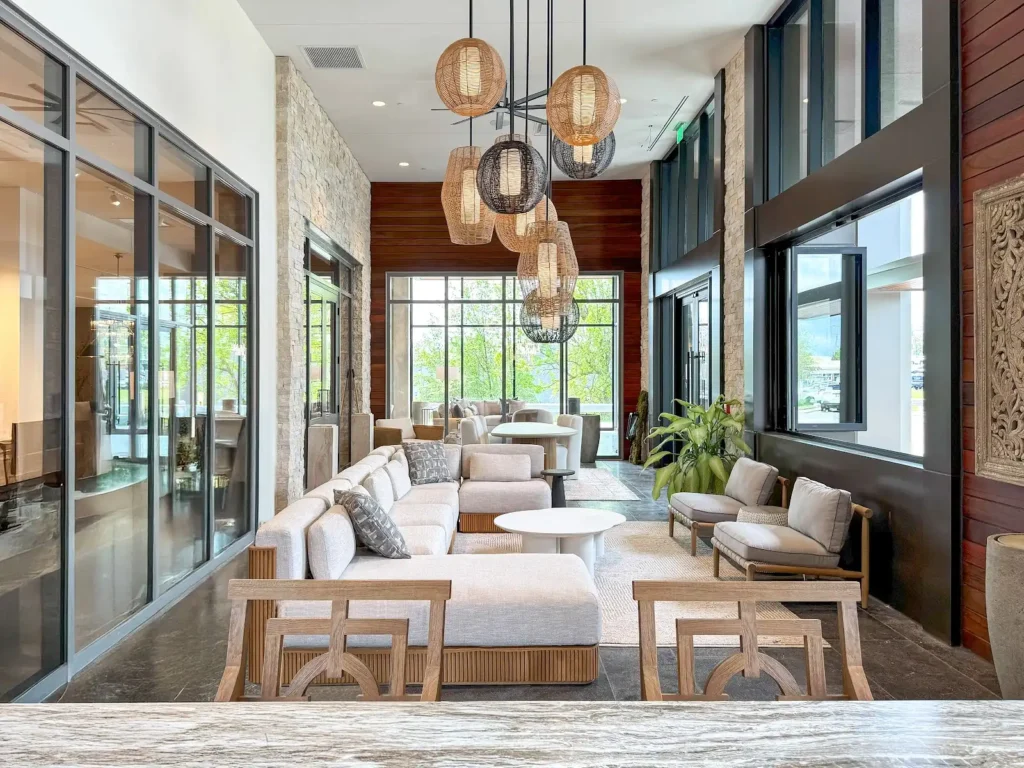
A similar strategy is seen at Arhaus in Wexford, PA, where folding glass walls create an open-air shopping experience while still protecting merchandise after hours or during inclement weather. The transparent operable storefront brings daylight deep into the space, reinforcing the brand’s indoor-outdoor aesthetic and encouraging exploration. The environment mirrors the indoor-outdoor lifestyle many homeowners aspire to and provides inspiration that customers can imagine in their own homes.
Performance That Supports Long-Term ROI
Experiential design may attract customers, but long-term performance sustains a successful retail environment. For furniture retailers, glass wall systems are specified not only for their visual impact but also for their reliability in demanding, public-facing settings. In high-traffic stores, doors must operate consistently and predictably without disrupting the customer journey.
These systems are engineered for frequent operation, enabling layouts to change as needed while reducing wear and minimizing maintenance-related downtime. Safety and accessibility remain equally important. Operable glass wall systems can incorporate advanced locking options, panic hardware, door closers, and ADA-compliant sills to meet standards. Additionally, slim profiles and various finish options help designers maintain brand consistency while enabling future updates as merchandising strategies and store formats evolve.
By emphasizing openness, daylight, and flexibility, designers can craft retail spaces that encourage customers to slow down and connect more deeply. Operable glass walls facilitate this transformation by allowing areas to adapt without compromising design integrity. The result is a store that remains inviting, flexible, and valuable long after opening day.