Bringing Wellness to the Whole Home

By Julie A. Palm
From life-changing medications like GLP-1s for diabetes management and weight loss to influencers touting workout programs, morning routines and supplements, wellness is having a moment.
That extends into our living spaces — and it goes far beyond the home gym or yoga studio. Think cold plunges, saunas, steam showers, red-light therapy rooms, hydration stations and meditation spaces.
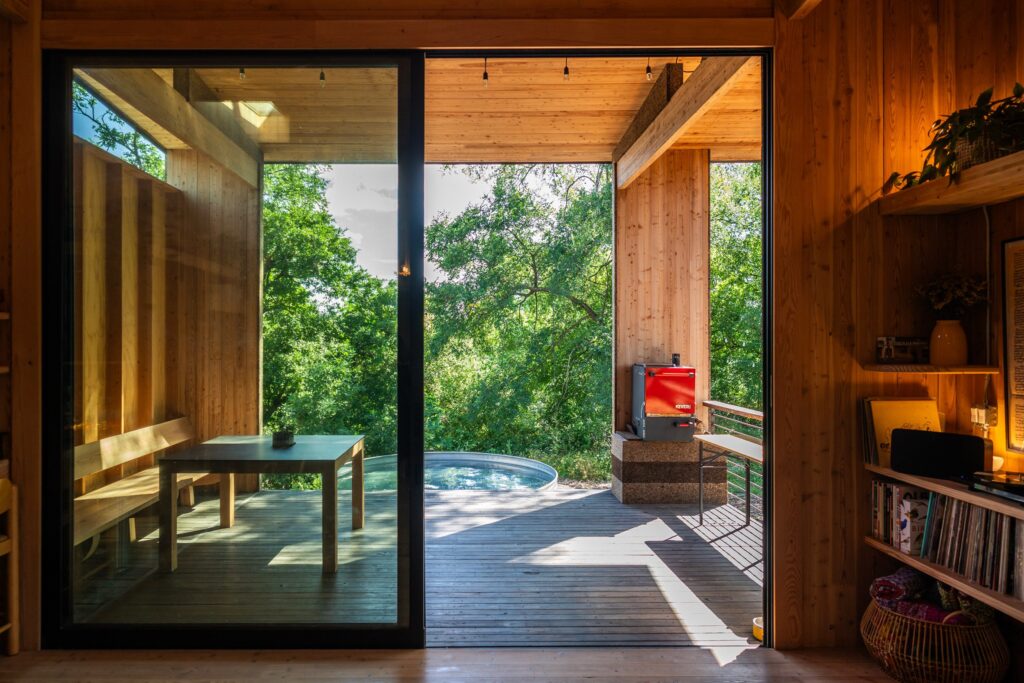
Photo: Daniel Cavazos
Erica McLain, founder of Dallas-based McLain by Design Interiors, worked with a client who wanted to convert an underutilized media room into a “wellness in a box” space that included a red light therapy bed and steam shower, among other features. “They went all in,” McLain says. Dissuading the homeowners from creating a Himalayan salt room for practical reasons, they mimicked the look with a backlit wall to provide a calming, centering visual.
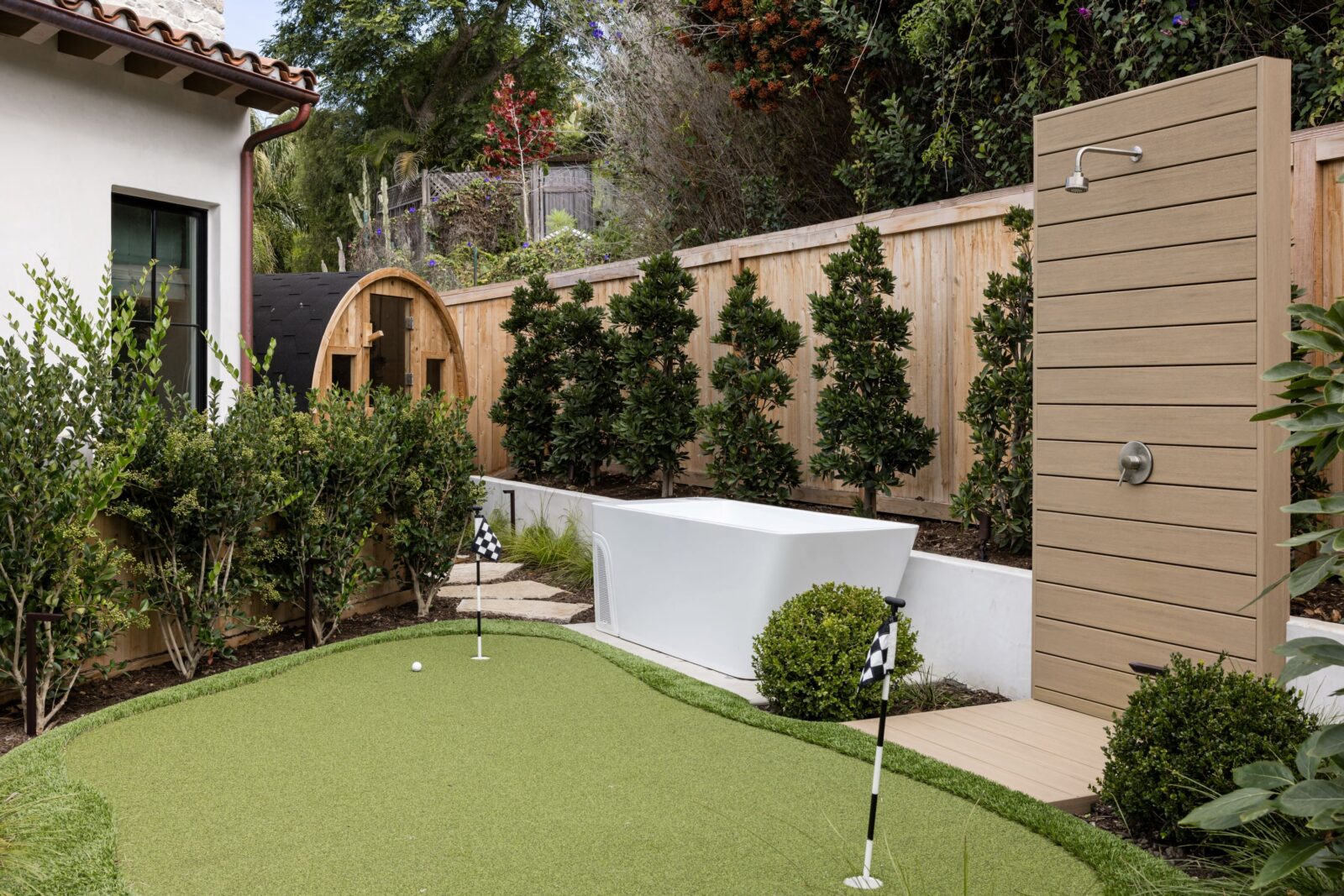
Today’s wellness spaces extend beyond interiors. Brandon Architects, based in Costa Mesa, California, notes that homeowners want to effectively utilize all their available space and that includes incorporating features like swimming and lap pools, cold plunges, outdoor showers, saunas and other features into their outdoor areas. “Every square foot of outdoor space (is) designed like a room with a purpose,” the firm says. At a home in San Clemente, California, the architecture and design firm turned a back yard into a wellness sanctuary for the family, complete with outdoor shower, pool, cold plunge and putting green. A unique outdoor sauna as a centerpiece of the design.
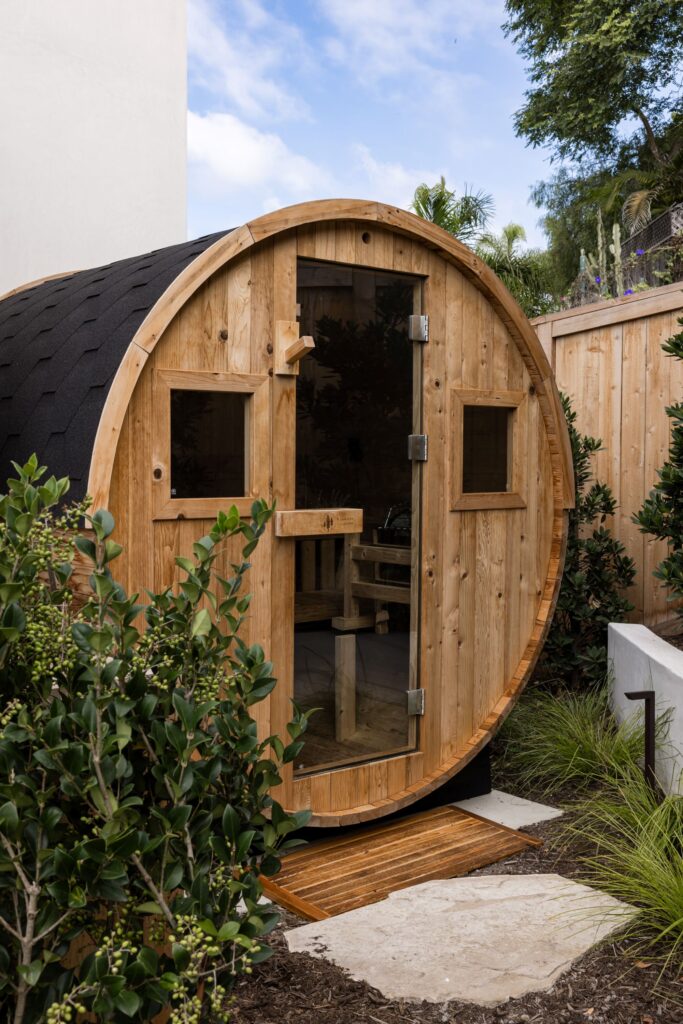
Photo: Vanessa Lentine
“Saunas, plunge pools (and features like that) are big mostly in higher-end renovations, because they take a lot of space and resources. … But it’s amazing how many positive comments are made about how those (well-being areas) improve stress levels or their life in general,” says John Ballentine, principal designer for Atlanta-based Domicilio Interiors.
Companies like KLAFS have become one-stop shops for products for wellness spaces. It offers saunas, steam baths and showers, and infrared cabins and chairs, as well as accessories like the foam-producing ESPURO CloudSPA for soaking tubs and the SaltProX, which turns any sauna or infrared cabin into salt inhalation room.
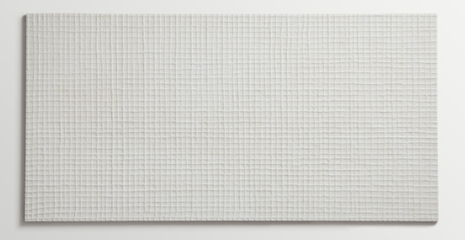
But other vendors offer wellness gems among their broader portfolios. For instance, for outdoor showers, Ann Sacks offers Timbrato, a collection of dry-pressed, unglazed porcelain tiles with a grid of repeating raised squares. Available in a 12” x 24” format and in four hues, they blend with natural surroundings while offering performance for wet, exposed environments, the company says.
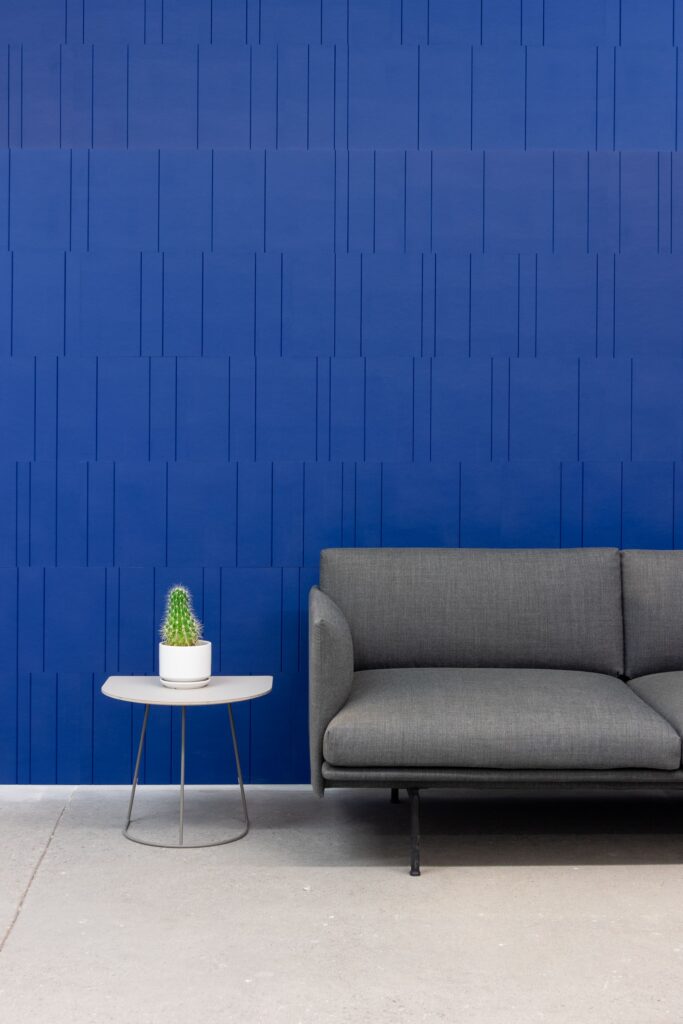
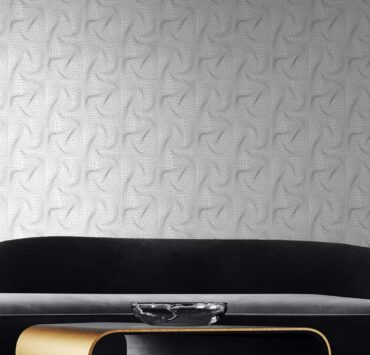
If we broaden the definition of wellness, such spaces don’t require spa-like amenities. I took note earlier this year when designer, brand consultant and content creator Hans Lorei said he sees growing interest in “analog” rooms as a way for people to untether themselves from their ubiquitous screens — and the hunched shoulders, rounded necks, squinty eyes and overstimulated brains they encourage. “Analog spaces — dens, libraries, listening rooms, studies, whatever you want to call them — seem to be something everybody wants right now. It’s all about tech-free rooms,” he says. (Submaterial just launched a new wallcovering at ICFF that works well in such analog spaces: Echo features supple cactus leather atop a recycled, sound-dampening acoustic substrate. Soft vertical seams create a luxe, tactile surface.)
Whole-home wellness
But what about broadening the idea of wellness beyond a single space to create homes that support our physical, emotional and mental health throughout the interior and exterior?
Science in Design, which presented the Sunday keynote at the recent High Point Market, provides interior designers and others in the home furnishings industry with education and certification in neuroaesthetics, biophilia and health-based design.
“It’s probably one of the most exciting times to be an interior designer because the value proposition for designers today is so much greater than it was 10 years ago,” says Mike Peterson, founder of the organization. “Science now knows that designers improve health. Science actually considers (designers) to be an alternative health resource and it’s something our industry needs to start owning. … We’re no longer designing and creating products just to create an attractive room. We’re designing for the purpose of creating health — and it’s changing the DNA of the entire design industry.”
A key idea behind Science in Design is that, because of how humans evolved, we are comforted and even healed by patterns, principles and features found in nature —everything from the sound of water to fractal patterns to the idea of prospect and refuge. (That last one is the feeling of being sheltered and secure while having a view of our surroundings. It’s partly why most people prefer booths to tables in restaurants.)
Ideas like this mean that interior designers can remake any room into a place of health and well-being.
McLain, who competed in the 2008 Summer Olympics in the triple jump and knows a thing about health, takes that broad approach to wellness in her design work. “I think the whole reason I got into design and designing spaces is because I traveled the world as an elite athlete from an early age and I was always ‘tuning’ my spaces,” she says, explaining that she would walk into a hotel room and know immediately if the space didn’t make her feel good. Then she’d set about making adjustments.
In designing spaces to foster her clients’ well-being, McLain likes to incorporate as many natural materials as possible, including wood flooring from Mafi, which is suitable even for bathrooms, and Amorim cork. “I love to work with that cork,” McLain says. “… You can actually have it on your shower wall, so it’s kind of like forest bathing.” She’s also a fan of Alkemis paints, which are Cradle 2 Cradle certified.
“For me, it’s not just that these products are healthy or sustainable, they’re actually also just beautiful,” she says.
Like McLain, Ballentine takes a “whole house” approach to wellness. In an explainer he gives clients, he says, “Real luxury isn’t loud. It’s quiet, grounded and deeply personal — a home that knows how to take care of you.”
He likes to incorporate natural materials, organic forms, layered light and living elements into his interiors, which he says, all “signal safety at a biological level.” Addressing sound — or more specifically limiting unwanted noise — is also a key part of his design process.
He offers a self-audit for prospective clients, encouraging them to assess their current home in terms of several of these categories: sound (“the subtle saboteur”), light (“your circadian whisperer”), biophilia (“the nervous system reset”) and visual cortex (“cluster = cortisol”).
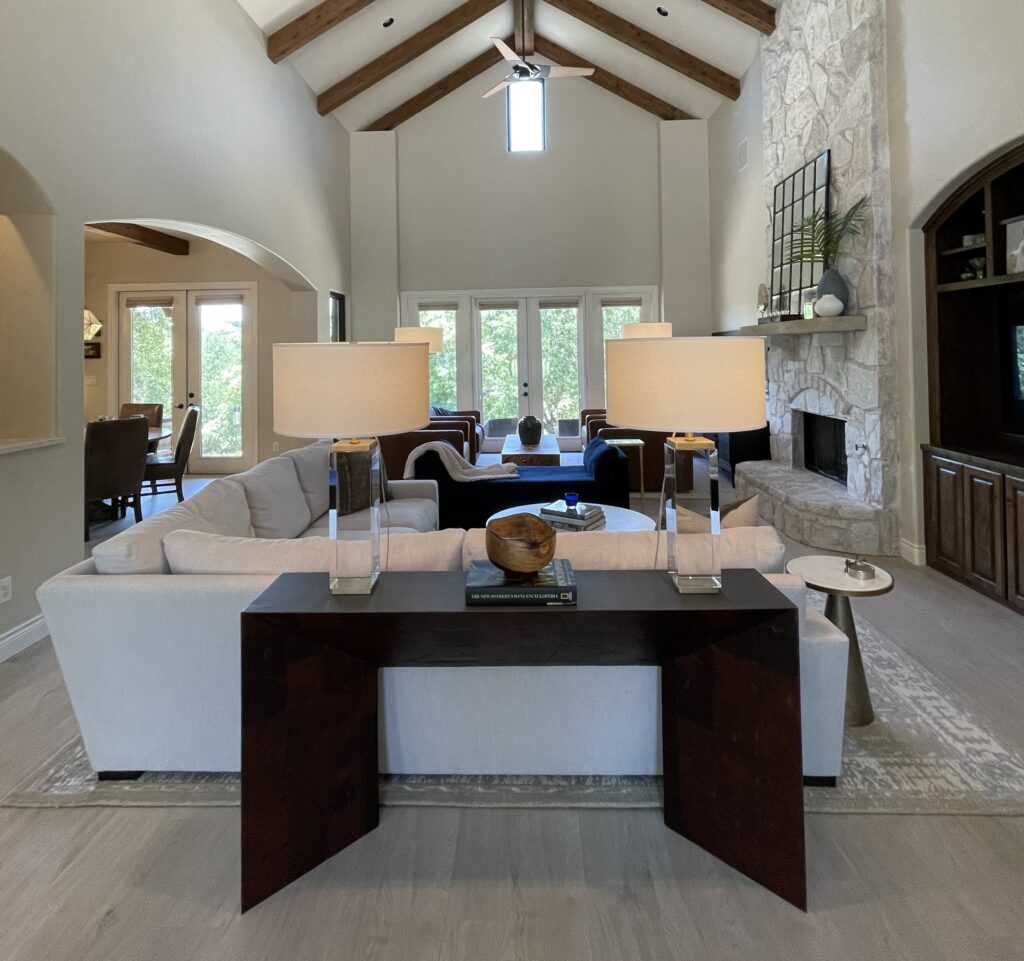
To help homeowners support their circadian rhythms, Ballentine likes to incorporate systems to lower and raise shades and adjust lights automatically, such as those available from Visual Comfort and Lutron and others. “We try to include circadian lighting as much as possible, just to support the natural cycles that our body goes through during the day,” he says.
Ballentine explained some specific wellness-focused choices he’s made in recent projects. For instance, in a bedroom, he used dark walls and trim to anchor a bed and frame expanded views of the outdoors. He also added natural fiber bedding and rugs, as well as those automatic shades he likes. In a living room, he added views to the outdoors, plus leather and natural fiber furnishings. In addition, he created multiple seating areas to foster connection and create a sense of mystery and discovery.
Remember what McLain said about walking into those hotels as a young athlete and knowing when a space felt “off”? Ballentine likes to share this tidbit with his clients: “Our body’s taking 11 million bits of information a second and our brains can only process 50 bits a second,” he says. “So, if you ever walk into a place and you’re like, ‘Oh, I don’t like the way this feels or something’s off,’ (it’s because most) of our processing ability is not happening in our brain. It’s happening in our body.”
“There are things in design, like wellness rooms and that sort that can improve health,” Ballentine continues. “But in general, there are studies showing that applying (neuroaesthetics, biophilia and other) principles (throughout the home) reduces stress and anxiety. It improves mood and well-being. It supports better sleep and enhances focus.”