Five things defining the design moment: January 2026

At the end of each month, DNN Editor in Chief Courtney Porter curates a list of five standout things — design projects, product launches, noteworthy events, trends and more that deserve your attention. Together they offer a snapshot of where the design industry stands, capturing emerging trends, influential movements and key developments. Think of it as your monthly briefing on what’s shaping the creative landscape. This edition for January 2026 covers the standout products and themes from Maison + Objet and Paris Deco Off, design tech from CES in Vegas, the state of rebuilding after the California wildfires one year later, why Dallas could become the next global design hub, and the refined desert homes of Sheldon Harte.
1. Stand out products and themes from Maison + Objet and Paris Deco Off
Maison & Objet overlaps with Paris Deco Off, spilling off the trade show floor into pop-ups across the city. Racing along icy cobblestone streets to spot the “Maison in the City” signs scattered throughout Saint-Germain and the Left Bank, interspersed among the fabric showrooms debuting new collections at Deco Off, is the ultimate designer scavenger hunt. Inside, the tiny showrooms make up in spectacle and sparkle what they lack in square footage. Expertly merchandised to inspire a sense of discovery and awe, they keep designers coming back year after year.
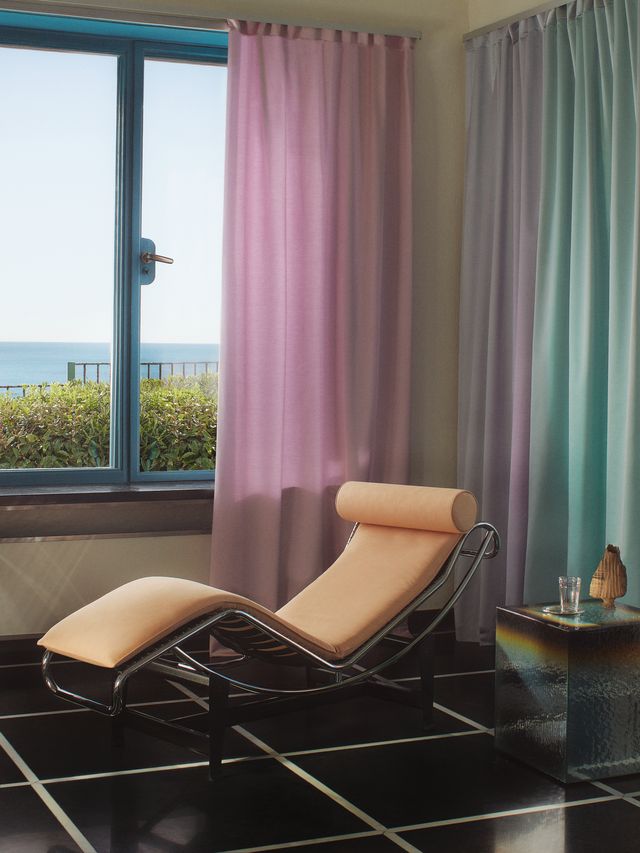
What follows are some of the highlights of the fabrics, furnishings, lighting and decor which premiered this month during Paris Design Week. You’ll notice this year’s offerings lean into themes of romance and nostalgia. The products and their makers favor the handmade, the organic and the playful. Color palettes are earthy and warm or deep, saturated jewel tones or pastel candy. And, of course, for Spring: there was plenty of flora and fauna to behold.
Thierry Lemaire at Galerie Xavier Eeckhout
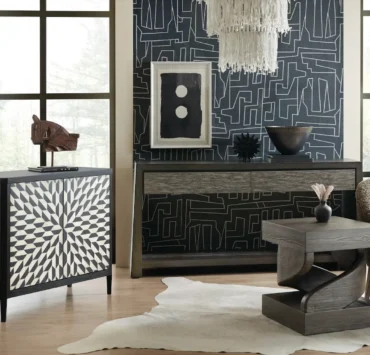
Presented at Galerie Xavier Eeckhout, Thierry Lemaire’s new six-piece collection extends a growing emphasis on furniture as sculptural statement, pairing travel-inspired forms with a gallery-style scenography that includes modern paintings from Bailly Gallery and textiles from DEDAR to position design in direct dialogue with fine art.
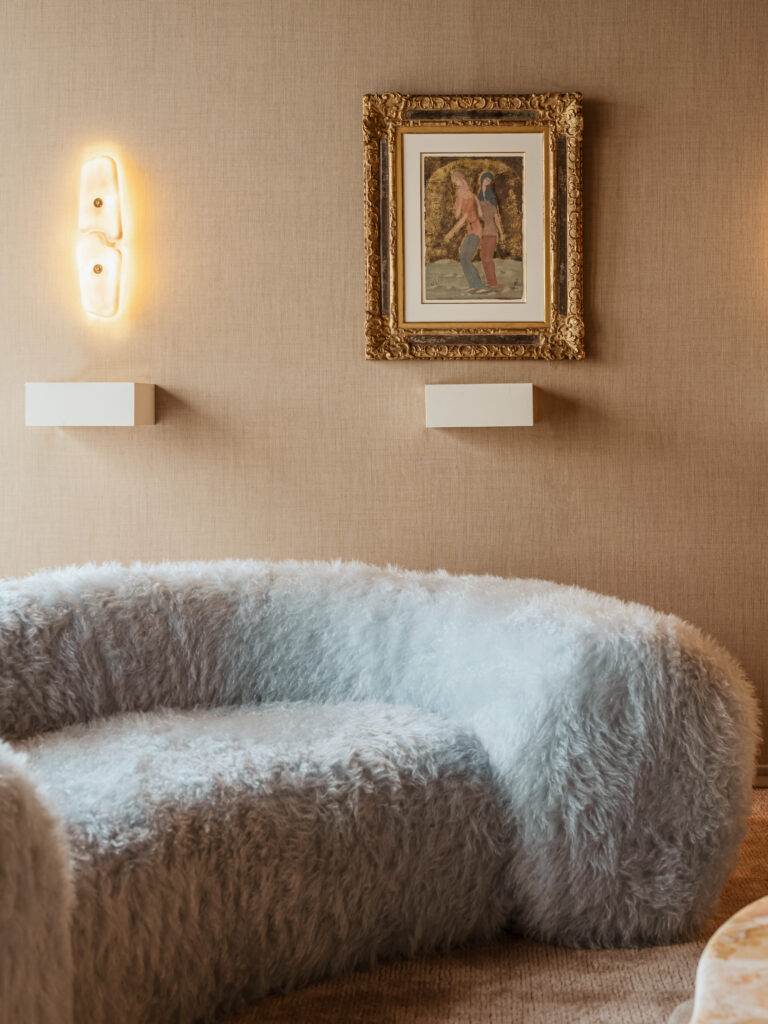
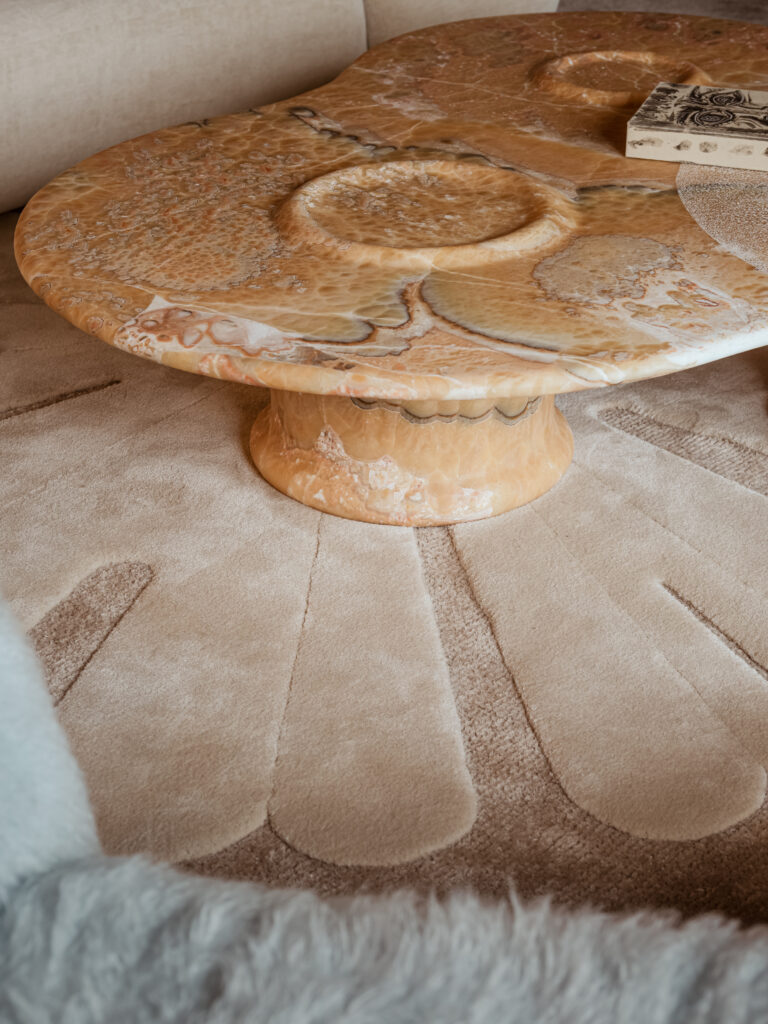
Boon Room
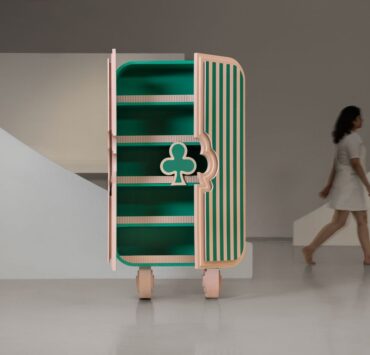
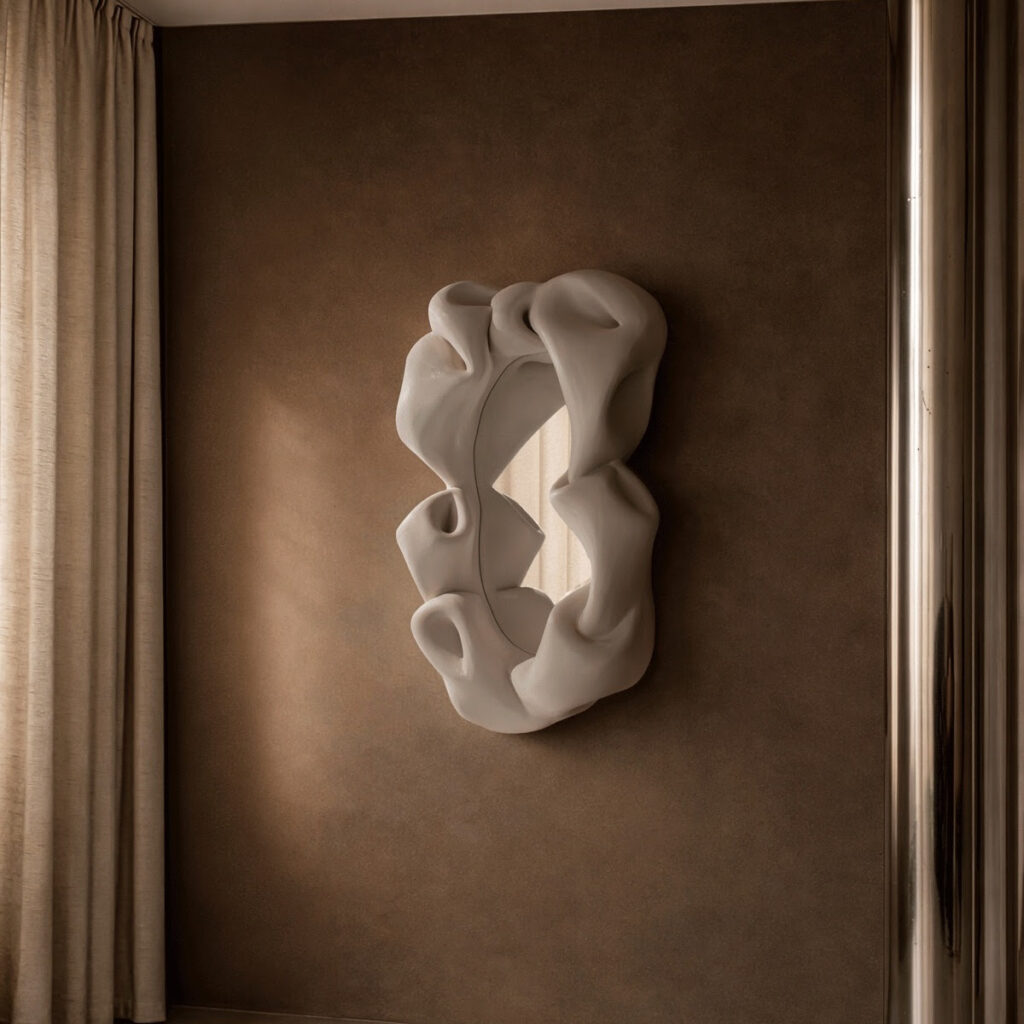
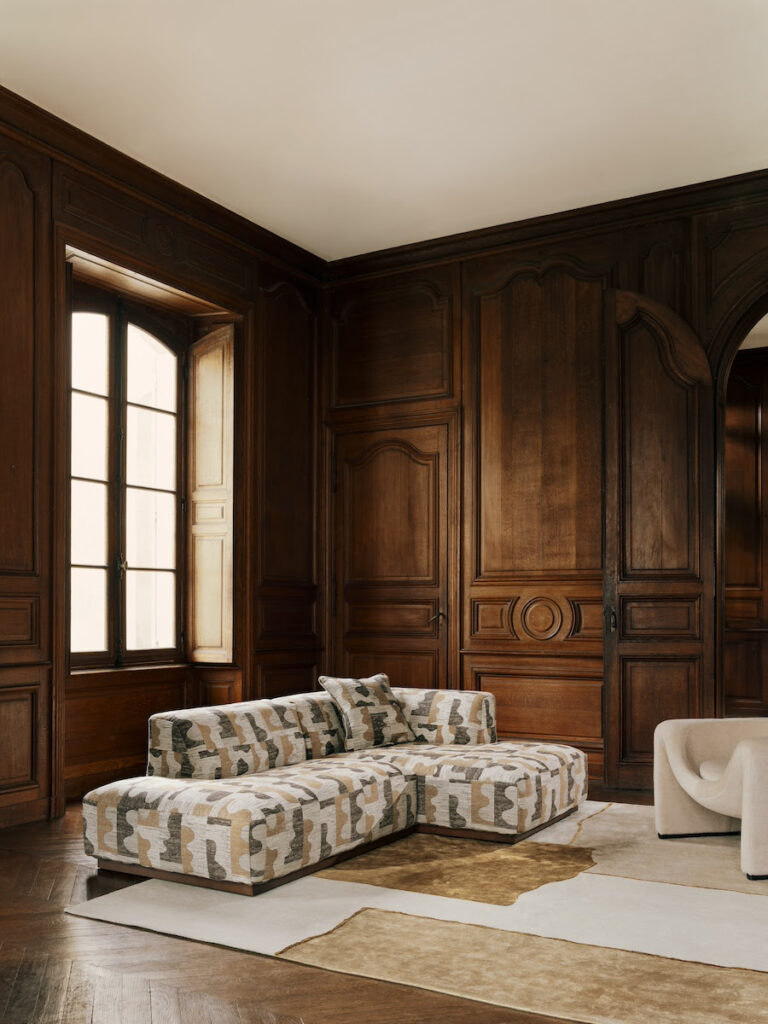
Highlights from Boon Room’s ‘Material and Matter in Dialogue’ exhibition point to a continued convergence of sculpture and function in contemporary design, exemplified by Pieter Maes’ Strata Sofa for BOON_EDITIONS N°1, Sizar Alexis’ deity-inspired Lahmu console in charred and natural woods, and A2Studio’s Anamnesia mirror-sculpture, all defined by expressive materials, tactile surfaces and softly sculptural forms.
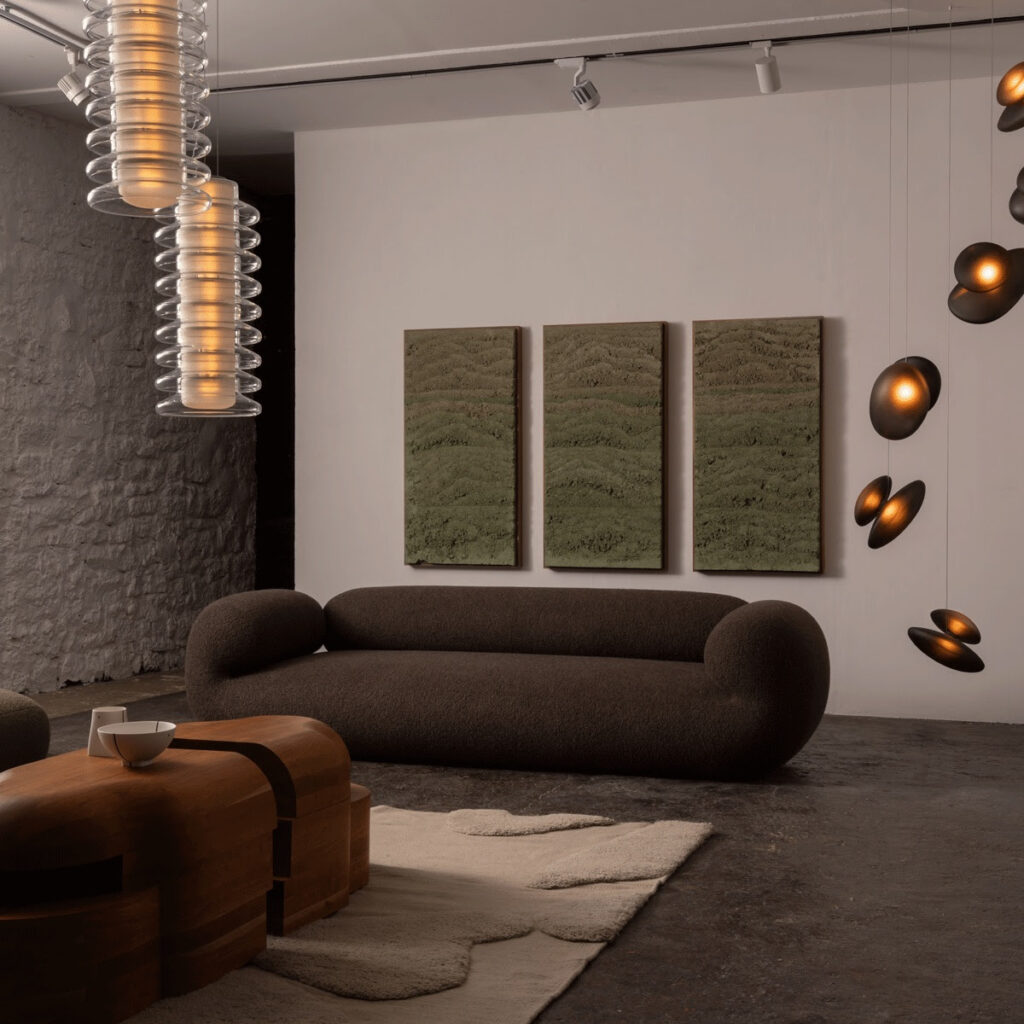
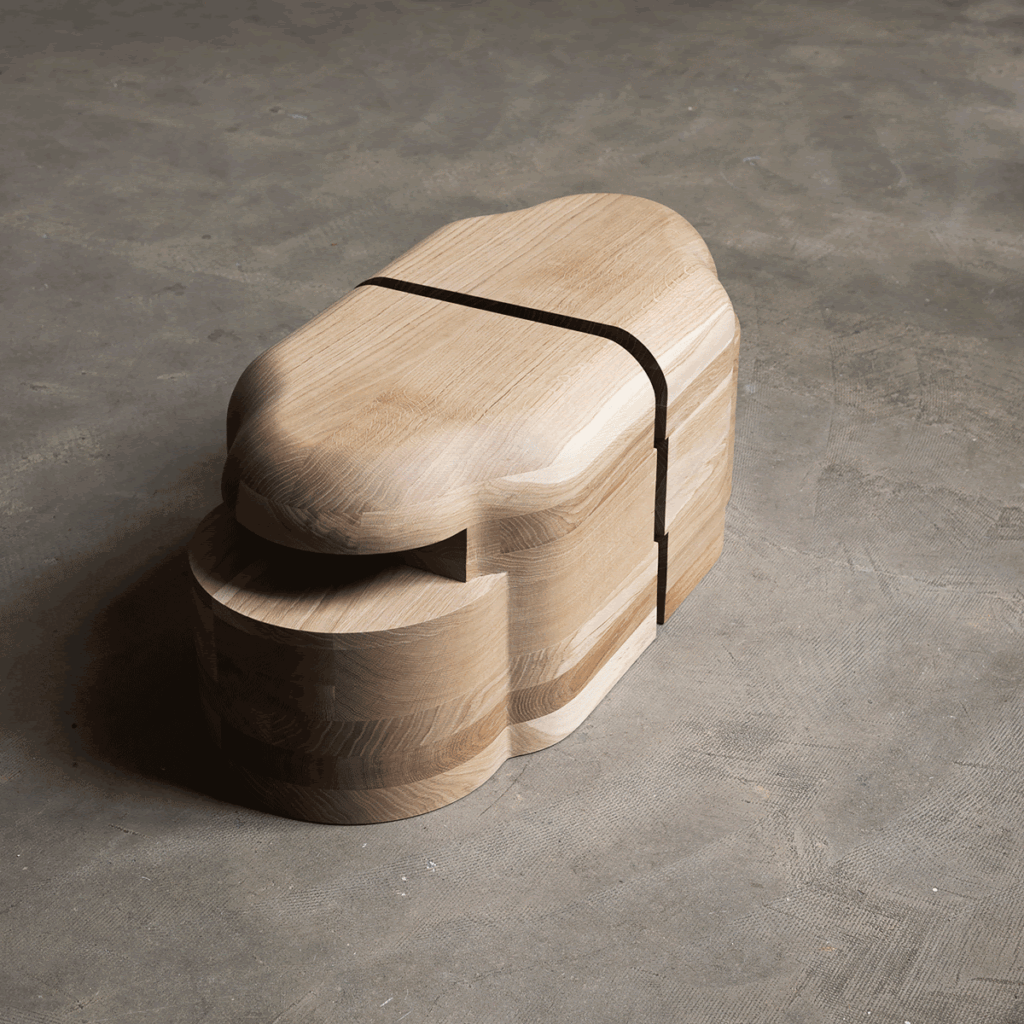
Omexco
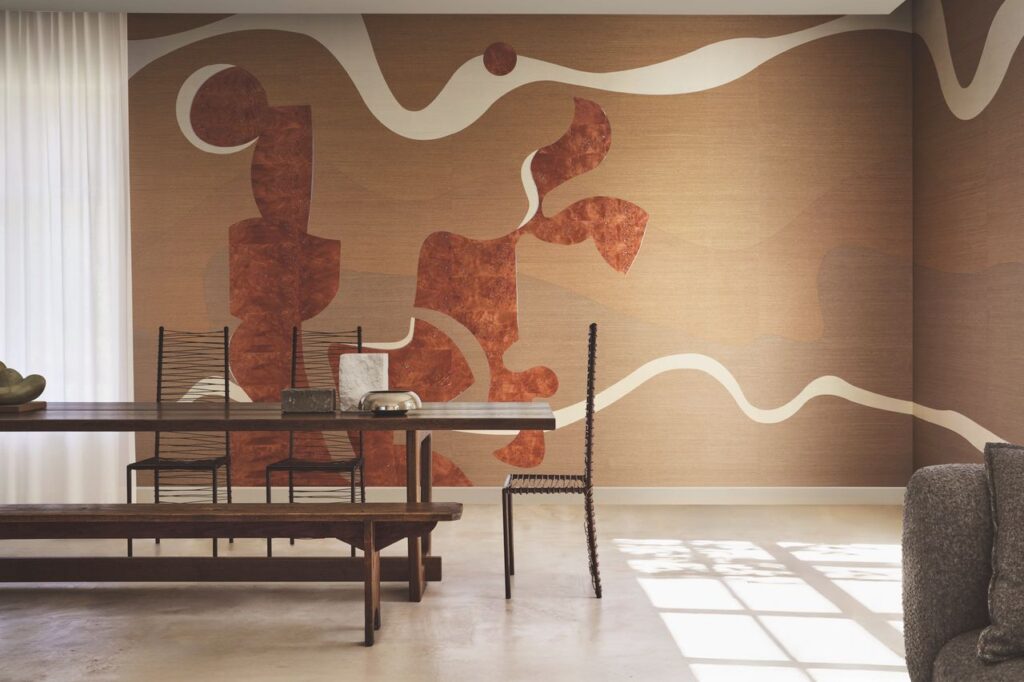
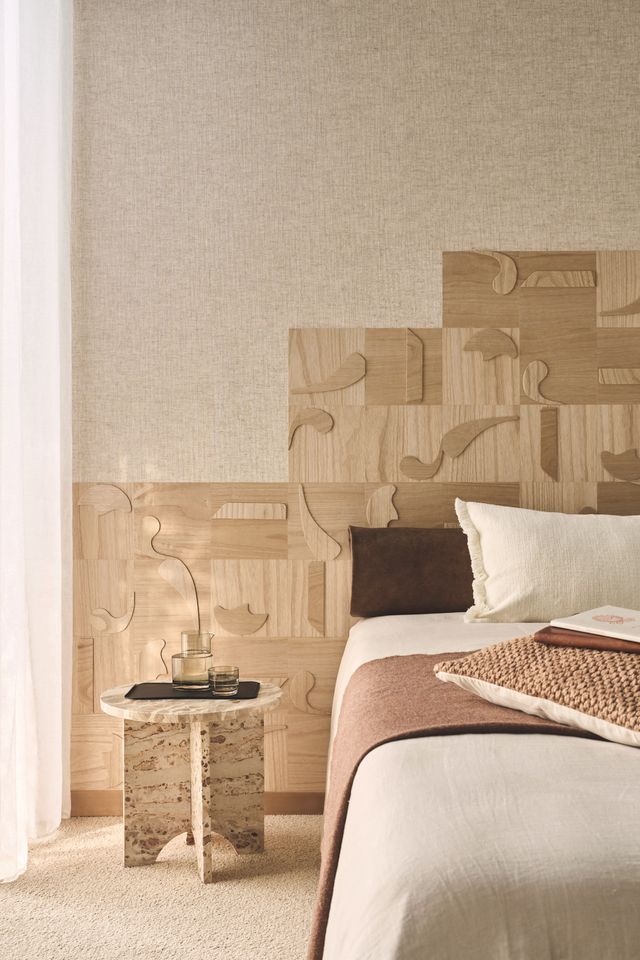
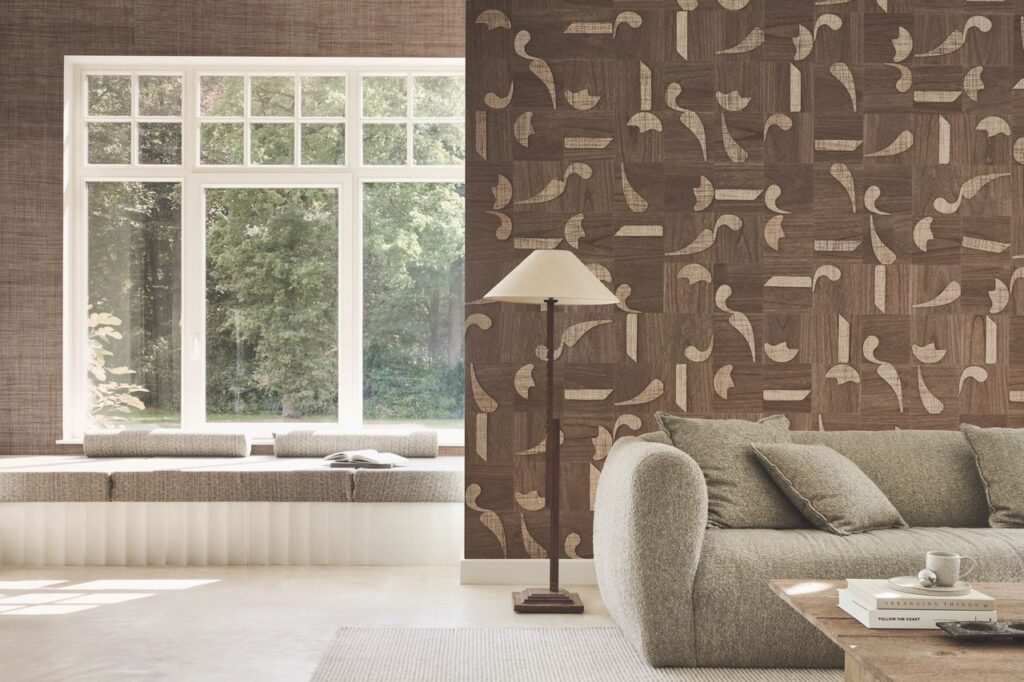
Omexco’s exclusive collaboration with designer Kim Mupangilaï translates her Belgian-Congolese design language into mural-scale marquetry, reworking furniture-inspired forms in wood and raffia to unite cultural identity with the brand’s artisanal wallcovering expertise.
Yarn Collective
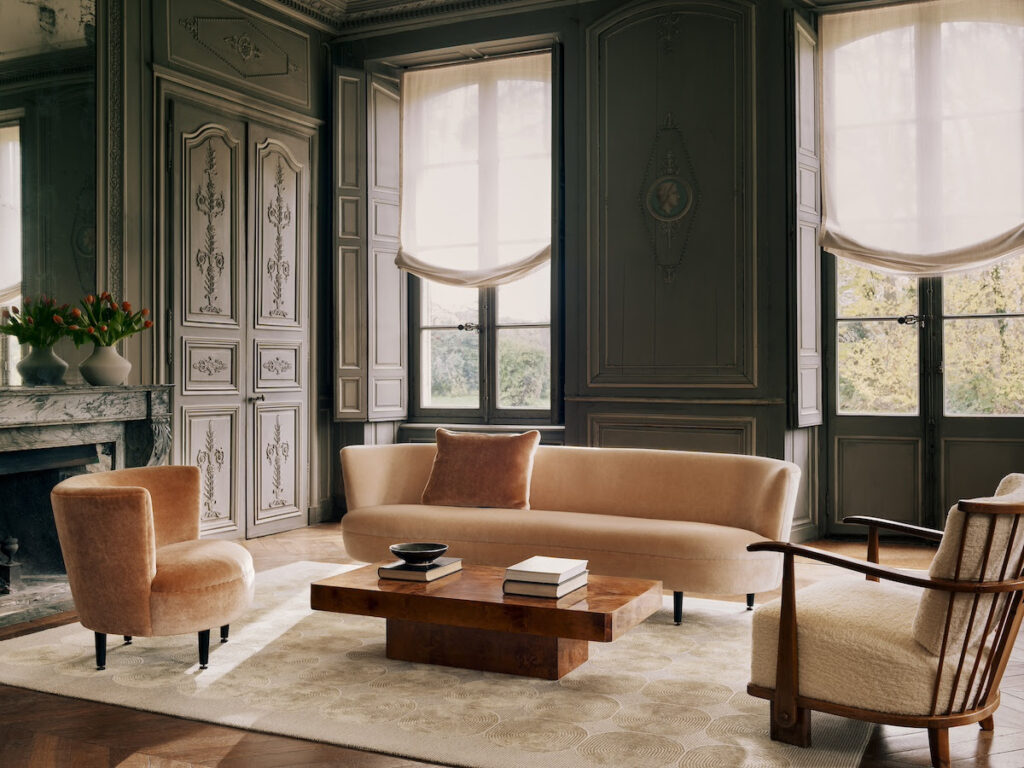
Yarn Collective’s 2026 introduction at Paris Deco Off reflects a move toward layered cozy materials, pairing refined plains and select graphic patterns in wool, linen, cotton and mohair to form a cohesive, tactile textile library intended to age well and provide versatility to designers, supporting both understated and more expressive interior schemes.
Little Greene
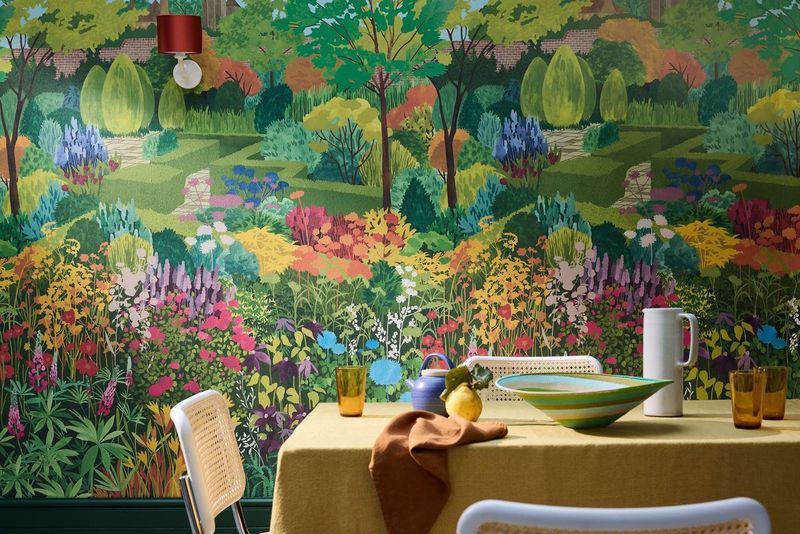
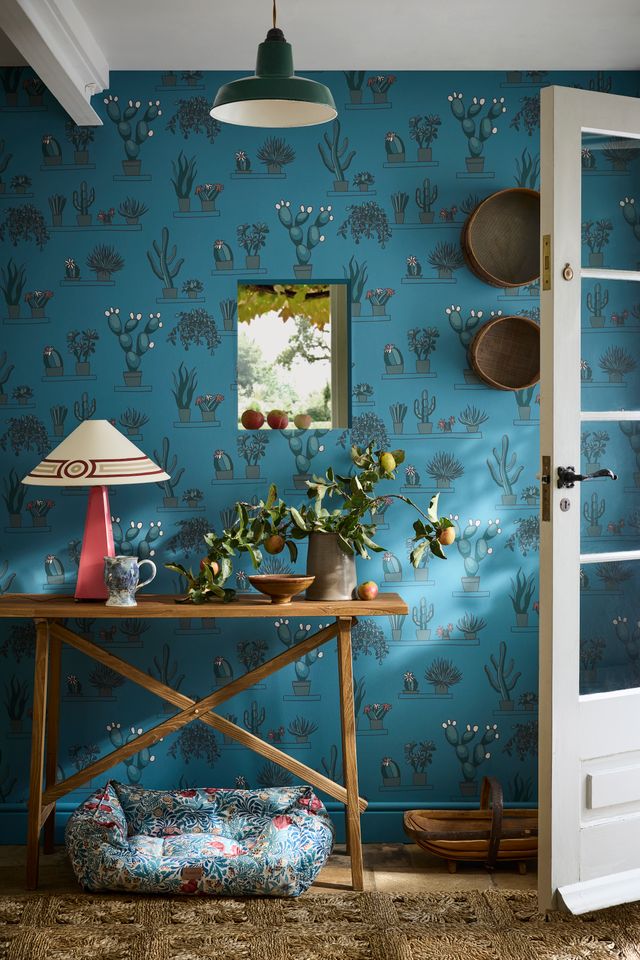
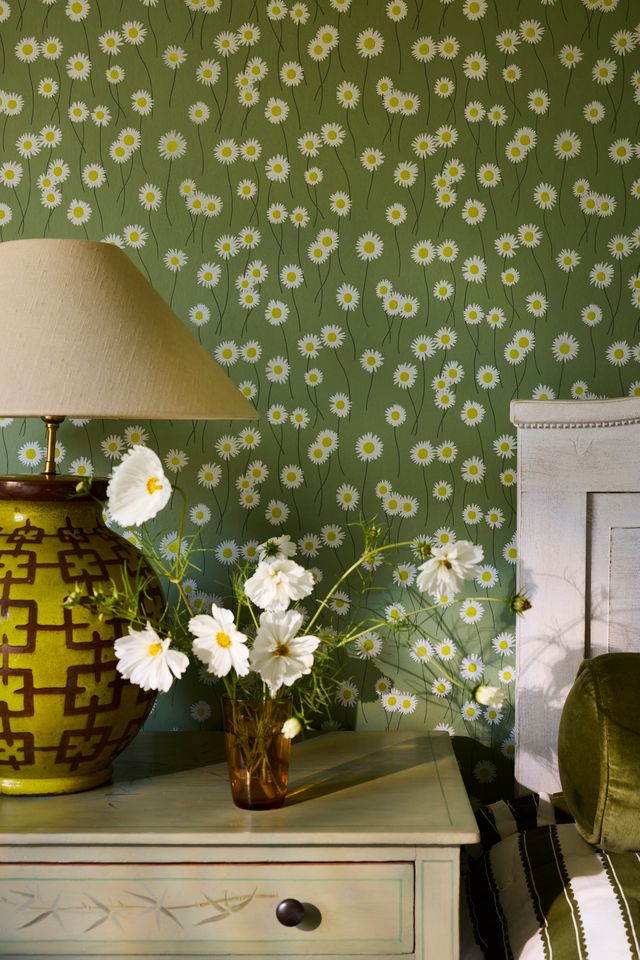
In the Garden is Little Greene’s sixth collaboration with The National Trust, reflecting a broader trend toward historically inspired, nature-driven interiors, offering eight garden-based wallpaper designs produced with a mix of traditional and digital techniques on sustainable materials and released in coordinated colorways to align with Little Greene’s paint range.
Rubelli
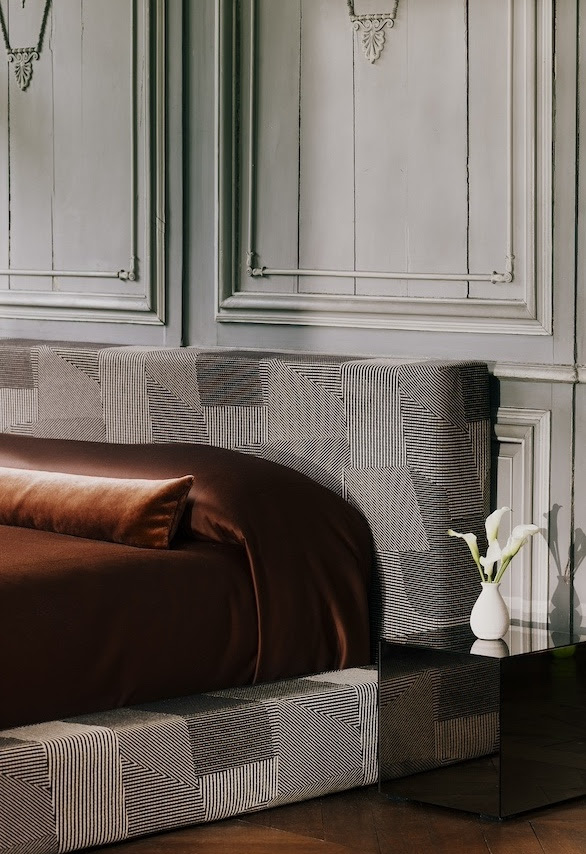
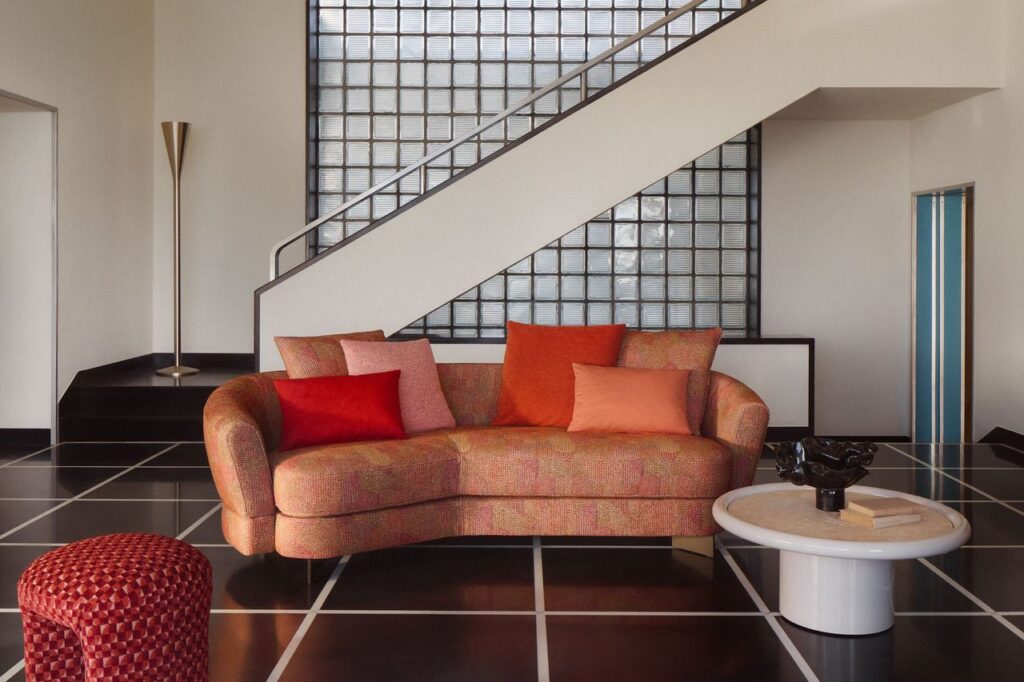
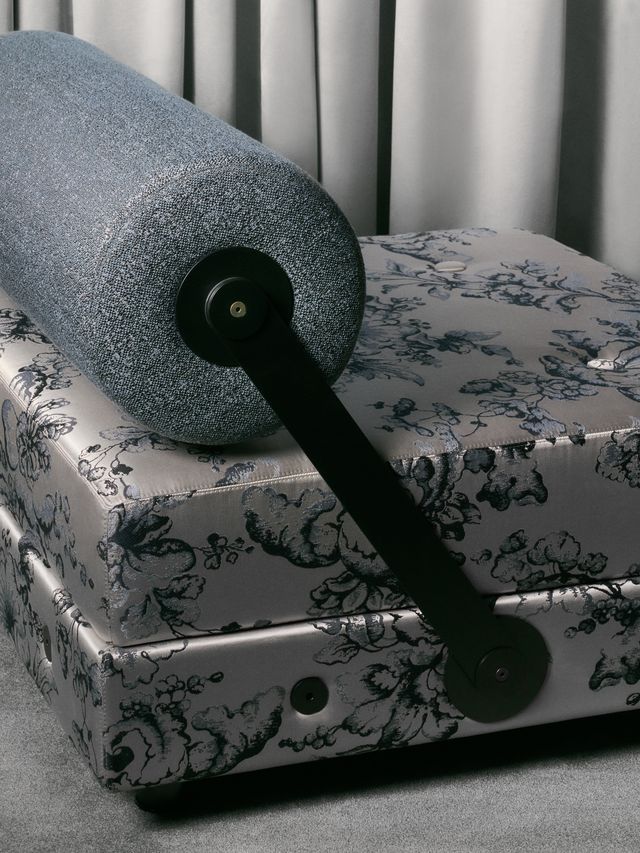
Rubelli’s new Luce Collection explores the interplay of light and fabric, using varied weaves, textures, and materials to shape color, create movement, and define spatial character, with standout pieces including the silk-like Aurora, jacquard Dark Lady, wave-textured Ripple, and geometric Spotlight.
2. CES
The Consumer Electronics Show, the annual global showcase for emerging technology, wrapped this month in Las Vegas, offering a familiar parade of screens, sensors and promises of smarter living. For much of the past decade, interior designers have approached those promises apprehensively, developing all sorts of tricks to hide tech. Cables were routed behind millwork, televisions were disguised as or disappeared behind framed art, and speakers blended into walls and ceilings. Even this year, there was still plenty of that: Amazon’s Ember Artline lifestyle TV and its redesigned mobile interface were meant to soften the presence of hardware, for example.
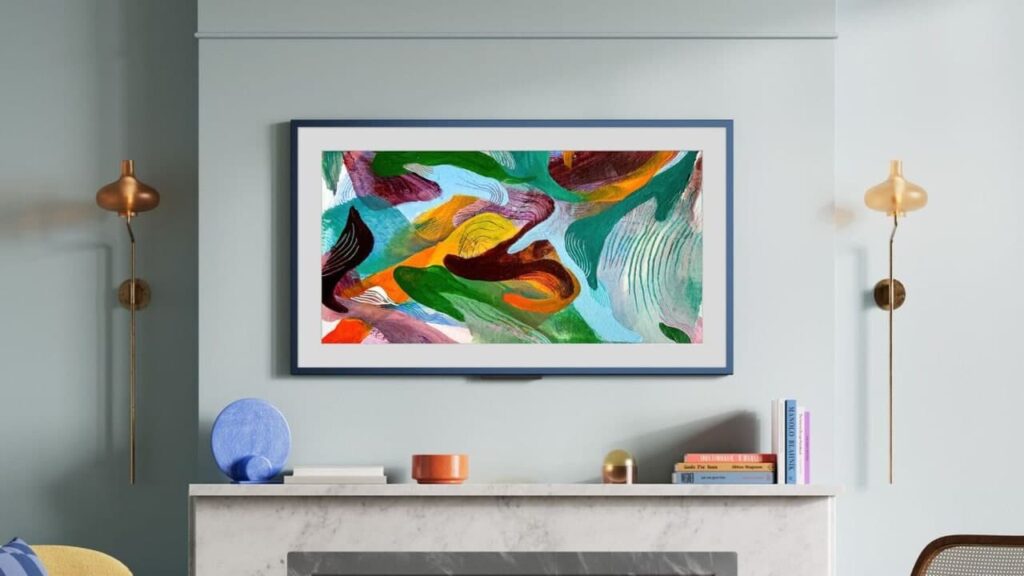
But the dominant story at CES 2026, aesthetically, was not about how to hide technology but about how to live with it openly. The most notable introductions were neither masked nor overtly futuristic. Their colorful, subtle glows leaned into the Y2K nostalgia trend. Products were designed to behave like ordinary domestic objects, suggesting we may be at an inflection point where designers decide to treat technology not as a novelty nor something to be camouflaged but as an expected layer of daily life. A few examples:
Ikea
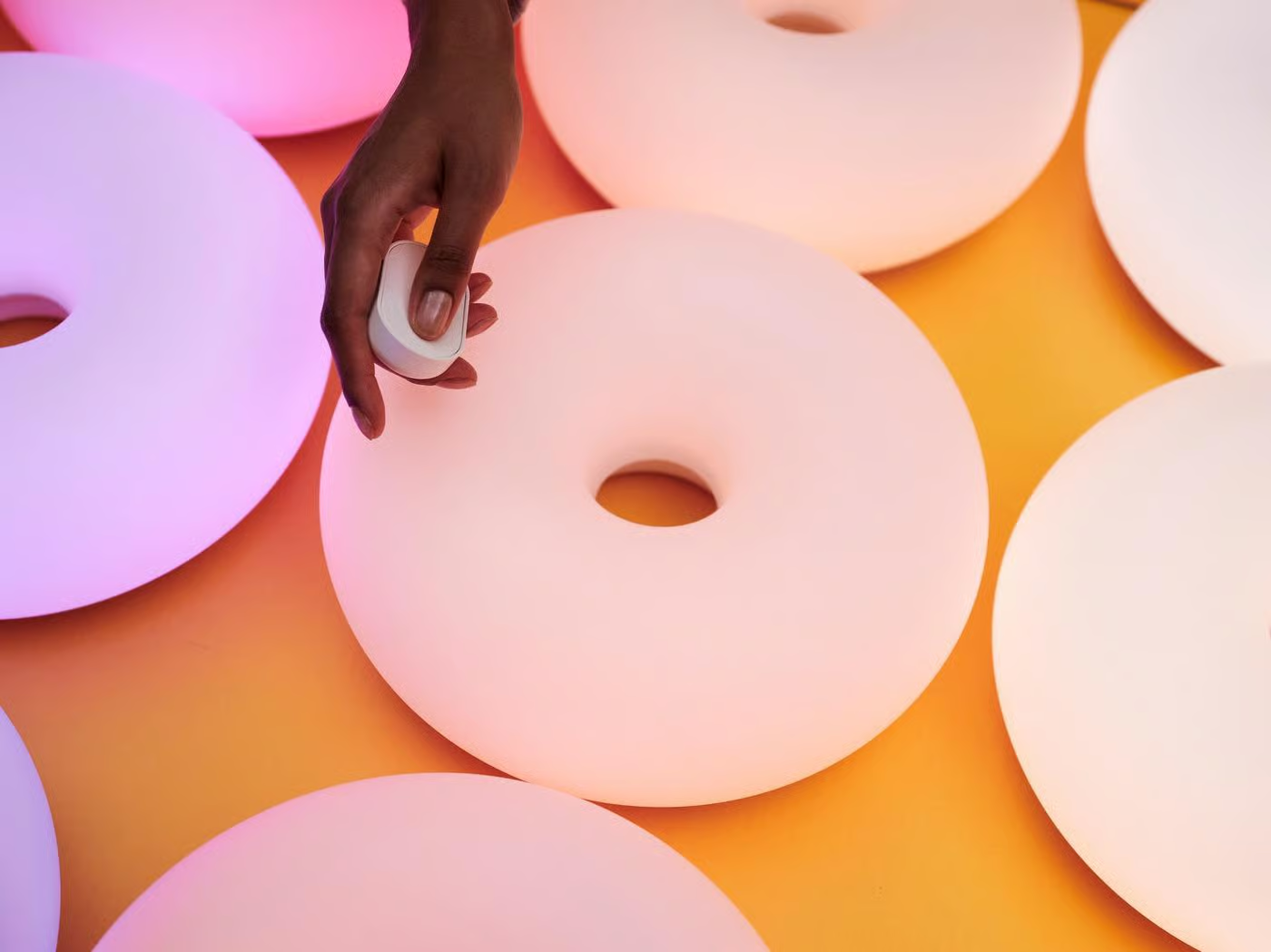
IKEA’s Varmblixt lamp used Matter integration not to advertise connectivity but to let a sculptural, donut-shaped light shift across 12 tones like a piece of ambient décor.
Govee
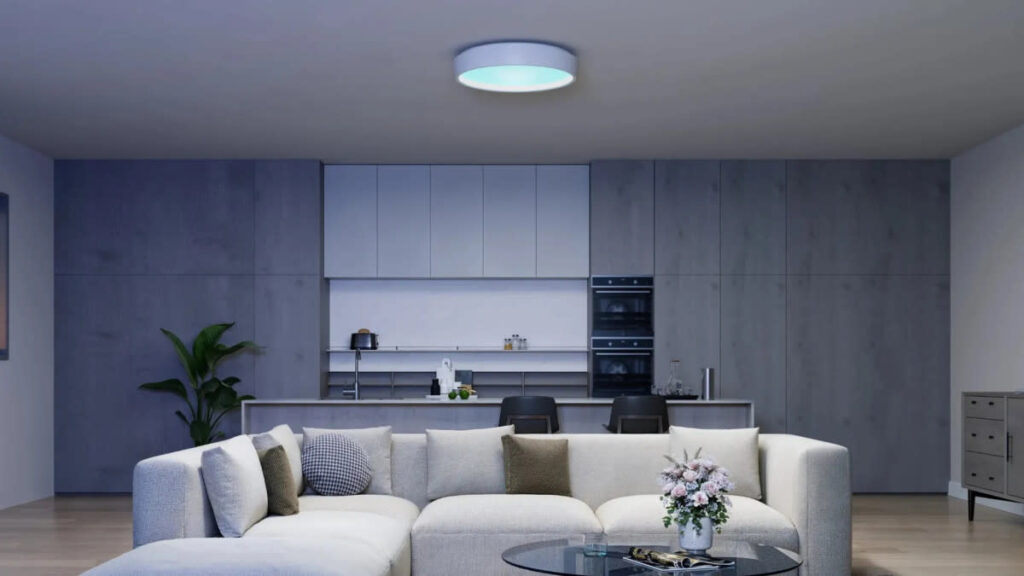
Govee’s Sky Ceiling Light simulated skylights in saturated blues and oranges, offering mood and illusion for windowless rooms rather than another utilitarian fixture.
Smsung Bespoke AI Fridge
Samsung’s Bespoke glowing refrigerators embed AI screens that suggest recipes and displayed schedules, and even comes complete with an AI wine manager.
LifX

Lifx’s mirror featured edge-lit panels that functioned as both lighting and art.
There were also robots – lots of AI robots. But even though a robot that folds my laundry sounds awesome, it’s not yet ready for prime time. Simply put: They are scary and don’t work well enough. Their faceless, humanoid forms sit too deep in the uncanny valley to be consumer-friendly so I anticipate these intros to all be busts.
Other consumer electronics for the home that were well-received, however; were gadgets and apps that pertained to home security and safety, like the whole home back-up battery from BioLite designed to keep the home running in the case of a blackout and fire and security alert systems on doors and stovetops. Speaking of fire safety…
3. California rebuilds, resilience and impermanence
We started this year with rainfall in Los Angeles, a welcome reprieve from this time last year when wildfires ravaged north, east and west of the county. One year later, what progress has been made on the homes destroyed in the fires? Not much, it turns out.
Debris from 10,000+ parcels was cleared in nine months, twice the volume of 9/11 Ground Zero cleanup, meeting or surpassing early goals. However, fewer than a dozen homes (two in Pacific Palisades, seven in Eaton/Altadena) are fully rebuilt, far below hopes for dozens or scores, with only 14-20% of destroyed homes permitted and 70% of households still displaced. Construction on more than 900 sites trail expectations due to insurance shortfalls, costs doubling payouts, labor shortages and disputes, leaving experts like those at Urban Institute noting “inequality emerging” as only well-resourced owners advance. – According to the New York Times as of writing this.
As a result, I, along with many in the LA design-build community have been pondering what will eventually be rebuilt and how designers and builders are approaching the rebuild.
There has been a subtle shift in how we discuss the longevity of buildings. The word resilience has replaced sustainability as the buzz word of the moment, but this update is hopefully more than mere rebrand or sloganization. Resilience and the flexibility that comes along with it, is a central part of centuries-old design philosophies, from cultures outside of our own.
In the recently released third edition of Cross-cultural Chairs – Matteo Guarnacia’s anthropological look at chair design in the world’s most populated countries – a passage from the section on Nigeria stood out to me. Wale Lawel writes: “What makes Nigeria’s megacity Lagos, the most exciting place to think about furniture is the city’s underlying cynicism towards the notion of “property.” This is a cynicism upheld by years of generational but uniquely African distrust for anything supposedly permanent…”
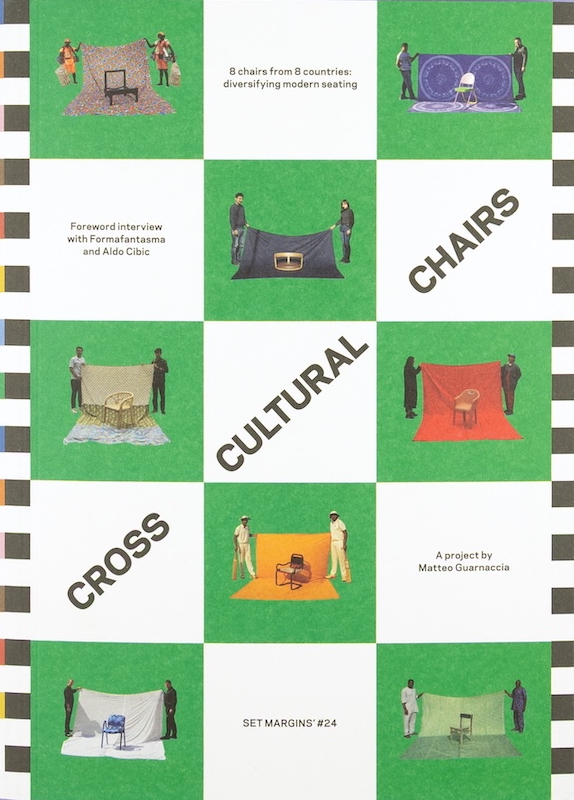
He goes on to set-straight that this isn’t a front-of-mind political ideology that frames all property ownership as theft, but rather, is a culturally embedded instinct. Its a permanent callus from years of political and climate instability. “Rather we are opportunists,” he says, ”who believe anything can happen… Here, where “no condition is ‘permanent;’ where islands can emerge or disappear in the time it has taken you to read this…all property must change hands –even as waste.” A similar skepticism toward permanence emerges in Japanese design discourse, where impermanence is not merely a condition of circumstance, as in Lagos, but a guiding aesthetic principle rooted in material choice and cultural philosophy.
I first revisited Rosella Menegazzo and Stefania Piotti’s 2014 book Wa: The Essence of Japanese Design, when I was thinking about the recent uptick in popularity of wabi-sabi design, but I came across something relevant to the conversations surrounding “resilience building” too. They make reference to an essay in Italian writer Italo Calvino’s Collection of Sand, which is devoted to the role of wood in Japanese culture and design. They hold up his argument as the clearest account that distinguishes Western design philosophy from Japanese: the latter based on the lightness and impermanence of wood versus the former which is based on the strength and permanence of stone.
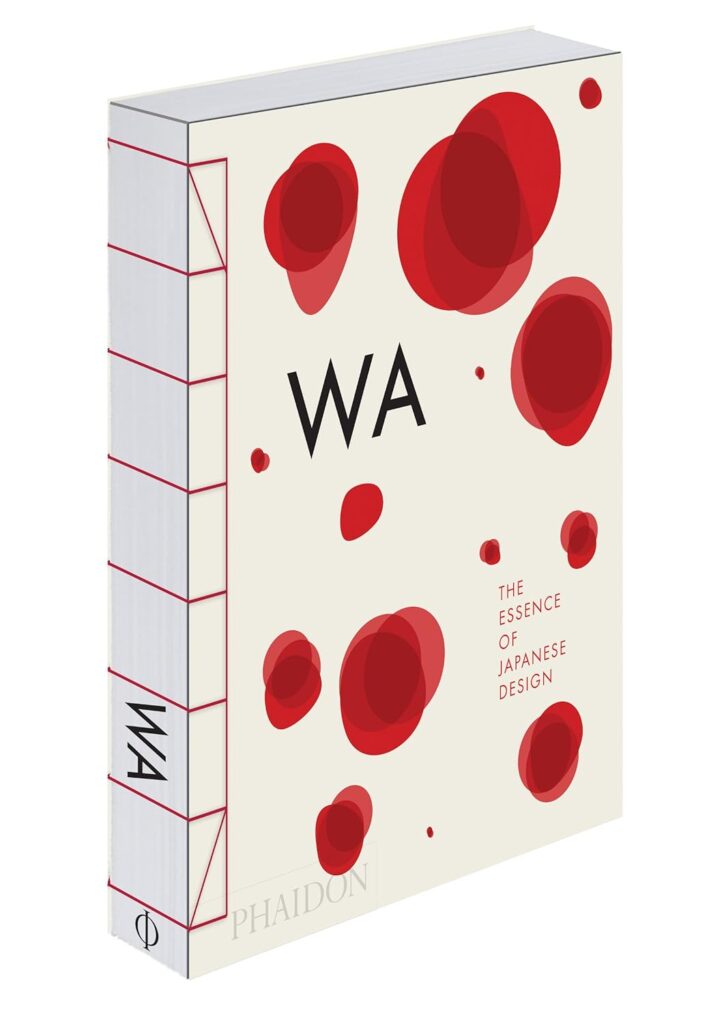
The ethos of the impermanent underpinning design from Africa to Asia for centuries is key to informing what we need to do when it comes to our approach to manufacturing, building and designing with resilience. These centuries-old design philosophies reject both wastefulness driven by profit and the rigid notion that sustainability requires products to last forever.
The Japanese ‘Wa’ value of resilience and flexibility doesn’t stem from distrust or instability, the way it does in Africa, but it arrives at the same conclusion: That no amount of design intent can freeze time. That we are going to have to work with nature, as it is now and how it will be, if we hope to coexist with it.
The good news is that new technologies and building materials, like mycelium composites, hempcrete, self-healing concrete and smart façades that actively respond to their environment allow buildings to adapt rather than merely endure. Yet innovation alone is not enough: policy sets the limits for what is possible, and progress depends as much on regulatory guidance as on creative design.
Initiatives like USGBC-California’s fire rebuild guide give us some actionable guidelines on how to proceed within the existing system. And this February: The Hammer Museum is presenting In Focus: Transformation, a free public program curated by The World Around, the global platform for architecture and design, and the Fondation Cartier pour l’art contemporain, which spotlights visionary architects and designers who are already actively confronting a world in ecological, social and political flux by designing with resilience. The path forward lies in further embracing impermanence, working with natural systems and designing not just to last, but to endure thoughtfully in an uncertain future.
4. Could Dallas, Texas become a year-round design destination?
If any US city has the ability to make itself a year-round design destination, it is Dallas, Texas.
This January alone hosted a Winter gift market, Lightovation, and Round Top’s Winter edition was a day-trip drive away. Off market-season, there are just as many events, galleries and activations to attend in and within driving distance from Dallas in Marfa, McKinney, Waco, Austin and beyond.
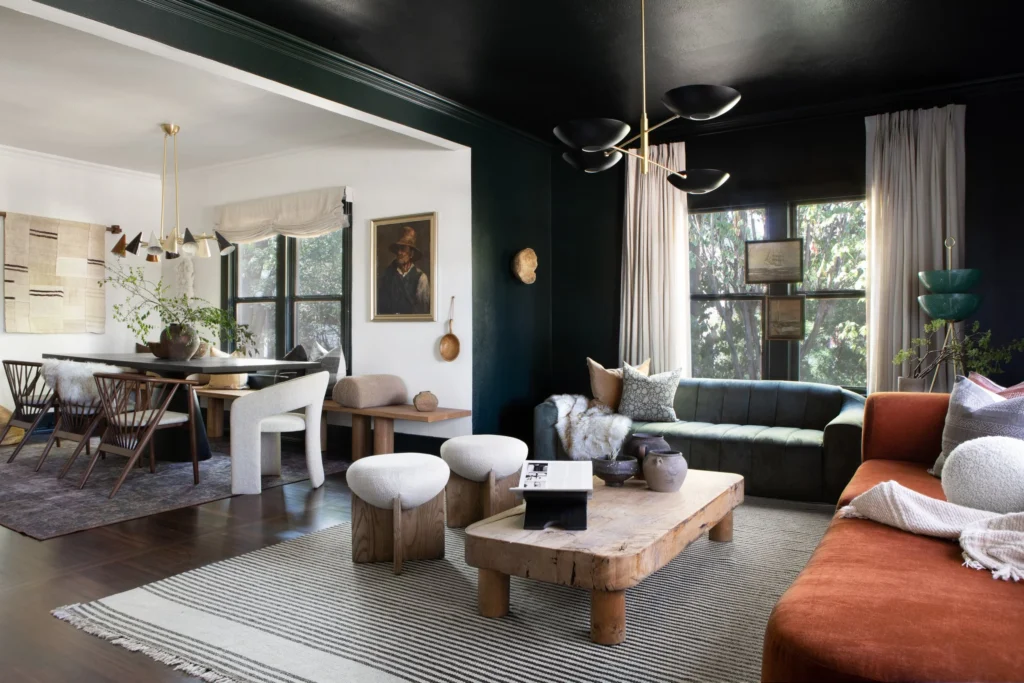
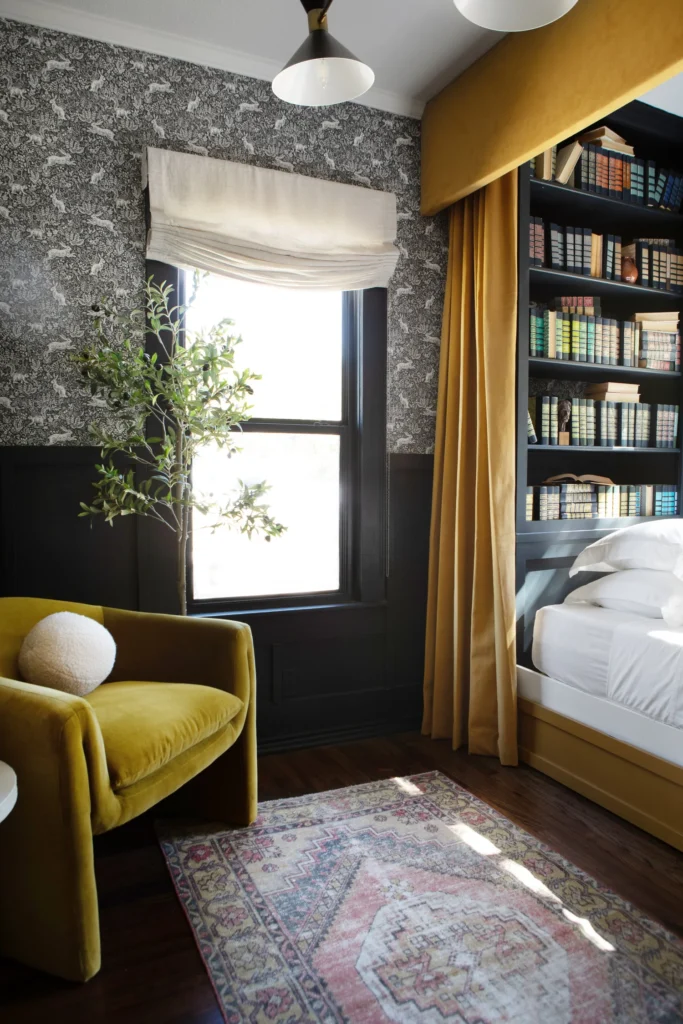
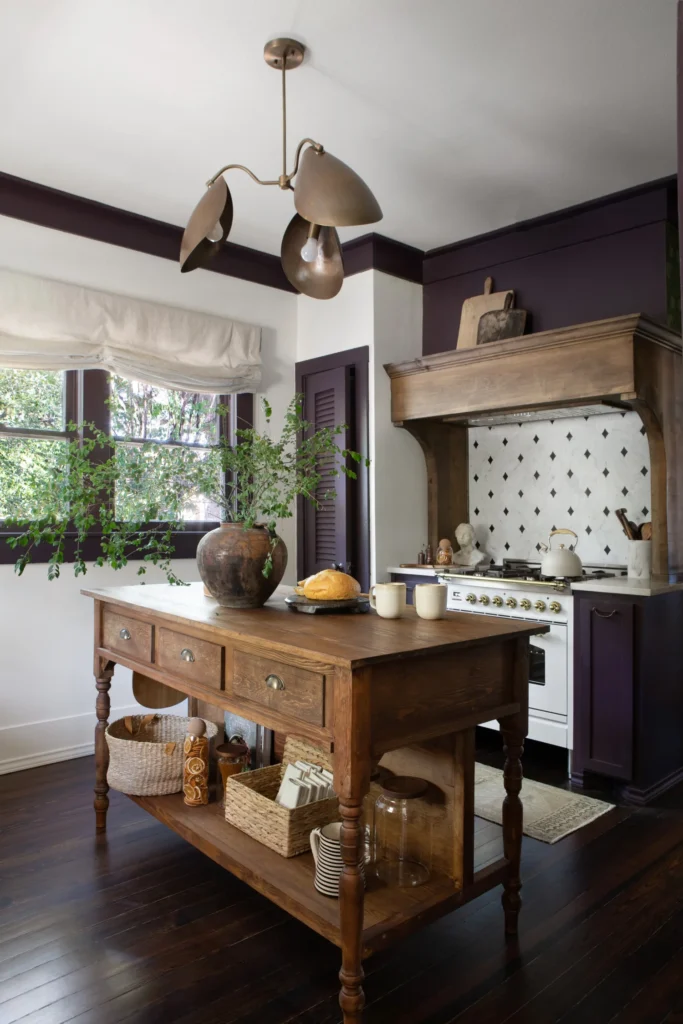
The tastes are varied, the houses are big and even if your flight gets canceled in a snowstorm (Which has happened to me twice leaving Dallas in January), there’s still plenty to see if you get stuck in town for another few days. And that is the imperative for a town becoming a year-round design destination.
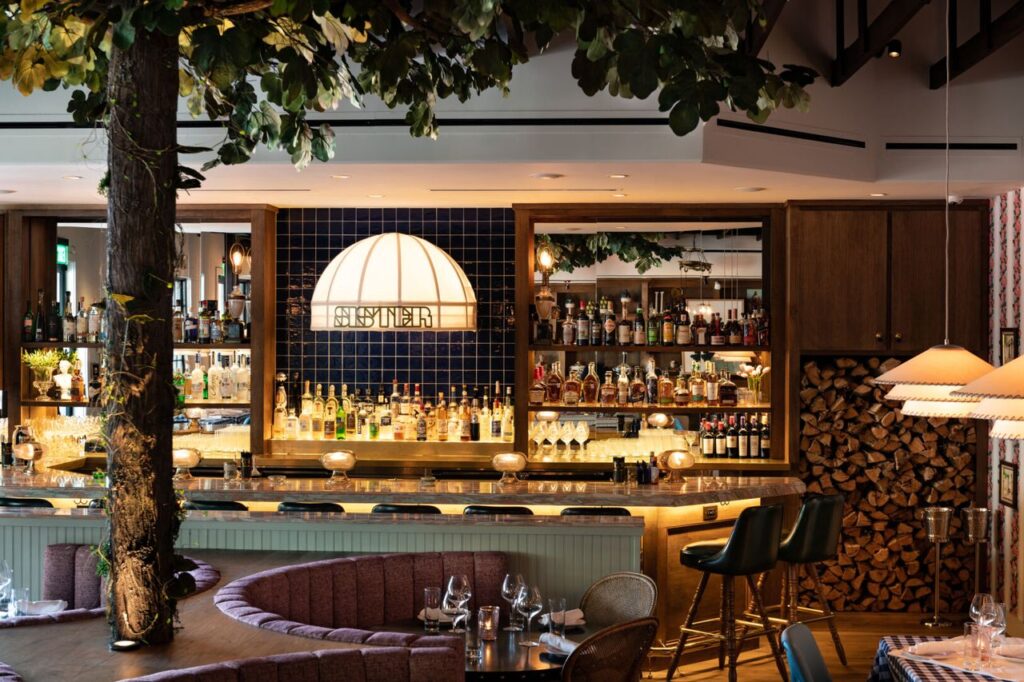
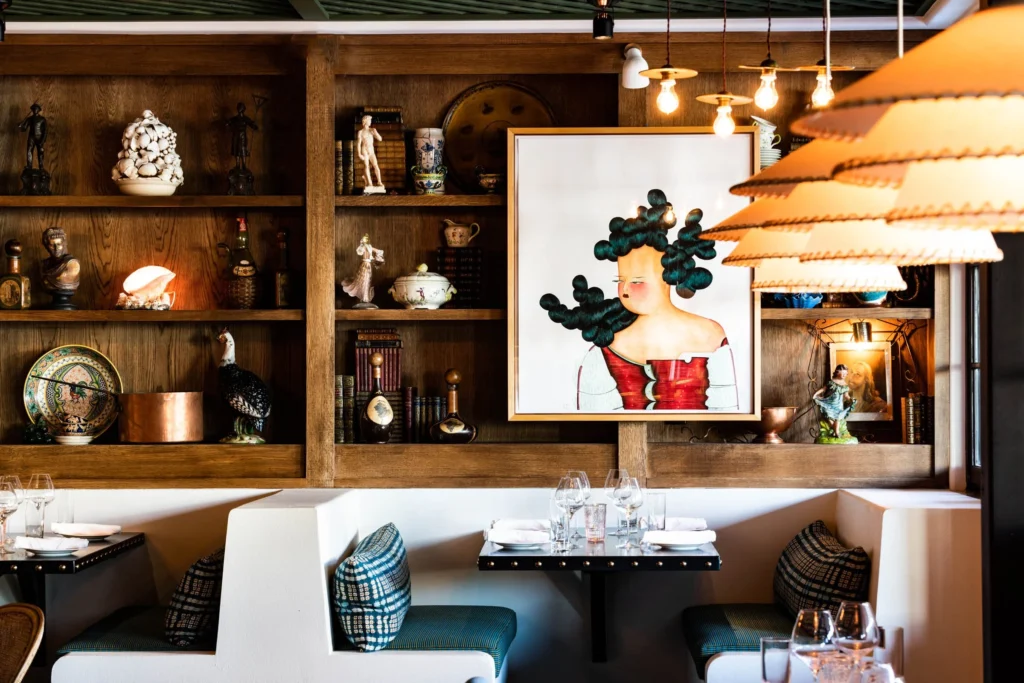
What do you do after a day at the design show or with an afternoon or morning off? What else is there to see, be and do? How are the museums? The shopping? The food scene? How are the hotels? And, practically speaking: How easy is the destination to get to from anywhere else in the world?
Designers care about these things and derive inspiration from them. If a designer is going to take time away from their work back home and travel to a show, they need it to be worthwhile – in the showroom and outside of it. Top-tier markets like Los Angeles, New York, Paris and Milan are the obvious examples of this and I am bullish that Dallas, if they play their cards right, could be next.
Why? Namely because Dallas is already one of the best towns in America for art dealership which usually correlates to the health of a town’s design scene. In this case, though, the two aren’t in close conversation with one another. They haven’t explored enough of their overlap.
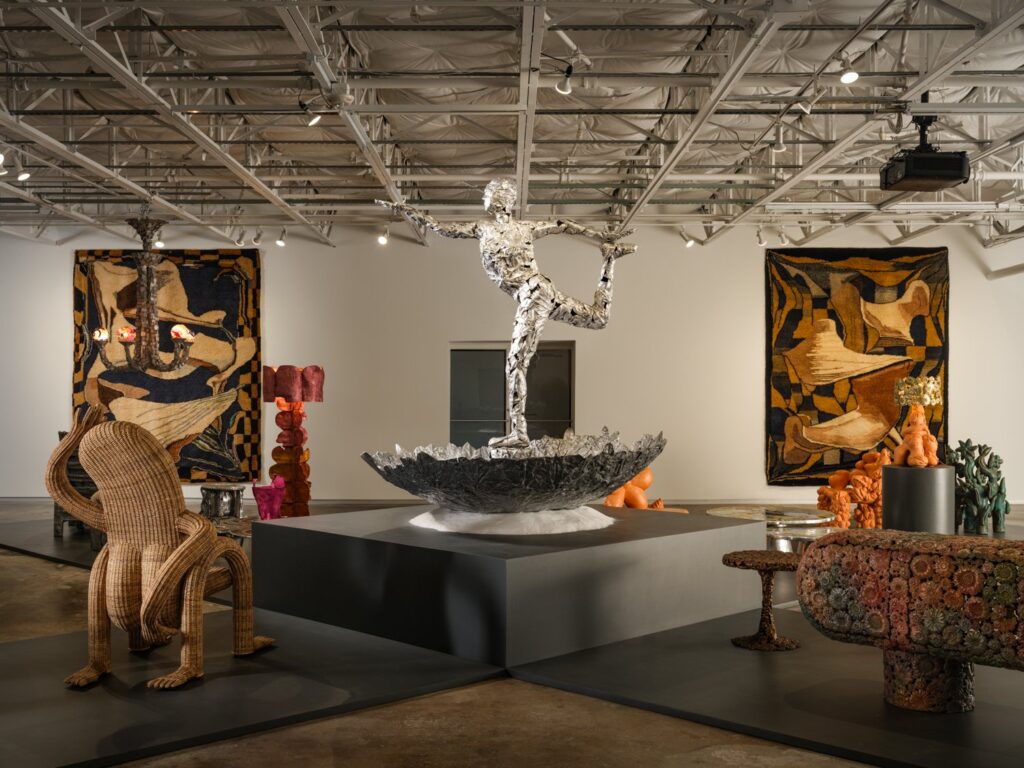
But first, what are the conditions that make a robust art scene? I use four main criteria: Culture, Competition, Capital and Capcity (or space). Compared to other major US art-and-design markets like NYC, LA and Miami, Dallas has a unique balance of these elements that the interior design markets aren’t fully capitalizing on yet.
Let’s start with the last point: Capacity, or space, is a commodity in NYC, for example, where the average home size is less than 1500 square feet. This is something Dallas doesn’t have to worry about – everything is bigger in Texas, after all. Which means artists can sell more and bigger pieces. Ditto with furniture manufacturers. But what New York City lacks in space, it makes up for in meeting other criteria, like competition.
NYC, like Los Angeles or Miami, is an invite-rich town. It has an over-saturation of cultural activities to do on a Friday or Saturday night and places that stay open late. While this is a fantastic thing for cultural interest, too much competition amongst events can be a disadvantage when you’re trying to draw a crowd together for an art show opening or any other design-related soiree. Dallas is in a sweet spot – It’s a vibrant city, but it’s also not the city that never sleeps. This gives Dallas a competitive edge to concentrate attention and build a robust scene of its own.
Dallas’ geography is also helpful. If you’ve spent time in Los Angeles, you know you’re not going to get to a gallery opening on the East Side if you’re coming from a lunch meeting in Santa Monica – unless you enjoy spending two hours in bumper to bumper traffic to go 20 miles. (If you’ve ever been in town for LA Art Week and made the mistake of trying to leave Frieze and get to Felix before it closes, you know what I mean) As much as people in Dallas complain about traffic, it’s not that bad…
This is one area, though, where NYC and Paris have nearly all other cities beat with their world-class public transit systems. While Dallas isn’t fully advantaged in this category, there are still flat, walkable districts or areas a quick drive away from one another (Think Highland Park to Lower Greenville) that could host a variety of design events in design-centric venues and restaurants in one night, allowing for event-hopping the way Paris Deco-Off does so successfully every January or the Hollywood Design Walk does in the Spring.
The confluence of cultural curiosity, capital, competition and capacity make Dallas ripe for becoming a global design destination. The more lock-step manufacturers, showrooms, designers and design show producers are with one another and with other local cultural ongoings, the more robust and attractive the design scene will be year-round to both local designers and designers abroad. All the pieces are already there, they just need to be stitched together.
5. Sheldon Harte’s refined desert homes
January, for me, revolves around the desert.
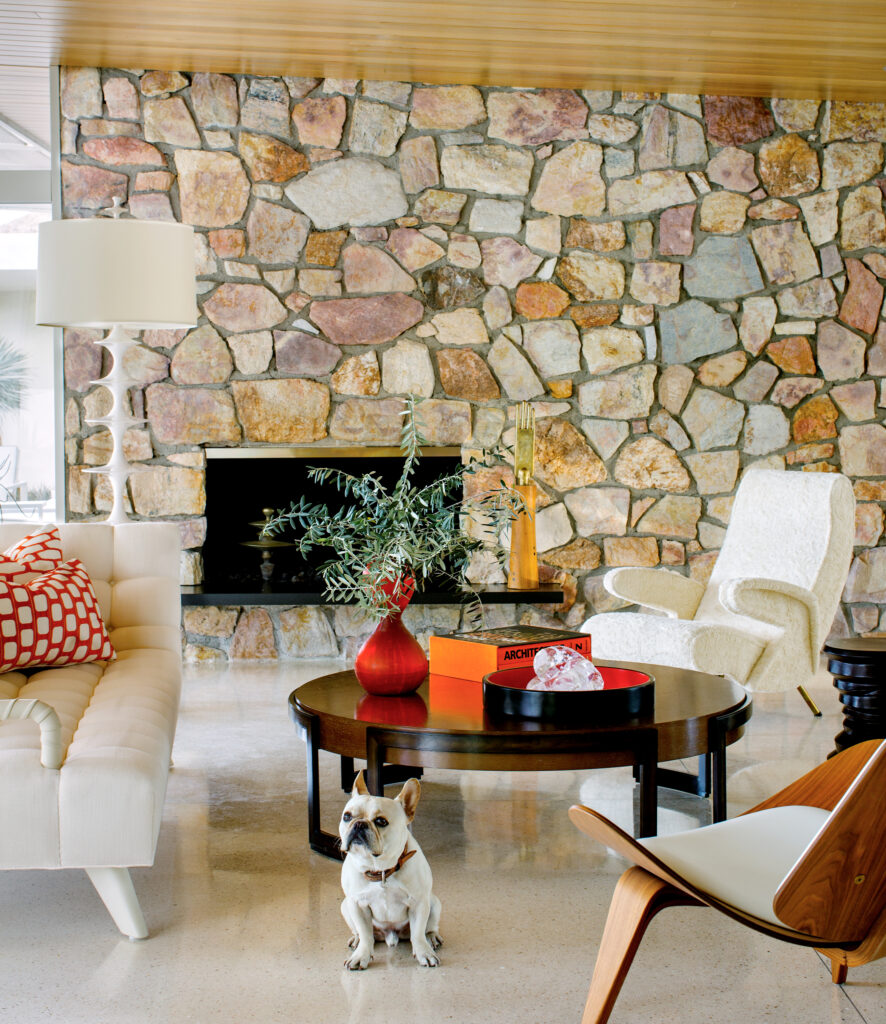
Having just returned from my Winter Mecca #1 to the desert for the Palm Springs International Film Festival and prior to #2 for Modernism Week this February, there’s no question why I find myself extra drawn to midcentury modern clothing, furnishings, architecture and media this time of year. (Mad Men rewatch, anyone?)
This year, driving from the La Quinta golf courses lined with Spanish Revival condos, through the candy-colored streets of downtown Palm Springs, and across a stretch of Cahuilla Indian reservation punctuated by a gleaming casino, I thought about the variety of the California desert and how it continues to evolve despite the tension between native tribal cultures, retirement communities, and the preservation of its signature midcentury modern style, even as a younger, queerer demographic brings contemporary design sensibilities into the mix.
How does a place so frozen in a particular time period stylistically, and celebrated for it every year during Palm Springs Modernism Week, change in a meaningful way? Designer Sheldon Harte’s approach to the interiors of California desert homes might show us the answer.
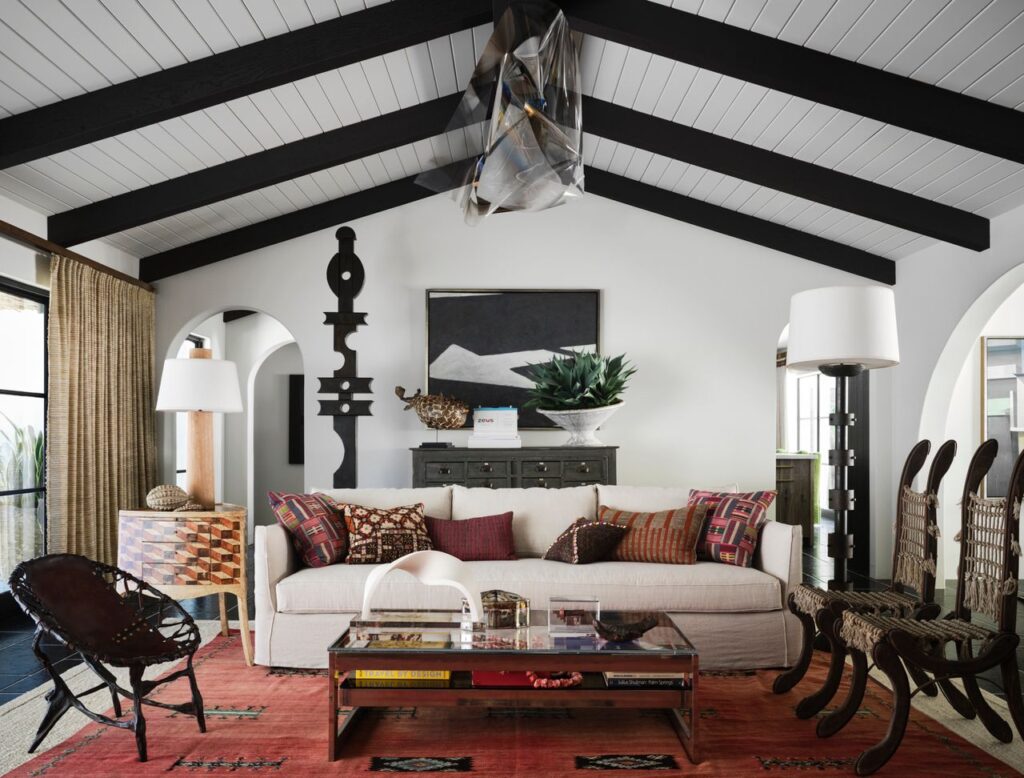
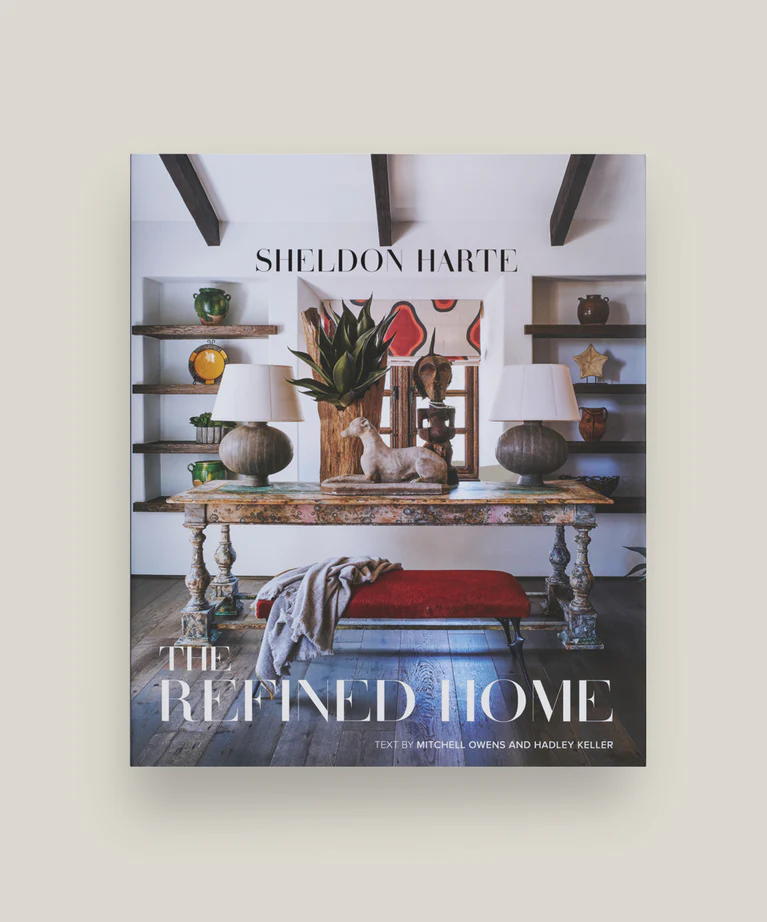
While the crux of The Refined Home, the new design book written by Mitchell Owens and Hadley Keller featuring the luxurious portfolio of designer Sheldon Harte, is not focused on Palm Springs and the surrounding desert communities exclusively, much of the portfolio featured in the book is located there. And whether intentional or not, it speaks to the evolution of desert design and nods to its future in a beautifully comprehensive way.
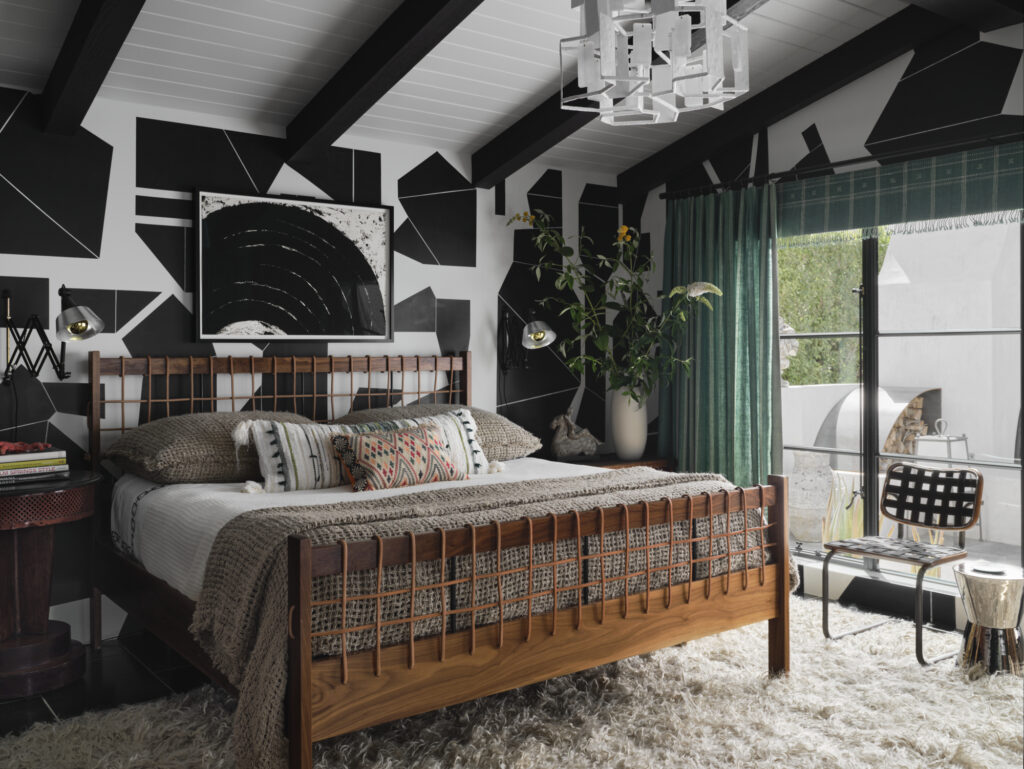
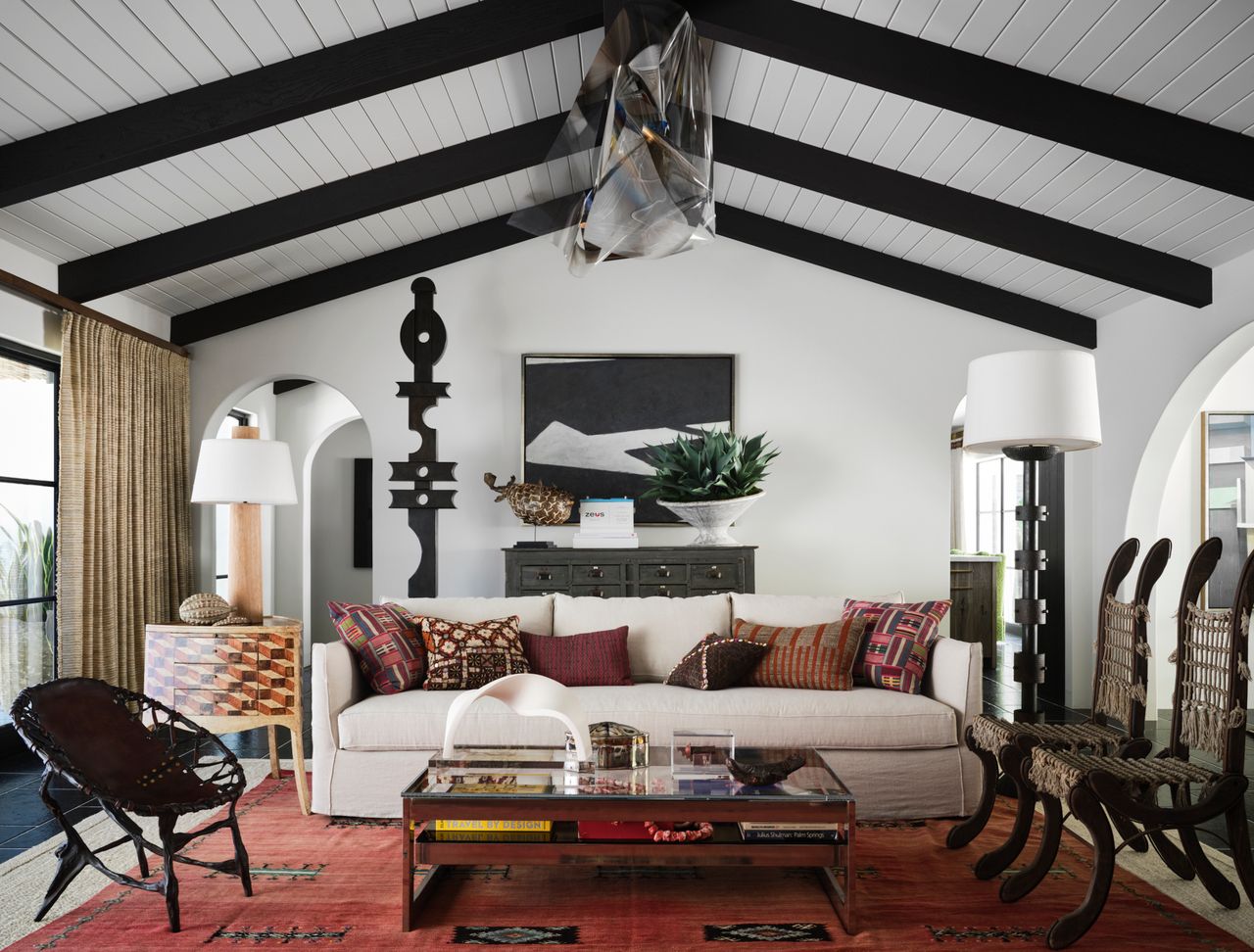
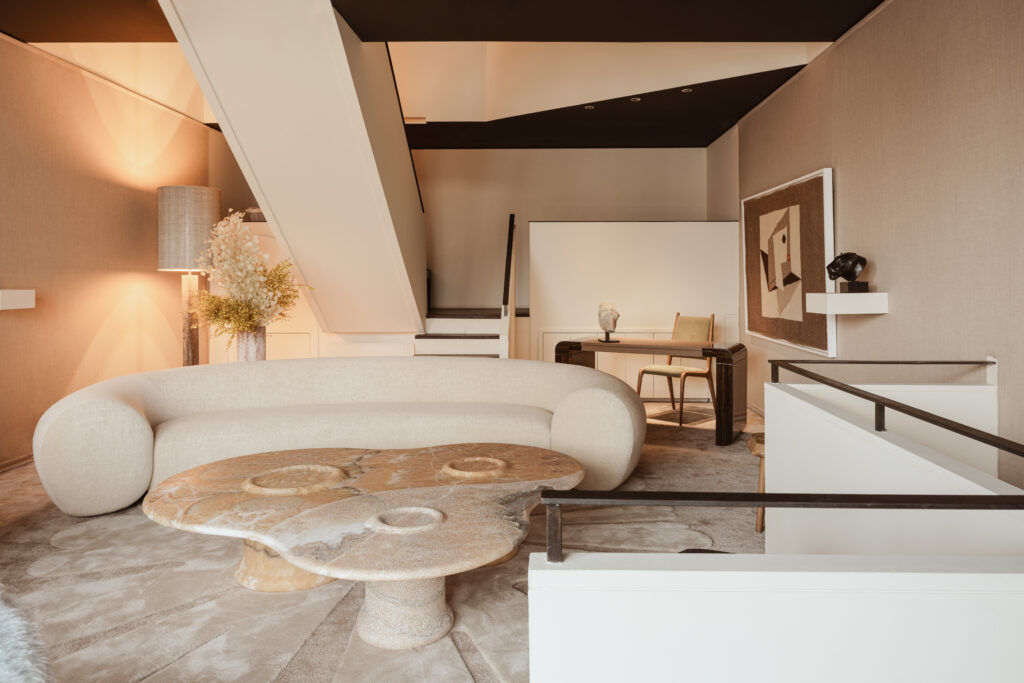
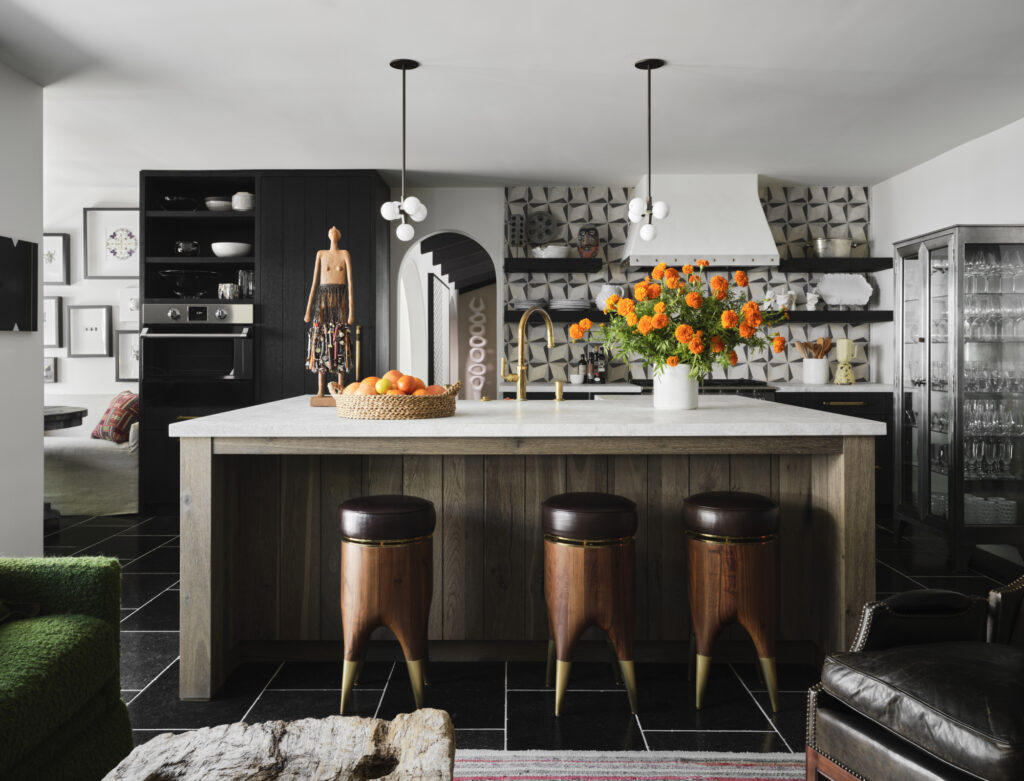
A run of three projects back-to-back in the middle of the book, progresses from a chapter featuring Sheldon’s own Spanish-style desert home cheekily titled ‘These are some High End Gays,” (My people!) to a quintessential midcentury-modern home and lastly, a contemporary take on desert dwelling for clients who are true individualists with a penchant for contemporary art.
These latter were clients who opposed tradition and cliche and challenged Sheldon to design something that was entirely fresh without intruding on its landscape the way a ‘Modern-industrial-farmhouse-at-the-beach’ might. The results are nothing short of extraordinary and it is clear to see why Harte is among the best in his class of designers. Projects like these only come from the designers who are truly trusted by their client and in love with the project and history of the community it is situated within.
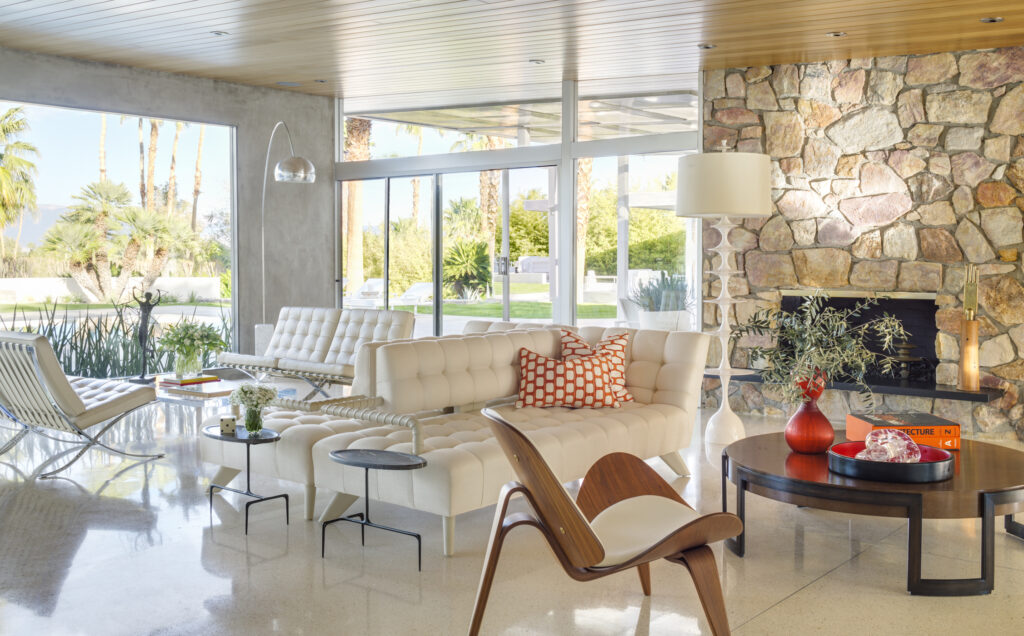
(When I asked for imagery from the projects in the book I could run with this review that project was the one project I didn’t get access to. So, you’ll just have to trust me and purchase your own copy of the book to see for yourself 😉 )
TLDR: Here’s the upshot
- Paris Design Week: Maison + Objet and Paris Deco Off leaned into romance, nostalgia and craft — warm and jewel-toned palettes, handmade and organic forms, and flora-forward motifs defined the season’s offerings.
- CES 2026: The shift is here — tech is no longer being hidden in the home but designed to live openly within it, behaving like ordinary domestic objects with colorful, ambient aesthetics.
- California rebuilds slowly: One year after the wildfires, fewer than a dozen homes have been fully rebuilt. The moment is prompting deeper reflection on impermanence as a design philosophy, drawing on centuries-old traditions from Japanese and African design culture.
- Dallas has serious potential: The confluence of capital, cultural curiosity, capacity and a thriving art scene positions Dallas as a strong candidate for the next year-round global design destination — if the industry connects the dots.
- Desert design is evolving: Sheldon Harte’s portfolio of California desert homes offers a compelling vision of how a region so defined by a single era can move forward with nuance, individuality and deep respect for place.