



The Relationship Business:


What veteran sales rep Connie Flick can teach designers—and brands—about service, trust and showing up
By Jane Dagmi
Connie Flick thought she was good at retiring.
At 70, exactly as she’d promised, Flick officially called it a career. There were parties. Several of them, in fact, hosted by designers across the Carolinas who wanted to celebrate the woman who had spent nearly two decades as their Phillip Jeffries rep. The company feted her in New Jersey, too.
Three weeks later, she had other thoughts.
“Oh God, what have I done?”
There were only so many times she could clean the house, rearrange things or work in the garden. What Flick missed was work—but perhaps even more, she missed helping people.
So she unretired.
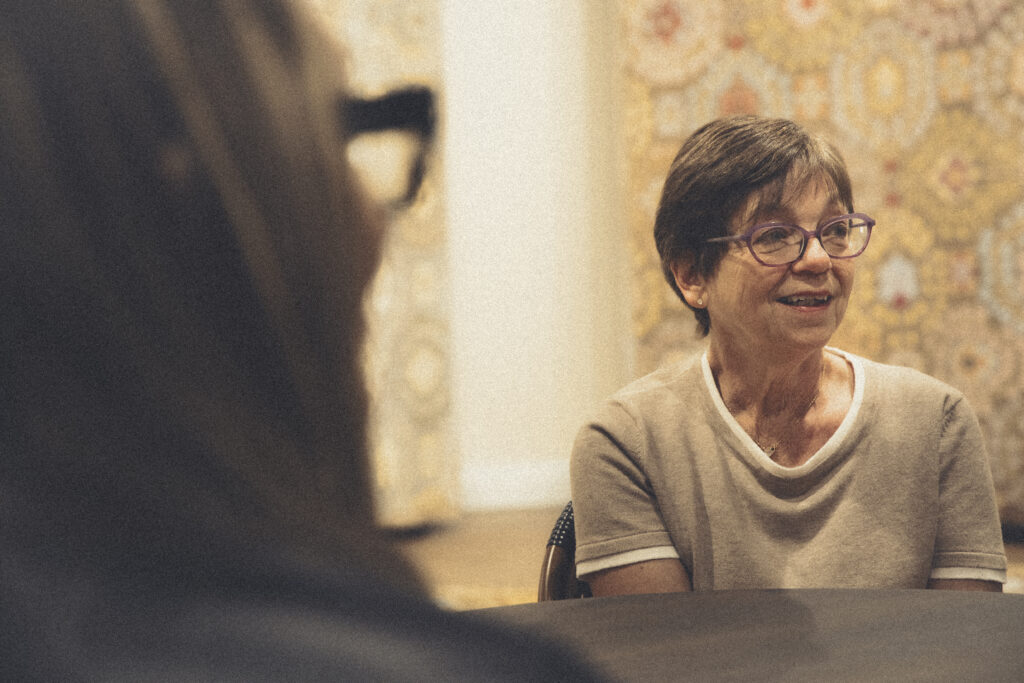
This isn’t particularly surprising once you understand how Flick approached a career spanning decades in the home furnishings industry. For her, being a sales rep was never simply about selling product. It was about supporting people, finding solutions, and doing her best to make everyone happy along the way.
Flick entered the industry in rugs, first working at Pace Stone and later managing the Feizy showroom in High Point. She knew virtually nothing about rugs when she began, but on her first day, the owner handed her the keys and offered a piece of advice she never forgot.
“I want you to pretend this is your business, not mine,” he told her. “You treat it like your business.” Flick took that to heart.
After a brief move to St. Louis, she returned to North Carolina and went to work with an independent sales representative who was nearing retirement. They traveled together for about six months before he turned his lines over to her. Among the nine that she inherited was Philip Jeffries, a remarkable wallcovering company that would ultimately become the focus of her business.
Beginning in 2008, Flick covered North and South Carolina. She was Phillip Jeffries’ only independent road rep. She was not, however, the stereotypical road warrior. She doesn’t like to drive.
Fortunately, her husband Jim had retired and happily became her driver. He chauffeured her throughout the Carolinas while Flick answered emails and worked from the passenger seat. Before long, her clients knew him, too.
“We’d drive up and they’d go, ‘Is Jim in the car?’” she recalls, noting how designers would bring him coffee or a brownie while Flick was in meetings.
When Jim died, Flick discovered just how much of the operation he had quietly managed. He knew where every designer lived and worked; she realized she barely knew how to get anywhere. Clients, knowing her aversion to driving, sometimes offered to pick her up.
For Flick, those relationships were never incidental to the job. They sustained the job.
Today, designers can search, sample, specify and often order product without ever sitting across from a sales representative. Flick understands the convenience. What concerns her is what can be lost—the relationship.
“I would stress to new designers coming into the business: you really need to get to know your rep,” she says. “You don’t have to meet with them every time they call, but if you’re going to buy from that company over and over again, you need to know them.”
A good rep can become an extension of the design studio. They know the product deeply. They know what samples are available and can often secure larger ones. They know what is new, what may be delayed, what has changed and whom to call when answers aren’t obvious. A rep learns the designer.
Flick remembers clients calling to say what they needed for a project and leaving the rest to her.
“I knew their taste. I knew what they were looking for. So I did the work for them,” she says. ”When you call that rep, you get your rep, and that rep knows you.”
That relationship is essential and tested every time a piece of furniture arrives damaged, an order is delayed or, in the case of wallcovering, it doesn’t look the way it should. The rep is often the person who can navigate the company, investigate what happened and advocate for a solution.
But advocacy, Flick points out, does not mean automatically taking the customer’s side.
“Sometimes that does get a little sticky. You want to provide the best service you can to your customers while also honoring the company,” she says, explaining that a rep has obligations in both directions: to the designer who relies on them and to the manufacturer whose product and policies they represent.
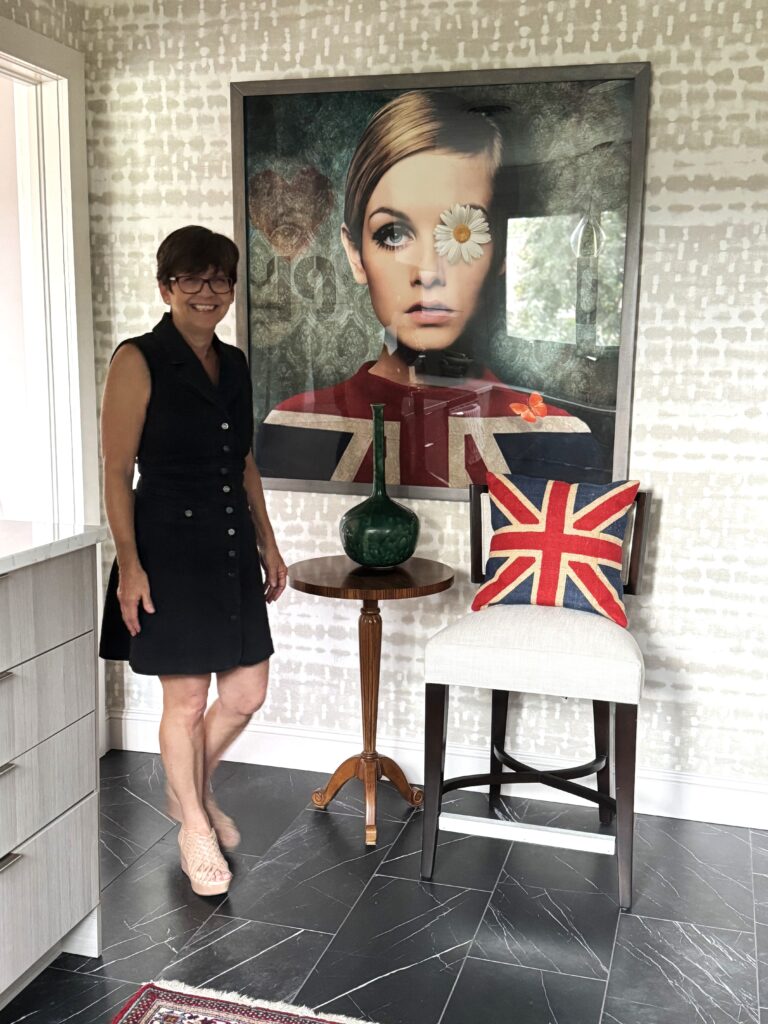
“That was the hardest thing,” Flick admits. “I want to please everybody. I want everybody to be happy. And it didn’t always work out that way.”
The relationship works best, in other words, when responsibility goes both ways – a lesson Flick learned early in her repping career when she ordered the wrong chest for a customer who had already been waiting six months.
“I didn’t make an excuse,” she recalls. “I said, ‘I’m sorry. I reversed two numbers and I ordered you the wrong piece.’”
The customer surprised her.
“She said, ‘You know, I should be mad, but you were so honest with me. You could have told me any lie.’” Flick never forgot it.
Radical accessibility has always been part of Flicks MO—perhaps to a degree few boundary police would advocate today.
“If you called me on a Sunday, I’d answer the phone. If you called at night, I’d answer the phone,” Flick says. “Because if you’re working, I’m working.” Flick thought if you don’t get me, you’re going to call someone else.
For reps to serve customers best, Flick says, brands need to give reps the tools and product education to do so. Philip Jeffries brought its representatives in for annual intensive training, giving them firsthand knowledge of the materials they were selling.
Flick also urges brands to pay reps on time. “That’s your livelihood,” she says. “You’re out there spending your money.”
And for goodness sakes, she encourages sales directors to allow reps to savor a win before immediately asking how they will raise the bar next time.
Flick’s mind was rarely off the customer and what could shift their interest and put a smile on their face.
When a designer declined catalogs because she said she could simply bookmark selections online, Flick returned with bookmarks made from Philip Jeffries wallcovering.
When Prince George was born, she paired baby-blue wallcovering with its-a-boy candy. When Flick turned 60, she sent some of her longtime clients Christmas ornaments bearing her picture—and delighted in receiving photographs of herself hanging from their trees.
“When you’re doing that, you’re thinking about your clients,” she says, smiling generously.
While every representative has their own personality, Flick is a hugger. The rep who succeeded her, not so much. “You trained them,” she told Flick, whose gestures worked because they were genuinely hers.
During her time in wallcovering, she began organizing pop-ups with representatives of complementary luxury brands, allowing designers—particularly newer designers and those working from home—to discover several resources in one stop. The gatherings also exposed each rep’s customers to the others, enriching the pot for all.
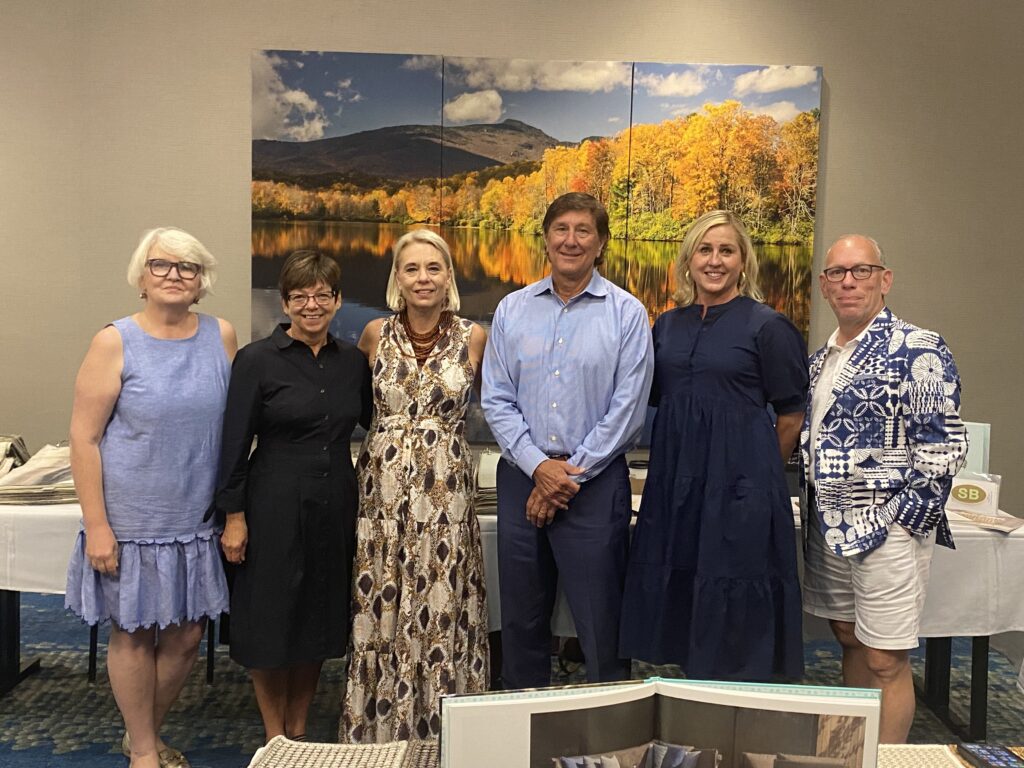
Karen Beymer Kepley, a home furnishings representative with Modern History, Ambella Home and Eliko rugs, came to know “Flicka” as both a colleague and mentor.
“As a furniture manufacturer’s sales representative, I was fortunate to learn from Connie’s wisdom and encouragement,” Kepley says. “She played an instrumental role in helping me discover new designers, new opportunities and grow professionally. She generously shared her experience and celebrated the successes of others. Throughout it all, Connie remained humble, gracious and authentic. Her kindness, integrity and generosity have touched countless people.”
These days, Flick can be found several days a week at Capel Rugs, unretired on her own terms. Helping longtime friend and showroom manager Bret Palmer with whatever he needs—as long as it doesn’t require the computer. She now gets to leave the job at the job.
“The thing I like about it is I can shut that door and go home, and I don’t have to think about it until I come back in the morning,” she says.
Not that she minds coming back. “I love working. I love what I do, so it’s really not working at all.”
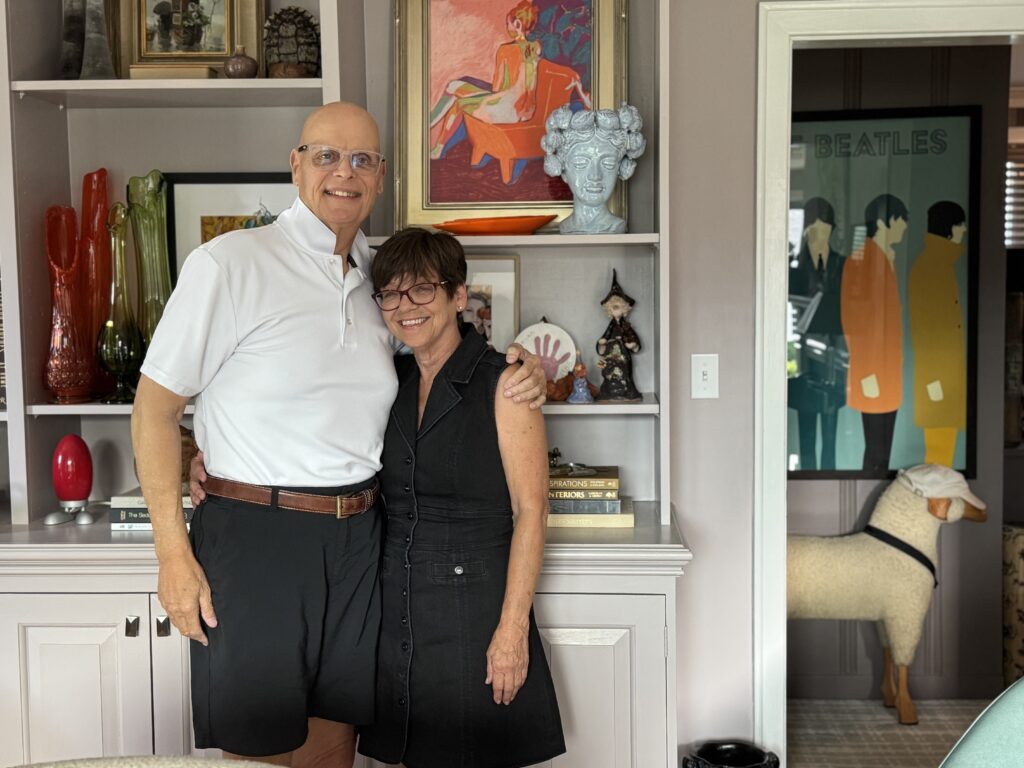
After decades of orders, samples, showrooms, road trips, problems solved and relationships built, Flick can make the whole thing sound remarkably simple.
“Just be nice,” she says. “Even when there are problems, just be nice. Everything can be worked out.”
Perhaps that is the secret to being a good rep. And, for that matter, a good customer.
Note: Header image Flick at a designer pop-up with rep friends (l to r) Randy Masters, Karen Beymer Kepley, and Holly Halterman.