
From Sourcing Art to Making Her Own: Zsuzsi Winn’s Next Chapter

After years shaping the visual identities of home furnishings brands, Zsuzsi Winn is building her own artistic vocabulary—bringing landscapes, ceramics and European craft traditions together in High Point.
When something captures Zsuzsi Winn’s imagination, she follows it.
Most recently, all the way to Portugal where she was immersed in the centuries-old tradition of azulejo tile art. Seeking out the blue-and-white tile panels she had studied from afar, she visited monasteries and churches, arranged a private visit to a tile factory, and studied with a ceramic artist. Beyond YouTube and books, Winn wanted to understand the craft from the source.
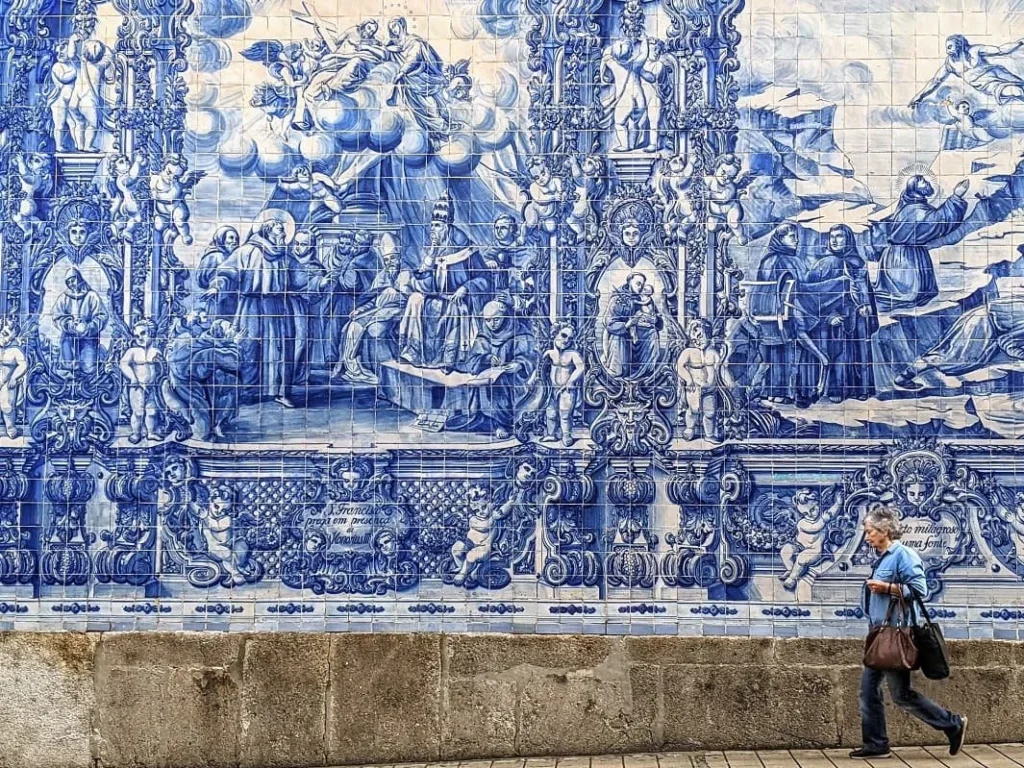
“I feel like I’m obligated not to ruin this craft,” she says of the tile work. “I want to honor it and learn exactly. And that’s one of the reasons why I went there.”
Like a method actor prepares for a role, Winn follows suit with her creativity, noting her instincts, and backing them up with study and repetition. Her work has moved from botanical illustration to sculptural mixed media, photography, landscape painting and now three-dimensional painting that incorporates ceramics.
What may look like lane changing is actually a steady accumulation of skills, influences and experiences converging naturally with intention and effort.
In the Beginning
Winn grew up in Hungary in a creative family. Her grandfather was a highly regarded blacksmith; her grandmother was a passionate crafter; and her mother loved home furnishings and antiques. Gypsy markets were a regular destination. Her path to becoming a working artist was anything but direct.
She landed in Cleveland in pursuit of the American dream in 1998. One visit to New York, and she never looked back.
Her career in home design started unexpectedly when she discovered visual merchandising by accident, passing by a Pottery Barn window dresser in action. Fascinated to learn that this was a job, she walked in and asked if they were hiring. They weren’t—not for visual merchandising, at least—so she took a sales position. Eager to learn, she volunteered to help with holiday displays and, within six months, landed the job she wanted.
Winn remembers the company’s visual merchandising “bible,” which delved into shopping behavior, customer decision-making and why people respond to certain environments. She was hooked.
Moving to Safavieh, Winn quickly advanced from visual merchandiser for one store to overseeing seven throughout the New York metropolitan area, eventually traveling to High Point Market to source accessories. On repeated visits to John-Richard, she found herself lingering in the art department, buying other people’s work while wondering if she might come here one day and sell her own.
The idea stayed with her. So did High Point.
A later position with Stickley brought her back to the city, where she remembers decompressing in a rocker on the porch of the company’s historic Johnson Street house after long showroom days. Something about High Point felt right.
Meanwhile, Winn kept stretching herself creatively. Returning to Safavieh to develop its photo studio, she learned to style through the lens of a camera, studied the visual direction of major retail partners and created her own “bible” of photo-styling guidelines. She also learned how to operate a camera and started taking photos of her own.
Learning by Doing
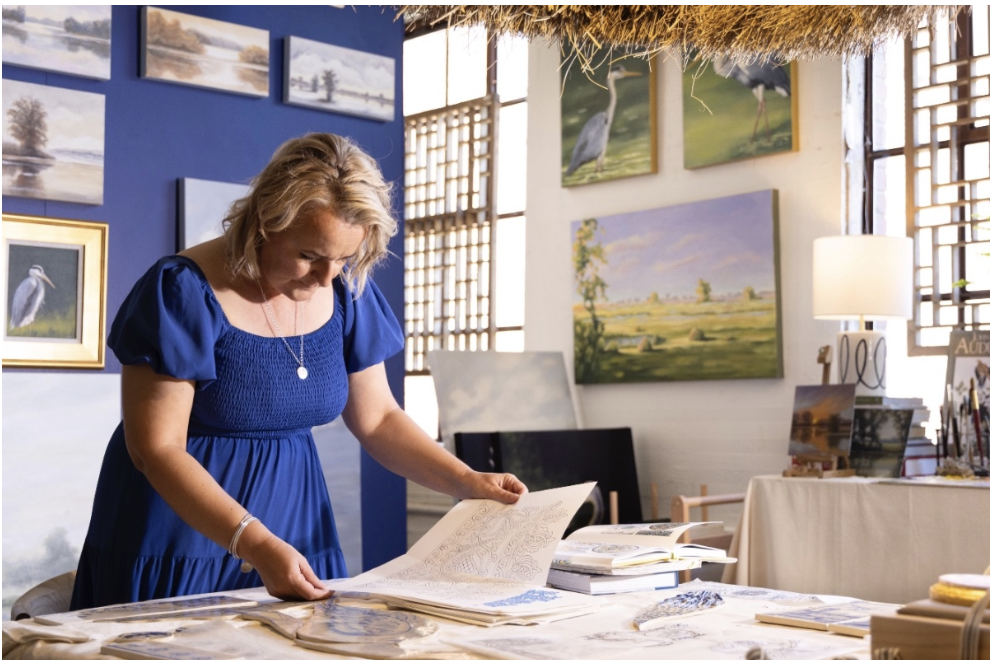
Throughout those demanding career years, Winn was making art, often taking evening and weekend classes after work.
Nature was an early obsession. She spent two years studying botanical illustration at the New York Botanical Gardens, drawing and watercoloring, taking plants apart under a microscope to better understand them.
When flat surfaces began to feel limiting, she started experimenting with recycled materials and paper pulp, building sculptural wall pieces inspired by landscape and nature. Color gradually disappeared from the work until she was working almost entirely in black and white, allowing material, texture, and form to shine.
When she felt the next itch, she returned to painting, this time learning oils and bringing back color.|
“I like to spend time with my art,” Winn says. “I don’t like fast work, because something is beautiful when you work slow. It’s like an inner dialogue opens up.”
Oil gave her that time. She could manipulate it, layer it, live with it.
The Move to High Point
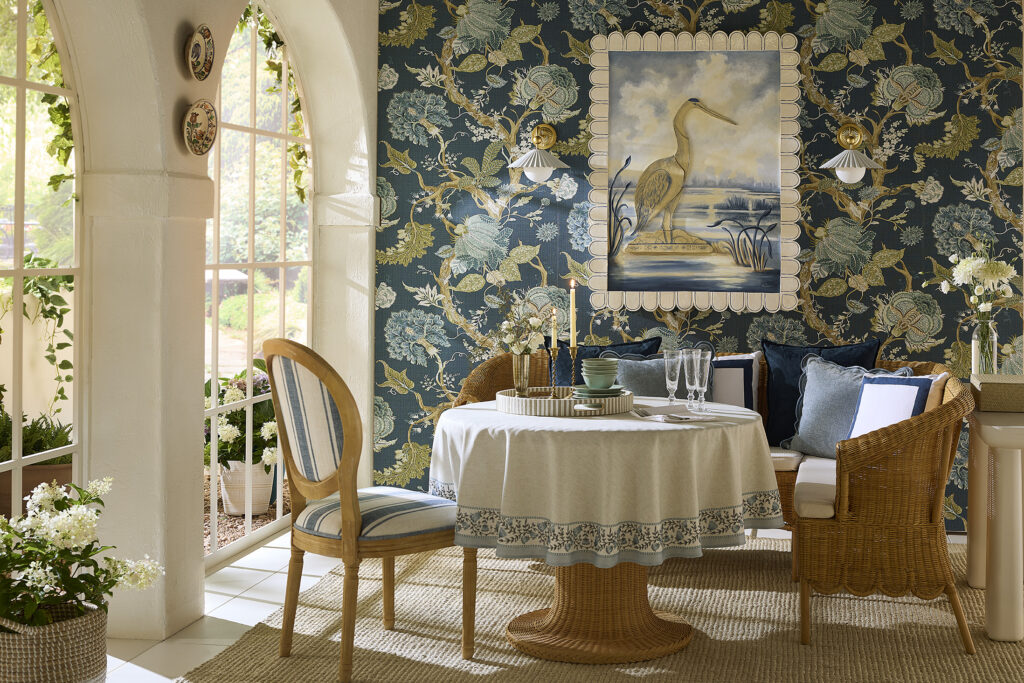
Near the end of the pandemic, Winn was still living in Westchester when a photo stylist position in High Point appeared on LinkedIn. She applied, then forgot about it. Two months later, Bassett Furniture called.
One interview became three, then an offer that included relocation. Winn hung up the phone and walked over to her husband, Jack.
“I guess we’re moving,” he told her.
“Within two months, we sold the house, packed everything and just went,” she remembers. “I had all those flashes—the warm weather, sitting on the porch, walking here. I just knew this was my calling and I needed to be here.”
Winn spent the next three years working for Bassett while maintaining an art studio at home. But she also did something important: she embedded herself in High Point.
She sought out other artists, joined an artist cohort, and found an evolving creative community at Cohab.Space. She discovered Oak Hollow Lake and City Lake Park, whose lush natural habitats offered both inspiration and a sense of peace. A new body of landscape work began to emerge.
At a group show, Winn exhibited the landscapes alongside her sculptural mixed-media work. A respected gallery director encouraged her to pursue them. She did, and people responded.
Meanwhile, something bigger was gnawing at her. After years of making art after hours, Winn began wondering what might happen if she stopped fitting her creative life around her career and gave it her full attention.
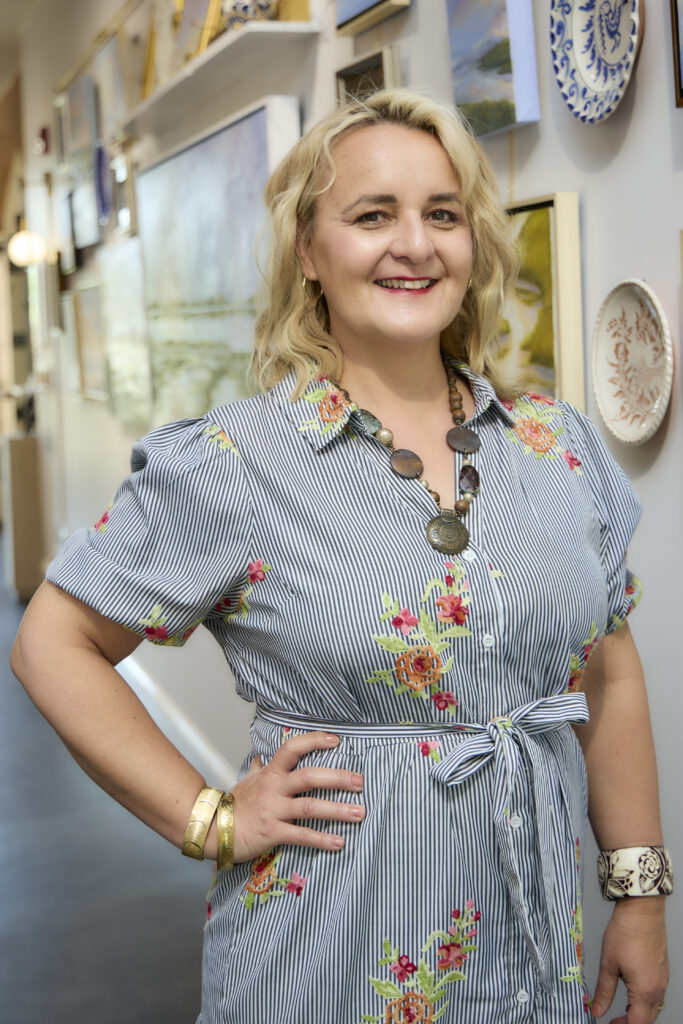
“I think every person deserves to fully explore their potential,” she says. “I was so scared I was going to regret it when I was older. I said, ‘I can always go back and get a job, but I feel like I’ve got to do this.’”
The decision to leave Bassett terrified her, and she did it anyway. Two weeks later, she remembers wondering whether she had just thrown away the career she had spent decades building.
But Winn also knew something from all those years working for established brands: nothing worthwhile happens overnight. She promised herself patience. If she had been willing to work that hard building other people’s businesses, she reasoned, she could put that same energy behind Zsuzsi Winn Studio.
Her landscape painting gave her direction, but then almost like clockwork she felt something was missing. That thing she discovered was right in front of her.
Putting the Pieces Together
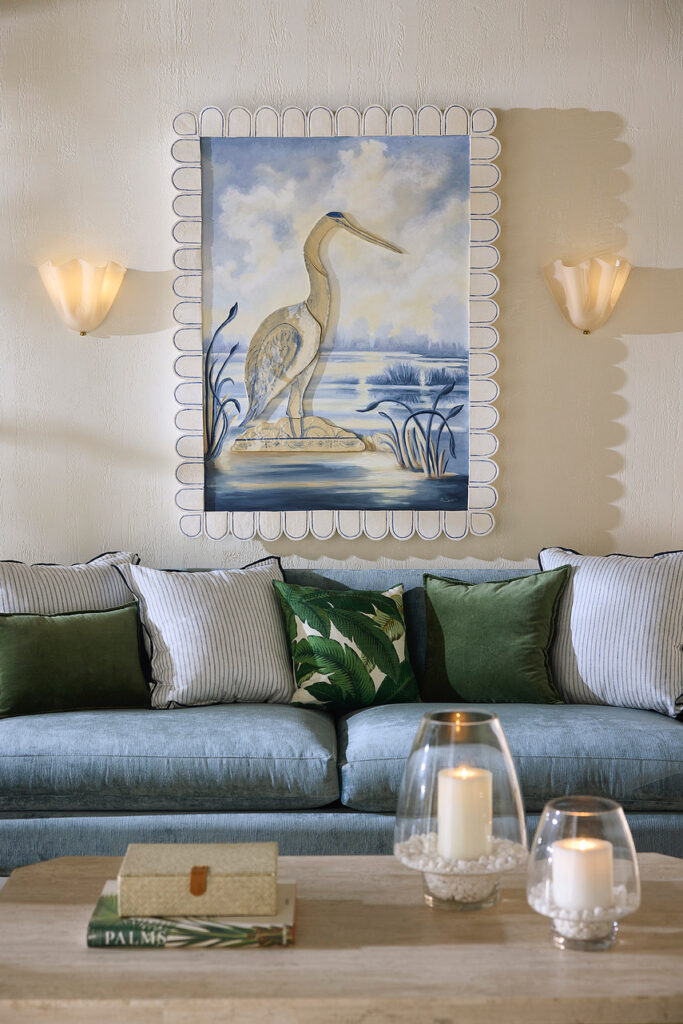
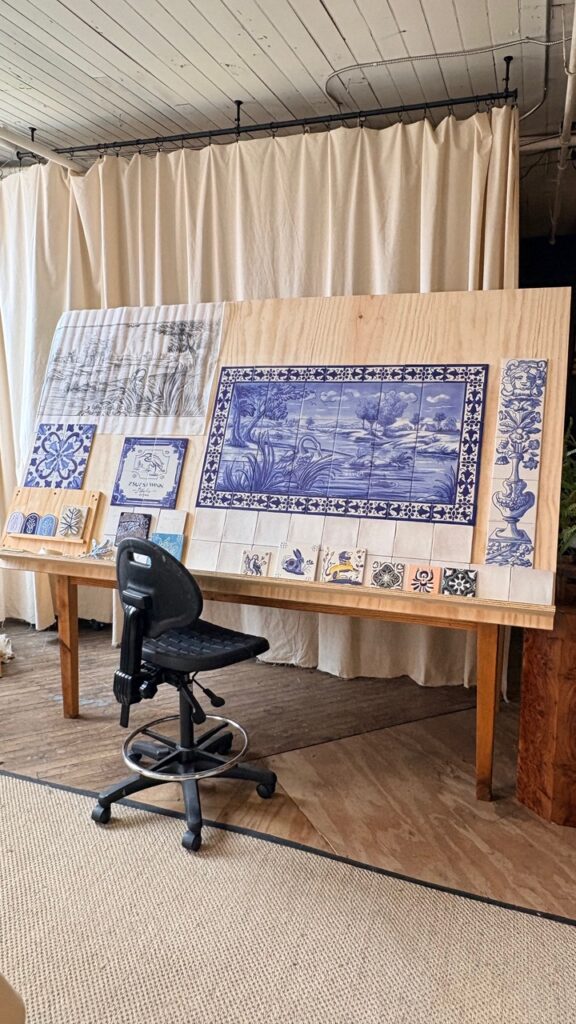
An avid collector of Eastern European pottery, Winn began looking differently at pieces she had lived with for years, including a favorite Hungarian vessel decorated with a bird. She had always put her ideas on paper or canvas. Why not ceramics?
One week before Fall Market, the work taking shape in Winn’s Cohab.Space studio feels unique and strangely inevitable: landscapes meeting ceramics meeting Hungarian motifs and Portuguese technique, all rendered in always-right blue and white.
Winn is already imagining it at architectural scale—site-specific installations for residential and hospitality spaces, collaborations with interior designers and, eventually, furniture incorporating her tile work.
There is a pattern here. Winn follows her gut. Curiosity sends her down a path. And through most of it, High Point has been a constant—first as the place where she sourced other people’s work, then the place she chose to call home, and now the place where others can source her work. The many pieces of her own creative life—figuratively and literally—are coming together.
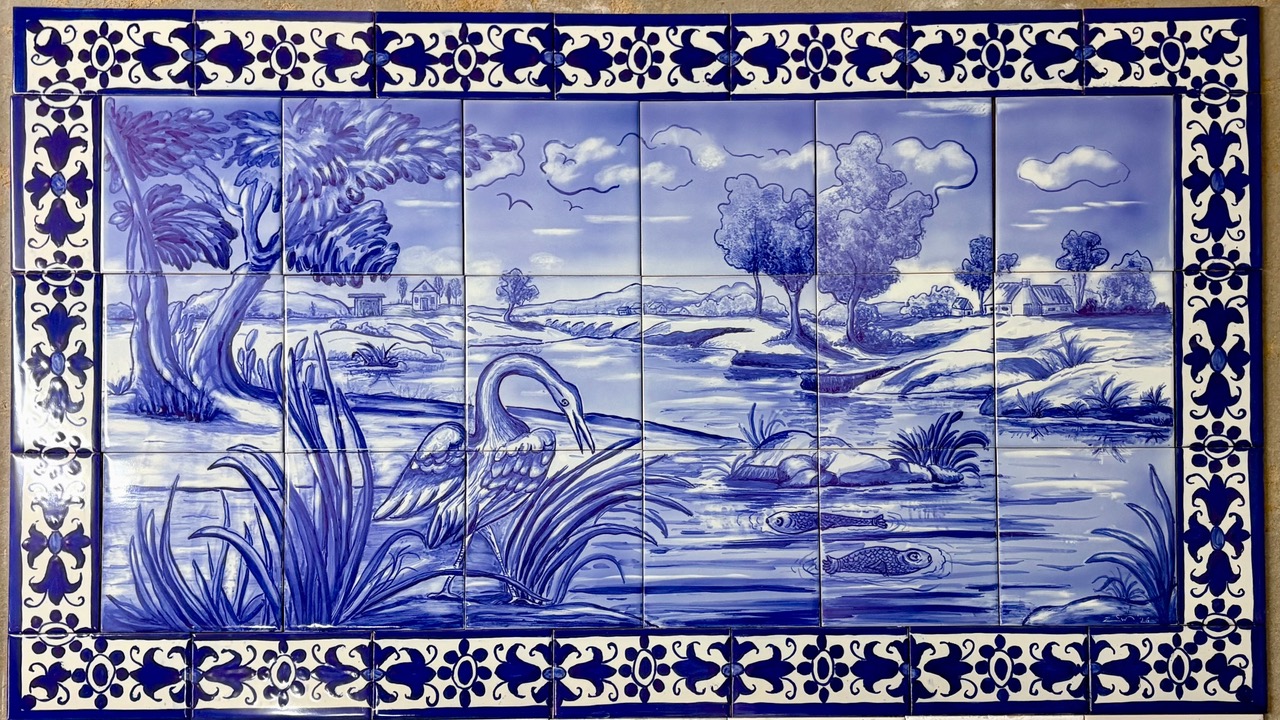
Note: Header image is Winn’s latest work “The Heron and Fish” on display at Cohab.Space