
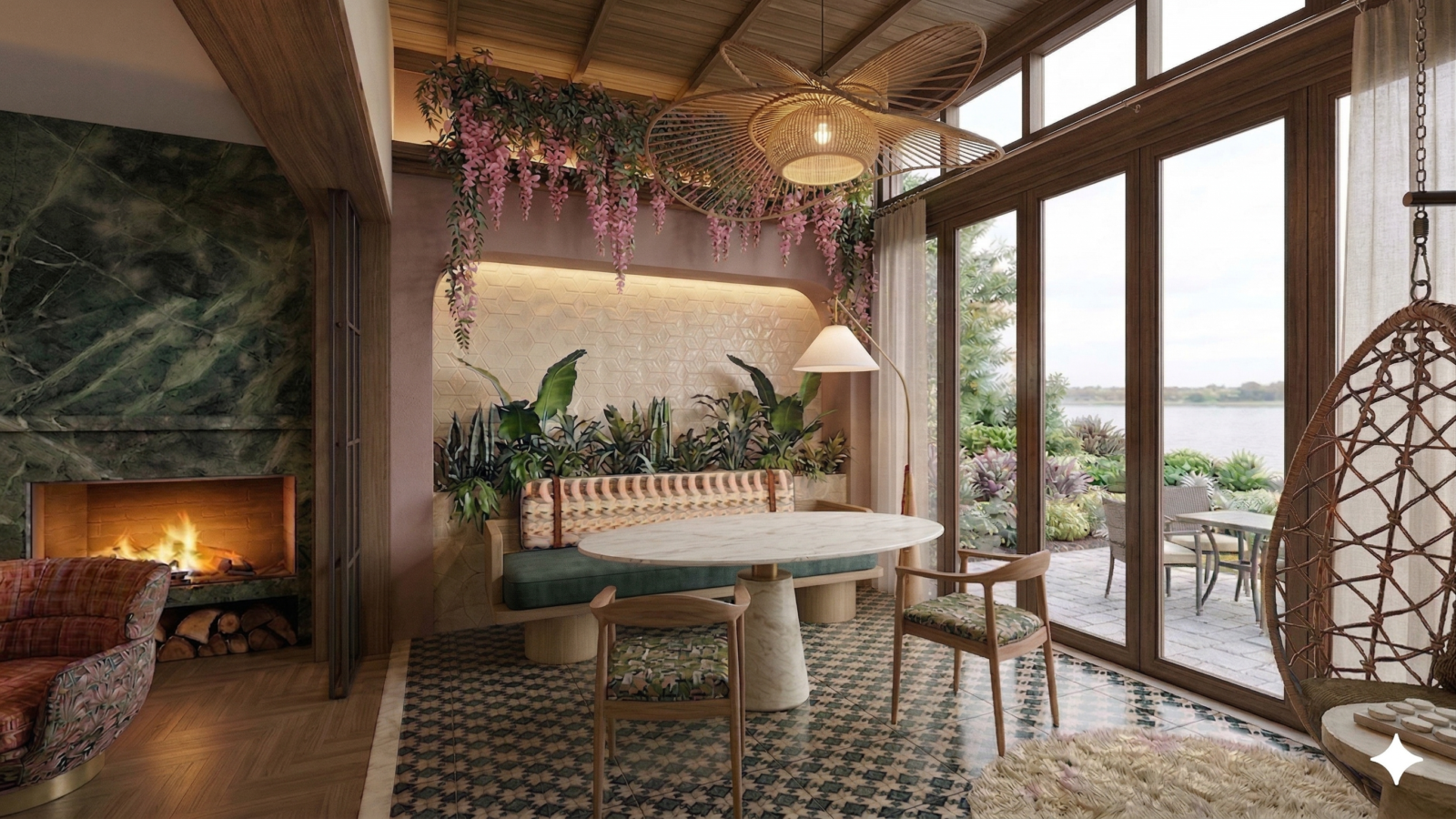
A virtual showhouse poised to be an industry gamechanger.
By Jane Dagmi
If you’ve been to a Science in Design event, you’ll recognize the chant. If you haven’t, you will soon enough.
Picture a room—mostly interior designers—gathered to explore biophilia and neuroaesthetics, the science showing how beauty and thoughtful design can positively impact our emotional and physical wellbeing. Founder Mike Peterson opens with a brief welcome, connecting the dots between nature, beauty, and human health. Then he asks the room to repeat, in unison: “I create health.”
With a career spanning media, executive leadership in home furnishings, and marketing, Peterson has worked across the industry from multiple perspectives. A longtime advocate for interior designers, nothing has resonated more deeply than the belief that design can (and should) be considered a health-based discipline.
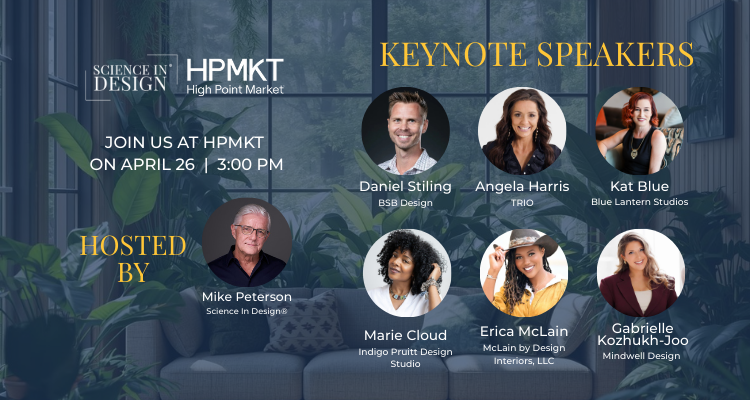
Science in Design has become his raison d’être, and it’s reshaping how a growing community of design professionals frame their work. It’s a meaningful new value proposition—not just for interior designers, but for product designers and brands—and it will be vividly on display at High Point Market during Sunday’s keynote, “Creating Health-Based Design—Beauty, Neuroaesthetics, and Biophilia: A Virtual Showhouse.”
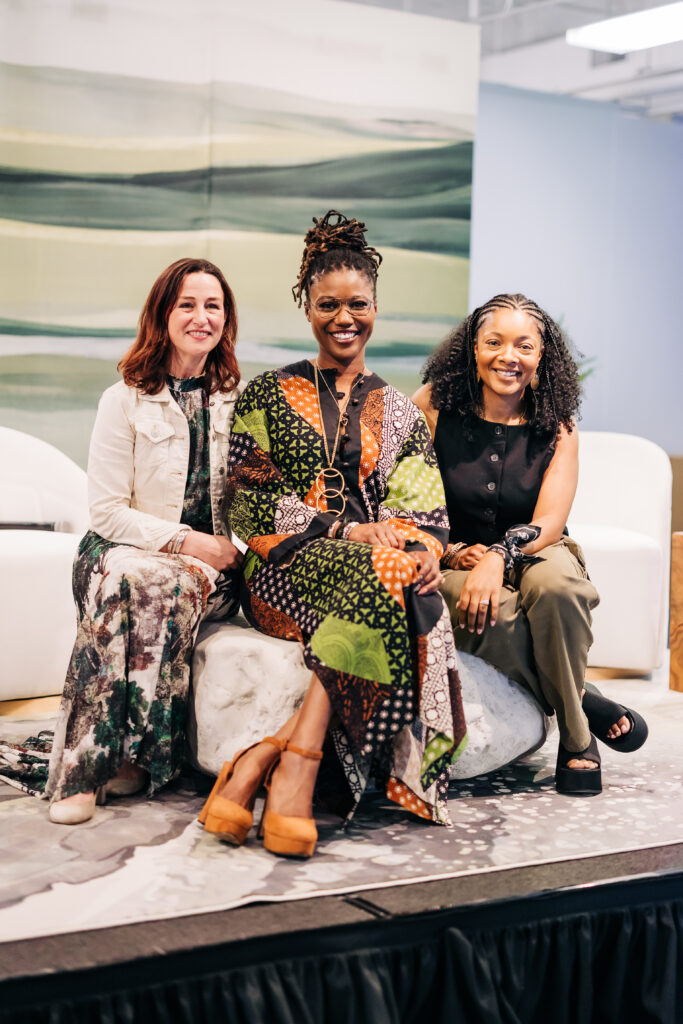
Joining Peterson for the presentation are five Science in Design–certified designers—Kat Blue (Blue Lantern Studios), Marie Cloud (Indigo Pruitt Design Studio), Angela Harris (TRIO), Gabrielle Kozhukh-Joo (Mindwell Design), and Erica McLain (McLain by Design)—along with Daniel Stiling, the principal of BSB Design, the firm whose Innovation Lab developed the architectural envelope for the showhouse.
Designed for a family of four—including a pre-adolescent neurodivergent son and a teenage daughter—the house reflects a commitment to designing not just for living, but for peak human performance. At its core is a central atriumthat draws natural light deep into the home and reinforces a connection to nature from nearly every vantage point.
“Some may consider the atrium an added expense,” says BSB’s Devin Sigman, “but it’s hard to put a price on its impact on wellbeing.” Equally intentional, though more subtle, he points out, is the separation of private spaces, thoughtfully linked by common areas.
With the framework in place, the designers began translating theory into lived experience—each interpreting neuroaesthetics and biophilia through their own lens, vetting resources and products from High Point and beyond.
The intention behind the design
Designing for positive physiological and emotional outcomes requires rigor—research guiding the what, where, and why.
Blue and her team approached the great room and sunroom focused on the human experience, designing around how a space feels throughout the day—how someone arrives, settles, connects with others, or finds a moment of quiet. They consider biophilic cues authentic to the project, and address fundamentals like sightlines to the outdoors, light, movement, and airflow before layering materials and details that reinforce a cohesive emotional experience. “Every move is intentional,” she says, “but not rigid.”
McLain, who designed the eight-year old son’s ensuite bedroom, agrees that not every decision is solely prescriptive. “Some choices arrive intuitively,” she notes, “but when it comes to the final cut, my client’s neurological needs are the ultimate arbiter.” By tuning into those needs, she designs not only for who her clients are today, but for who they hope to become.
Similarly, Kozhukh-Joo—who shaped the kitchen areas and dining space—returns to a central question: is a choice simply attractive, or does it support daily rituals, cultivate healthy habits, and improve the overall experience of the individual or family? “There are a lot of lenses to filter decisions through,” she adds.
Cloud approached the project through a cultural and physiological lens—one that expands the conversation around wellness beyond aesthetics. Designing the second floor as a fully immersive wellness environment, she grounded every decision in the lived experience of a high-performing Black family. Drawing from research and personal insight, she considered the concept of “weathering”—the cumulative physiological toll of chronic stress—and designed to counterbalance it. Not as a luxury layer, but as a necessity for health.
Intention in form
Translating theory into form requires more than concept—it demands precision. At the same time, creating a sense of comfort and safety is essential to well-being. One of the ways Cloud chose to express this feeling was via curved corridors. “The brain reads soft geometry as safer and more natural than rigid lines,” she explains, citing research linking organic forms and sensory balance to reduced cortisol and increased serotonin. A sauna with Himalayan salt walls and a complete shower wellness system from Kohler are also part of this wellness-focused living environment.
For Kozhukh-Joo, a marble archway between the kitchen and dining simultaneously maintained openness while creating intimacy and a sense of refuge. By layering materials such as stone, wood, and fractal-pattern tile, she aimed to conjure the vibe of a lush forest, but in kitchen form.
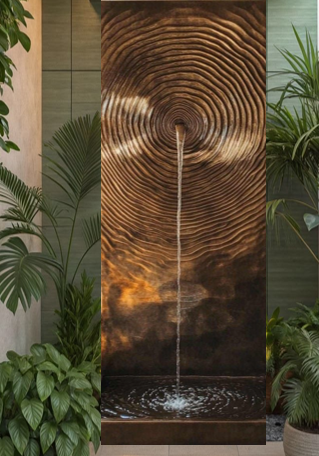
Blue draws attention to the sunroom where she designed a water feature, a quiet, steady presence that brings both visual and auditory calm. “It softens the environment,” she says, “and makes the space feel restorative and alive.”
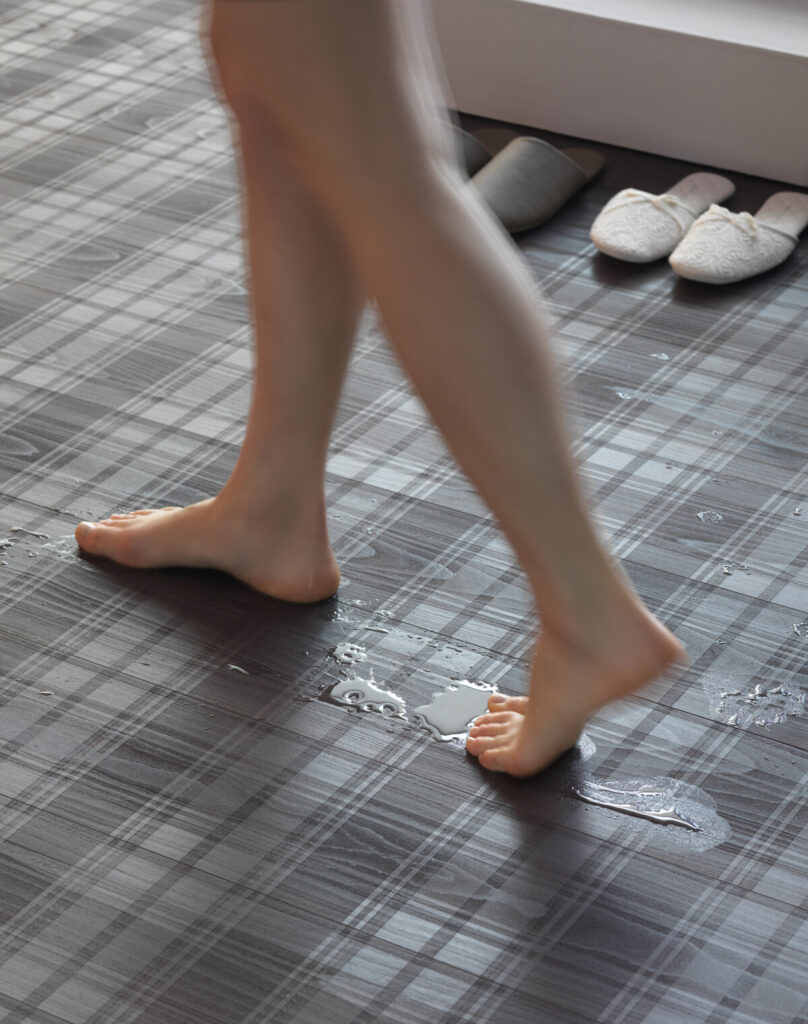
McLain leaned into the health properties of wood, using it throughout the boy’s area—on doors, walls, ceilings, and even a plaid-patterned bathroom floor. “I chose this material not only for its beauty,” she says, “but for its natural olfactory, textural, allergen, and antimicrobial qualities.”
How limits (unexpectedly) set one free
For designers working within a health-based framework, the absence of physical interaction felt counterintuitive. Materiality—texture, temperature, authenticity—is central to how a space is experienced. “There’s an essential layer that can only be fully understood through touch,” Blue explains.
Cloud had doubts too. “In a traditional project, the room becomes your collaborator. You stand inside it, feel how the light moves, hold a fabric swatch against a wall—and the space tells you whether it works. That feedback loop is gone. At first, it feels like a limitation.”
But as the process unfolded, those limitations began to open new doors, yielding innovation, growth, and unexpected freedom.
Without the constraints of budget or logistics, designers were able to explore more expansively. McLain no longer had to worry if everything would physically fit. Rendering idealized, custom-scaled versions of products allowed her to align selections fully with her client’s neurological needs—without compromise.
For Kozhukh-Joo, the format encouraged a more adventurous approach to materiality and pattern—pushing beyond the restraint typical of her more conservative Toronto-based clients.
Blue welcomed the exposure to new resources, diving deeper into research around performance, sustainability, and sensory impact. “We became more intentional and informed—even without having every piece in hand.” Her team also tested ideas around sound, airflow, and circadian lighting they plan to carry into real-world projects.
That spirit extended to the architectural team. “The budgetary freedom to explore neuroaesthetics outside the typical design process allows us to develop techniques we can apply to the broader market,” says Sigman.
Cloud is grateful for being brought into this project; it stretched her in many good ways, she says, and sharpened her skills.
“What I have learned most is how much my design philosophy is anchored in story. Every selection I make connects back to a narrative about who lives in the space and what they need their environment to do for them. Working within a neuroaesthetic framework has also given me language I will carry into every future client conversation. I can now sit across from a client and explain not just what I am choosing but what it will do to their nervous system. That is a different kind of trust.”
The value proposition
The implications of this approach extend far beyond a single project. It’s layered and provocative, rigorous and life-changing.
McLain frames it as a form of long-term, non-invasive intervention: “Whether you realize it or not, we have the power to influence marriages, a child’s performance, productivity in the workplace, even the tip of a waitstaff, all through our design decisions.”
Cloud’s work is fueled by client feedback that lets her know they are sleeping better, feeling calmer and arguing less. “A medication is temporary. A therapy session ends. But a space does not stop working,” she says. “It keeps doing its job every morning when someone wakes up, every evening when they come home, every quiet Sunday when they just exist inside it.“
From the architecture side, Sigman hopes builders and developers begin to recognize the value—and market advantage—of homes designed with health at the forefront.
The conversation around design is evolving—quickly. When designers say, “I create health,” it’s no longer aspirational—it’s strategic. And increasingly, it may define the future of the industry. It’s a science-based strategy. And Peterson sees it as the future of the industry.
A preview of the Science in Design keynote will take place on April 16 from 12–1 p.m., ahead of its debut at High Point Market. Learn more.