
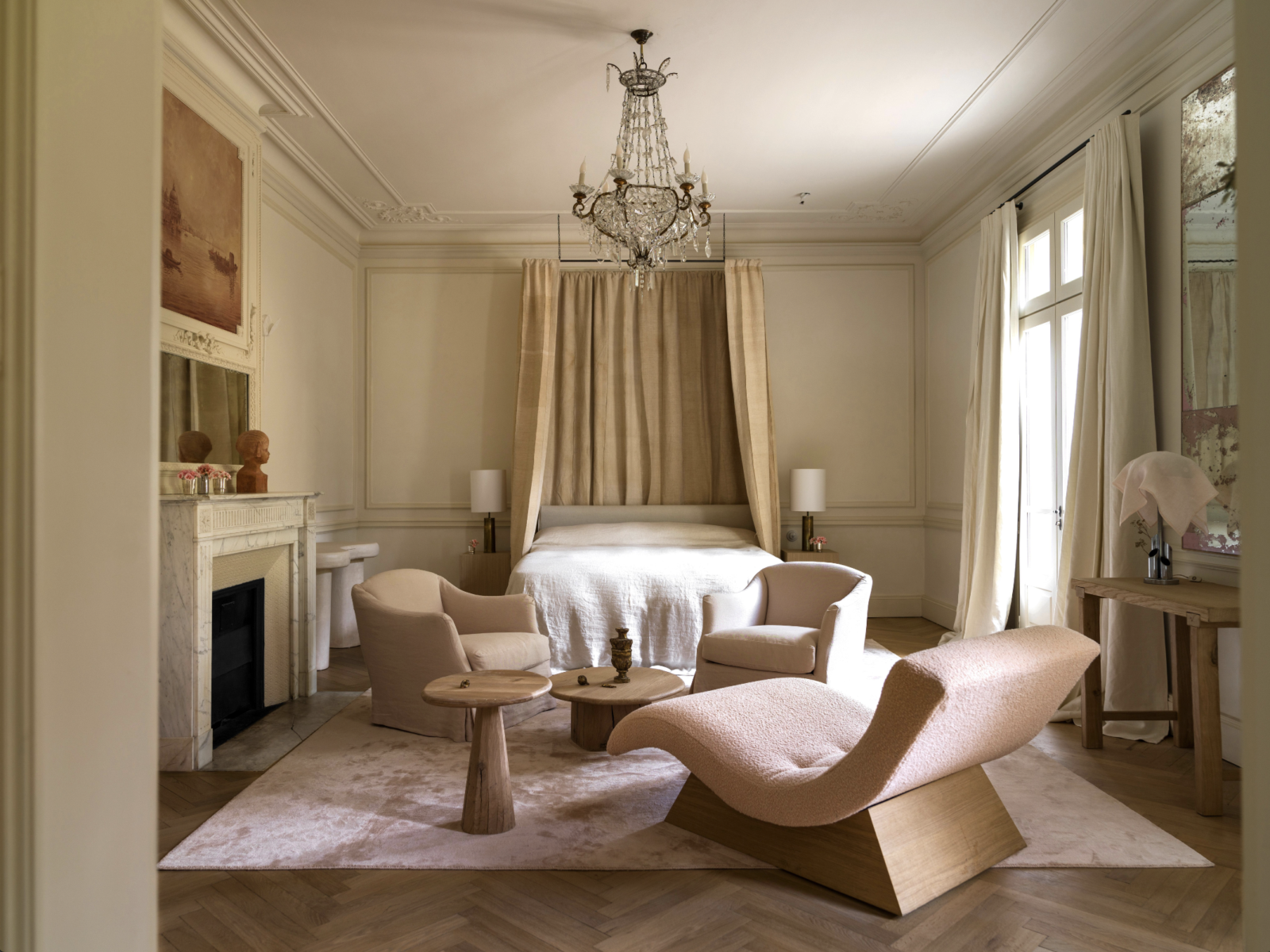
Marianne Tiegen Interiors has reimagined Château La Banquière, an 18th-century estate set amid vineyards and centuries-old oaks near Montpellier, France, into a hospitality destination where architecture, landscape, and textiles come together in a quiet, contemporary expression of sustainable luxury.
A château reborn through light, landscape, and craft
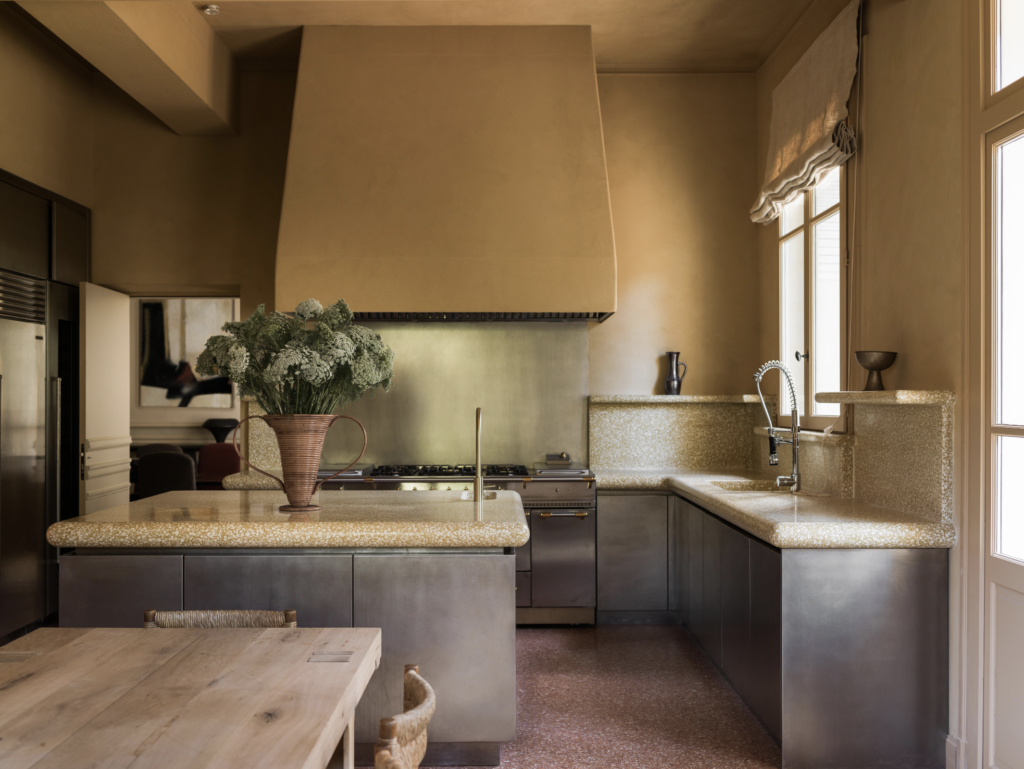
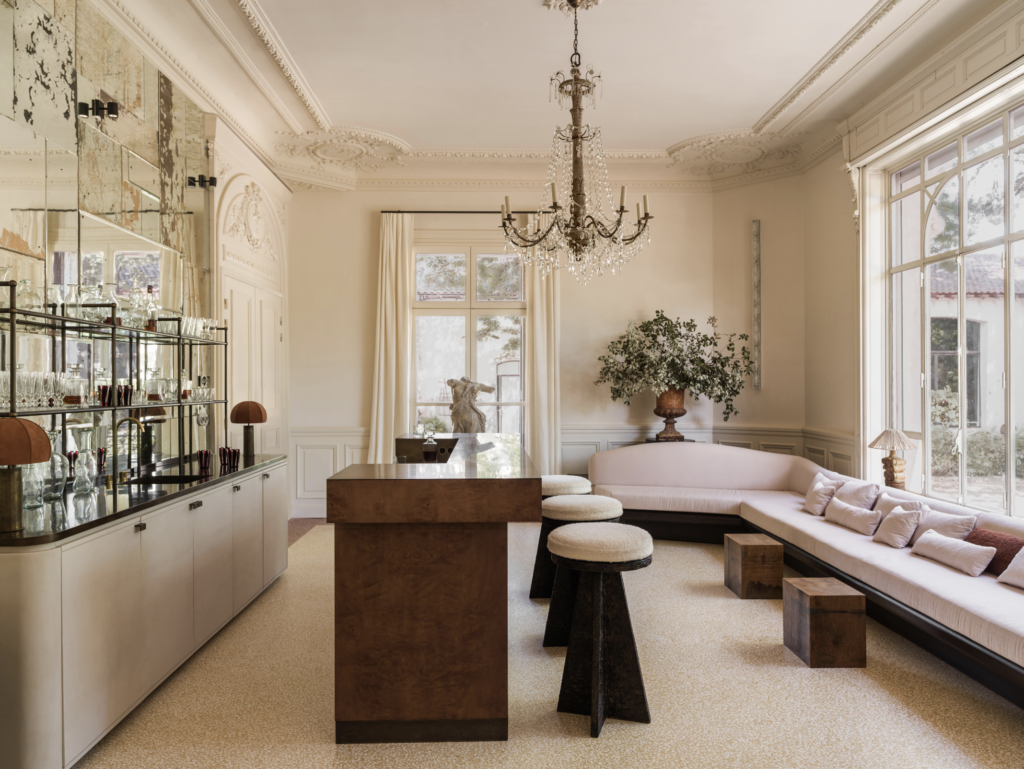
Château La Banquière sits in a serene park, framed by centuries-old oaks and sprawling vineyards – a setting that immediately inspired the design. Every room has been conceived as a dialogue with natural light and the surrounding landscape: an interplay of stone, wood, air, and textiles that animates the spaces throughout the day.
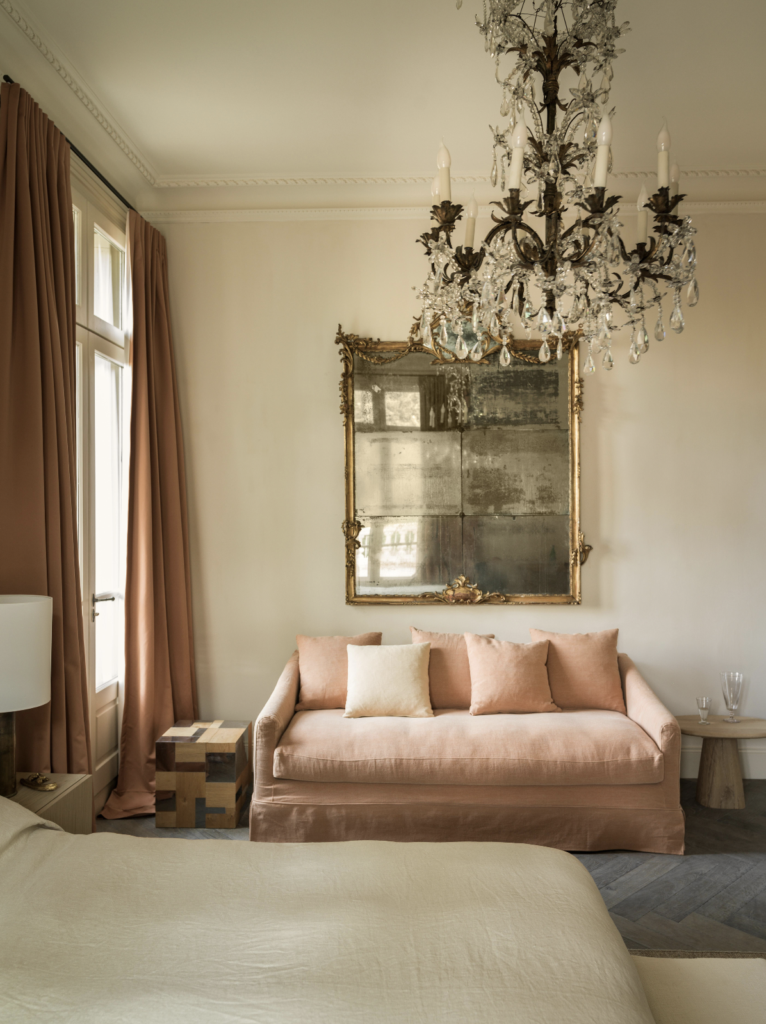
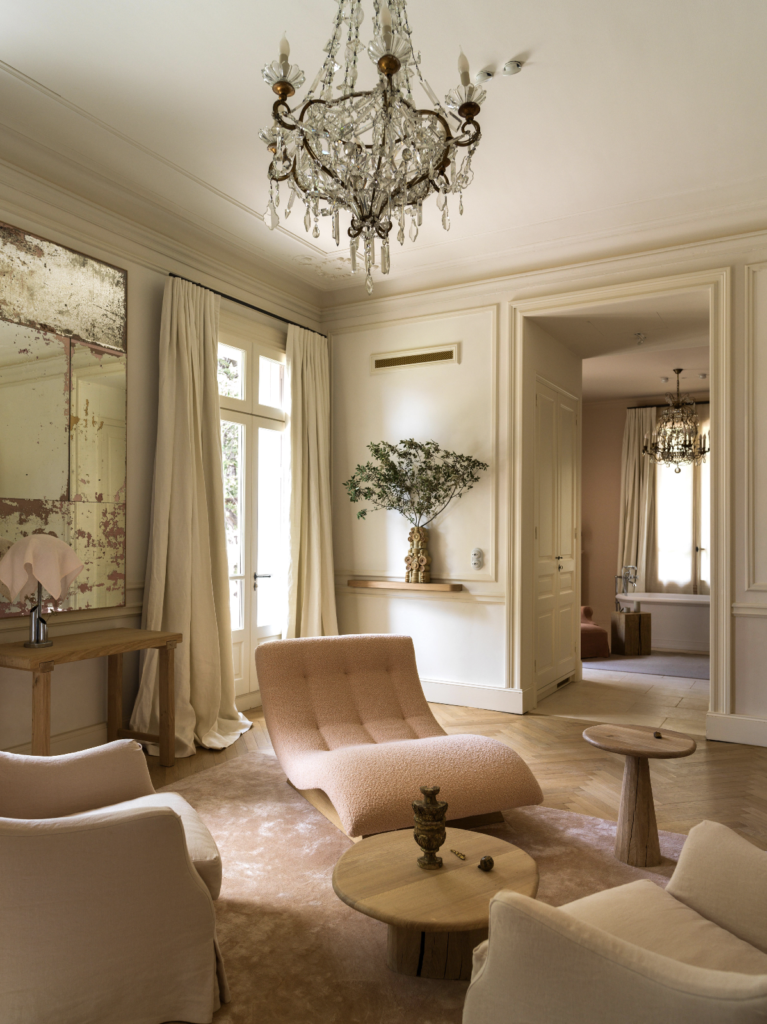
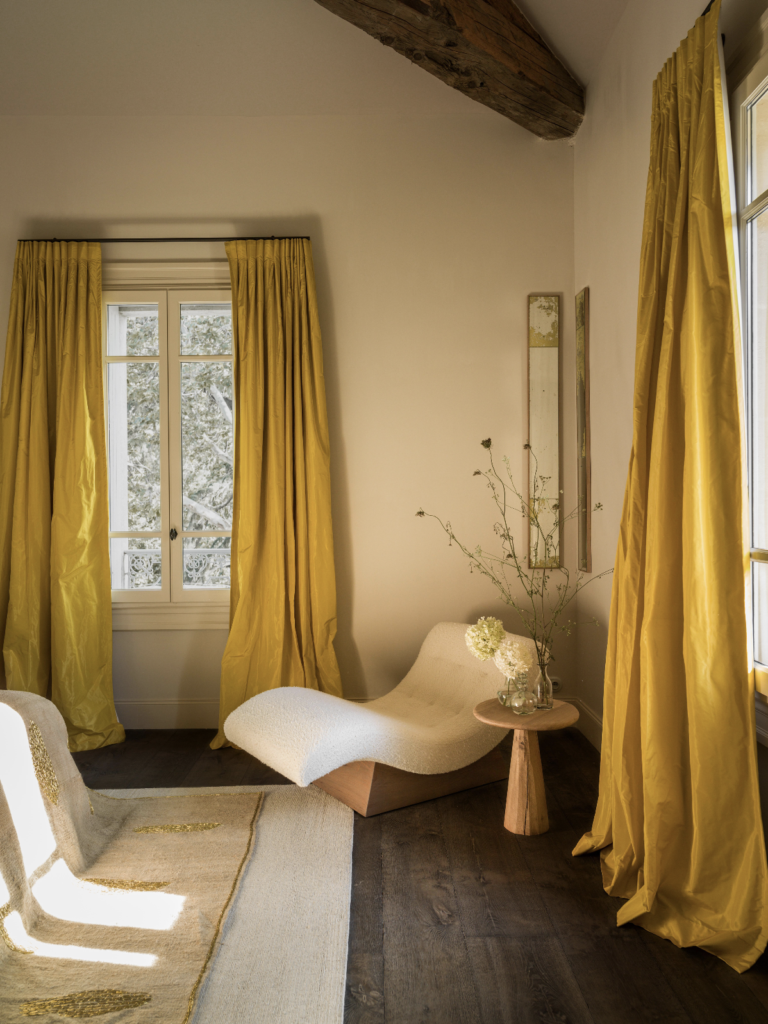
In this project, textiles become more than decoration: they are spatial anchors. Fabrics define rooms, soften acoustics, frame views, and offer a tactile warmth usually found only in private homes. For a hospitality project, Marianne Tiegen Interiors strategically used textiles, focusing on key elements such as canopies, screens, bed throws, and wall panels to create intimacy and comfort without overwhelming the classical architecture.
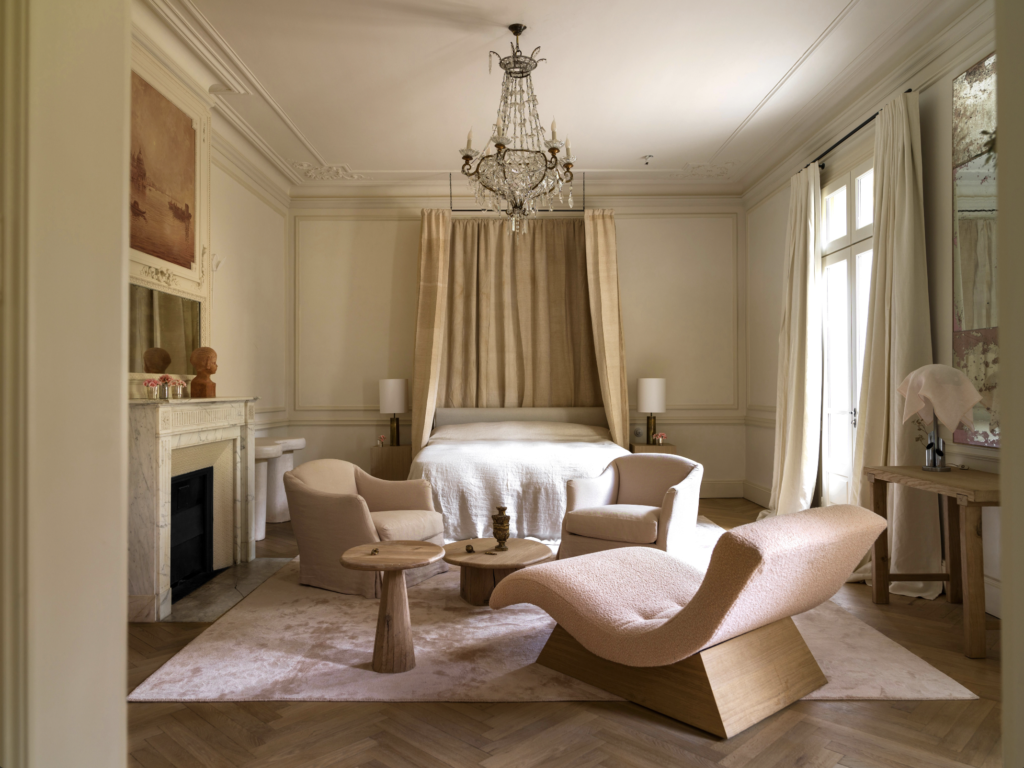
Weaving history and place: natural dyes, antique textiles, amd circular craft
La Banquière’s textile palette draws deeply from its Mediterranean context. Working with botanical dyers and local specialists, the team developed shades like “Blush”, derived from grape seeds harvested on the château’s vineyards, or warm coral and apricot tones from garance (madder root), complemented by soft blues and greys from pastel (woad). These plant-based pigments echo the estate’s romance: a former honeymoon gift cast in Italian-villa tradition.
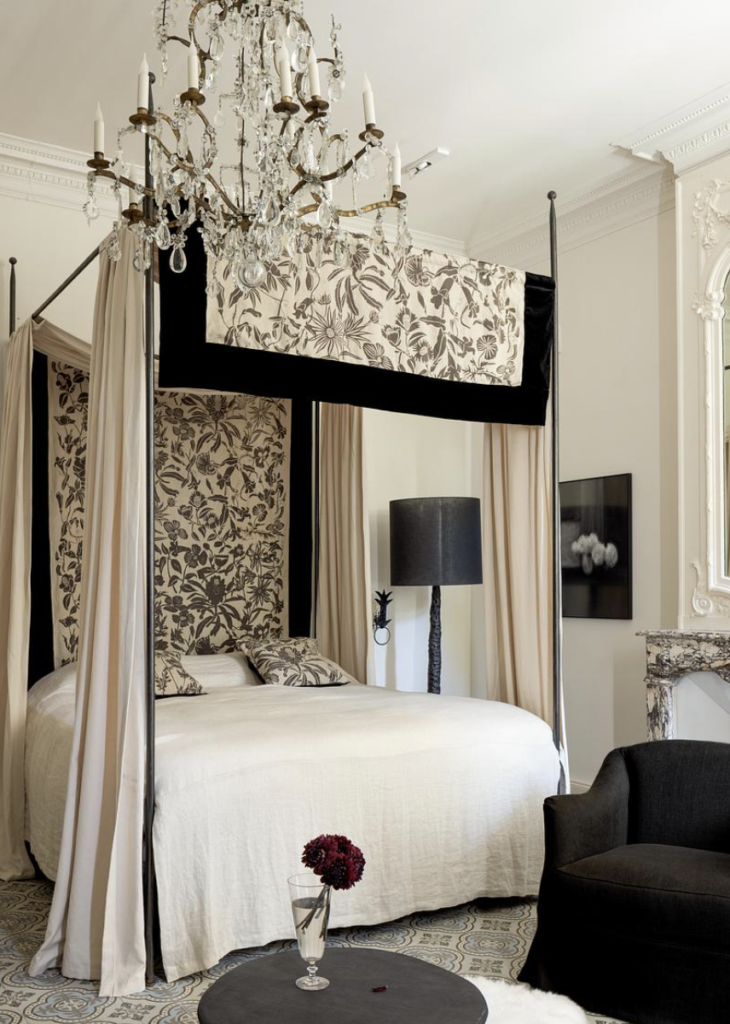
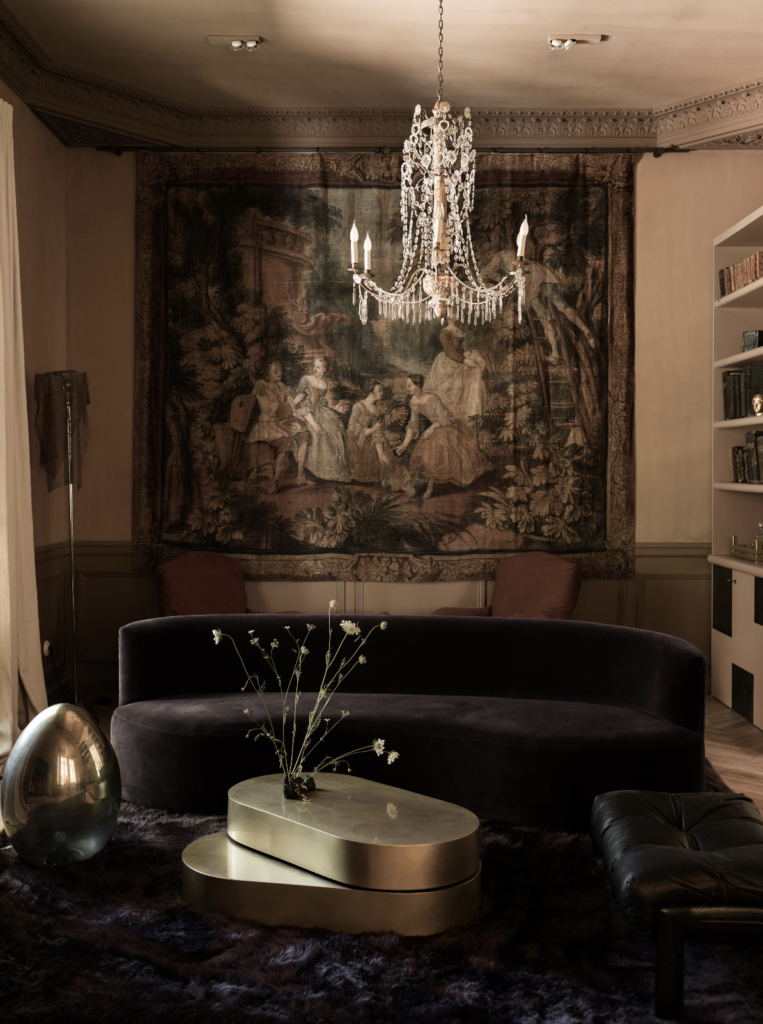
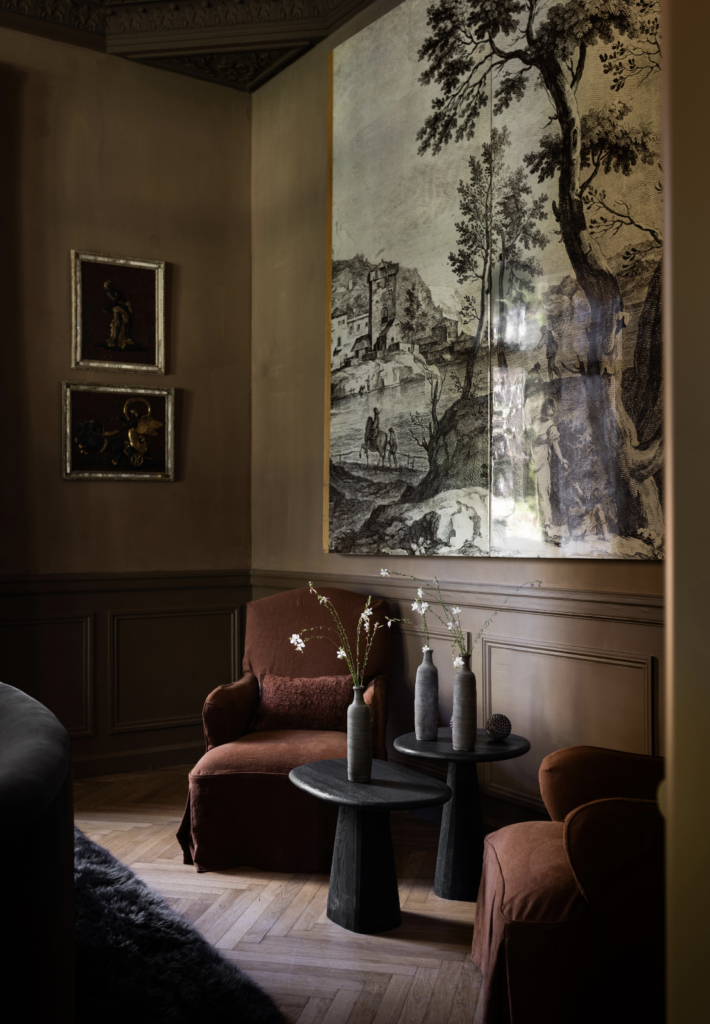
Alongside newly dyed linen, hemp, and cotton, the design incorporates a curated selection of antique fabrics – Provençal damasks, Venetian block-prints, and couture-surplus textiles, sourced through a long-established network of collectors and dealers. In many rooms, antique textiles served as the starting point: once discovered, their unique texture, patina, or pattern helped define the entire design direction. In others, naturally dyed linen or hemp sets the tone, imbued with subtle variations, depth, and a quiet, living luminosity.
Where antique materials were fragile, they were either restored, backed with light cotton, or embraced as imperfect surfaces, repaired rather than disguised, celebrating their history, much like a textile-bound equivalent of kintsugi.
Artisan techniques meet hospitality rigour
La Banquière also marks the return of European artisan skills once confined to couture ateliers. Woven Belgian linens, hand-printed serigraphies from historic Lyon workshops, and block-printed Venetian fabrics join embroidered panels decorated with haute couture techniques. The project’s signature motif is a subtle bee rendered in the Pont de Beauvais stitch, which ties together the estate’s biodiversity, regenerative spirit, and circular design philosophy.
Bed canopies, privacy screens, and bed throws, anchored in metal frames or removable structures, offer both grandeur and practicality: they can be unfastened, cleaned, repaired, or even redyed over time, without ever compromising the design integrity. Upholstery features removable covers; cabinetry and screen panels can be restored or replaced, meaning the château is not just furnished, but built to evolve, age beautifully, and become richer with use.
Slow textiles, lasting luxury
For Marianne Tiegen, La Banquière stands as a manifesto: sustainable hospitality does not mean austerity; it means selecting materials and techniques that age with dignity, that carry memory, and that contribute to a circular, regenerative design economy.
“Luxury today faces an identity crisis,” she says. “Its renewal lies in craftsmanship, authenticity, and rarity. With La Banquière, we show that sustainability can be a form of true luxury – rooted in nature, in history, in care.”
In twenty or thirty years, the fabrics, colors, and textures of La Banquière will tell their own story: one of place, of patience, of beauty lived-in.
Photos by: @jeremy_wilson_photo