
I’ve taken a particular interest in unusual design — not spaces that are aesthetically strange, but in designers whose projects demand unique problem-solving outside the conventional realms of residential design, hotel rooms and restaurants. Spaces like yachts, private jets, members clubs and bespoke event environments compel designers to reckon with movement, the environment and new policy requirements in ways that the typical design brief does not. Such ingenuity brought AAHA Studio to The Headquarters, a former police gymnasium in San Diego’s historic civic complex now redesigned by AAHA as a multi-level wedding and events venue.
Rather than neutralizing the building’s institutional past, AAHA embraced its industrial character, negotiating stringent historical preservation requirements with the imperative to create a poised, commercially viable ceremonial space. By treating the project as a sequence of spatial moments rather than a static layout, the firm balanced respect for raw architecture with the demands of event choreography — elevating vaulted trusses, preserving original fabric and conceiving dynamic partitions that allow one space to disappear and reappear over the course of an evening’s celebration.
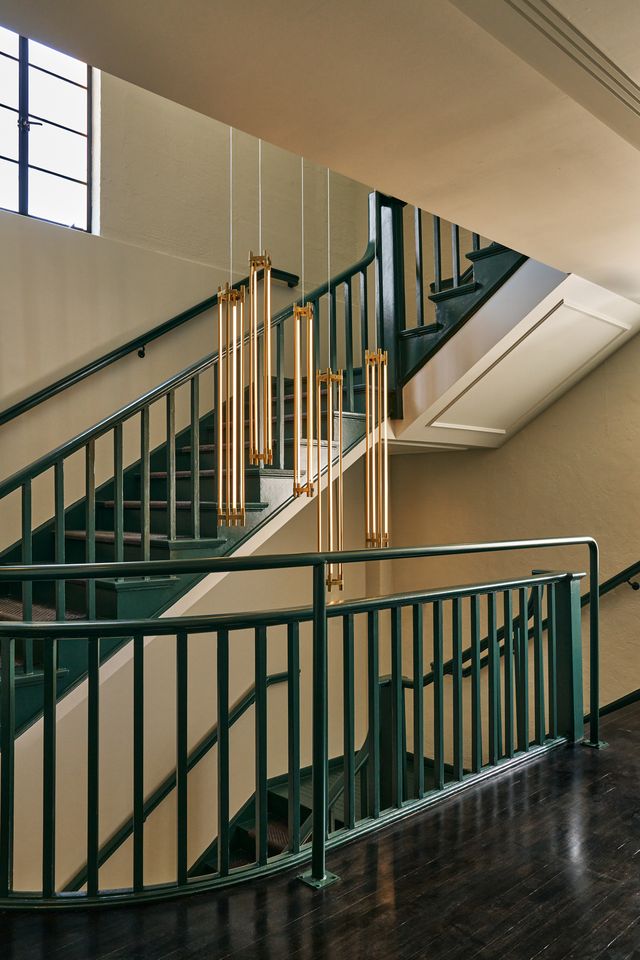
“The primary challenge was balancing stringent historical preservation requirements with the need for a poignant, high-impact design that remained commercially viable,” the firm said. “We had to ensure every design move honored the building’s past while creating a functional, revenue-generating space for a modern business.”
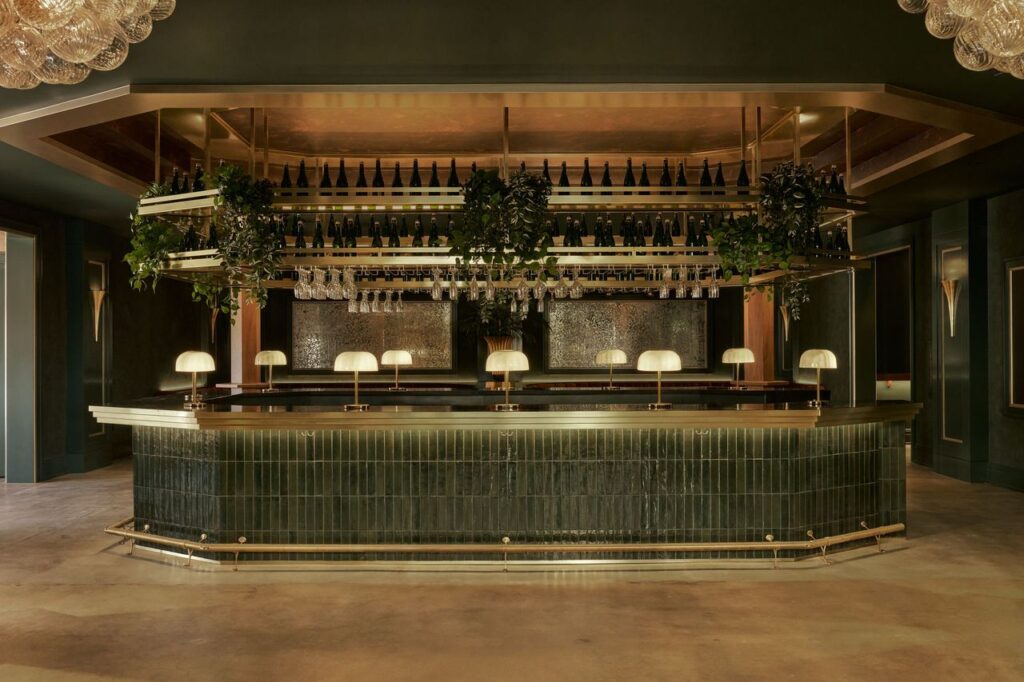
The result is a case study in applying residential and hospitality design sensibilities to a radically different type of space, where the cadence of wedding choreography, light and modularity become the primary tools of architectural storytelling.
What to change? What to keep?
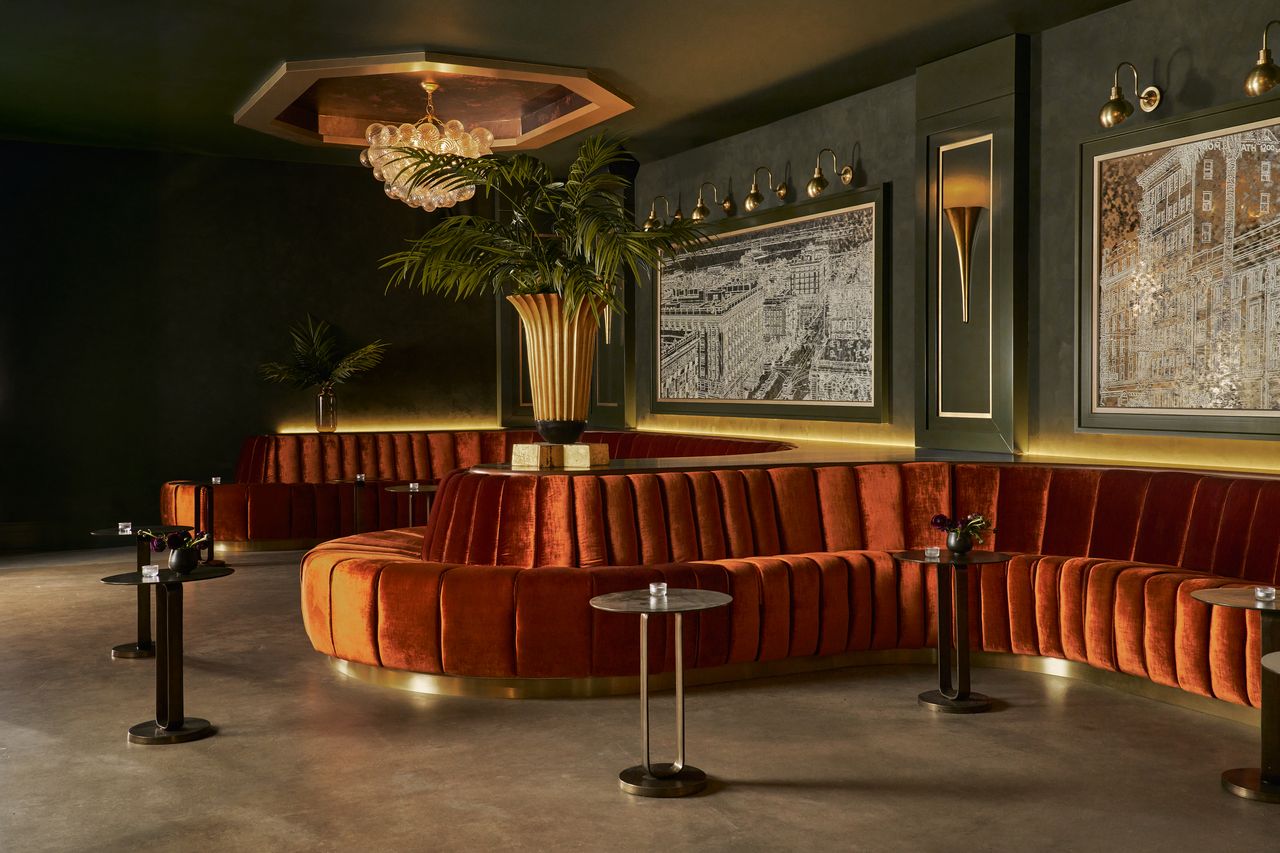
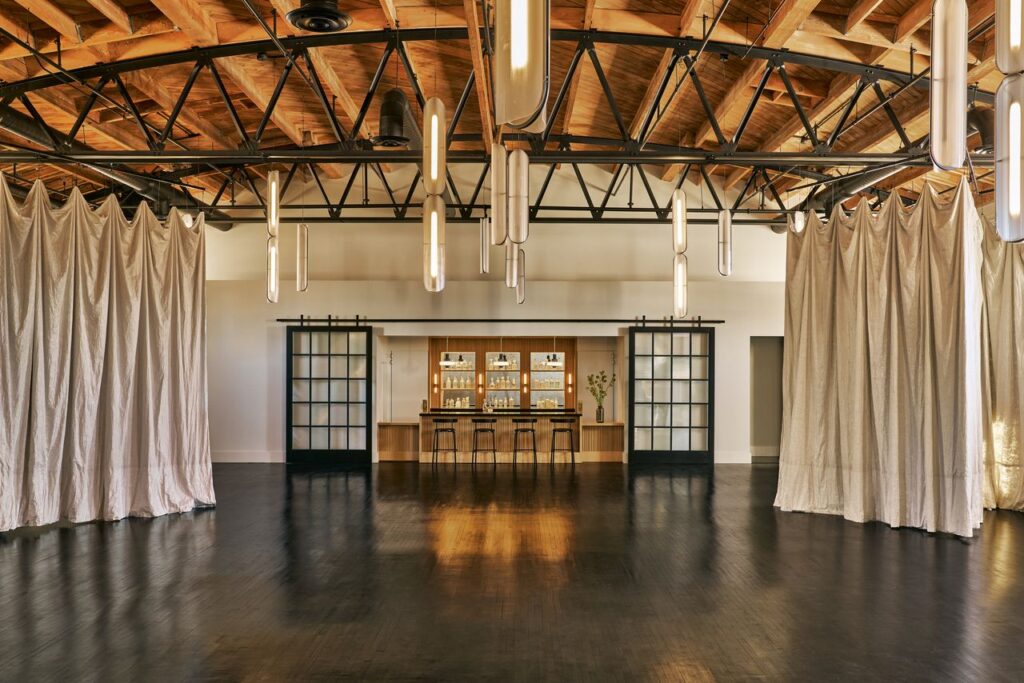
On the upper level, working within the constraints of the mezzanine and the bow truss grid, the designers chose to amplify the gymnasium’s industrial scale rather than soften it. “Rather than hiding these, we turned them into a focal point, even sandblasting the ceiling to highlight the raw architecture,” AAHA said. Below, where a dense column grid narrowed the field of options, repetition became an organizing principle. Columns were mirrored to establish rhythm and pressed into service as custom drink rails that operate as both structural covers and standing-height tables.
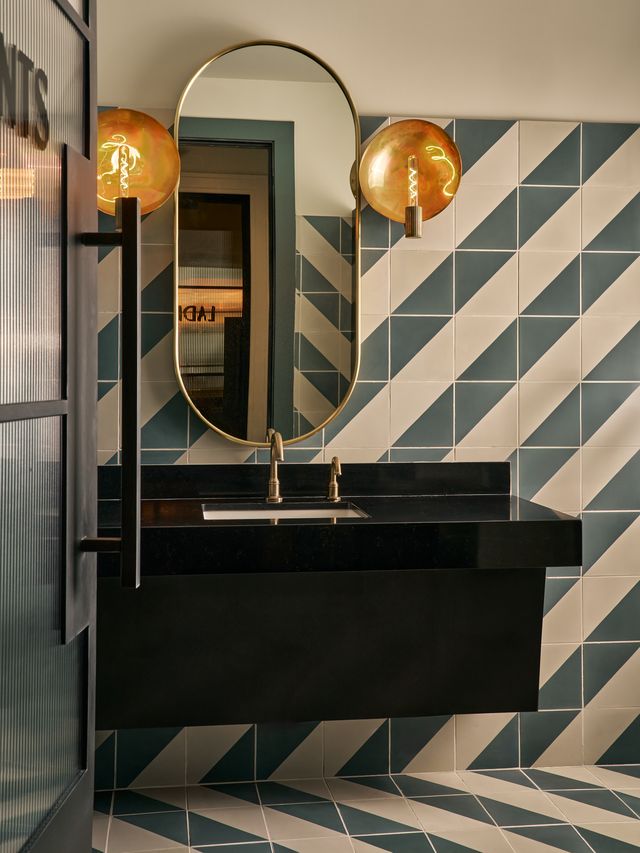
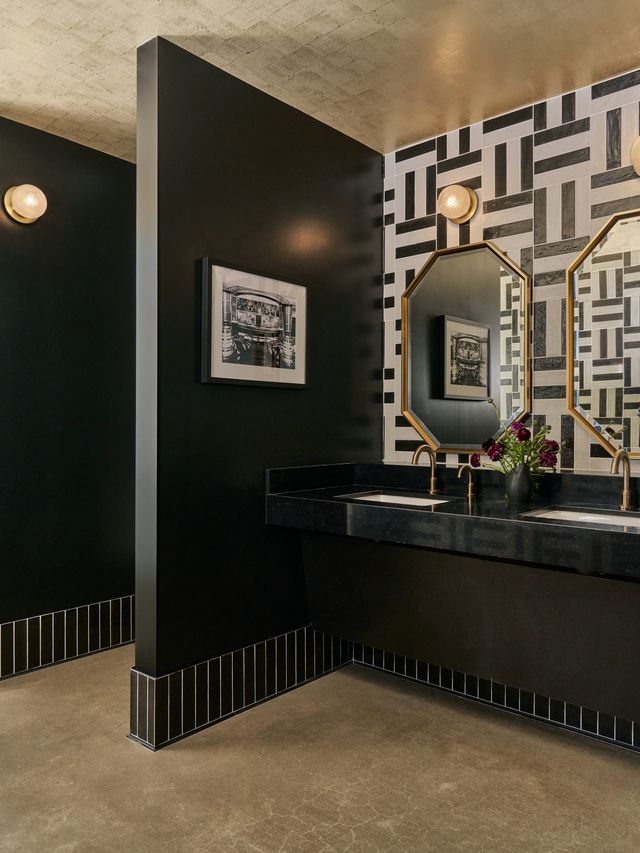
Preservation guidelines for the historic property heavily guided the scope of their design: Gym windows, floors, ceilings and a historic pony wall were all staying and utilized in the new design, while less programmatically useful spaces were reclassified rather than removed. The tiled shower rooms, for instance, became storage. “Since showers weren’t needed for the venue, we converted that space into storage to keep the tile intact for future historical significance while serving a current need,” the firm said.
Wedding choreography
Weddings follow a strict choreography, and AAHA approached the plan as a sequencing problem rather than a static layout. Through its partnership with Wedgewood Weddings, the firm mapped movement using what it describes as persona role play, ensuring that bridal parties, guests and vendors never intersect at the wrong moment.
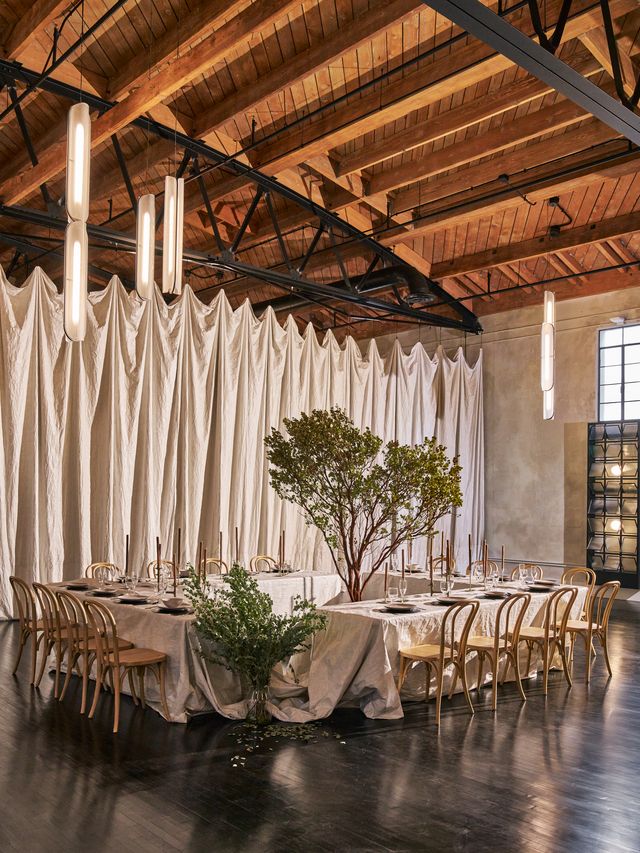
The solution to the building’s two-level organization was not separation but timed transformation. A custom curtain system allows staff to reset the upper hall for the reception while guests occupy the lower level for cocktails. In so doing, they created a room designed to disappear and reappear in the course of a single evening.
Fabricated in Tyvek, the curtain operates as partition, acoustic buffer and visual effect. “We wanted a material that could provide a visual barrier but didn’t feel static or heavy,” AAHA said. They were inspired by Ann Hamilton’s 2012 installation at the Park Avenue Armory, where suspended textiles and light produced spectacle inside an industrial shell. In San Diego, the Tyvek curtain absorbs sound and collapses against the wall when not in use, turning ephemerality into a working tool.
Design as theater
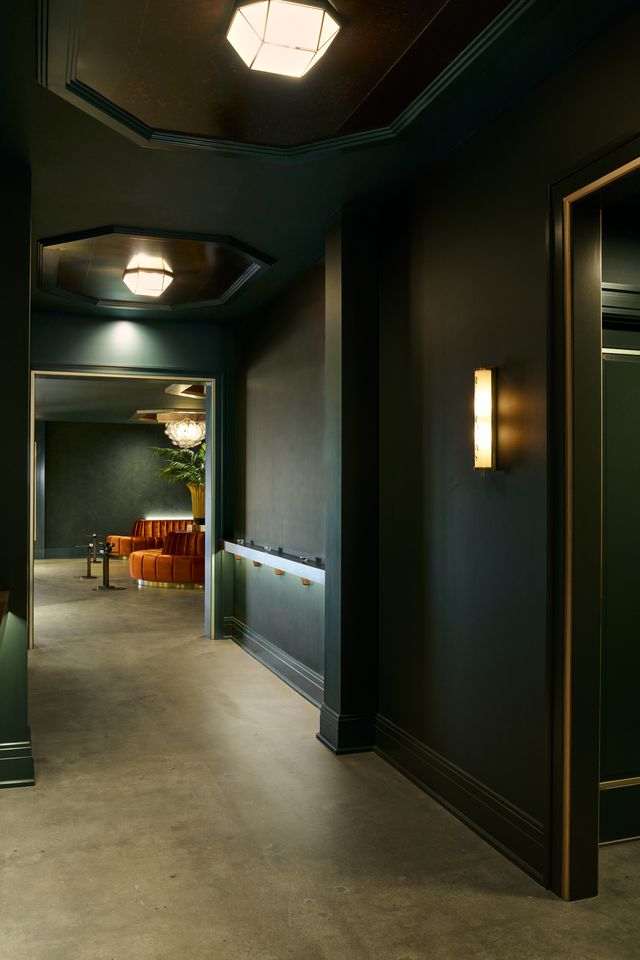
Weddings are theater with lots happening behind the scenes. That means most of the important design decisions revolve around a semi-concealed infrastructure strategy. The building arrived as a cold shell, requiring the insertion of a commercial kitchen, new HVAC, electrical and audiovisual systems, along with a structural retrofit complicated by a network of underground tunnels once connecting jail cells. Upstairs, electrical runs were consolidated and aligned, and ductwork was designed to read as architecture rather than industrial background noise. On the lower level, these systems were concealed to intensify the contrast between environments.
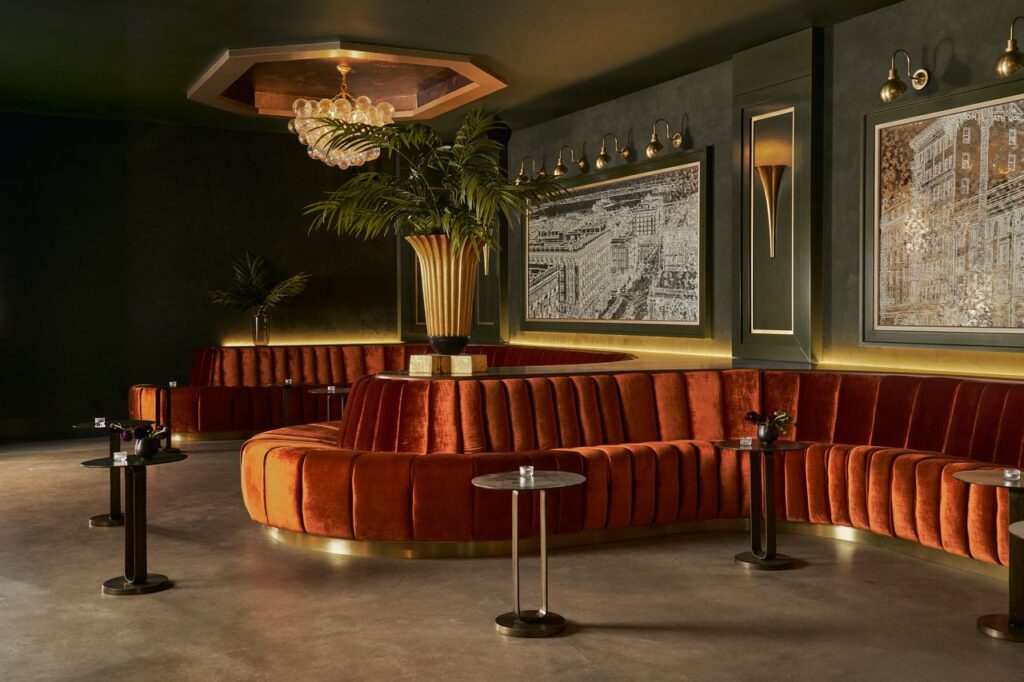
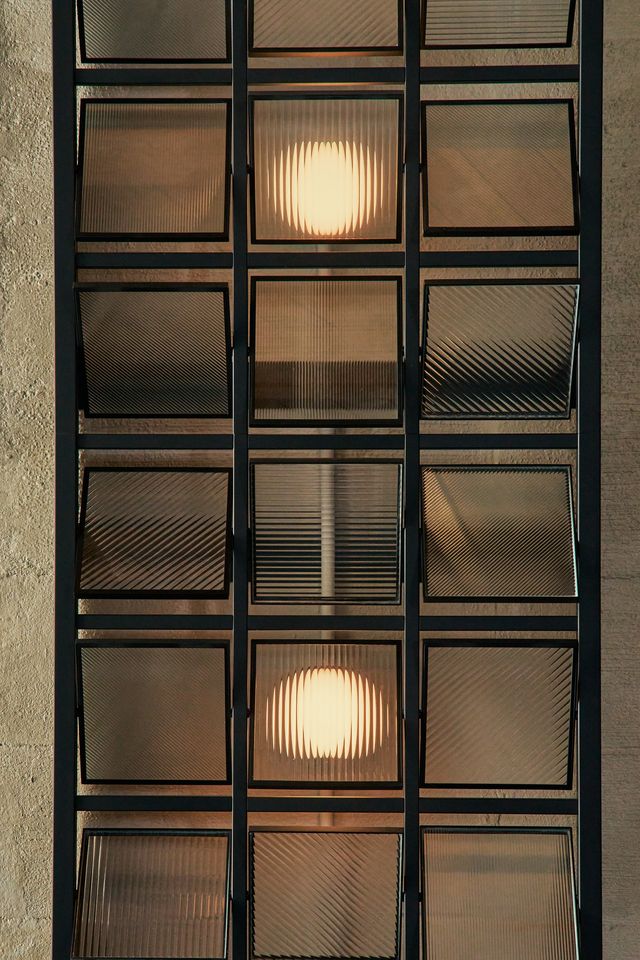
Lighting was calibrated for both lived experience and photography: Indirect sources and column uplights shape the lower level without glare, while matte plaster walls prevent flash hotspots. Upstairs, windows double as programmable lightboxes, and chandeliers function as depth cues rather than centerpieces.
All the moving parts
The lesson the firm carries forward from the gym-to-wedding-venue project is conceptual rather than technical. “On a multi-year project with so many moving parts, you have to constantly return to your original North Star idea to ensure the design doesn’t get lost in the process,” they said.
In reimagining an austere civic interior as a venue for one of life’s most meaningful rituals, AAHA Studio has demonstrated how thoughtful design can transcend a building’s original purpose. By foregrounding spatial choreography, preserving the gym’s industrial character and allowing flexibility in use, the project not only honors the history of the Headquarters but also creates a compelling setting for contemporary celebration and is a testament to the power of adaptive reuse.