

Between the Covers – More Than Beautiful Rooms: How “In the House” Expands Design History

By Rachel Fasciani
I began reading “In the House” intending to write a book review on a much-discussed new release. But after reading the book and speaking with author Alton LaDay, it became clear that this was not another coffee-table design book. “In The House” is something far more significant: a record of a profession in transition and a contribution to a design history that has too often gone undocumented.
A book born from reckoning

I began my interview with LaDay by asking him about the spark that led to creating this work. His response was unexpected, “it was my way, small way, … respond to what was happening with George Floyd and everything. That happened at the time of reckoning.” He continued, “it was a positive thing to do, to give back to what was potentially a negative situation.”
LaDay also sought to inspire other Black Americans to become designers while celebrating today’s leaders. He explained, “That is what I wanted to do. I mean, of course, giving these very worthy people notice, but also, perhaps, inspiring some people [to] work … in this industry that they may love and not even realize that.”
Rather than focusing on portfolios alone, LaDay roots each profile in personal history. Childhood memories, family influences, and unexpected career pivots become as important as finished projects. Sharing narratives such as this one about Amber Guyton’s mother, ” ‘She has witnessed my creativity and love for interior design since I was a child and always thought I’d be an entrepreneur instead of climbing the corporate ladder,’ Guyton says.


And this, from Mark Grattan’s focus as it applied to a childhood chore of mowing the lawn, “The aesthetic quality of those early experiences still informs Grattan’s work, which often features saturated colors combined with multiple cool shades of green and blue and has a lush sense of materiality. ‘The sky always seemed extra blue on those days, the sun blazing, and that cold garden hose at the end . . . my own little ritual,’ Grattan says. ‘Grass is a lot like velvet; the blades shift color depending on how you pass over them. I didn’t know it then, but I was learning how to control a surface. That lawn was my first design brief.'”
And so, the book becomes not just a compendium of notable Black designers, but a decisive move by LaDay to shift the focus from projects to people. The result is a deeper examination of the experiences, influences, and moments that shaped their work.
The many roads to design
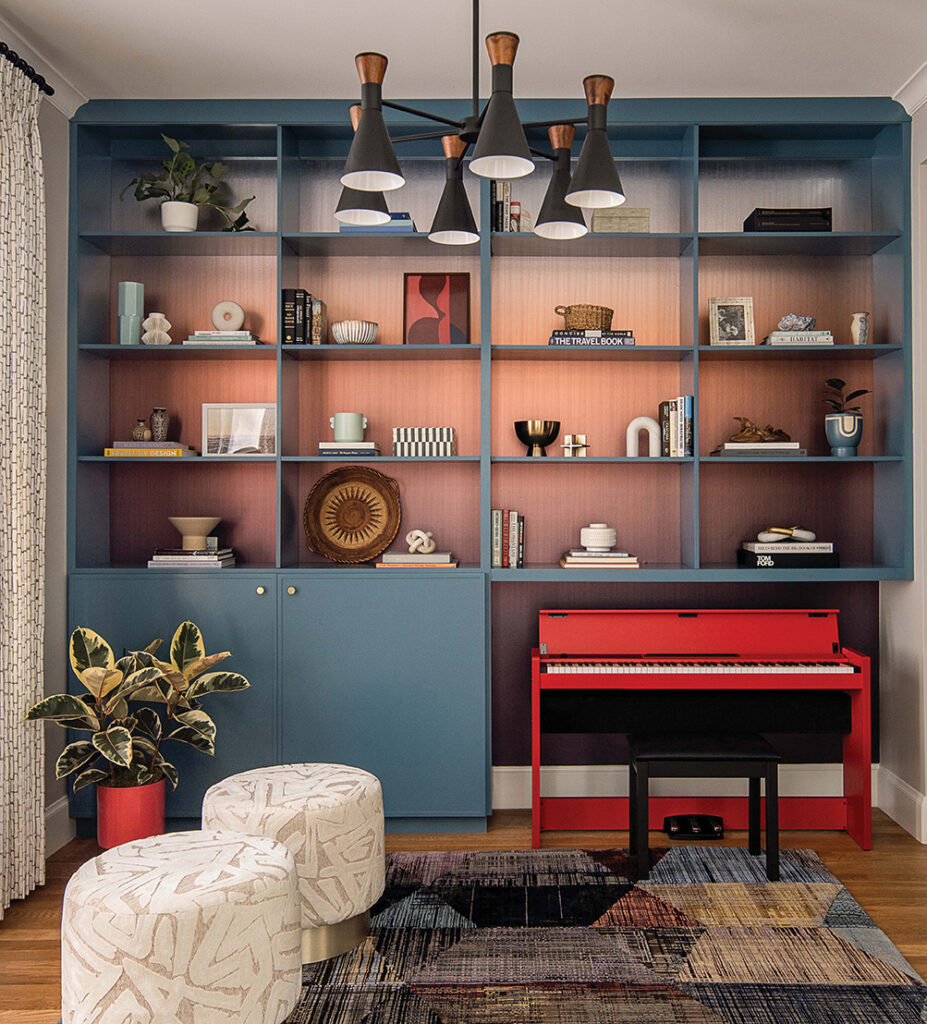
Both Patti Carpenter, a leader in Black design and the author of the book’s forward, and LaDay, call out that for many Black designers, interior design is a second career. Beth Diana Smith, Courtney McCleod, Kesha Franklin. All arrived to interior design as secondary careers, and they didn’t just master one profession, then pivot into design by hanging a shingle and coordinating bedrooms. They often maintained their first career while undertaking the rigorous work of obtaining design degrees, then mastering another profession.
On this, LaDay writes, “For many, this meant attending school while still working full time. Historically in the Black community, the need to prove your value in the professional world—to make your value indisputable, even—has been paramount. You will likely have heard the phrase, “We must be twice as good to be considered equal,” since it is a credo drilled into the heads of many Black children.” In our interview, he expanded, “I really do think that within the culture, it is really implanted in us. You know, your parents tell you, at a very young age, what the expectation is … and what you’re going to need in this world.”
That point is evident when you read each designer’s path. Beth Diana Smith was an executive in corporate accounting and finance for companies such as Johnson & Johnson and Viacom, and Kelly Finley, who holds a Stanford law degree and practiced for over a decade before studying design at UC Berkley. While the designers do not outright make those assertions, the proof is in each of their stories. Their stories reveal two professional ascents.
The throughline: cultural resonance
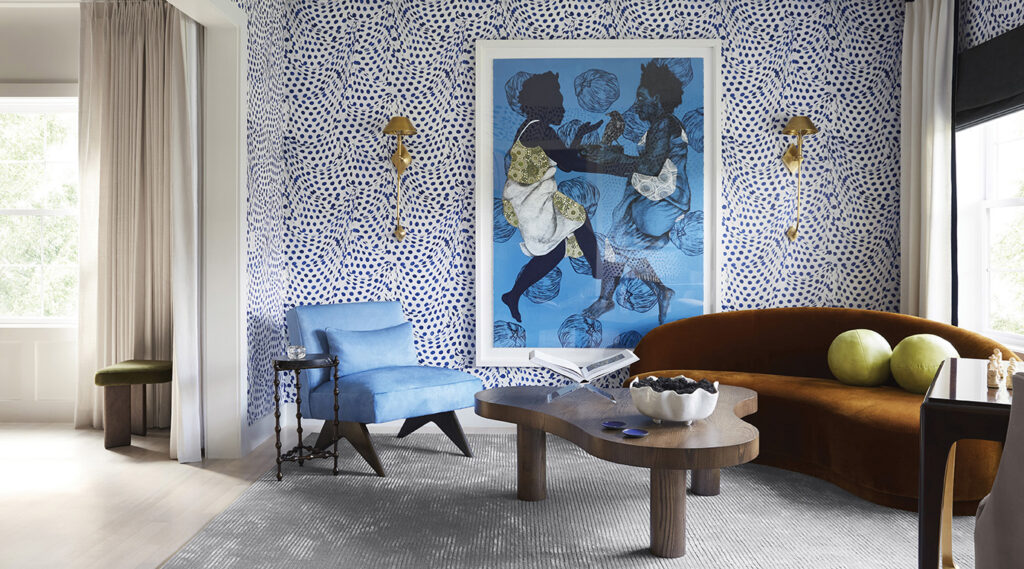
The most consistent thread running through the book is not a particular palette or aesthetic. It is the design narrative of Black Americans.
Patti Carpenter captures that nuance perfectly in her forward when she writes, “There is an interconnectedness in these interiors that both beckons and envelops, creating an immediate sense of home. This is not to suggest that other designers cannot achieve similar effects, but rather that within the work of Black designers, these qualities often emerge with a particular depth, clarity, and cultural resonance.”
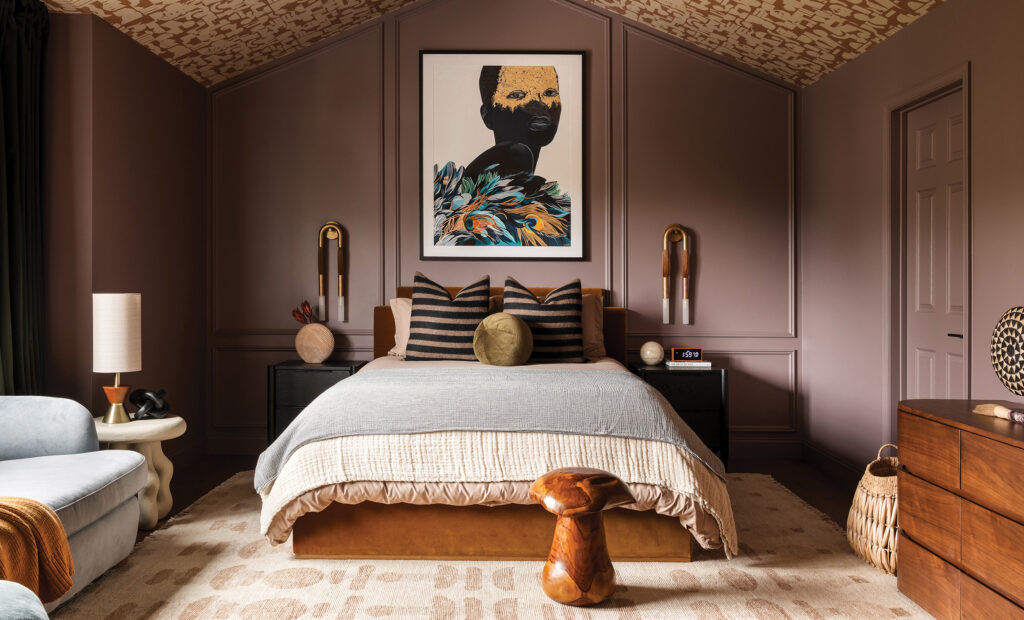
Those qualities—cultural resonance, emotional connection, and personal narrative—surface repeatedly throughout the book. In Forbes Master’s work, a living room anchored by Delita Martin’s “The Moon and the Lady Bird” becomes a reflection of the clients’ art collection and identity. In Beth Diana Smith’s richly layered bedroom, art, texture and color work together to create a space that feels simultaneously regal, comforting and deeply personal.
Both the examples above and throughout the book is a consistent stream of storytelling through design. Rayman Boozer’s den is an excellent example of this. The deep purple and blue tones, swirled fabric, and trimmed ottomans tell the story of the designer, client, and their relationship.
An untold history
“In the House” also serves as a corrective to design history. Through conversations with Harlem based preservationist and writer Michael Henry Adams, LaDay traces a lineage that has often gone unrecorded, reminding readers that Black designers have long shaped American interiors—even when their contributions went undocumented or unrecognized.
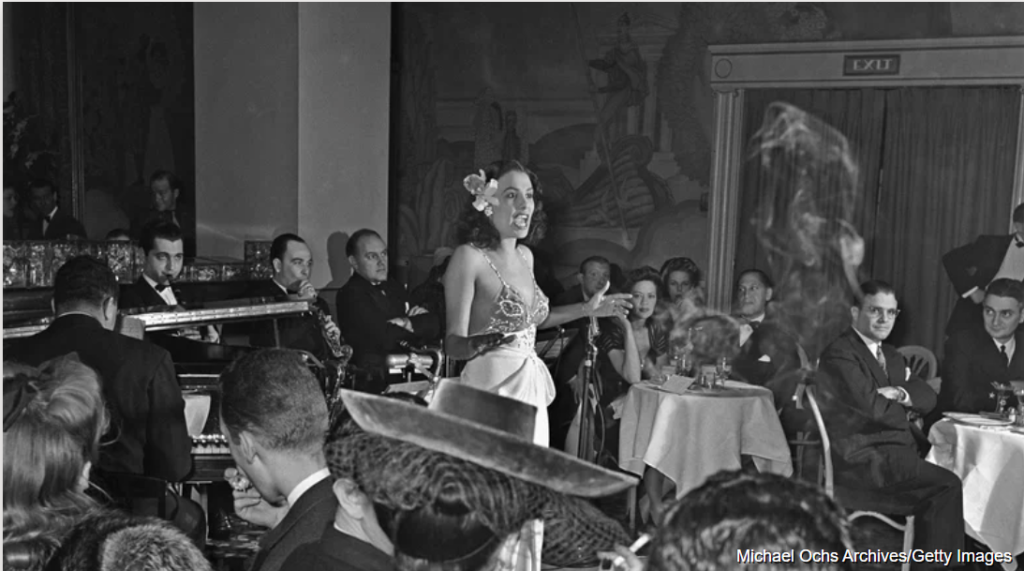
To this end, LaDay shares the story of one of the “most documented” Black interior designers, Harold Curtis Brown. Brown designed Harlem’s original Cotton Club, the Saratoga Club, and the homes of Harlem’s social leaders, per Adams.
Yet despite these contributions, Black designers remained largely absent from the industry’s most influential publications for decades. Perhaps the most startling fact in the book is that Cecil Hayes—the first Black interior designer to have her work featured in Architectural Digest—didn’t appear in the magazine until 1997. Not 1957. Not 1967. 1997. The significance is not that it happened in 1997. It’s that it didn’t happen until 1997.
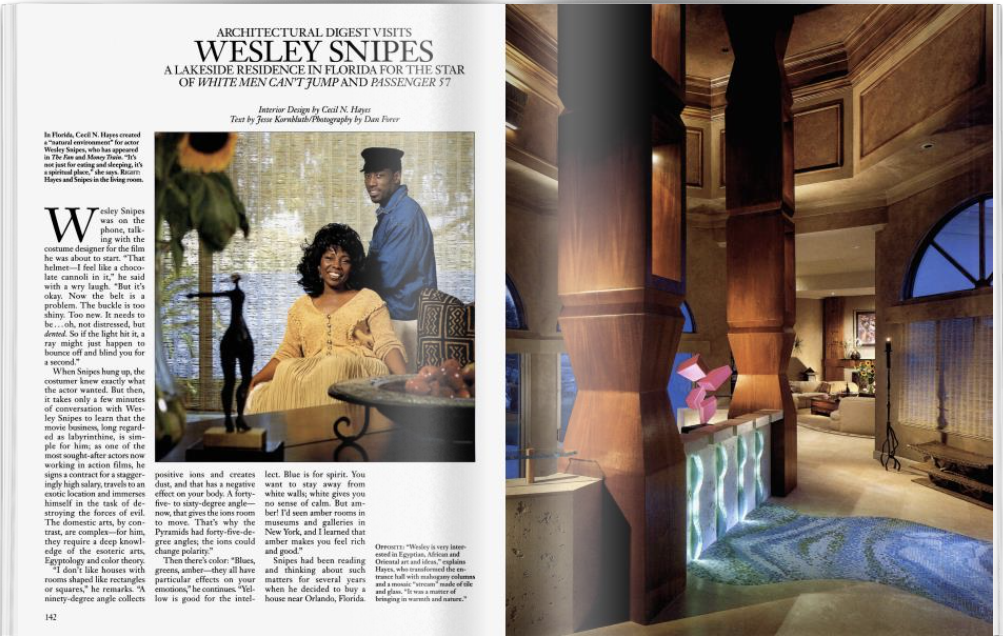
The callout is less an indictment than a reminder: Black designers have long been shaping American interiors. Recognition arrived much later than the talent itself.
Yes, “In the House” is a book about Black designers; it is also about visibility, perseverance, mentorship, education, and the preservation of history. LaDay’s work expands the design canon while documenting stories that might otherwise be lost. The interiors are compelling, but the lasting impact comes from the people behind them and the histories they carry forward.
Read it.
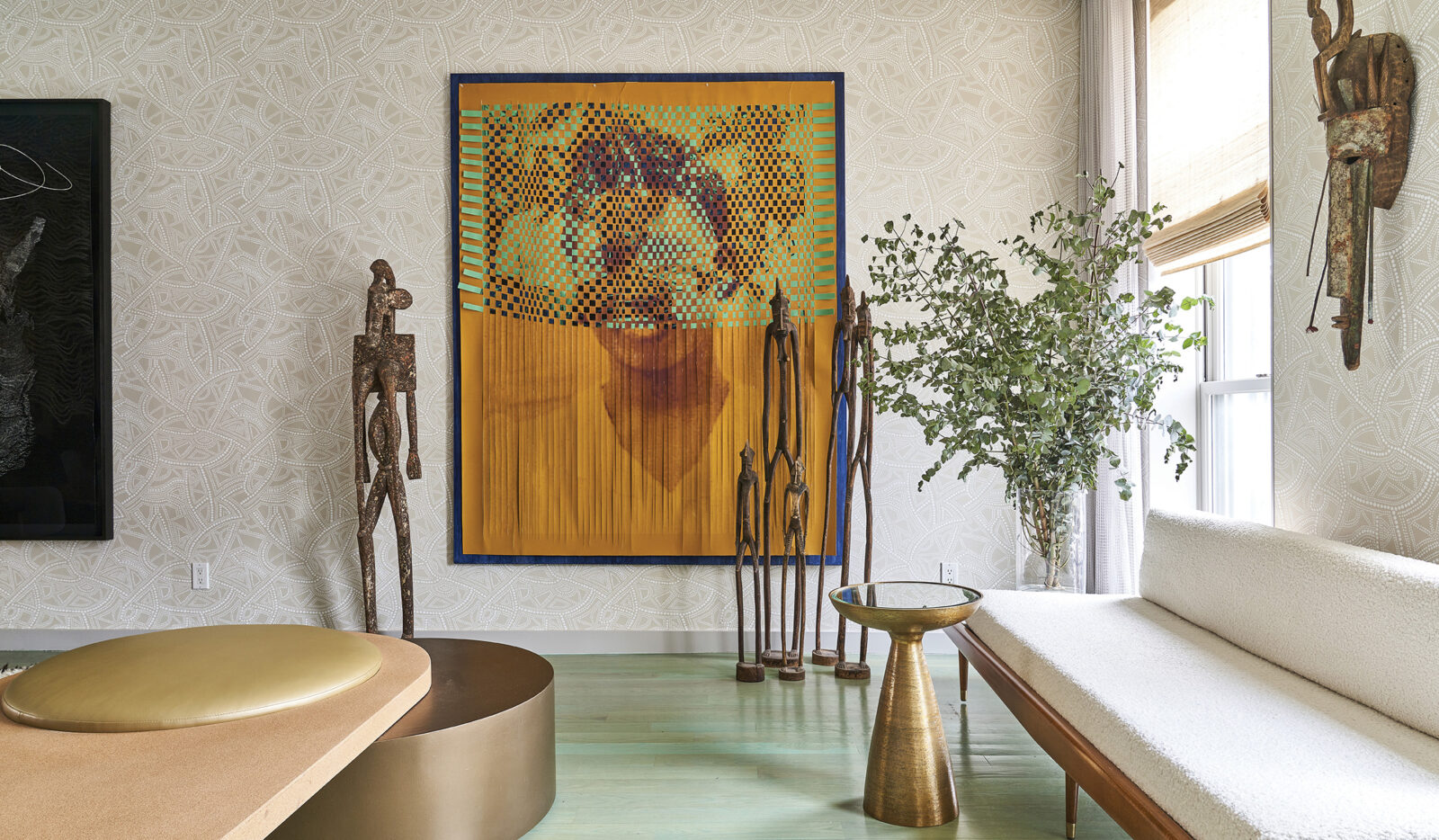
Note: “In the House” by Alton LaDay is available at Phaidon. Featured image: Design: Leyden Lewis. (Pratya Jankong)