A Seat at the Table

What began as a pandemic-era rediscovery of games has evolved into something larger: a movement toward shared experiences, entertainment, and screen-free leisure. Designers are increasingly carving out spaces devoted to gathering, while entrepreneurs are building businesses around the experience itself.
The return of play
The rise of game tables and games themselves is hard to ignore. Whether at markets large or small or among designers’ own product collections, play is showing up everywhere—and it’s no anomaly. The push began with designers creating spaces to meet the needs of their clients. So why the return? I spoke with several designers and manufacturers creating game rooms and products across the country. While their aesthetics differ, they echoed many of the same sentiments.
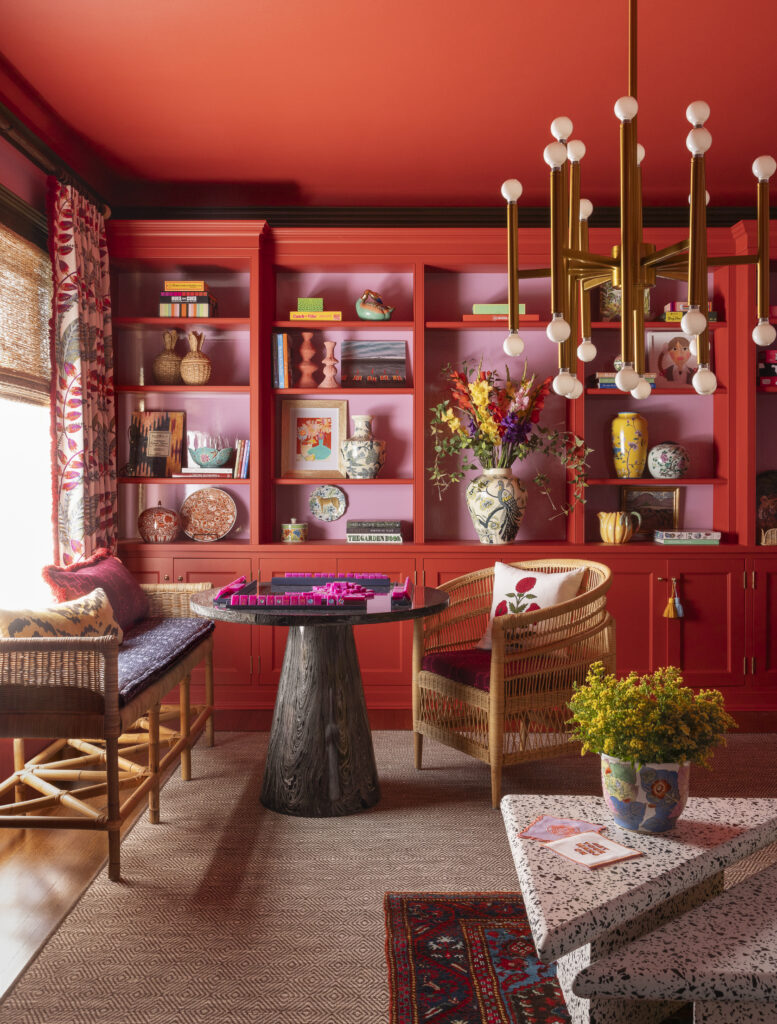
Isabel Ladd, principal of Isabel Ladd Interiors, was one of the first designers I called after spotting the Aqua Maj floating in a pool on her Instagram feed (see last week’s “In the Game” for details). Given her penchant for creating joyful, personality-filled spaces, I suspected she’d have strong opinions on the trend. Ladd shared that she sees the impetus to the return to game rooms rooted in COVID when families were coming together organically and needed at-home activities, “[we] saw different rooms in our houses that weren’t being utilized to the max.” She also pointed out a cultural shift, “I think that there’s a pushback to less screen time.”
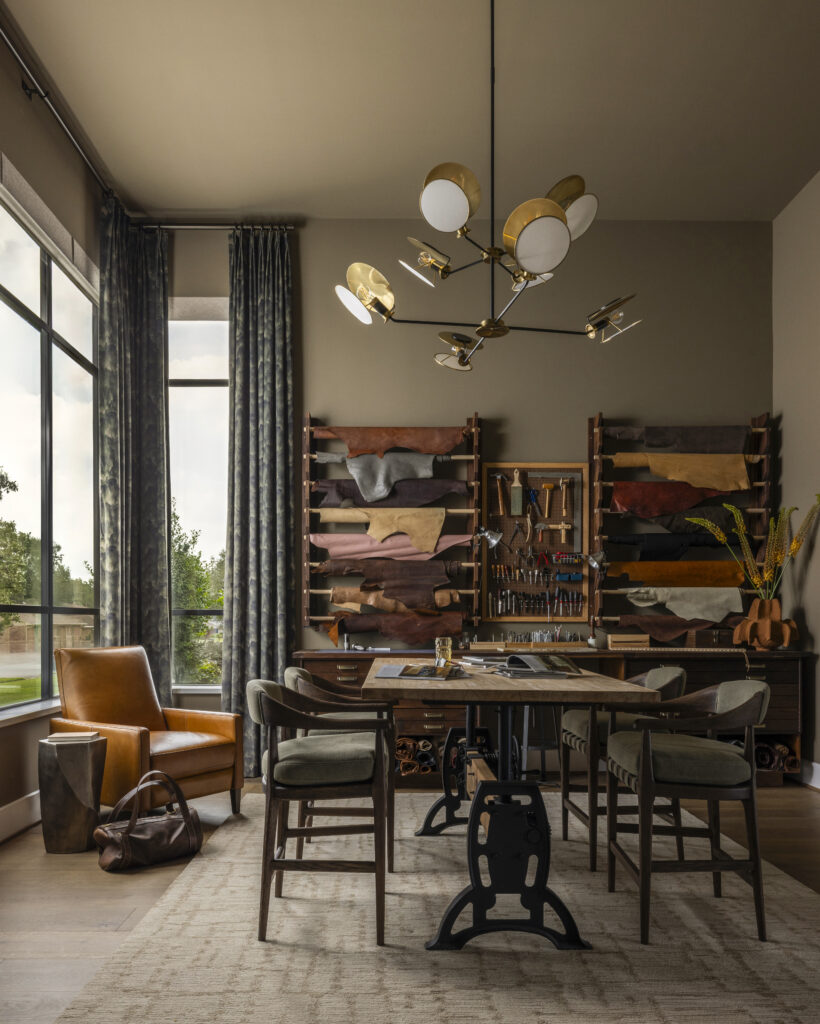
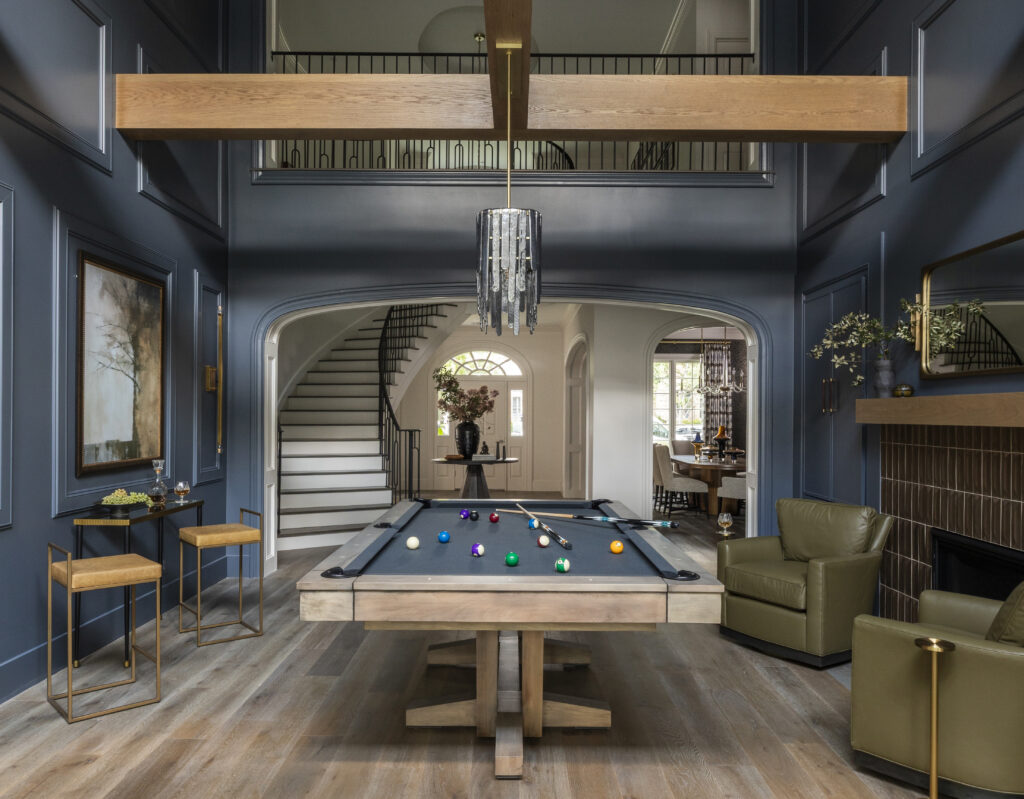
Rainey Richardson, principal of Rainey Richardson Interiors, had a related perspective. “during Covid, we were installing 1 to 2 offices in a house for those clients who needed to work from home. Now the two-office house is becoming unusual, freeing up square footage for leisure spaces.”
COVID may have sparked the shift, but there’s more at play than finding a use for underutilized spaces. Richardson opines, “we live in a world of uncertainty, which leads us to spend more time at home on leisure activities. And that lends itself to game spaces.”
Then there’s the simple joy of entertaining and originality. The game room adds an element of fun to hosting in your home. Barrie Benson, principal of Barrie Benson Studio, explains, “It’s an opportunity to host friends, spend a few fun hours together, and bring out all of your entertaining wares.” To that, Ladd adds, “there’s also a push for originality. And so what drives it for me is things that bring me joy. .. so I’m designing with what brings me joy and then other people resonate with it.”
The rise of gathering culture
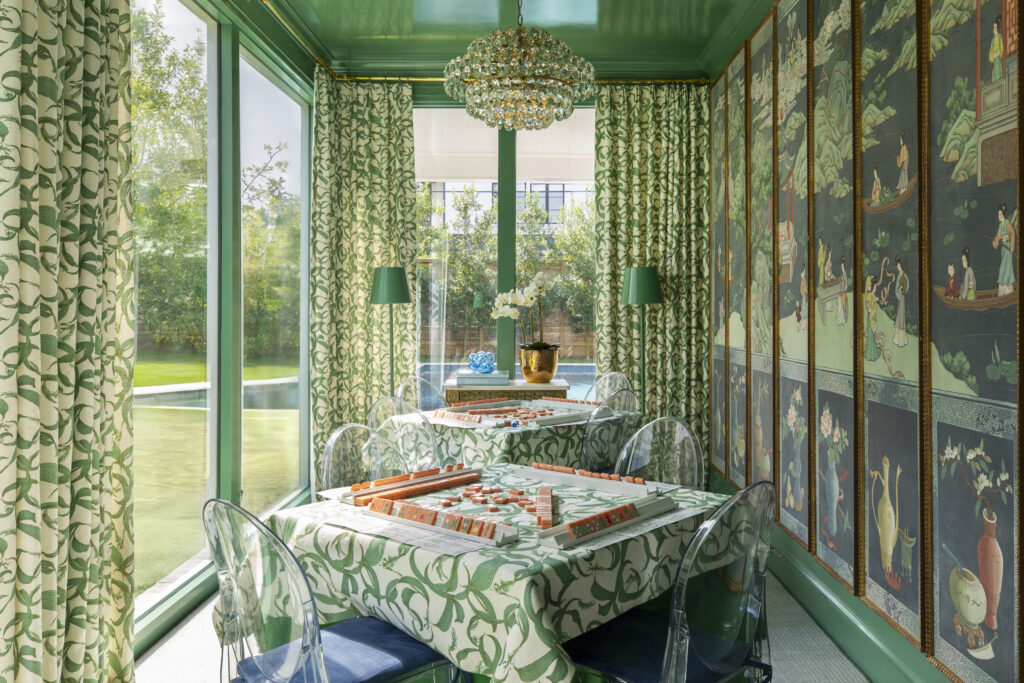
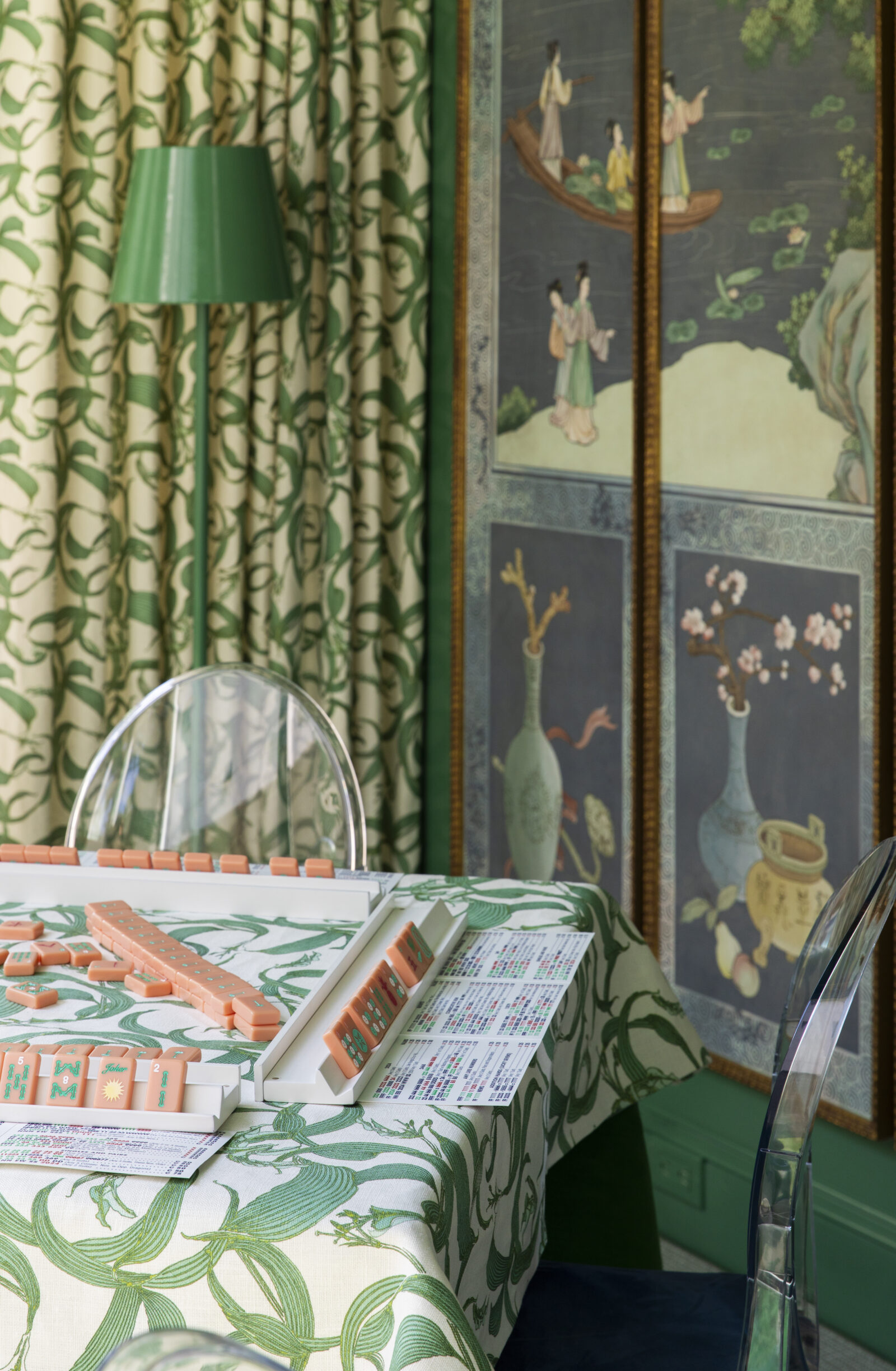
Before joining DNN, I happened upon one of the most fascinating entrepreneurs—and innately gifted decorators—I’ve met at Shoppe Object. Stacey White, creator of The Mah Jong House, was showing her line of custom Mah Jong tiles and accessories. We began chatting, and she shared with me that her journey began with a love for the game that ran so deep, she’d created her own game room. “The game room began very organically,” she shares, “I wanted to create a beautiful space where friends could gather, unplug from daily distractions, and spend meaningful time together. Mahjong has always been about connection for me, and I wanted the room to feel welcoming, layered, and personal—a place people naturally wanted to linger.”
That desire to linger taps into something deeper. Guests weren’t simply looking for a game. They were looking for a visually rich, welcoming environment that fostered friendship, hospitality, and community. A true seat at the table.
Perhaps what surprised White’s guests wasn’t simply Mahjong. It was a room that felt intentional. The game room has evolved from a utilitarian space into a design destination—one where the table, seating, lighting, and accessories work together to create an experience. In many ways, the rise of Mahjong, and games mirrors a broader design movement: spaces that are well-appointed enough to admire but inviting enough to actually use. Increasingly, the game room is being treated with the same design consideration as a kitchen, bar or outdoor living space.
A fresh coat of cool
The game rooms of yore feel worlds apart from today’s designer-driven spaces. When speaking with Ladd, she noted that one of her focuses with clients is to utilize every space in the home, meaningfully. So if a formal dining or living room isn’t used often, Ladd poses the question, “What can we make this room? Put something in this room that will really attract people, for it to not just be a pass-through room…how can we make it useful, and so in many cases, that’s by adding a game table in the area that’s always at the ready, because it’s different from just having like a square table with four chairs.”
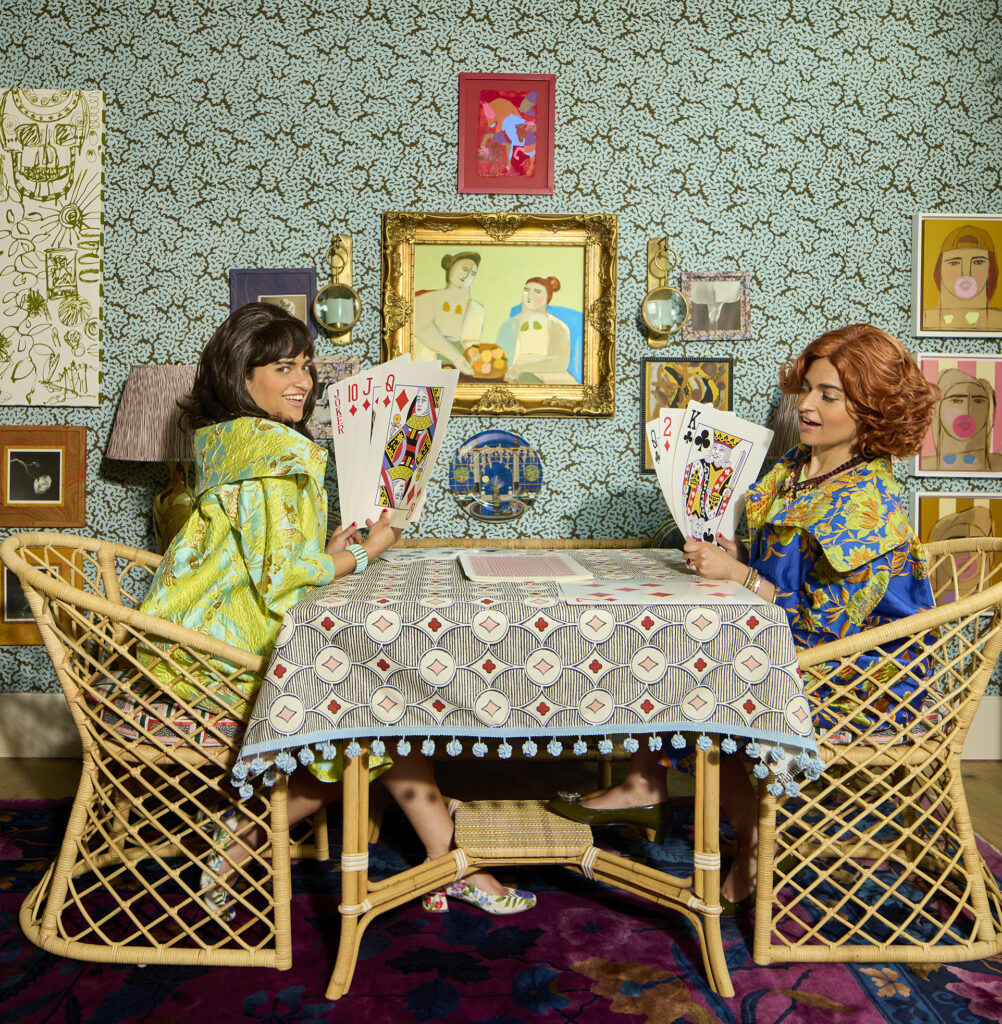
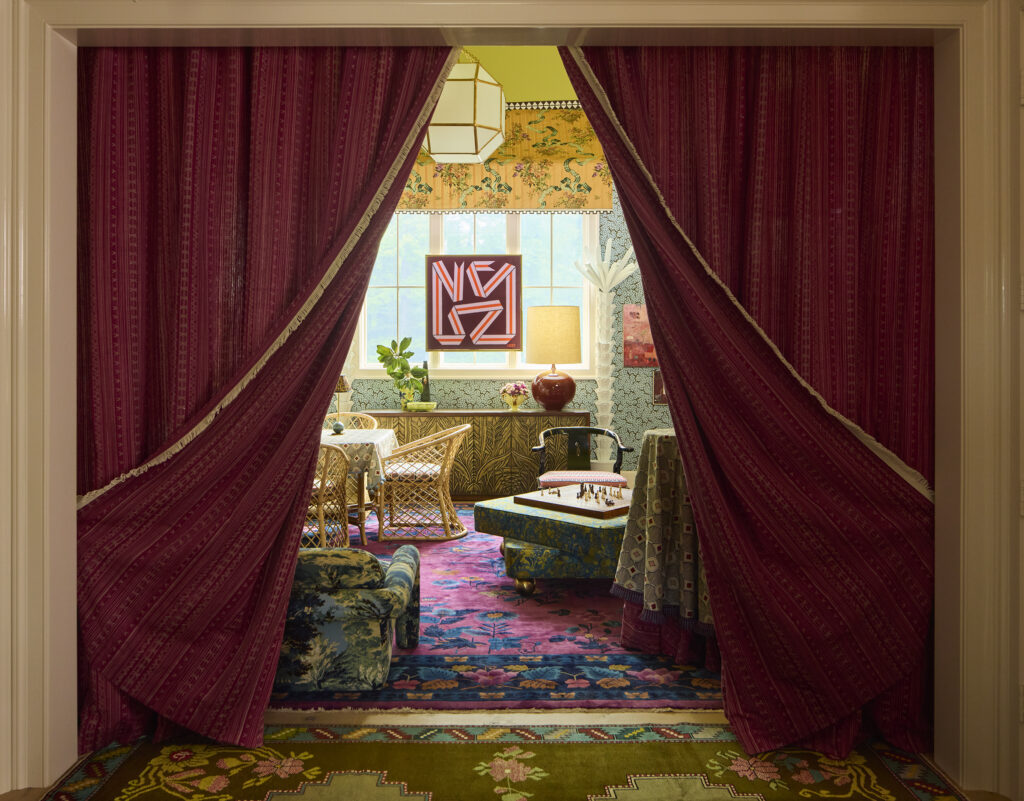
But her designs are not simply a table and chairs with an adjacent bar and pool table. Ladd reflected that her “essential elements” in game rooms are “our color and pattern that just feel extraordinary, magical over the top, like a little vacation in your own house.” These elements come through in the form of extra-large game cards, multiple gaming vignettes within one room featuring robust patterns, eclectic art, and sculptural cocktail tables.
Benson’s clients are also looking for “multifunctional spaces” and express wanting to “lounge, gather, and play games.” To meet those needs, she specifies furniture such as game tables with flip tops or pedestals that are flexible enough to act as additional seating or even a center hall table. She shares, “We appreciate pieces that can adapt over time and allow for easy adjustments during installation or when extra room is needed for entertaining.”
Then there are the very practical essentials. Richardson calls out, “You need enough room. You need 3 feet behind each chair for comfortable seating, and you need 4-5 feet clearance behind each chair to navigate around the table.” She also notes that ambiance is key with appropriate lighting, music, and game storage.
The business of gathering
The clearest sign that game rooms have moved beyond trend status may be the industry’s response. What was once a niche category has evolved into a growing ecosystem of furnishings, accessories, and specialty products designed specifically for play.
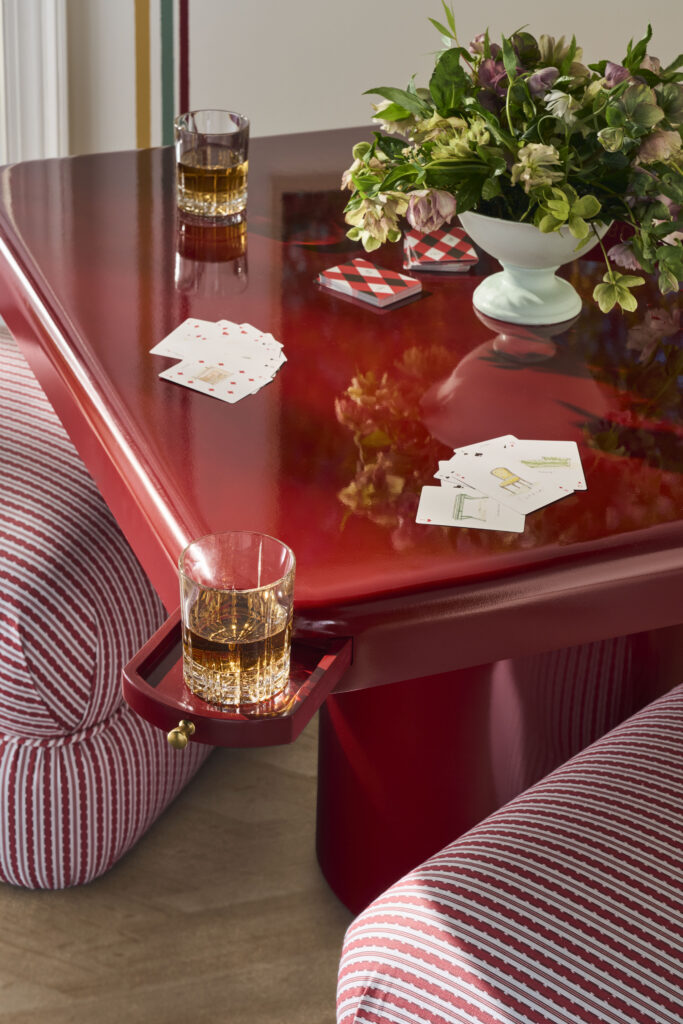
When asked how she reimagined the Brody game table with Highland House, Benson shared, “We designed [it] …. as a study in postmodern form. It features a rounded bullnose edge, a pedestal base, and a lacquer finish.” Benson describes the lacquer finish as a “candy-coated application,” one that adds to the table’s sculptural appeal and allows it to feel equally at home in traditional and modern interiors.
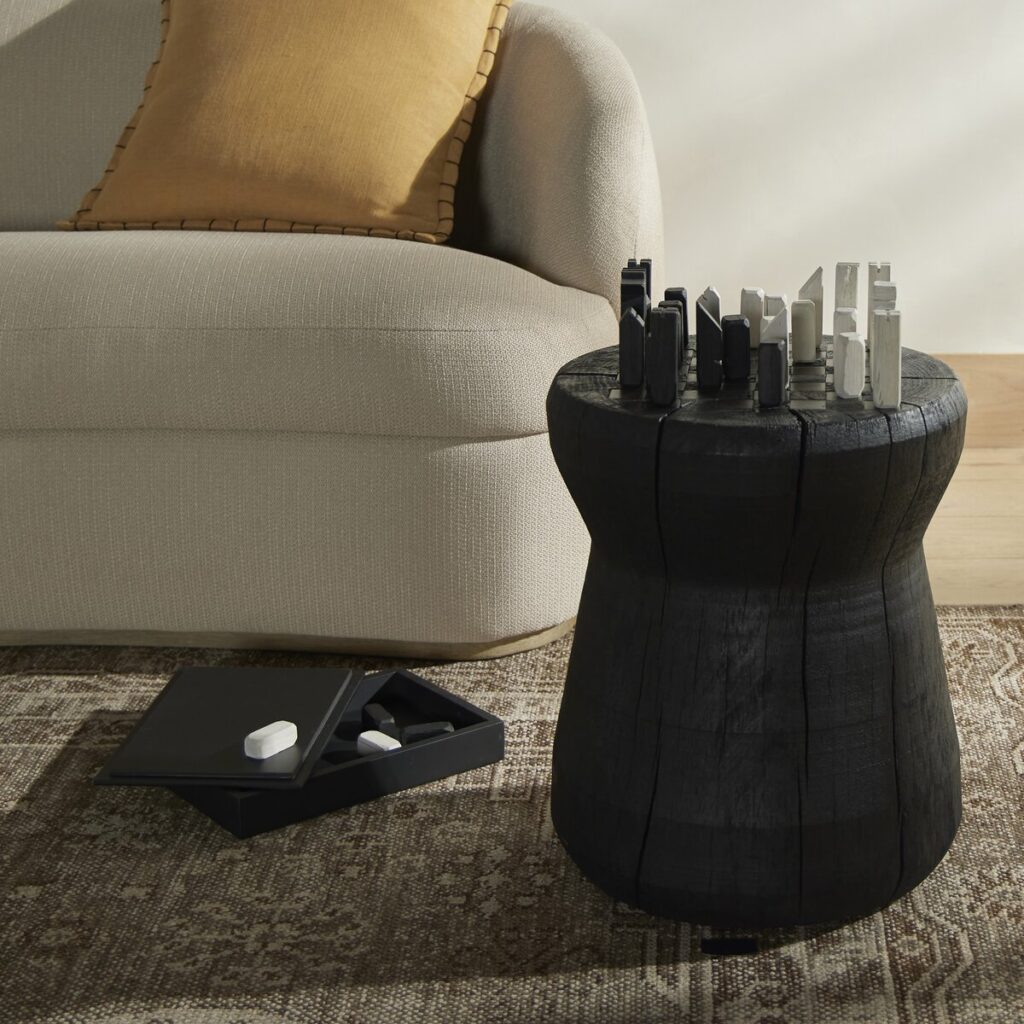
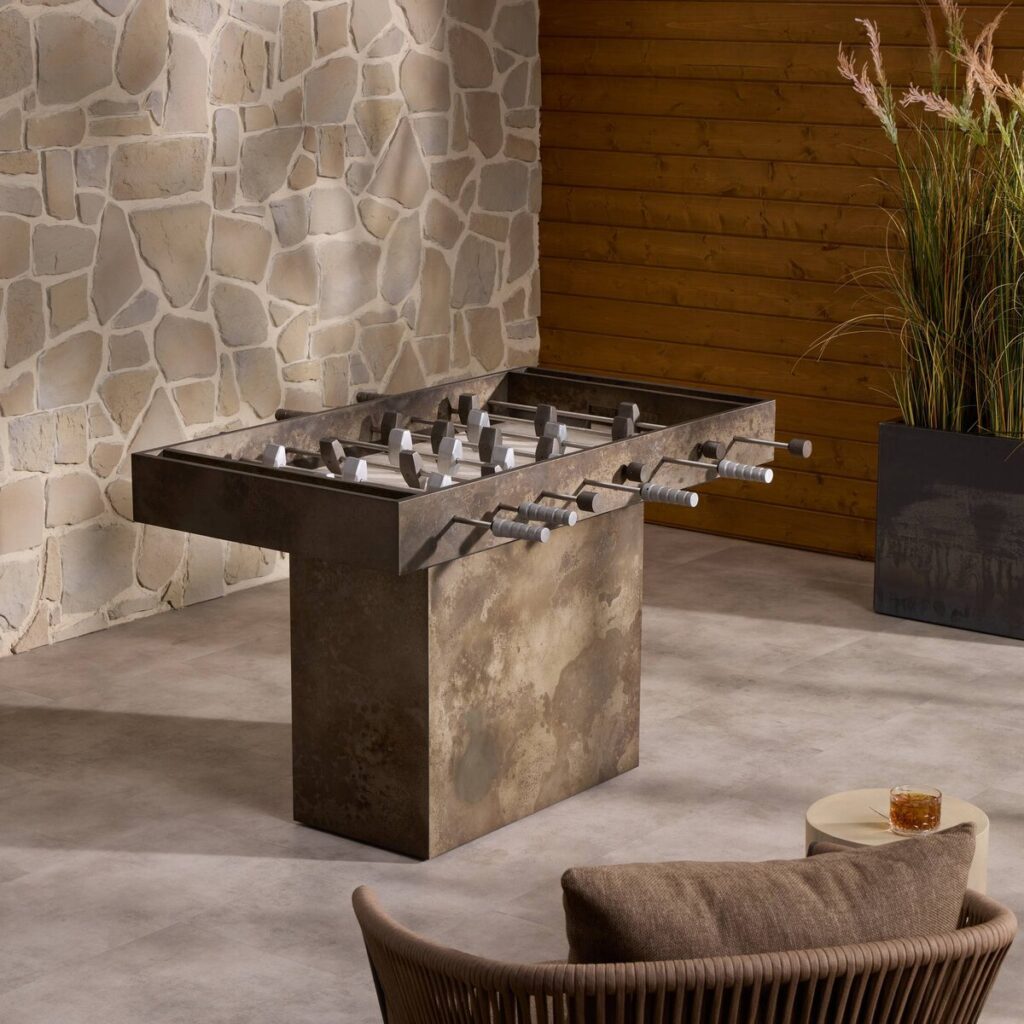
Furniture designer Adam Dunn, the senior vice president of design at Four Hands, shared a different yet equally important approach: “Our goal with game tables has always been to make furniture for the way people actually live. We want to celebrate the fun and creativity of everyday life without sacrificing style, which means prioritizing materiality and creating pieces that blend seamlessly into the home.” Dunn also calls out Four Hands’ focus on form and function, an echo of Benson and Ladd’s approaches to maximizing utilization and space. He points to the company’s chess table and newly launched foosball table as examples, sharing, “Our black chess table … is made from solid wood remnants at a family-run factory in Mexico, maximizing every part of a naturally fallen tree to minimize waste. We launched outdoor games in Spring 2026 to extend that same mentality. Our outdoor foosball table draws on Brutalist design and is constructed from industrial oxidized aluminum panels. To me, it’s the perfect blend of form and function.”
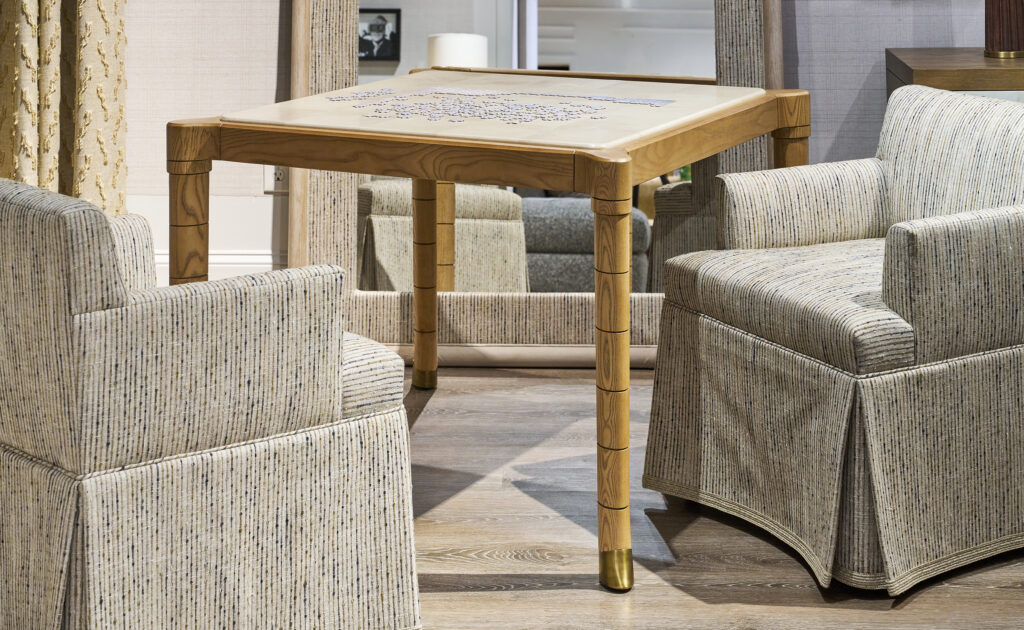
Thom Filicia, who designs furniture for Vanguard, shared both Dunn’s and the designers’ perspectives on the goals in creating game room furniture and the rooms themselves. “I’ve always believed the best entertaining spaces are the ones that invite people to settle in, relax, and stay for one more round.” He continued, “The Davis Game Table was designed to feel timeless, tailored, and approachable—bringing together craftsmanship, comfort, and just the right amount of glamour to make every gathering feel a little more special. To me, entertaining at home should feel chic, comfortable, and a little unexpected.”
The return of the game room is about intention. This isn’t really a story about Mahjong, chess or cards. It’s a story about how we want to live now. Designers are transforming overlooked rooms and forgotten corners into spaces that invite people to pull up a chair, pour a drink and stay awhile. The games may bring people to the table, but great design gives them a reason to linger.
Note: Featured image is Stacey White’s game room