
A “visual spellcheck” for your design


Designers are known for having a good eye. It’s part of the job, being able to create focal points and draw attention away from the unsightly, all with a goal of making appealing spaces.
But science can help confirm if your project is hitting the mark or creating unintended impressions, says Byron Trotter, creative design director for Minneapolis-based 3M. It can also help convince skeptical clients of the wisdom of your design.
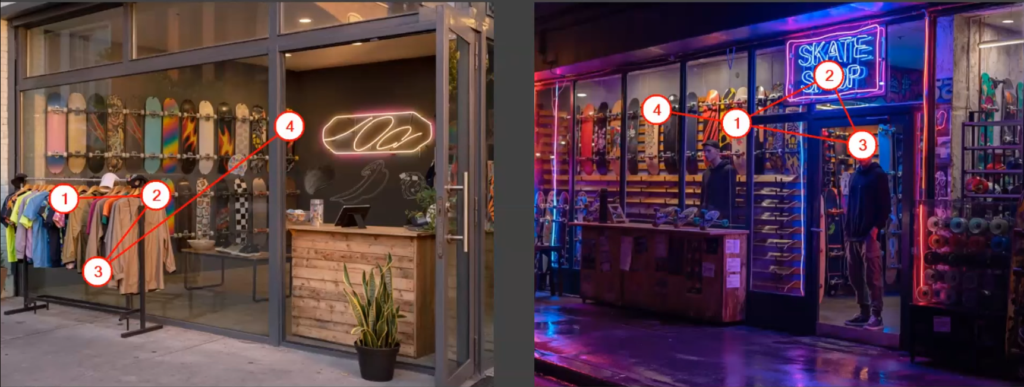
Trotter recently discussed his company’s Visual Attention Software during a Science in Design webinar. 3M promotes VAS as a “visual spellcheck” that “instantly predicts what viewers will seeat first glance — with 92% accuracy — so you can test, refine and present your work with confidence.” The product has been used widely in commercial design, especially retail. But Trotter notes that it can also be used with residential renderings, website design and marketing materials, making it good for interior designers, too.
In introducing Trotter, Mike Peterson, founder of Science in Design, noted research shows that 95% of our brain activity is beyond our conscious awareness and that means designers must design for our unconscious mind.
“So, the question becomes, you want to attract attention with your work? Then are you designing for the unconscious mind, the subliminal brain?” he said.
VAS works in three ways, offering a heatmap that acts as a visual overview of the salient areas of a design; hotspots that score individual areas of a design, based on the probability of those receiving people’s attention; and a gaze sequence that shows the first four areas of a design most likely to be noticed.
“This software focuses on that first three to five seconds when you’re not really consciously thinking and helps measure that moment before your opinion starts to kick in to go further with the information,” Trotter said. VAS measures factors like edges, intensity, red-green contrast, blue-yellow contrast and faces. It’s especially good for A-B testing design options.
To me, such software seems to offer particularly strong potential for designers who work on commercial projects, from restaurants and hotels to short-term rentals, where one goal is to direct people through spaces and improve ease of use for visitors.
“Some people might say, ‘Well, I don’t really want software to control how I design,’” Trotter said. “One thing this does, if you have a client, for example, who might be a little headstrong, and they have already made up in their mind, this scientific measurement tool can prove that the solution you’re providing has been measured and is the right solution for them to consider.”
I’ve written before about my concerns that some artificial intelligence tools risk putting creative professions out of work. Our goal with tools should be to facilitate and enhance creative work, not take creativity out of the hands of humans. I’m not promoting 3M’s VAS, but I like that it functions, as the company says, like a visual spellcheck — the type of tool that can sharpen, rather than replace creative work.
As Trotter noted, VAS doesn’t judge good or bad design. That’s where a designer’s expertise comes in.