
The design industry runs on novelty: 500-piece collection launches, seasonal trend cycles and the constant churn of what’s next. So there is something radical about a project that asks a different question entirely: What endures?
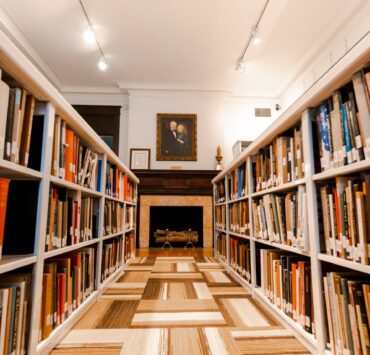
Tim Barber Architects (TBA) has spent more than a decade answering that question at the Jonathan Club, the 1925 Beaux-Arts private club on Figueroa Street in downtown Los Angeles. The phased renovation has updated the natatorium, the valet entrance, the barbershop, a women’s spa, an internet lounge and a rooftop cigar lounge, all while the building remained open to its members.
It is impeccable preservation work. But the project’s relevance extends well beyond the heritage world. From material sourcing and adaptive reuse to the business case for patina, TBA’s approach offers a playbook for designers and manufacturers thinking seriously about longevity, craft and how to make things people don’t want to throw away.
Reversibility: the sustainability strategy no one is talking about
Before any line is drawn, TBA evaluates every space for historic significance. Original elements of high merit are conserved as-is. Lesser features become candidates for adaptation. The non-negotiable principle is reversibility. “We strive to make our work reversible,” Barber says, “in the event the building is entirely restored.”
In an era where sustainability is on every brand’s website but rarely in its engineering, that’s a provocative standard. TBA builds things that can be undone, not because the work is expected to fail but out of respect for the possibility that someone may have a better idea in 50 years. For manufacturers developing new product lines: design for disassembly, design for repair, design for the long view.
Heritage sourcing and the business case for reorderability
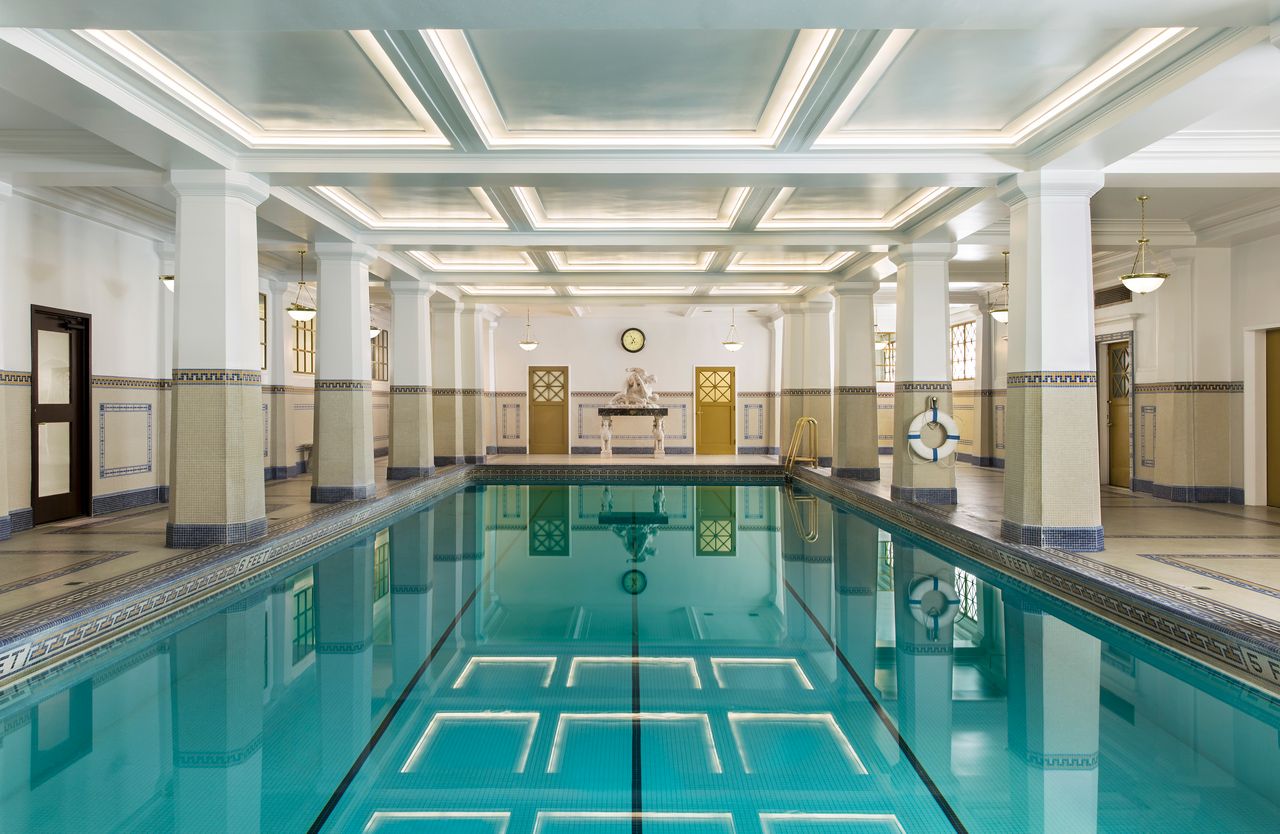
The natatorium’s original 1920s tilework, expertly crafted mosaic in distinctive shapes and glazes, had been partially replaced during a 1960s renovation with mismatched tile. Rather than approximate the originals, TBA tracked down the original manufacturer, still in operation, and commissioned new mosaic that was shape-and-color-matched to the 1925 designs. “Otherwise,” Barber says, “we would have made, glazed and fired these replacement tiles anew.”
Heritage sourcing, the ability to trace a material to its origin and guarantee continuity, is rapidly becoming a differentiator in the upper market. Manufacturers who maintain artisan relationships and legacy processes aren’t just preserving craft. They’re building reorderability. For any designer who has tried to match a discontinued finish five years into a project, that is worth its weight in gold.
Patina: designing materials that age with care
“Patina often shows the layers of history to be celebrated,” Barber says, “yet it is important that patina expresses care and not disrepair.”
That distinction between care and neglect is the tightrope the furnishings industry is walking in 2026. Zellige tile, tumbled stone, hand-distressed leather, washed linens: the market wants lived-in. But there is a meaningful difference between a material that ages gracefully and one that simply degrades. At the Jonathan Club, each element is assessed individually. Can the original brass pool ladder be conserved, or is it too deteriorated to read as anything but neglected? Can existing marble benches be relocated to serve a new program? Is there a good reason to replace the shoeshine bench? (There wasn’t.)
The lesson for product developers is concrete: if a piece is engineered to develop patina over time, it also needs a predictable aging arc, a point at which character deepens rather than tips into looking uncared-for. The best heritage materials have this built in. The worst just look old.
Adaptive reuse: layering history instead of erasing it
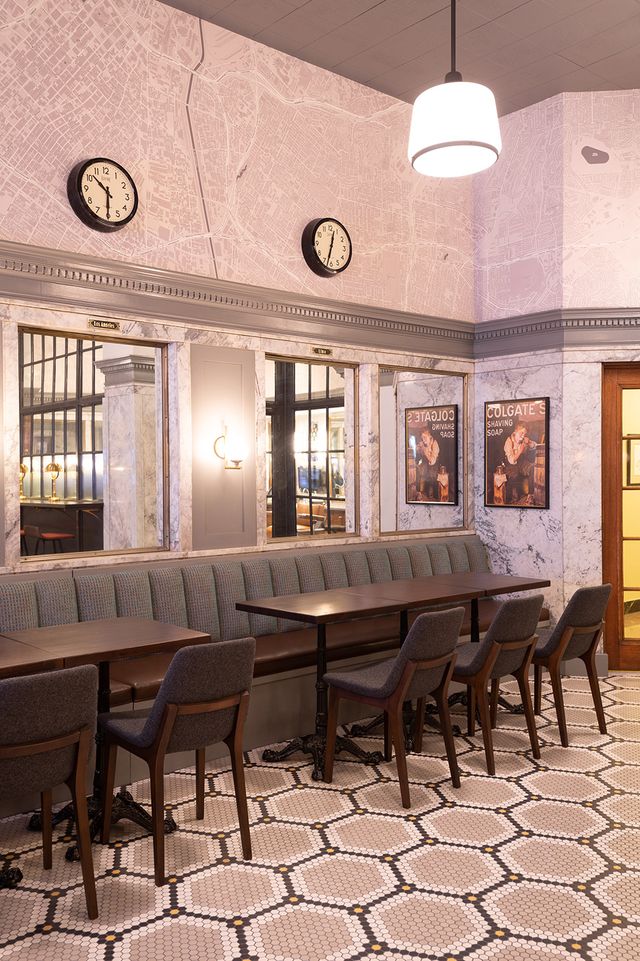
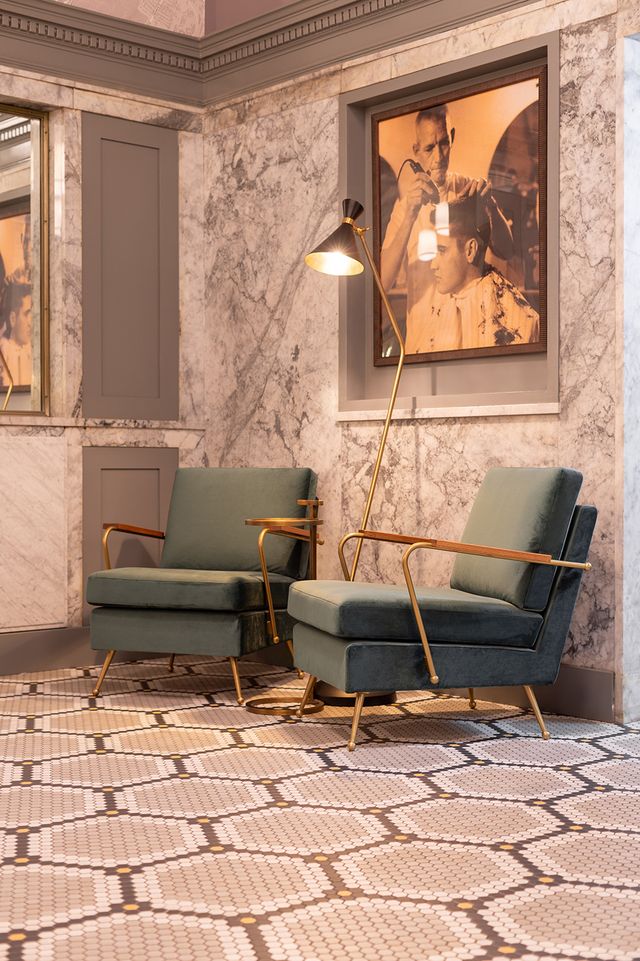
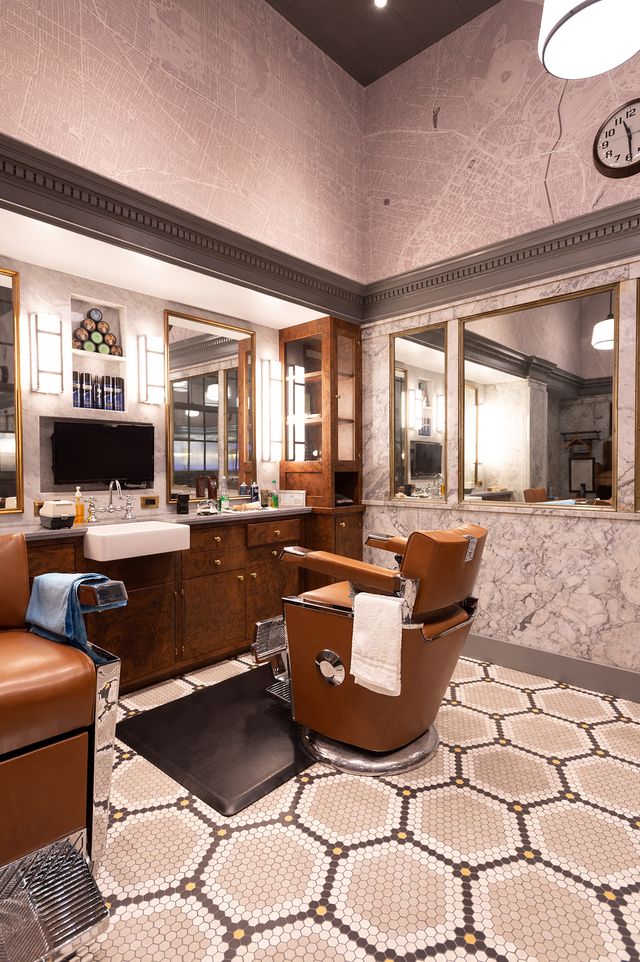
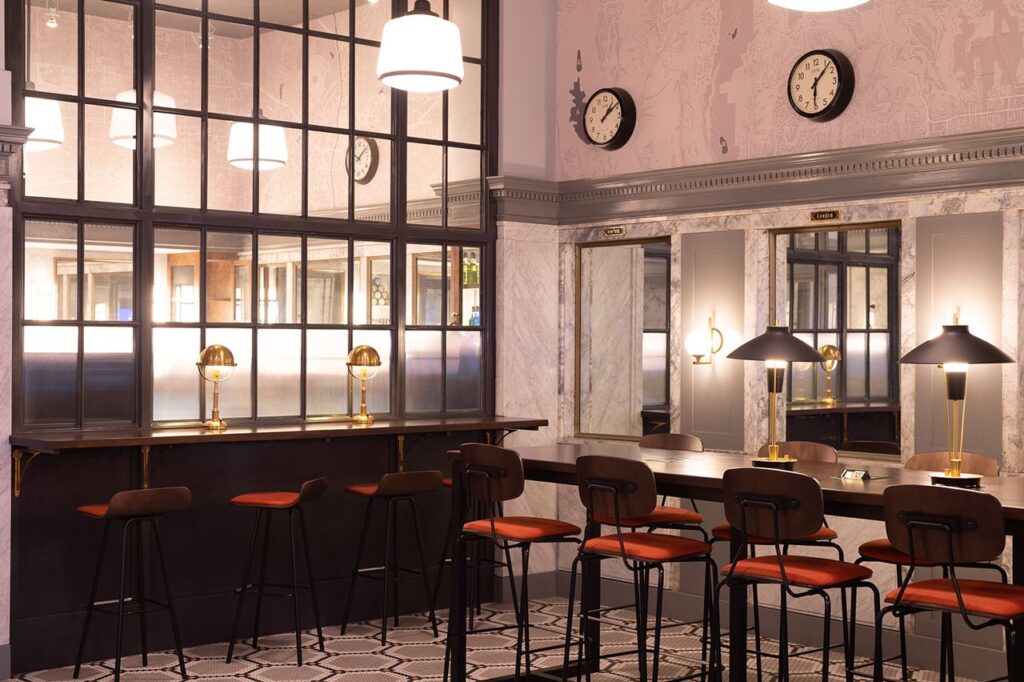
When the club opened in 1925, a barbershop was a practical necessity for members arriving after days-long train journeys. By the 2000s, the chairs sat mostly empty while members clamored for somewhere to use laptops and phones, devices banned in the club’s formal areas. TBA reduced the barbershop’s footprint and introduced an internet lounge with tables, data ports, Wi-Fi and coffee service but retained the original marble wainscot, millwork and brass-framed mirrors. A new steel-and-glass enclosure houses a smaller barbershop within, complete with stained burled-wood cabinets, the original shoeshine station and 1950s barber chairs reupholstered for the next generation.
The result is a palimpsest, layers of the club’s history readable in a single room. It connects directly to the offline-luxury movement reshaping hospitality design: spaces designed with enough material depth that people actually want to be present in them, judged by how they feel rather than how they photograph. The Jonathan Club’s lounge succeeds because it feels like somewhere, not anywhere. For designers specifying furnishings in hospitality and club projects, the takeaway is clear. The most effective adaptive-reuse interiors layer the previous chapter rather than erase it.
Atmospheric lighting: designing for experience, not the camera
During the natatorium restoration, TBA discovered that a 1960s parking addition had sealed off the pool’s original windows entirely. Unable to restore actual daylight, the team converted the bricked-up openings into back-lit fenestration with grillwork inspired by the original design, flanked by mirrors to amplify the glow. Overhead, distracting fluorescent fixtures were replaced with indirect cove lighting in the existing coffered ceiling. Along the pool aisles, new fixtures reference 1920s designs.
The approach predates the current conversation around experiential, nervous-system-calibrated lighting in hospitality, but it validates the direction. Lighting manufacturers take note: indirect, warm, layered illumination designed to create a sense of place rather than a social media moment is where the specification market is heading.
Constraints as design brief
The Jonathan Club never closed during construction. TBA limited work to one phase at a time, mapped alternate routes for members and presented renderings and material boards for approval before each project, a process closer to civic design review than a typical client sign-off. The rooftop cigar lounge, born from California’s 1995 indoor smoking ban, is the most vivid example of constraint as catalyst: a tented rooftop space with classical form, heaters, drapes, soft lighting and panoramic downtown views that became the club’s most desirable destination.
Enduring design
Asked how to measure success on a project designed to last another century, Barber’s answer is disarmingly simple: “The largest contributor to longevity has been a commitment to the memorable spirit of the place: collegiality, comfort, convenience and beauty.”
No trend language in that sentence. No “quiet luxury,” no “biophilic design.” Just four words that would have resonated in 1925 and will still resonate in 2125. For an industry perpetually fixated on what’s next, the Jonathan Club is a reminder that the most enduring design strategy isn’t novelty. It’s building things worth keeping.