The O’Hare Way: A design family’s approach to creativity

Not to unearth a centuries-old academic debate, but the nature-versus-nurture question has always held a certain fascination for me. It came to mind recently while scrolling LinkedIn and landing on a post by Maggie O’Hare, who leads Sherwin-Williams’ Industrial Wood DesignHouse.
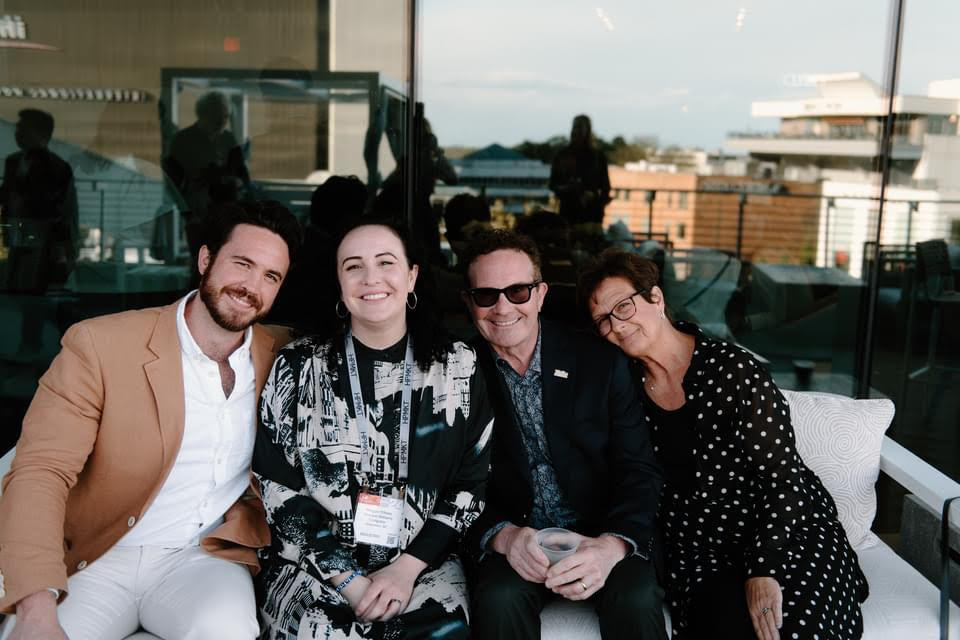
Maggie is the daughter of interior designer Caroline O’Hare and prolific furniture designer Tim O’Hare, who are now partner and founder of The O’Hare Group, respectively. She is also the sister of Ian O’Hare, a furniture designer and founder of Studio EL.
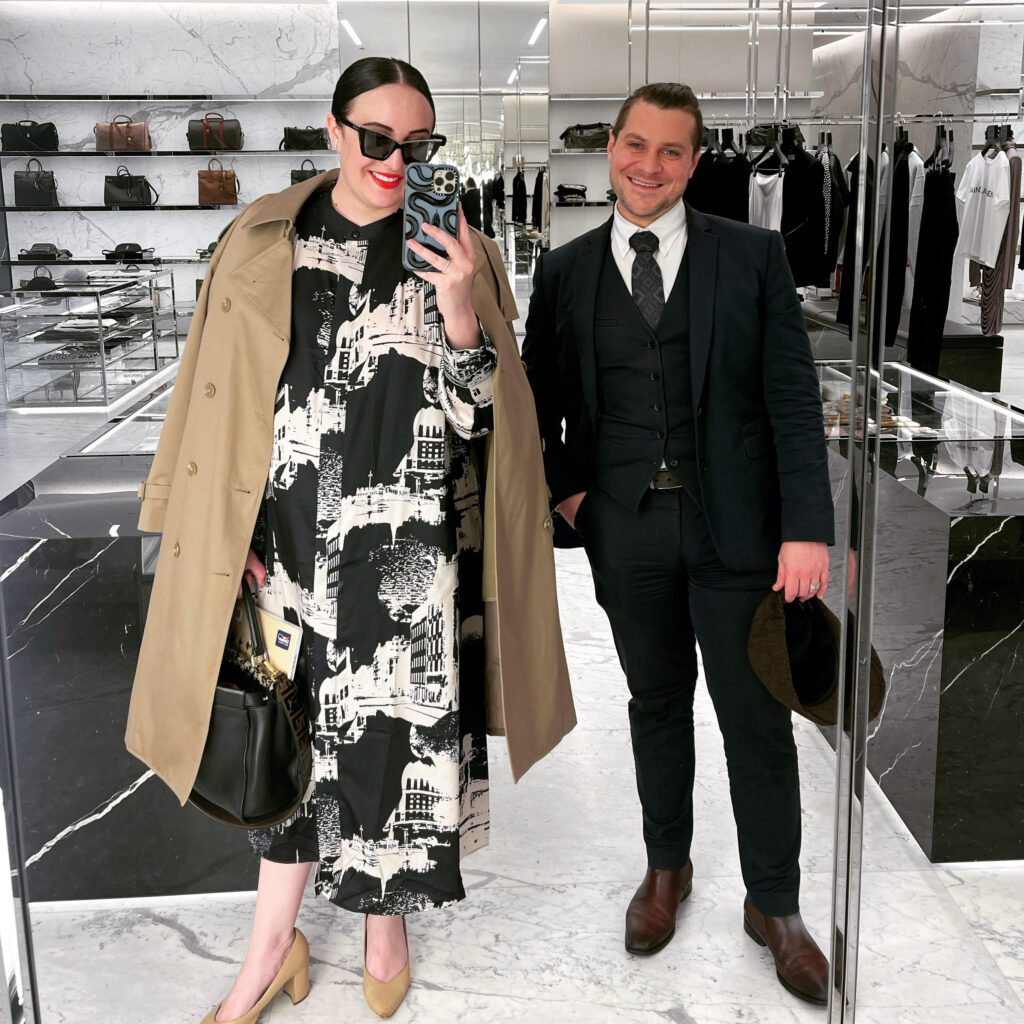
Maggie’s post made me wonder if and how creativity gets passed down, how it’s nurtured, and ultimately becomes a way of life. I ruminated on it long enough and reached out. Here is what I learned.
Tim O’Hare had a habit of bringing his children to work. From factory floors in China to retail-store research weekends, Ian and Maggie grew up inside the furniture ecosystem, gathering impressions that proved indelible.
Maggie recalls a formative trip to Vietnam while Tim was working on Jessica McClintock’s youth collection. Witnessing a master carver struggle to interpret a sketched bow detail, language failed—but drawing didn’t. Tim sat down beside him, sketching and refining the form together until they solved it. “That was when I really learned the power of visual communication,” Maggie says.
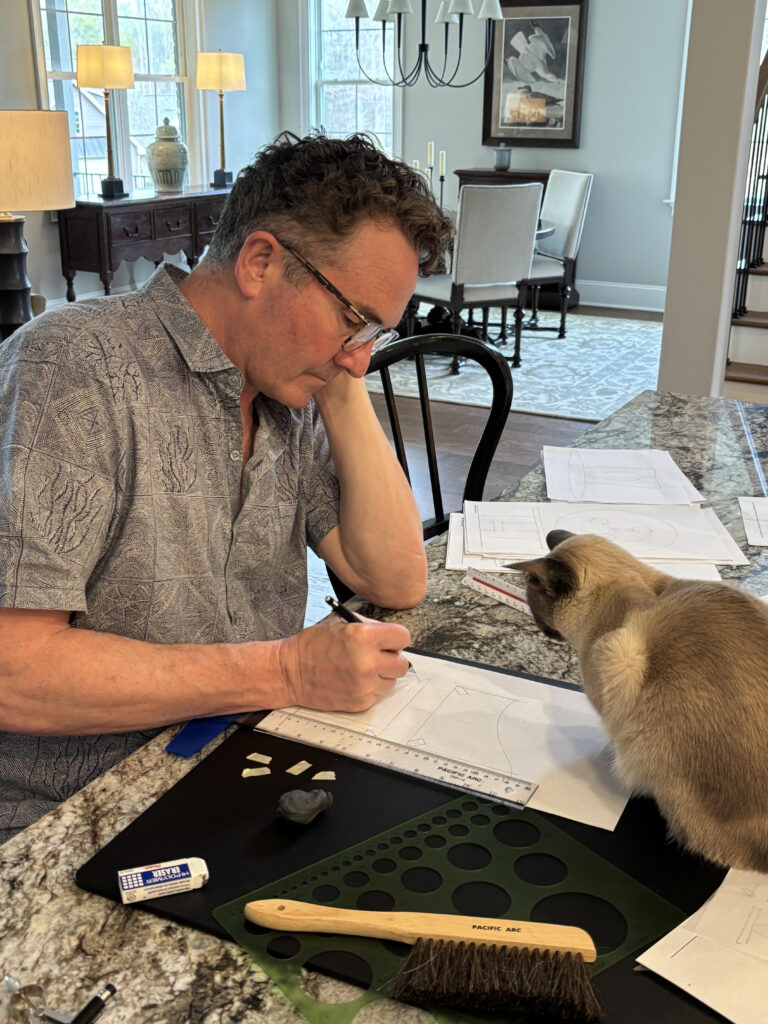
Closer to home, Ian and Maggie spent time at HT Keller & Associates in High Point, where Tim was a partner for 25 years. Ian, fessing up to a childhood obsession with dinosaurs and dragons, remembers building creatures out of kneaded erasers at the conference table. Maggie interned there and it’s where she learned to draw and hand-render furniture. “I was always surrounded by creatives who wanted to teach me,” she says.
At home, creativity was encouraged in quieter ways. There were sketchbooks everywhere, every room, every surface. Pens were always within reach. Drawing wasn’t scheduled. “It was simply what you did when you were bored in the ’90s,” Maggie says.
That freedom shaped Ian’s approach early on. “It’s precious, but it’s not,” he explains. “I can always sketch something else. I can do it again—and I can do it better.”
In the O’Hare household, there was no neat separation between work and life. Dinner conversations were often furniture-adjacent, no matter how hard the family tried to redirect them. “Our father would share his excitement with us daily,” Ian recalls. “His bottomless energy around style, design, creativity, and ideation shaped my worldview.”
Their home reflected that same intentionality. “My parents decorated with a deep understanding of balance,” Ian says. “Every room had order and structure—never cluttered, never sparse.” Maggie recalls how carefully her parents personalized each of their rooms.
Choosing careers in home furnishings, however, was not a given. Maggie entertained marine biology, archaeology, and later fashion before earning a BFA in design from UNC Greensboro. “I was so immersed in the furniture industry from a young age that I owed it to myself to explore other avenues,” she says. Shortly after graduation, Lexington Home Brands, however, offered her a job.
Ian flirted with becoming a jazz musician before studying industrial design at Appalachian State, where he and Tim chartered the school’s first ISFD student chapter. His career would later include positions at Baker, Theodore Alexander (where he relished the collaboration with Alexa Hampton), and Jonathan Charles.
Creativity did not replace character-building, it enhanced it. “Work hard and be nice to people.” That is what Tim O’Hare told his family each day as he went off to work. “So far, that has served me very well,” Ian says. Maggie has the phrase framed in her home. “I walk by it every morning.”
Immersed in their own practices today, creativity and innovation remain essential to each O’Hare’s livelihood. What keeps their work fresh is a shared commitment to curiosity.
“There’s a childlike quality to it,” Ian says, watching his own children experience a world where everything is new. “When you get older, you brush things off as mundane. Creativity is about retaining as much novelty as possible.”
“A lot of people walk by things that would stop us,” Tim adds. Be it marble veining or cloud formations, the quiet way shapes assemble and dissolve delights him. Where others move on, Tim pauses.
For Maggie, that attentiveness shows up in noticing the smallest details, often of ordinary objects. “I may pick up a vegetable at the grocery store and think, wow—that’s beautiful,” she says. “Leaning into that childlike curiosity can spark a lot of creativity.”
And when curiosity stalls—when the work feels heavy, each O’Hare has a way back in.
Tim returns to drawing. “I just start,” he says. “Sometimes it’s just circles, but something always comes out.” Ian looks to the past—antiques, joinery, architecture. Last time he was at The Met, he was captivated by the way shagreen was wrapped around the handle of a samurai sword, a lesson in material and restraint.
Maggie heads somewhere else entirely. Nature is her reset. “If I’m overwhelmed by technology or society, I disconnect,” she says. “She’s got all the colors down. She’s perfection.”
The O’Hare family didn’t pass down a profession; they passed down curiosity, kindness, and the belief that creativity is both adaptable and resilient. And it happened through immersion and proximity, not pressure. “I learned that my creativity shines wherever I focus it most,” Maggie says, “so I’ve never limited myself creatively or career-wise.”
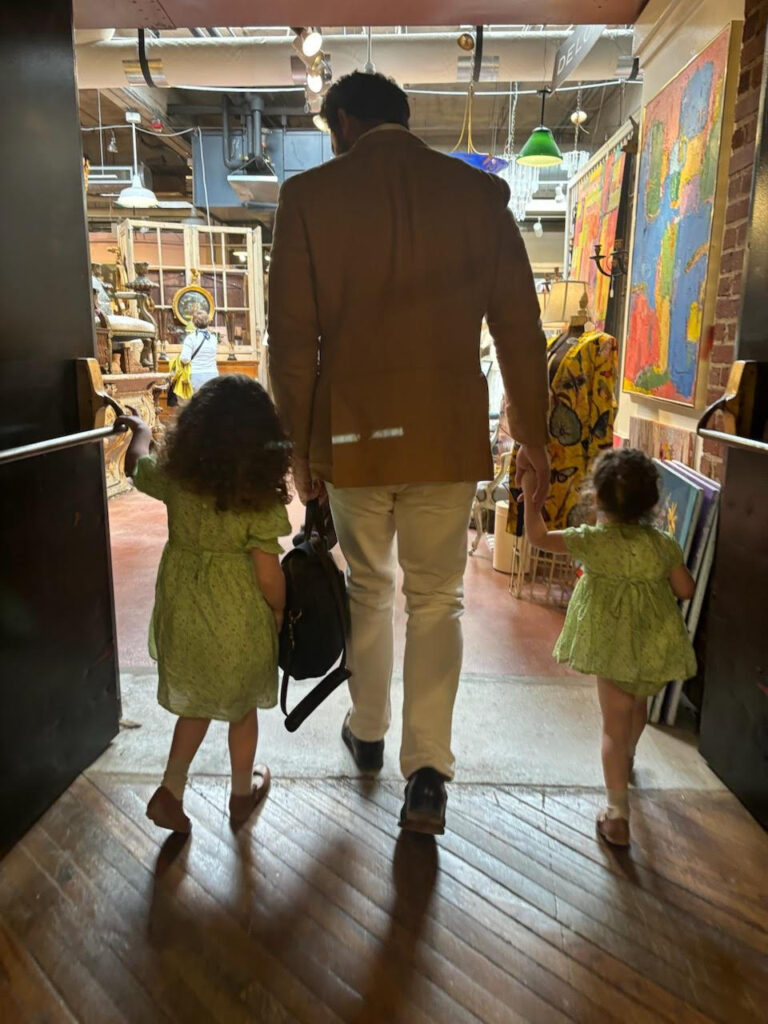
“I always wanted to be a father, first and foremost,” Ian says. Carrying forth the tradition that Tim set in place, Ian’s daughters, Edie, six, and Louise, four, have been attending Market since October 2023. He says, “They love the excitement and the free food.” In 20 years, let’s circle back and see what those girls are up to!