



Corey Damon Jenkins Has an Answer to Design’s Most Annoying Question: Where Does the TV Go?

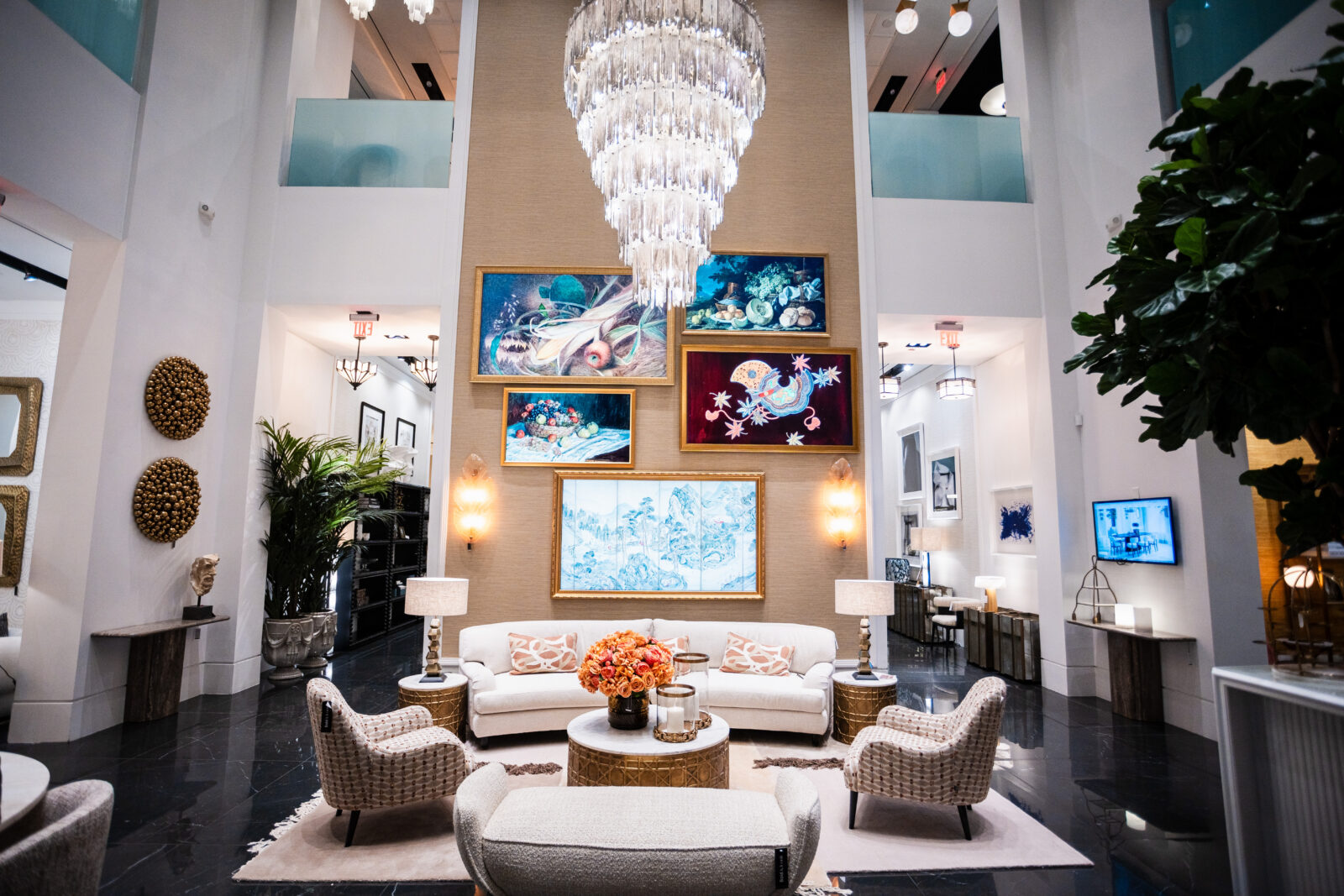
With Samsung Art TVs, Corey Damon Jenkins turns a familiar design dilemma into an opportunity for art, personal expression and a better-looking room.
Interior designer Corey Damon Jenkins has dealt with vexing design challenges throughout his career. But one has been universal and, frankly, annoying: What do you do about the television?
Even as people cut the cord on cable and increasingly watch movies, sports and their favorite programs on laptops, tablets and phones, most homeowners want at least one TV. But when turned off — and Samsung research shows a TV is off about 20 hours a day — televisions become a big black hole in the room’s design. The typical solution: Hide it inside a cabinet.
Jenkins has found a solution he likes better in Samsung Art TVs, which display works of art — from classical master painters to rising stars in the modern art world — when the TV isn’t in use.
“For eons … people have been struggling with how to manage form and function in the same space. And let’s be honest: We all love our television screens. We love to watch our shows. We’re streaming. We binge our favorite series, so we can’t get away from having televisions in our living spaces,” Jenkins said during a discussion “Beyond the Black Box: The New Role of Art, Design and TVs in the Home.”

At High Point Market, visitors to the Eichholtz showroom were greeted with what looked like a wall of gold-framed paintings. They were, in a way. But all five images were displayed on Samsung Art TVs as part of Samsung’s High Point Market debut.
TVs have evolved since they were pieces of cabinet furniture in the 1950s and 1960s. Today, they are much thinner and sleeker but also much larger, making them an even bigger eyesore. “We’re designing spaces with the Samsung Frame TV all the time now. We no longer have an issue putting the TVs where they need to be,” Jenkins said.
Samsung Art TV is more of a technology than a specific product. It’s available on a variety of Samsung models, including the Frame, Frame Pro, OLED S95H, Neo QLED and others, and it’s offered on screen sizes from 27 inches to 115 inches.
The Frame, Frame Pro and some other models feature Art Mode, in which the brightness and color tone of the display intuitively adjust to the ambient lighting of the room. A built-in motion sensor detects movement and automatically turns the TV on and off. The Frame versions also come with choices of frame styles and colors to better match decor.
That’s the tech: But from the designer’s perspective, what Jenkins appreciates is the ever-growing library of available art. The Samsung Art Store now contains more than 5,000 works from individual artists, museums and galleries, including The Met, MoMA, Art | Basel, Keith Haring, minted., the Van Gogh Museum, and Musée d’Orsay. The library increasingly includes works beyond paintings, such as textile and paper art that show well on high-definition screens.
Leanne Graeff, general manager of product design for The Met Store and Met Licensing, said The Met partners on the technology to bring art to more people and to make it relevant in their daily lives.
Jenkins embraces that idea, often incorporating a Samsung Art TV into a gallery wall. “Maybe they all have different frames, different textures, different mattings, maybe even different subject matter,” he said. “The TV can live comfortably side by side with those art pieces. If you choose the right aesthetic, it just kind of goes away when not in use. It’s a wonderful way to solve for form and function.”
There’s also a playful element to the technology because the growing Art Store gives people options to swap out art rather than selecting a single painting that will hang on the wall for years, said Daria Britt Greene, global head of content and curation for the Samsung Art Store. Homeowners can curate their own gallery, even having pieces rotate out on a timed carousel. The Samsung Art Store also offers seasonal collections for fresh, holiday-themed displays.
“A lot of people like to decorate their home for seasonal and holiday, and sometimes it can be a little cheesy, right? I think we all know that that’s like.” Graeff said. “But we managed to pull it off thematic and holiday in the Art Store: ‘Hey, here’s Valentine’s Day, but make it The Met, right? So, it takes (seasonal decorating) to another level.”
When installing an Art TV, Jenkins works with clients to choose the art it will display, using it as a chance to educate them about both art and design. Most appreciate his direction.
“A lot of time clients will come to us and say, ‘Help me with this,’ because they don’t want to ruin what I’ve done, and the wrong piece of art can screw up the space. So, we do want to make sure there’s a collaborative effort. I also tell them, ‘This is a chance for you to really express yourself. So, let’s talk about color. Let’s talk about texture. Let’s talk about pattern,’” he said. “’Maybe you’re in a very traditional space and it’s very neoclassical as far as the theme of the furnishings and the lighting. Maybe that’s a good opportunity to bring in some abstract art, some geometry, some whimsical energy that is only expressed through the (TV) artwork.’ … So, we have a collaborative conversation with them. I’ve had clients text me screenshots they’ve taken of their TV, saying, ‘Which of these (pieces of art) do you like?’ I’m amazed by how big a range the art pieces often are. … I tell them, ‘Lean into all of them with the carousel configuration.’ It’s very fun.”
Additional reporting by Rachel Fasciani: The Samsung Art Store has also introduced this week artwork by Jonathan Adler.
Note: Header image of Eichholtz High Point Showroom by Charlotte Photography