
How They Get It Done: Mel Bean

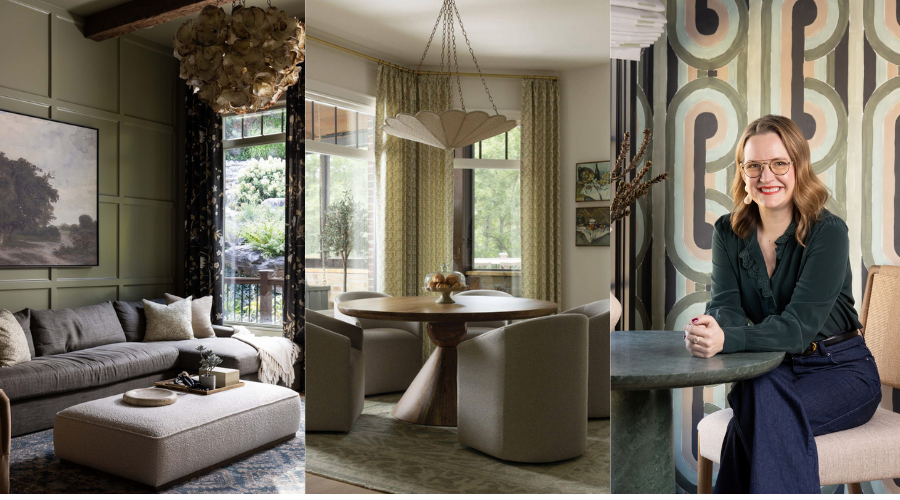
Having built an in-demand, award-winning, nine-person interior design firm in Tulsa, Oklahoma, Mel Bean is ready for a new phase of growth — one tied to a significant change in her personal life as her twin sons head off to college later this summer.
“I’m going to be a 45-year-old empty nester, knowing that (it’s going to be) just me and my dogs (at home). It is actually a really exciting time in my life,” says Bean, founder of Mel Bean Interiors. “… (My sons) are obviously going to be the focus of my life,” but with them away at the University of Oregon, she’s open to new opportunities she didn’t have time for while raising her boys as a single mom and running her firm. That might mean product design and brand collaborations, serving on market panels and other speaking roles, or writing a book, perhaps one about a multiyear, multiphase home renovation project she’s been working on since 2022.
In January, during downtime while recovery from surgery, Bean started considering a new vision for herself and her design firm.
“I went deep into reflecting and analyzing and dreaming, too,” she says. One of those dreams: splitting her time between Tulsa and somewhere else. France was an appealing option the day she and I spoke.
“I have options right now,” she adds. “I have the ability to do a lot of things remotely and have an incredible team and a structure that supports our lives. That’s the philosophy of Mel Bean Interiors: I want it to support all of us, and it should support our lives.”
Bean and a partner founded Austin Bean Design Studio in 2011, then in 2018, Bean founded Mel Bean Interiors, bringing some Austin Bean team members along with her. She has strived to create a culture that values positivity, kindness, and creativity, as well as one that encourages her team to challenge themselves.
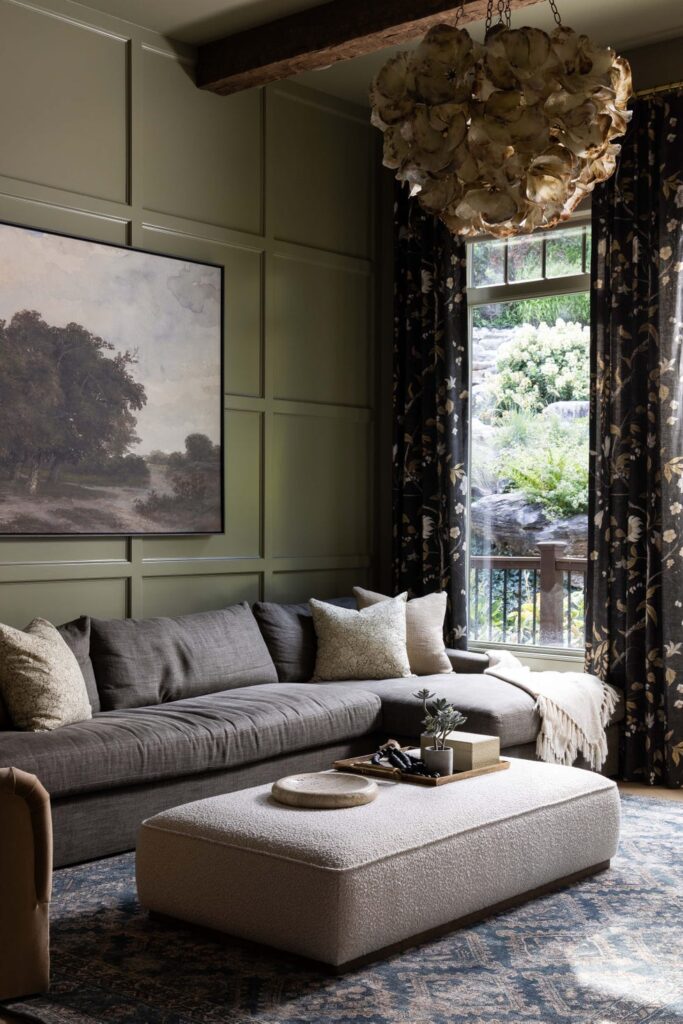
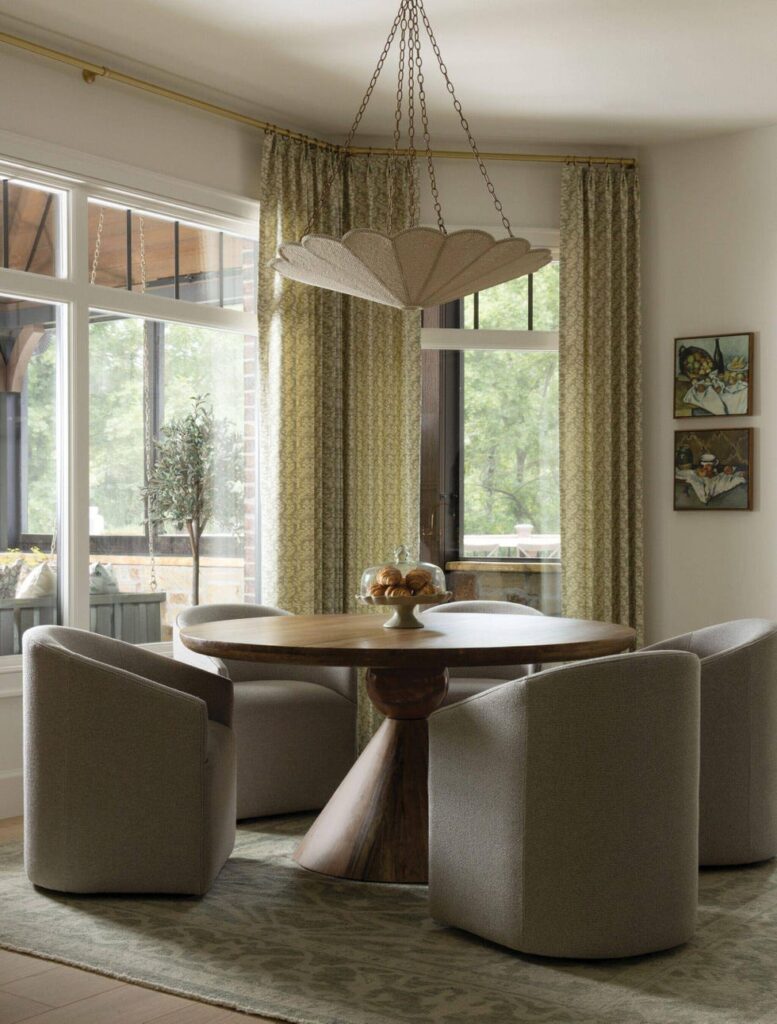
“We’re all very protective of it,” she says. “… I want this to be a really amazing, successful business — and it is. And yes, I want to do the ultimate, ideal, dream work, yet I’m also super proud that I happen to have a team right now of all women, and I’m proud of the culture that we’ve created that supports everyone’s lives.” That includes a work schedule designed to give the team flexibility: everyone in the office from 9 a.m.-5 p.m. on Mondays and from 9 a.m.-2 p.m. on Tuesdays and Thursdays. On Wednesday and Fridays, everyone works remotely.
Bean has fostered other cultural notes too, including prioritizing kindness in relationships with clients, vendors, and other project partners. One guidepost: She watches how spouses treat each other in initial client meetings. Disrespect between the couple is a red flag that they won’t be a good fit.
Mel Bean Interiors specializes in residential projects, with the firm’s current business split roughly 50-50 between new construction and renovations, mostly in Oklahoma. Tulsa is known for its historic homes, many built by oil barons in the early 20th century. “But there’s also a lot of land, so we’ll have 10,000-square-foot new builds out on acreage … but also new construction in midtown Tulsa — big houses not on acreage but on good-size lots,” Bean explains.
“Tulsa is like a very much a design city,” she adds. “There’s incredible Art Deco architecture. There are world-class museums, and I think there’s a wonderful design community that’s obviously amazing for us as designers, (and) many clients who really value design, art, and architecture. That also means there are some really talented designers in Tulsa. … People often think, ‘Oklahoma is fly overstate, or it’s not really coming up on my radar of interesting design moments.’ … But there are several designers in Tulsa that I really respect … I think there’s a lot of cool design work that’s happening across a range of styles.”
In this regular Design News Now feature, I talked to Bean about her tricks of the trade and strategic business decisions that have moved her firm forward. In her case, those decisions include a commitment to securing deposits, being transparent about markups, and getting coaching from Pearl Collective. Read on for more of her secrets of success:

Design News Now: What do you take with you to every client meeting?
Mel Bean: The first thing I’m going to say is a lead designer. With my business growth, I’m involved in these projects, but I cannot be the project manager … so a lead designer and I go together. Then I always (take) a tape measure and always the iPhone for taking photos and notes. (Bean’s bag also often includes a Nix color sensor to help match tile, paint and fabric colors, and a laser level/angle finder.)
DNN: What question do you ask at every initial client meeting?
MB: It’s not exciting, but it’s the budget question — that’s the most important; that’s the most critical. And usually, when they reach out, most do not have any idea. Some clients will say, “Oh, there’s no budget concern,” and I say, “Even for ‘endless’ budgets, there’s still a point at which you’re going to be uncomfortable. So that’s our exercise now, to figure out what that is.”
DNN: How do you handle clients asking about the markup you charge on products?
MB: We proactively share our pricing structure during our initial meeting with prospective clients while explaining our process and how we work. It’s an important part of determining whether we’re the right fit for one another. I’m very forthcoming that we make money in two ways: by charging for our time and through product markups. The markup varies by vendor, so there isn’t a standard percentage. In many cases, we’ve spent years building relationships and earning deeper discounts through our wholesale accounts. That often allows us to include our markup and still offer pricing well below retail. In situations where little or no discount is available, we simply charge retail pricing. I’ve found that transparency removes any discomfort around the conversation. Our clients understand that a healthy business model allows us to attract and retain talented people, invest in our client experience, and continue improving our processes.
DNN: What is your fee structure beyond design “concept”?
MB: MBI bills hourly for our time, with the exception of travel and installation days, which are billed at a fixed rate. Over the years, I’ve explored fixed-fee structures, but, ultimately, I’ve found that hourly billing is the best fit for the highly customized nature of our work. … Where our structure differs more significantly is when we collect fees and product deposits. We collect a project retainer at the beginning of the engagement and apply it to fees at the end of the project, typically during installation. Install week is one of the most demanding and important phases of any project, and we want our team focused entirely on creating an exceptional experience rather than watching the clock. It also helps make the final phase of the project feel less overwhelming for clients.
We take a similar approach with furnishings. Before sourcing begins, we work closely with clients to establish a detailed furnishings budget. Once approved, we collect a 20% deposit on that budget, which is ultimately applied to the final 20% of product purchases. Clients often tell us it feels like a pleasant surprise to realize those final purchases have effectively already been paid for by the time they reach the finish line.
DNN: What software is invaluable to you?
MB: Studio Designer. We transitioned to that in May 2024 and, boy, it was a learning curve! But it has allowed us to take what was accomplished across three different platforms into one. … That has been really helpful.
DNN: How are you using AI in your business?
MB: I’ve been using ChatGPT more for business management — business planning and strategic work — than for project work. For example, I intentionally have kind of held back from growing the business too much more because I had my boys at home, and I did not want to sacrifice too much time with them. (With them now heading to college) … we have been strategically planning … ChatGPT has helped organize a lot of those vision thoughts … helping my brain process and get clarity on things.
DNN: How do you find time for your most creative work?
MB: Wednesdays and Fridays (when the team works remotely) are truly when I get to do that more, when I can get in the zone for four hours, six hours, eight hours, and feel so productive. … When I’m in the flow state, I usually have music playing that I am familiar with enough to not get distracted, but that still has variety. Oftentimes, I have it cranked up, blasting through the whole house. … And I’ll put my phone on sleep mode because that allows my boys to get through if they need me. (Checking messages three times a day instead of constantly also helps Bean stay productive and focused.)
DNN: What are some of your favorite home furnishings brands?
MB: Verellen, Hickory Chair, and Lee Industries, and I’ll throw in Taylor King also for upholstery. Urban Electric, Visual Comfort, and sometimes Arteriors for lighting, and, of course, Arteriors has furniture, too. Made Goods is another furniture source we use a lot. I love their materials. Accessories-wise, we use Pigeon and Poodle, their sister company, quite a bit.
DNN: Where do you like to shop?
MB: Dallas is the closest (market) for us but mostly we like High Point. It’s the most efficient and where we can see the most at once. I’m going to Paris in January for the first time for Maison & Objet.
DNN: What’s a business decision you’ve made that has helped you grow and advance your firm?MB: I was a member of EO (Entrepreneurs’ Organization) for several years, and after that, I went to Pearl Collective for interior design-specific coaching and consulting, and that has helped Mel Bean Interiors tremendously. … I was able to bring Kath (Bones Baney, MBI director of operations), as well. Having her and me side by side as part of that coaching and consulting helped us to completely revamp our processes, our onboarding of clients, our marketing, everything you could imagine. It has been game-changing: Our budget retainer has taken away any cash flow concern or concern about clients disappearing, and with our smart scheduling component, I can map out how many hours each team member has available and projecting out how many hours they’ll have committed to each project over what weeks. We’re able to better protect our employees from being overloaded.
Another big part of this is getting the right people in the right seat. Ten years ago, I never would have thought I’d have a second in command like Kath, who I trust as deeply as I do. Our newest hires — our marketing manager, a new procurement coordinator, even our new intern — they feel like dream fits for the roles, and it’s going beautifully.
As Bean looks ahead to life as an empty nester, she finds herself in an unfamiliar position: having room to dream. After years spent building a thriving firm while raising twin sons, she is considering possibilities that once felt out of reach. It is a transition many business owners can relate to—a reminder that growth isn’t always about getting bigger. Sometimes, it’s about creating the space to pursue what comes next.
Note: Featured interior images are credited to Laurey Glen, headshot credited to Kacey Gilpin