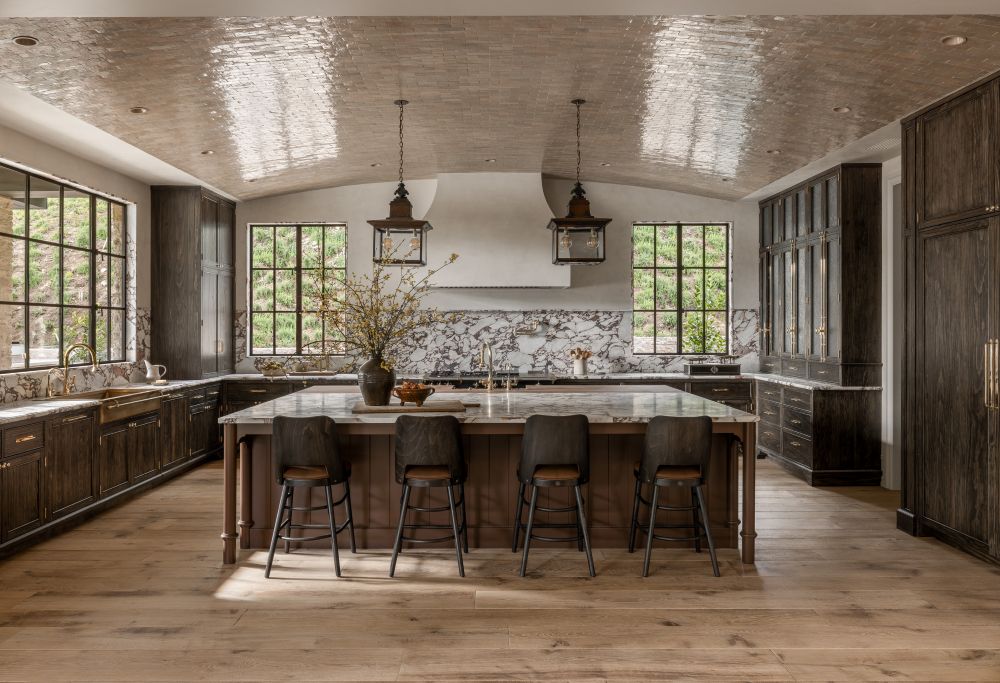

Emily Tucker: Tradition, Tailored for Today

From layered, character-rich interiors to disciplined systems behind the scenes, Emily Tucker is building a Boulder design firm where timeless style meets modern efficiency.
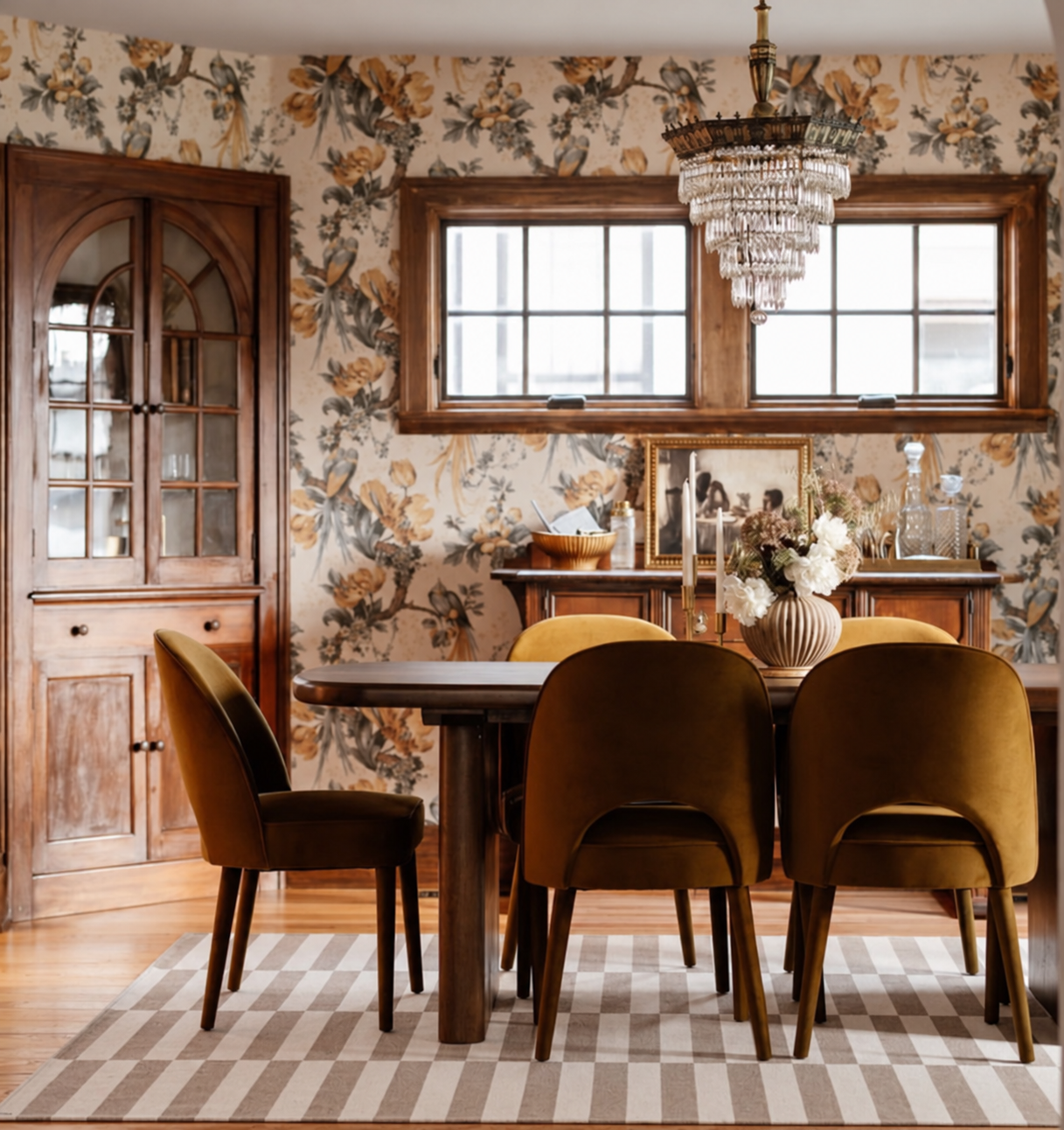
Interior designer Emily Tucker is an unabashed fan of traditional design — the scale, the colors, the patterns, the layers — and that passion has helped her eponymous firm Emily Tucker Design find a niche in Boulder, Colorado.
“Our specialty is traditional design for modern living,” she says. “I love traditional design. … It’s always in style. I look at interiors from Billy Baldwin or Bunny Williams or Michael (S.) Smith … and they still resonate for me today. I really appreciate that about traditional interiors.” Tucker’s love of vintage finds fits neatly into her aesthetic. She has, she acknowledges, an intense shopping habit as she searches for just the right piece for a room, and her firm prizes custom furnishings to create the luxury, bespoke interiors that her clients demand.
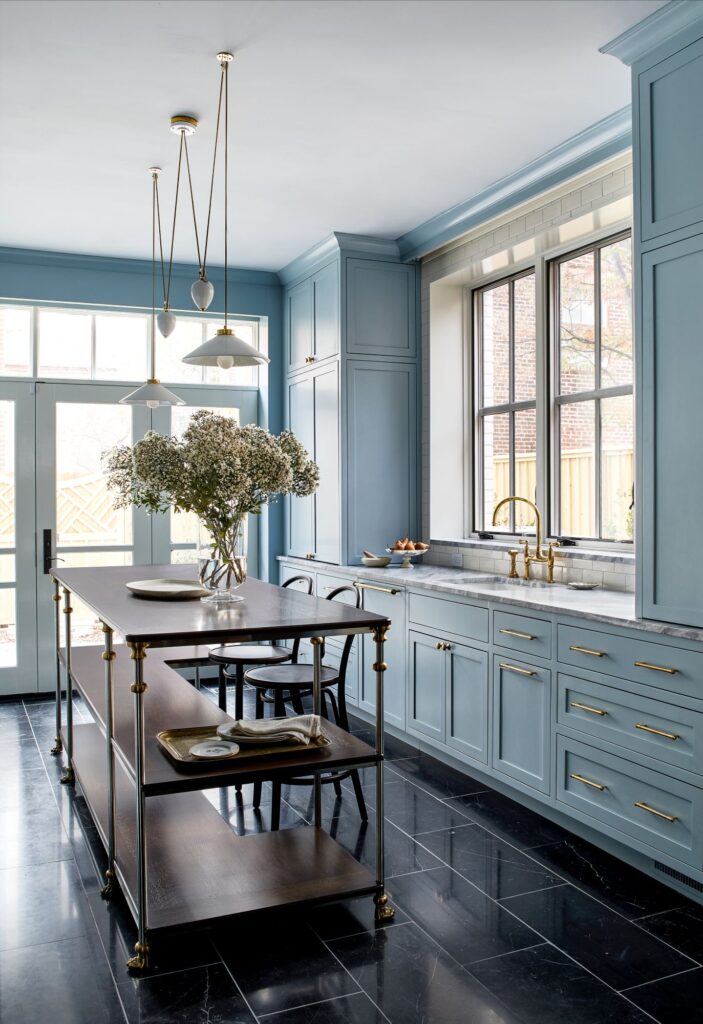
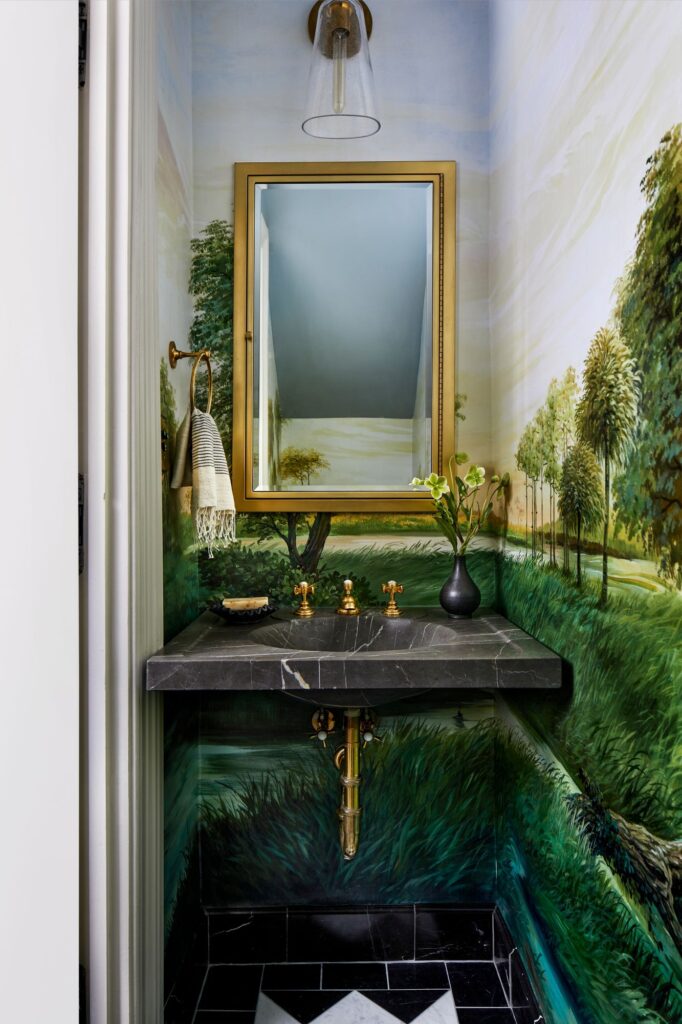
Tucker’s talents in balancing traditional and modern shine in this soft blue kitchen with dark floors and composed lighting and a powder room defined by muralled walls and a gilded mirror are balanced and unique through touches such as the boho hand towel and vase of fresh florals. (David Lauer)
Another differentiator for her firm in the Colorado market: “I have a lot of experience, and I’ve worked for some very high-end people, so I think there’s a level of just training and professionalism that’s come with the number of years that I’ve been doing this. Clients who are moving from out of state or who are used to working with larger design firms appreciate our very professional approach to this work.”
Tucker was born and raised in California but earned a bachelor’s degree in architecture and planning from the University of Colorado Boulder. After college she returned to the Los Angeles area and then moved to New York City, learning from those “high-end people” she mentioned — mentors like Ruthie Sommers, Kelly Wearstler and Steven Gambrel. (Read on for lessons she learned from).
Ten years ago, Tucker and her husband moved back to Boulder, where her firm focuses on high-end residential interior design, including new construction and extensive remodels, as well as smaller furnishings projects, primarily in the Boulder and Denver areas, working with six to 10 clients at a time.
Like many who settle in the area, Tucker and her husband were drawn to Boulder’s relaxed, outdoorsy lifestyle, and the beautiful landscape. With a major university to boot, the Boulder area is dynamic. “There’s a lot of new construction … and we’ve got some very expensive, beautiful homes here,” Tucker says. “We also have a lot of fixer-uppers that people will invest in and spend time and money redoing.”
In a recent ground-up construction project, Tucker’s firm teamed up with a local architect they’ve worked with before as the clients demolished their existing home and rebuilt. “The palette and the aesthetic of these clients were very different than my personal aesthetic. It was a lot of solid colors, not very much pattern. I would say almost a corporate sensibility. … And we were able to deliver that for them, and they’re very happy. The house is really beautiful and suits them in the time of life they are in.”
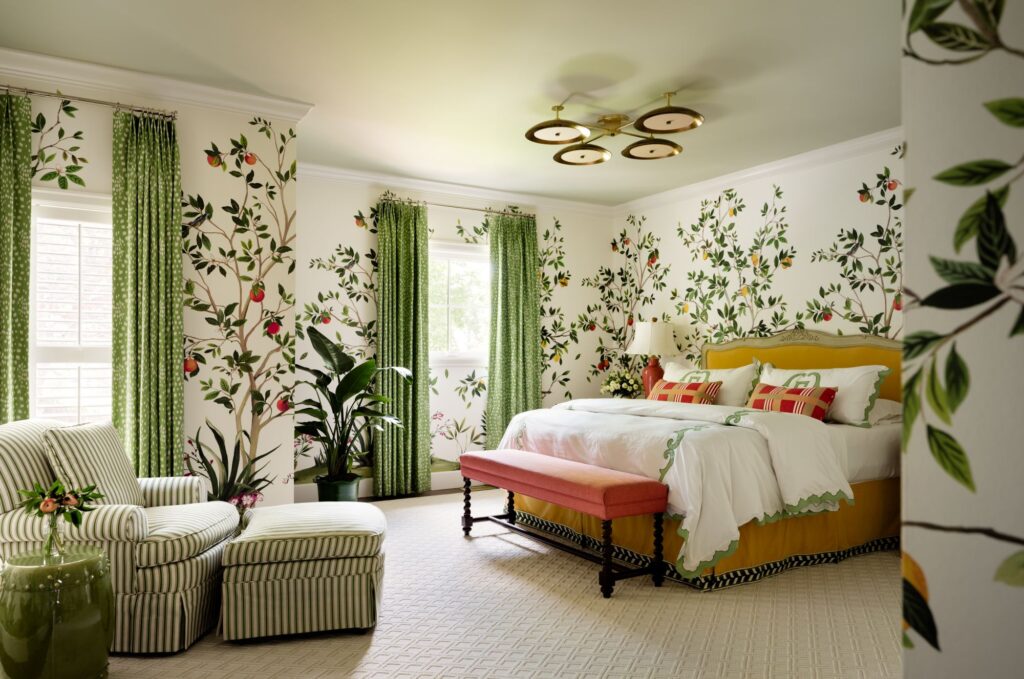
“The other project that we just completed was for a very young family in Denver. It was a large-scale renovation on a house they had newly purchased, and it is very layered, very traditional, very colorful, lots of patterns, lots of tile work, fun details all over the place,” she says. “It’s a totally different vibe aesthetically.”
In addition to design projects, Tucker is working on a furniture collection with Cecilia St, a Los Angeles-based furniture brand founded by Frank Eybsen, where designers serve as the creative directors of their own collections, made to order and built in LA. Cecilia St asked Tucker to be part of its founding designer roster. “We have lots of one-of-a-kind pieces that we’ve designed over the years, and it’s exciting to finally bring those into production,” she says. The collection is expected to launch in spring 2027.
To get it all done, Tucker has assembled a team of four — some working remotely and some working with her in the office in Boulder — and augments with contractors, like a warehouse manager, social media firm and PR team. The warehouse manager is a particularly important part of the team, given her penchant for buying, Tucker says with a laugh.
Tucker, who has three young children, prizes efficiency, and I had a quick call recently to talk about how she is growing her business — and the tools and strategies she’s using do it.
Design News Now: What items do you take with you to every client meeting?
Emily Tucker: Mostly I just walk in with my phone. If we’re doing a walkthrough, then I’ll bring my iPad and I scribble on floor plans directly on my iPad so that everything is in one place. The girls on my team bring the other things. … But I usually just walk in with my phone — and my positive attitude.
DNN: What’s one of the most useful questions you ask clients during your initial meeting?
ET: We always try to touch on the scope, budget and timing. … Those are important questions and I always ask that within the first 10-15 minutes of meeting with someone, whether on the phone or in-person. Then I usually ask them about how they live. … What’s important to them in their home and how do they need the house to serve them?
DNN: How, specifically, do you approach the topic of the budget with new clients?
ET: I ask them first if they have a budget in mind. Some people do and some people don’t. If they say, “I want to do A, B, C, D, E, F and G and I have $25,000,” it’s easy for me to say, “That’s not realistic for what you want to accomplish. I’m not the right fit.” If they say, “I really have no idea what it’s going to cost, can you give me some ideas?” we have a document that we send out to prospective clients that outlines what it realistically costs per room for a formal room, for a kid’s bedroom, for an office, so they can get a sense of just what the furnishings cost. (Tucker says she also explains to clients that her firm’s design fee is typically 20%-25% of the furniture budget and they also charge 12%-18% for shipping, logistics and related fees.)
DNN: Do you require any payment upfront?
ET: We don’t require anything upfront. We bill monthly for all our hours. … And then we invoice per room for everything and receive payment in that order. … We bill all shipping after items have been purchased because there’s so much fluctuation in shipping costs.
DNN: How do handle the issue of markups on furniture purchases with clients?
ET: I explain to them that I’m a business and I like to offer a really high level of service. Maybe 25% of their items are going to come in damaged or with some problem. … We have to deal with a vendor or we have to deal with a shipping agent … or we have to replace the item completely, and I want to be able to offer a replacement. I want to be able to give them the time and effort that it takes to get them the thing that they expect. We have to have the markup there, so we have enough margins to cover those costs.
DNN: Where do you like to shop for furniture?
ET: I’m from Pasadena (California) so I go to Pasadena a lot to shop because there’s so much good antiquing to be had. I go and stay with my parents for a few days and hit up all the antique stores and ship a bunch of stuff back. I also buy a lot at auction. … You can find more unique pieces and find some screaming deals. … I have found some treasures for pennies.
DNN: What are some of your favorite home furnishings brands?
ET: We buy from the same lighting brands consistently. … We buy a lot from Urban Electric, and we buy a pretty decent amount from Stone (Lighting) and Hector Finch. For accessories, I’m a big vintage accessories person. I love vintage ceramics. I love vintage rugs. I love all of that. I think it adds so much spirit and character to a home. … We do a lot of custom furniture, from Kravet or Highland House. … Then we work with a company out of California that makes custom furniture for us called Buildlane. … We have almost all our rugs made custom. We have two weavers that we work with, one in Nepal that does all our tufted rugs and then we have a weaver in India who does flat weaves. … I like being able to really customize pieces for our clients, especially with rugs. Rug sizes are so important to me and I’m not going to pick a rug that’s almost the right size from another brand. … On the furniture side, it’s the same thing. Our clients are really specific. They’re demanding a certain level of excellence, and I find that custom furniture allows for a more personal touch for everything that we produce and it allows for more one-of-a-kind interiors.
DNN: You worked with some well-known designers earlier in your career. What lessons did you take from those experiences?
ET: I was just an intern when I worked for Kelly (Wearstler), but she ran a really efficient office. Everybody there had a role and they knew what their role was and they accomplished it efficiently. That was a nice model to see early on in my career. Ruthie (Sommers) was very hands on: She took only one or two projects at a time, so she was in deep with her clients, like staying at their houses, so that was interesting to see. It’s not necessarily something that I do although we do become very friendly with our clients over the years. And Steven (Gambrel) has just a very gentlemanly quality about him. He has a strong appreciation for every single person on every job site that he’s ever stepped foot on. He knew people’s names. He shook their hands. He looked them in the eye. He thanked them for their work, and that is something that I take with me to every job that I work on. I make sure that my team understands how valuable the trades are that we work with: We can’t do our job without them. … Steven was really respectful and grateful for everybody’s work, and that I think is an important lesson.
DNN: Where do you turn when you need advice or guidance?
ET: I rely on my fellow designers a lot. I will call design friends and say, “I’m having this issue” or “What would you do in this situation?” to get people’s feedback and that’s been helpful. I rely on Brian Paquette a lot. … I actually booked a session with him years ago and we hit it off and then we went to a few design events together and kind of became friends. … And I will often call Steven is there’s a bigger problem and I think, “I don’t know anybody who knows how to do this except for him.” I’ll shoot him a text and see if he’s got five minutes to talk through something with me. Then I rely on my team a lot, too, for day-to-day stuff and to bounce ideas off.
DNN: What’s a recent change you’ve made that has improved your business?
ET: Two years ago, we started sending out weekly updates to all our clients on Wednesdays, and that has been awesome for our clients and, I would say, also for our team. It’s an effort, something we have to think about, but it holds everyone accountable. It holds our clients accountable for things that they need to get back to us on and for getting invoices paid … It holds us accountable to make sure that we’re accomplishing what we said we were going to do last week. I think has been good for us as a team and as a business. I also hired a fractional CFO … that has been helpful in terms of tracking all of our expenses by client, our income by client and showing us really what we’re making for a project, what our margins are, what we can afford to spend on marketing and photo shoots and inventory. … I’m business-y but I’m a designer. I’m not a CFO so it’s been helpful to have somebody on my team who does that, who can give me some clarity and show me how we’re doing.
DNN: What would you like to be doing more of in your career?
ET: I would love to do a little boutique hotel in town. I think that would be a fun and an exciting opportunity.
A boutique hotel feels like a fitting next chapter for Tucker—an opportunity to bring her affinity for vintage finds, custom furnishings and enduring traditional design to a broader canvas. Whatever comes next, she’ll approach it as she does every interior: with discipline behind the scenes, respect for the people who bring the work to life and an eye firmly fixed on creating spaces with character, longevity and a distinct sense of place.
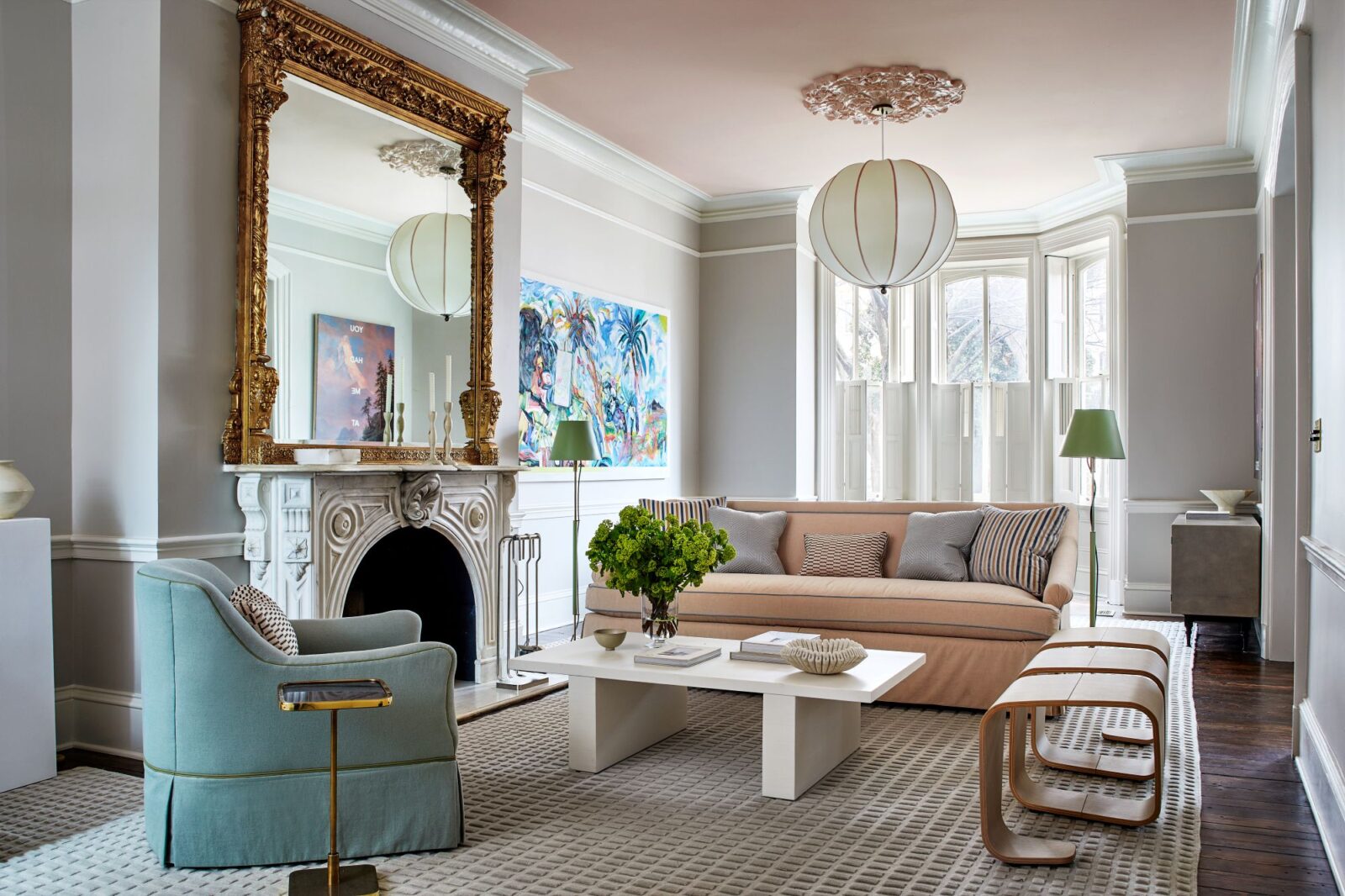
Note: Header image one of Tucker’s living room designs capitalizes on harmonious pastels playing well with neutrals, traditional touches and our favorite part, a pink ceiling. (David Lauer)