
The Design Set: Nourison’s Dipesh Haria Raises the Bar on Hospitality

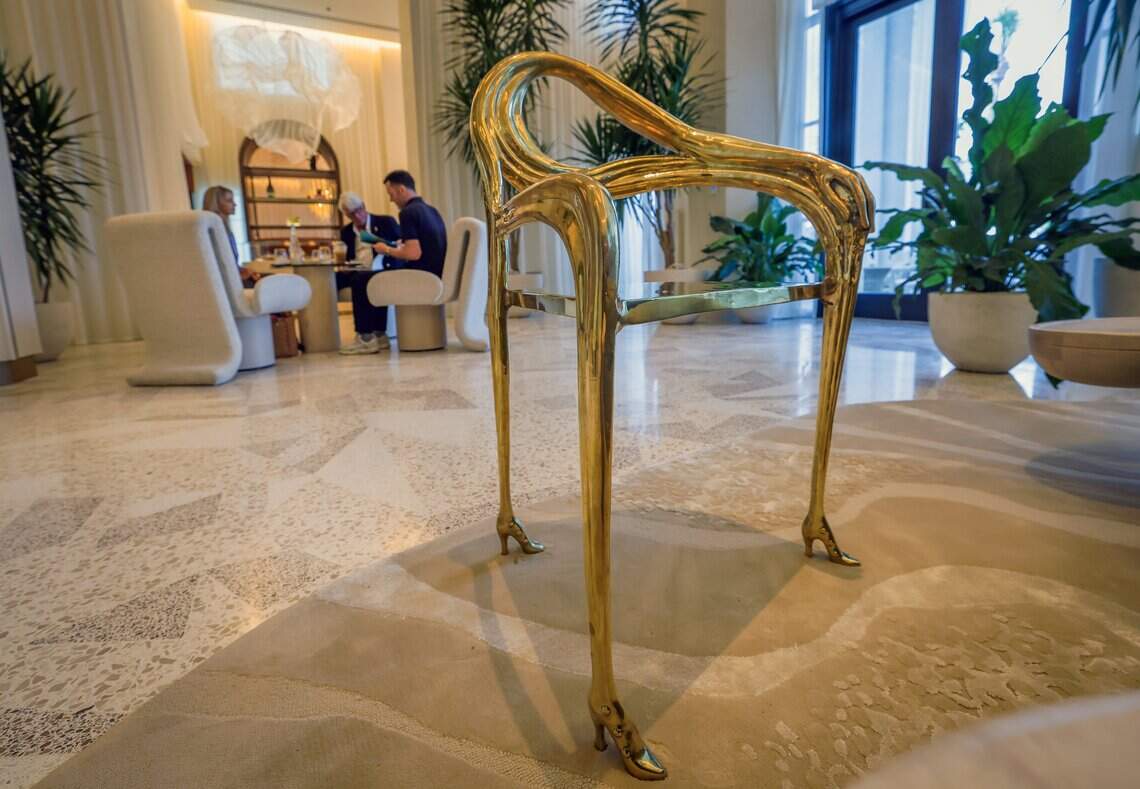
Years ago, after he earned his post-graduate degree in graphic design and computing from the University of the Arts London, Dipesh Haria made a trip to Miami, visiting the storied Delano Miami Beach hotel. Named after U.S. President Franklin D. Roosevelt and originally designed by architect B. Robert Swartburg in 1947, it was renovated in 1994 based on designs by Philippe Starck.
“It’s an iconic hotel, and I came to Miami to see it. It changed how everyone designed hotels; it changed design forever,” says Dipesh, creative director for carpet and rug producer Nourison’s hospitality division. So, it was a full circle moment when he and his team worked with Elastic Architects on the most recent renovation of the property.
The hotel reopened in June after a six-year renovation, but Dipesh says Nourison Hospitality worked on a much shorter timeline with a “strong vision” from the hotel’s design firm. “It required less pattern and light colors and simple textures, hand-tufted in its look, like an art deco terrazzo floor, but very subtle, which we were able to achieve perfectly with our patented Abrash dye technique and hand carving,” he explains.
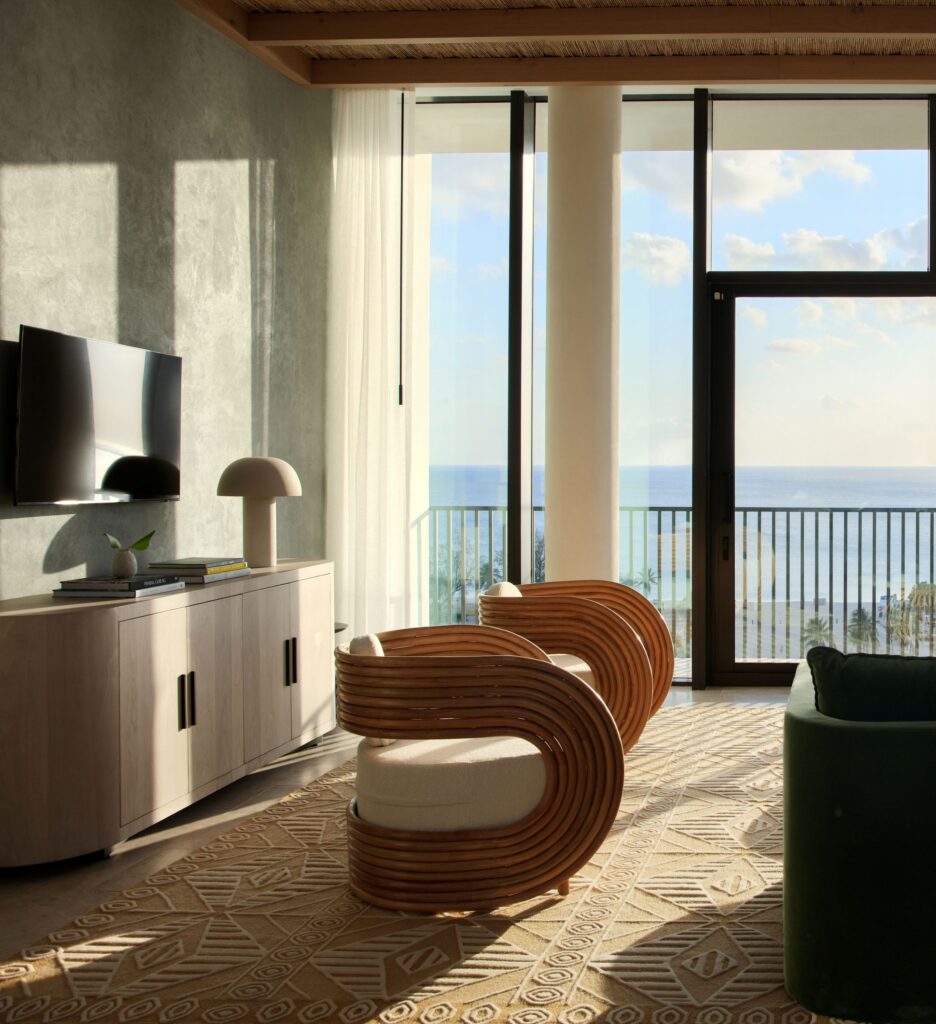
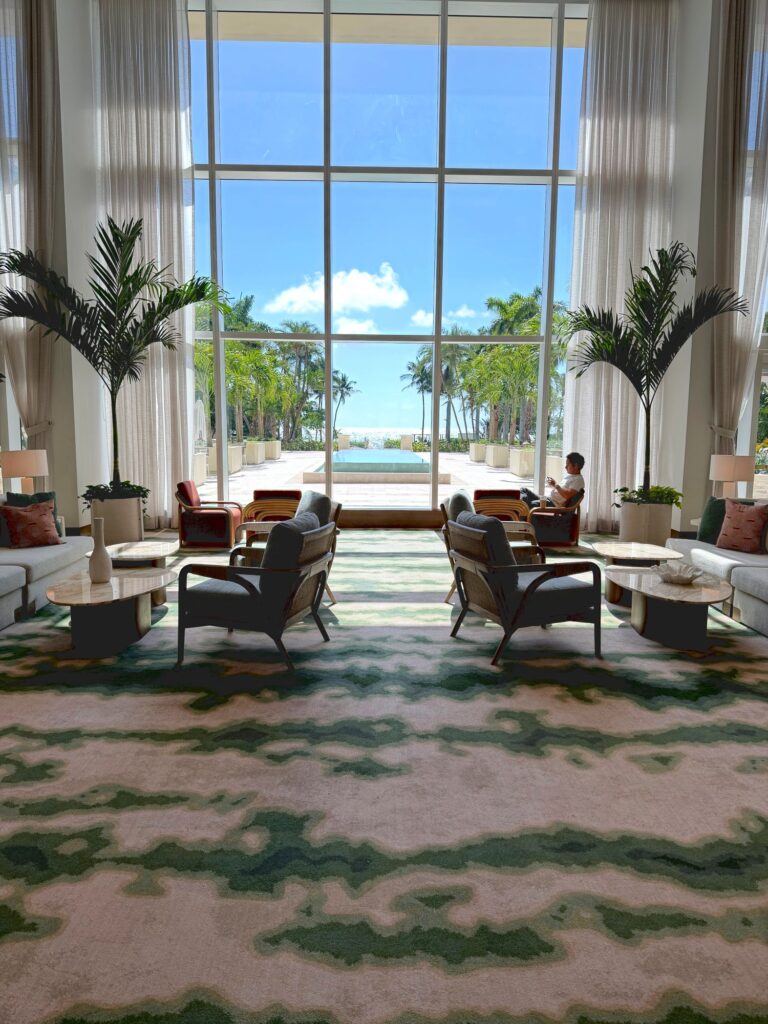
Working with interior designers and ownership groups on such installations is a key part of Dipesh’s multifaceted job. Nourison Hospitality has a long relationship with Marriott (including its AC, Aloft and Sheraton programs), as well as other major hotel brands, and the company has worked on a variety of trendsetting properties, including the Four Seasons Resort Lanai, Hotel Indigo Grand Cayman, One & Only Moonlight Basin, The Ritz-Carlton Key Biscayne and a series of properties in Aspen, Colorado: Hotel Jerome, The Little Nell, W Aspen and The St. Regis Aspen Resort.
As creative director, Dipesh also helps develop and shape the design of new hospitality collections, works with factories, and directs the hospitality division’s trade show presentations.
“Our goal at Nourison Hospitality isn’t to follow trends — it’s to anticipate them and inspire our clients with what’s possible. Above all, my role is to support and inspire our sales team and strengthen the Nourison Hospitality brand,” he says.
A career in carpet

As an undergraduate, Dipesh studied 3D design at Kingston Polytechnic (now Kingston University) in London, where, he says, “we were taught to solve design problems across every discipline.”
“That led to projects ranging from bowling alleys to Saudi Arabian palaces,” he says. “While working on those palace interiors, I hand drew thousands of traditional rugs, which led to an opportunity with a competitor and the start of my career in carpet design doing a combination of design and sales.”
Jonny Peykar, president, and Peter Lipkin, vice president of Nourison Hospitality, hired Dipesh in 2018 to help grow the hospitality segment for the company, which was already well known in the residential market. Dipesh knew they wanted to keep the division’s tagline: “A Higher Level of Hospitality.”
“It already said everything,” he notes. But Dipesh directed a brand refresh, launching a new website and social media presence.
“The growth started with redefining how the market sees Nourison in hospitality,” Dipesh says. “… A lot of the industry thought of us as high-end rug manufacturers when I started -which we are- yet we did these incredible hotels and casinos and conference centers, and nobody knew about it. So it was a combination of working out what we do and then working out the best way of telling the market what we do.”
The division also created NH Design Now, an online archive for designers to use to recolor the company’s thousands of rug designs for use in their own projects.
Nourison Hospitality also has a full-time design archivist who can assist clients. “She’s brilliant,” Dipesh says. “She really understands what the client wants and gives them so many options. So, there’s always something that they love and then we use that as our starting point. From there, our senior designers take the helm and navigate toward brilliant design execution for the property. It means we don’t have to go to Pinterest or copy competitors’ designs, and that’s really the aim, isn’t it?”
Dipesh’s ongoing goals for Nourison Hospitality have been to continually raise the bar on innovative designs and constructions, while building strong, lasting relationships with designers and hospitality property owners.
Key measures of success: 2025 was the division’s strongest year in terms of sales and this year Nourison’s Glassfall collection was named a finalist in the flooring category at the 22nd annual Hospitality Design Awards. The company describes Glassfall as reinventing “the stripe through the lens of reeded glass, layering texture and color to create patterns that feel both modern and timeless.” The bold palette, anchored by viridian, adds shades of oxblood and amethyst with accents of coral.
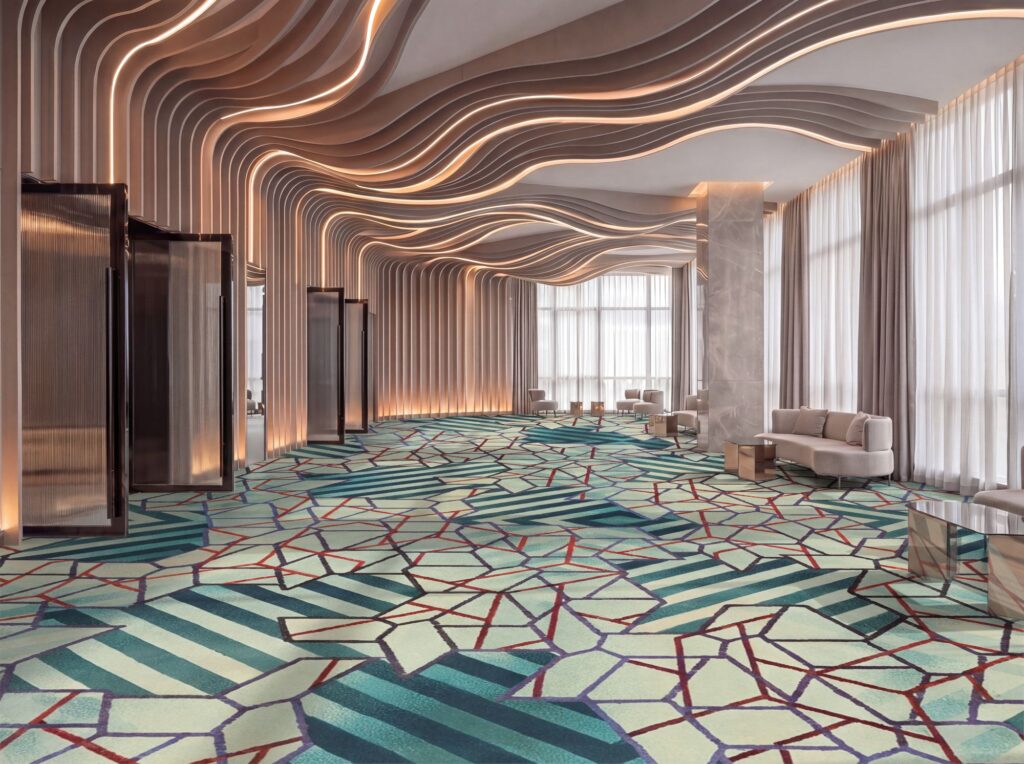
“Before I joined Nourison, everyone said, ‘When you walk on a Nourison carpet or rug, you know it’s a Nourison.’ You can really tell by the quality, and we’ve kept our quality high,” Dipesh says. “But innovation was more of a secret and we’ve publicized that. We’ve told people we can do incredible things that no one else can do, and that’s what’s attracting attention. It’s award-winning collections. It’s high-end quality. It’s innovative techniques that no one else has seen or done — combinations of different yarns, different textures. Being able to take a cut-pile Axminster and make it look like a hand-tufted requires a lot of skill and a lot of hard work behind the scenes, but we do it every time. But everything is done within an affordable budget, so we’re very competitive in the marketplace.”
Other recent collections from Nourison Hospitality include Molto, which was inspired by the Amalfi Coast and beaded embroidery, with “vibrant blues and soft pinks accented with emerald,” Dipesh says, and Resonant Rhythms, “a collection that translated bold, painterly brushstrokes and energetic color combinations into handcrafted rugs, celebrating artistic expression and individuality.”
The Enso collection, the company says, “draws inspiration from the timeless elegance of the circle — an ancient symbol of harmony, enlightenment and the endless cycle of life,” but also has a coastal aesthetic, Dipesh notes. The company’s Kyma collection, with a gold and gray palette, is based on the geometry of sound waves moving through space. Evangeline, on the other hand, is inspired by the bold brushwork of New Orleans artist Amzie Adams and showcases pinks and greens.
“Looking ahead to the next two years, I can’t reveal too much without spoiling what’s coming at BDNY,” Dipesh says. “What I can say is that we’re seeing a move toward more playful, optimistic interiors, with happy colors, soft textures and flowing patterns. From now through 2027-2028, I think designers will be embracing spaces that evoke joy and heavenly dreaminess, while still delivering simple sophistication. As the hospitality industry continues to evolve, there is a growing desire to create memorable, emotionally engaging environments that offer guests a sense of escapism and optimism.”
Higher levels of luxury
In general, the hospitality sector remains strong, Dipesh says, with demand among property owners for “a more luxurious, design-driven approach.”
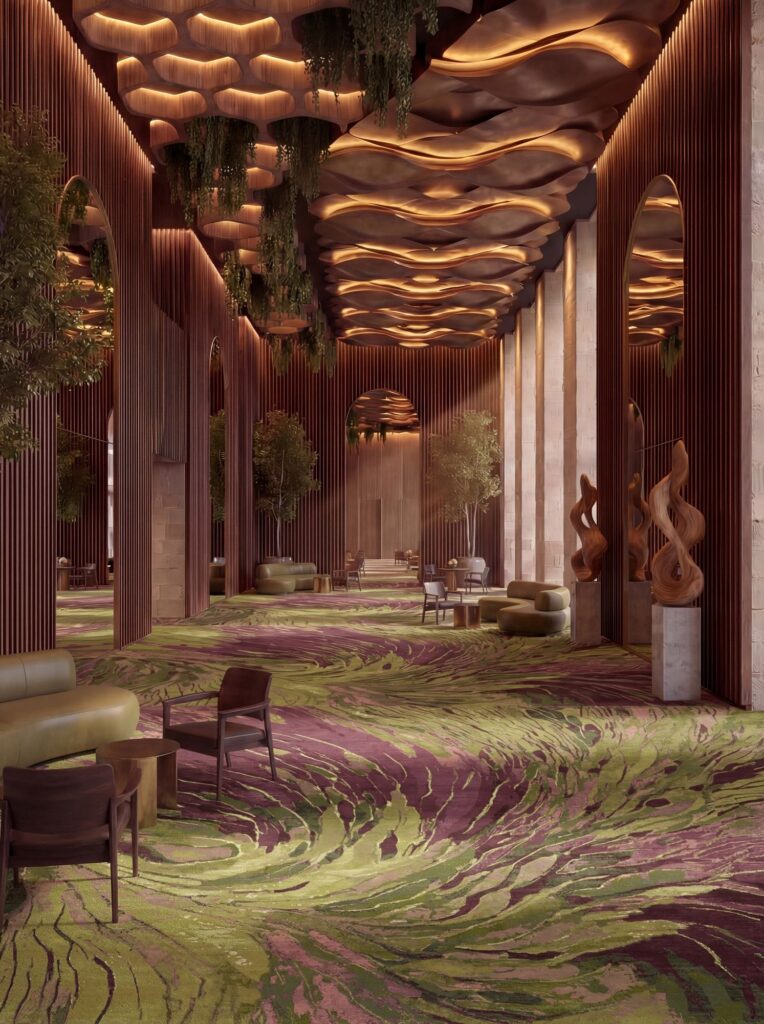
He sees the strongest growth in boutique hotels, destination restaurants, and private clubs.
“In many cases, these concepts are blending together, creating hospitality environments that offer a more curated and immersive guest experience,” he says. “… (Boutique hotels) are not just a 40-key property or a 70-key property: They are private members clubs with a boutique hotel attached, or they have a relationship with a private members club that elevates them into a different type of luxury. Or it could be hotels that don’t have just one core building: They have houses, or units, throughout the property.”
Dipesh describes the style of those decentralized properties as “cottage luxury,” where guests can feel immersed in the outdoors while enjoying luxurious accommodations.
“… Also, we’re seeing an increased interest in the residential sector, particularly in high-end condominium developments,” Dipesh says. “More developers are choosing Axminster carpet over traditional solution-dyed nylon tufted products because they want to create the look and feel of a luxury hotel for their residents. Alongside this, there is growing demand for natural materials, particularly wool-rich constructions, as owners place greater emphasis on quality, sustainability, and craftsmanship.”
Full circle
From his Miami living room, Dipesh can see the Delano — the hotel he traveled across the Atlantic to experience years ago and, decades later, helped reimagine for a new generation. It is a fitting full-circle moment in a career spent exploring what design can do and pushing the possibilities of carpet forward.
As hospitality spaces become more immersive, expressive and emotionally engaging, Dipesh sees opportunities for Nourison Hospitality to continue combining craftsmanship and quality with new ideas, techniques and approaches.
“We want to be the leaders,” he says. “We don’t want to be copying everybody else.”
Editor’s Note: The header image is of the original Salvador Dalí “Leda Chair” from The Lobby at the Delano Miami Beach. (Al Diaz, Miami Herald)